Referendum on waiting period for partners seeking to divorce set for May

Voters will be asked in May whether to reduce from four years to two, the minimum living-apart period for partners seeking to divorce.
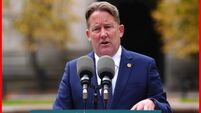
Justice Minister Charlie Flanagan announced the planned vote, which will coincide with the local and European elections.
He said the proposed reduction in the waiting period for a divorce would reduce trauma for families.
Arts Minister Josepha Madigan, who originally proposed the vote, said the change would also reduce costs and the dilemma faced by families, including children, with the current rules for a four-year wait.
Minister Flanagan said he believed there was political consensus for the proposed change and that it would also not lead to an increase in divorce numbers.
Ireland has one of the lowest divorce rates in Europe and this is to be welcomed
The government hopes that, if the change is approved by voters, the new rules for divorce could come into operation towards the end of the year, once the legislation has passed through the Houses of the Oireachtas.
Currently under the Constitution, couples must have lived apart for four out of the previous five years if they intend to divorce. If the vote is passed, Mr Flanagan plans to bring forward legislation to reduce the minimum period to two years during the previous three.
Ms Madigan said that it was “unconscionable” that families and children currently waited so long for divorce.
She said families were stuck in a “limbo” and the delay "increased hostilities" between couples.
“It obviously has an adverse effect on the children. It can also increase the costs that are involved,” added Ms Madigan.
However, under the plans, constitutional protections would remain for granting divorce.
This would include the requirement that there is no prospect of reconciliation in a relationship and that judges and courts alone could grant a divorce.
Currently, long separation periods required under the rules frequently lead to couples seeking a judicial separation prior to applying for divorce. This can add extra stress and costs for families.
The referendum, if passed, will also provide an opportunity to replace the outdated provision on recognition of foreign divorces.
Minister Flanagan added: “It is consistent with a time in our history when divorce was expressly prohibited under the Constitution. The text has not kept pace with the changes people voted for in 1995. The referendum in May is an opportune moment to remedy this anomaly.”
Department of Justice figures show that there have been over 60,000 divorces granted in the years 1997 to 2017. There were 3,412 divorces granted in 2017, 3,255 in 2016 and 3,277 in 2015.
"The Government wishes to ensure that the process for obtaining a divorce is fair, dignified and humane and allows both parties to move forward with their lives within a reasonable timeframe," Mr Flanagan said. A referendum commission will now be set up for the vote in May. Mr Flanagan also confirmed that a proposed vote on removing reference to women in the home from the Constitution would now be postponed and not held in May.