‘Little done to address hospital overcrowding crisis’
Levelling the criticism, it said it was “gravely concerned, but not surprised at what has transpired”.
“This was always going to be how 2018 started in our EDs (emergency departments),” a spokeswoman for the association said yesterday.
“Everyone, from the minister for health (Simon Harris) to the clinician at the frontline knew it, yet little of substance was done by the DoH (Department of Health) and the HSE to address it.”
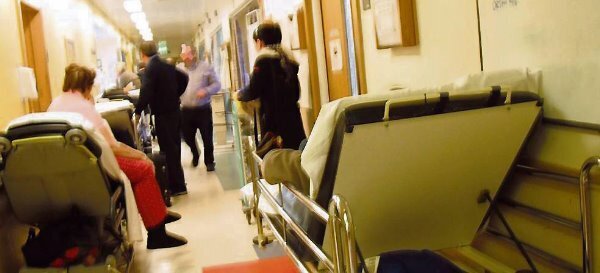
This week, the Irish Nurses and Midwives Organisation said there were 656 on hospital trolleys. Yesterday, it updated the figure to 677, with the flu epidemic yet to peak.
The IAEM said no solutions had been put forward to help the overstretched emergency departments.
“No solutions seem to be in sight. HSE plans are unambitious and token and are either not implemented or are too slow or too feeble to respond. The Acute Bed Capacity Review will tell us what we have already known for years, namely that we need many more beds.
“In the longer term, investment in primary care may improve our nation’s health, but this is currently little more than an aspiration. This winter and next need immediate solutions,” said the IAEM spokeswoman, who added that prefab-type units had been suggested to deal with last year’s flu season, but the idea had been shot down.
“Last year, we said we needed more beds. We said that, in some hospitals, modular ward units needed to be commissioned as a short-term measure, pending longer-term capital projects.
“We were told that modular builds would take months. We said ‘start now’ then, but it didn’t happen. The number of delayed discharges needs to be reduced dramatically to free up beds,” the IAEM insisted, adding that the “sense of déjà vu” this year is “overwhelming” and “disappointing”.
The issues of children on trolleys and staff stress were also highlighted by the IAEM yesterday.
“We are also seeing children, who need a hospital bed, being held overnight in EDs; [it is] a new and worrying trend that is not captured in any of the official figures. This is not just a problem today; this situation has been very challenging all through the Christmas and New Year period,” said the IAEM spokeswoman.
“Any extra beds created will need staff and the reality of persistently difficult working conditions is that we are haemorrhaging doctors, nurses and other staff involved in acute care.
“We recognise that it is really tough being a patient in an ED currently. We are also aware just how difficult it is working in grossly crowded EDs at the moment,” she added.


CONNECT WITH US TODAY



Be the first to know the latest news and updates