Air Corps: Indaver plan poses threats to operations including marine counter-terrorism training
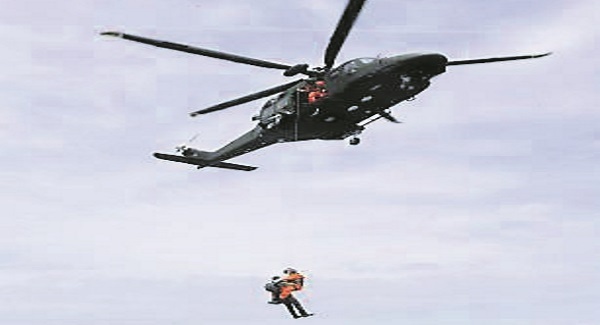
Fast-roping special forces onto a ship as part of marine counter-terrorism training; cargo-slinging large loads and how low is too low when flying above a chimney stack — these issues all formed part of a robust Department of Defence rebuttal of claims that building an incinerator in Ringaskiddy would pose no threat to Air Corps operations.

Air Corps: Indaver plan poses threats to operations including marine counter-terrorism training

On a day when waste management company Indaver Ireland prompted laughter with its offer to temporarily close the proposed facility “were it required for essential operations” of the Air Corps, Commandant David Browne said they remained concerned about the possible impact of an invisible plume on the safety of helicopter operations in the vicinity of Haulbowline naval base.

Given the strategic importance of Haulbowline to the Defence Forces, “including marine counter terrorism, joint Naval Service/Air Corps simulated attack, and cargo-slinging for replenishment of ships at sea”, any restriction of the Air Corps’ ability to operate in the area carries “strategic implic-ations for the State”, he said.

Cmdt Browne, accompanied by Department of Defence principal officer Fred Bradley, was back at the hearing yesterday to refute claims by Indaver that there is no need for a 1,000ft avoidance zone above the stack.

In his view, adding the height of the stack (245ft), the high risk zone of the plume (330ft), and a standard aviation safety margin of 500ft would force helicopters to operate at 1,075ft above ground level. This would affect their final approach to landing at Haulbowline and climb-out following take-off, he said.

Cmdt Browne pointed out that while much of Indaver’s argument, contained in a report by UK-based Windfarm Aviation Consultants, focuses on regulation laid down by the Irish Aviation Authority, those laws in fact govern civil aviation and not military aircraft.

He said the Irish Air Corps operates under the direction of the military aviation director and is bound by the Air Corps’ air regulations manual under the Defence Acts.

Cmdt Browne said risk management is about controlling risks “where uncertainty exists”, and that “uncertainty surrounds the potential effects on helicopter jet-engines operating in the vicinity of a proposed Indaver stack”.

“Considering the catastrophic consequences of a helicopter suffering a double engine failure with 15 people on board, in the light of such uncertainty, robust risk controls would need to be introduced to ensure safe military operations at Haulbowline.”

Rory Mulcahy, SC for Indaver, said it would be “more than happy to agree a protocol” whereby the 240,000 tonnes per annum facility could be temporarily shutdown if required for essential Air Corps operations.

Cross-examining Cmdt Browne, Mr Mulcahy asked if helicopters would have to operate at 1,075ft “only if you apply a safety margin on top of a safety margin” — saying that a 500ft safety margin would suffice. Cmdt Browne rejected this.

The hearing then heard, via phone link, from Shane Savage of Windfarm Aviation Consultants, and formerly the British defence ministry’s military air traffic policy lead. He questioned why the Air Corps might have difficulty operating in the vicinity of an Indaver plume but not in the plume of a ship when they were, for example, cargo slinging.

He said there “should be no impact as far as we can see” on Air Corps operations in the event of an incinerator being built.

The hearing continues.

More in this section

Lunchtime News

Newsletter

Get a lunch briefing straight to your inbox at noon daily. Also be the first to know with our occasional Breaking News emails.

Cookie Policy Privacy Policy Brand Safety FAQ Help Contact Us Terms and Conditions

© Examiner Echo Group Limited