Unmasking Mr Bitcoin
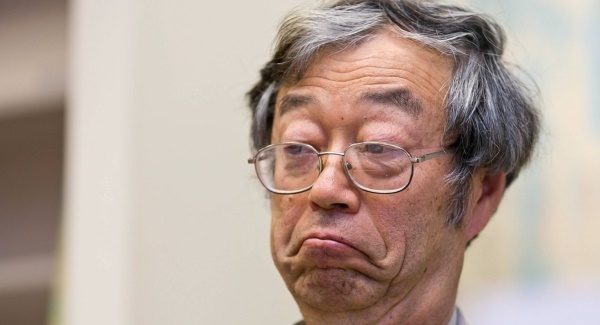
‘Newsweek’ says Satoshi Nakamoto is the creator of cyber currency bitcoin, but the cantankerous, obsessively private engineer has denied it. So is the magazine right, asks Dan Buckley

Unmasking Mr Bitcoin

TO TECH nerds it was the equivalent of the Fourth Secret of Fatima: a magical mystery best left alone and unsolved.

Which is why the identity of the creator of the bitcoin — long known only as “Satoshi Nakamoto” — was a closely guarded secret.

But now the mysterious creator of the hugely popular cyber currency has reportedly been unmasked by Newsweek magazine. It reveals him as a cantankerous, obsessively private 64-year-old father-of-six living near Los Angeles, who collects model trains as a hobby and drives a Toyota Corolla.

Ever since bitcoin rose to prominence there has been a hunt for the real Satoshi Nakamoto. Numerous media organisations have tried and failed to find the inventor of the virtual currency that has been linked to everything from America’s National Security Agency to the International Monetary Fund.

Whether Newsweek got their man is open to doubt as Nakamoto yesterday disputed the magazine’s story.

Newsweek is standing by its claim, which it regards as such a major worldwide scoop that it used it to relaunch its print edition after shutting it down for cost reasons.

When Newsweek’s reporter Leah McGrath Goodman confronted him at his home about bitcoin, Nakamoto called the police and barked: “I am no longer involved in that and I cannot discuss it. It’s been turned over to other people. They are in charge of it now. I no longer have any connection.” The magazine insists this is a tacit admission by him that they found their quarry.

The inventor of bitcoin has been a riddle since 2009, when someone using that name posted a scientific paper online, describing the idea for a digital currency under the title Bitcoin: A Peer-to-Peer Electronic Cash System.

“Satoshi Nakamoto” was widely believed to be a pseudonym or an anagram for an anonymous group of programmers. But Newsweek’s doorstepping reporter concludes the secretive genius behind bitcoin is a man born Satoshi Nakamoto although he goes by the name of Dorian.

At the age of 23, after graduating from California State Polytechnic University, he changed his name to “Dorian Prentice Satoshi Nakamoto”, according to records filed with the US District Court of Los Angeles in 1973. Since then, he has not used the name Satoshi but signs his name “Dorian S Nakamoto”.

According to research by Newsweek, he is descended from samurai and is the son of a Buddhist priest.

Nakamoto was born in July 1949 in the city of Beppu, Japan, where he was brought up in the Buddhist tradition by his mother, Akiko. In 1959, after a divorce and remarriage, she emigrated to California, taking her three sons with her. Now aged 93, she lives with Nakamoto in Temple City.

When McGrath Goodman tracked him down, she was greeted by a grumpy, bespeckled, grey-haired man in crumpled T-shirt and socks who immediately called the police to get rid of her. She had been communicating with him by email for weeks, feigning an interest in model railways, but he ceased all communication when she introduced the subject of bitcoin.

As she puts it: “It seemed ludicrous that the man credited with inventing bitcoin — the world’s most wildly successful digital currency, with transactions of nearly $500 million (€360m) a day at its peak — would retreat to Los Angeles’s San Bernardino foothills, hole up in the family home and leave his estimated $400m of bitcoin riches untouched.”

Gavin Andresen, chief scientist at the Bitcoin Foundation, offers an explanation, telling Newsweek: “If you come out as the leader of bitcoin, now you have to make appearances and presentations and comments to the press and that didn’t really fit with Satoshi’s personality. He didn’t really want to lead it anymore. He was pretty intolerant to incompetence. And he also realised the project would go on without him.”

A more likely reason is that any attempt by Nakamoto to sell his bitcoin fortune would not only give away his identity, but alert everyone from the US Inland Revenue Service to the FBI of his movements. While bitcoin lets its users conduct transactions anonymously, they can be viewed online.

Nakamato’s paranoia is legendary. When Andresen, an Australian who graduated from Princeton with a degree in computer science, first worked on a volunteer basis to perfect the bitcoin code after its launch in January 2009, he was intrigued by the promise of a digital currency accessible to anyone that could bypass banks at a time when the global financial system was in crisis.

Andresen communicated with Nakamoto by email for two years, but he unwittingly spooked the bitcoin founder when Andresen told him he had been asked to give a presentation about the digital currency to the CIA.

Nakamoto immediately went to ground.

Goodman interviewed some of Nakamoto’s family, and they described him as “intelligent” and “paranoid”.

The eldest of three brothers who all work in engineering and technical fields, Nakamoto graduated from California State Polytechnic University with a degree in physics.

According to Newsweek: “Nakamoto’s family describe him as extremely intelligent, moody and obsessively private, a man of few words who screens his phone calls, anonymises his emails and, for most of his life, has been preoccupied with the two things for which bitcoin has now become known: money and secrecy.”

Nakamoto is said to have worked on classified projects for the US military and as an engineer at Hughes Aircraft. He was laid off twice from work in the 1990s, fell behind on mortgage payments and taxes and the family home was foreclosed. That experience, says Nakamoto’s oldest daughter, Ilene Mitchell, 26, may have informed her father’s attitude toward banks and the government.

His younger brother, Arthur, describes him as a brilliant man.

But he also told Newsweek: “My brother is an asshole. What you don’t know about him is that he’s worked on classified stuff. His life was a complete blank for a while. You’re not going to be able to get to him. He’ll deny everything. He’ll never admit to starting bitcoin.”

In an exclusive interview with the Associated Press, Nakamoto said he had never heard of bitcoin until his son told him he had been contacted by a Newsweek reporter three weeks ago. He acknowledged that many of the details in Newsweek’s report are correct.

But he strongly disputed the magazine’s assertion that he is “the face behind bitcoin”. “I got nothing to do with it,” he said, repeatedly.

After the story was posted on Newsweek’s website on Wednesday, Nakamoto said his home was bombarded by phone calls.

During a car trip and then later over sushi lunch at the AP bureau in central Los Angeles, Nakamoto spoke at length about his life, career and family.

He also said a key portion of the article — where he is quoted telling the reporter on his doorstep before two police officers: “I am no longer involved in that and I cannot discuss it” — was misunderstood.

Nakamoto said of the exchange: “I’m saying I’m no longer in engineering. That’s it. And even if I was, when we get hired, you have to sign this document, contract, saying you will not reveal anything we divulge during and after employment. So that’s what I implied.

“It sounded like I was involved before with bitcoin and looked like I’m not involved now. That’s not what I meant. I want to clarify that.”

Newsweek’s Goodman, who spent two months researching the story, told the AP: “I stand completely by my exchange with Mr Nakamoto. There was no confusion whatsoever about the context of our conversation — and his acknowledgment of his involvement in bitcoin.”

The article has infuriated bitcoin fans who feel Nakamoto’s wish for privacy should have been respected.

The main points of contention — besides the fact that Nakamoto wanted to be left alone — is that Newsweek published a photo of Nakamoto’s house which could let anyone with access to Google Maps find him. Newsweek later removed the photo.

On Reddit’s bitcoin community, users quickly lambasted Goodman for “doxxing” Nakamoto — internet parlance for publishing someone’s identity and other personal information without their consent. Users of bitcointalk.org, which is considered the central hive of the bitcoin community, have expressed their disbelief at the report, and criticised Goodman and Newsweek for revealing details of Nakamoto’s private life. “If this is true I think this is very irresponsible,” writes one commenter.

Worst of all, perhaps, is the Twitter condemnation from Andresen. “I’m disappointed Newsweek decided to dox the Nakamoto family, and regret talking to Leah,” he says in his tweet.

What he will never regret is his decision to reach out to Nakamoto in the early days and offer his expertise.

“I made a small investment in bitcoin and it is actually enough that I could now retire if I wanted to,” Andresen says. “Overall, I’ve made about $800 per penny I’ve invested. It’s insane.”

One of the first people to start working with bitcoin’s founder in 2009 was Martti Malmi, 25, a Helsinki programmer who invested in bitcoins. “I sold them in 2011 and bought a nice apartment,” he says. “Today, I could have bought 100 nice apartments.”

Irish retailers take interest in bitcoin

The world’s most popular online currency, bitcoin is a peer-to-peer payment system that uses cryptography to control the creation and transfer of money.

Bitcoins are created by a process called mining, in which participants verify and record payments in exchange for transaction fees and newly minted bitcoins.

Users send and receive bitcoins using special software on a personal computer, mobile device, or a web application. Bitcoins can be obtained by mining or in exchange for products, services, or other currencies.

A growing number of Irish retail outlets are taking bitcoin. It is instantaneous and does not attract credit card fees. The Irish Bitcoin Association lists eight retail outlets in Ireland where they can be used. It includes Dublin’s Baggot Inn, where customers, pictured left, began using bitcoin to purchase pints.

In December, the value of a single bitcoin hit an all-time high of $1,200 (€865). It was $665 yesterday, according to bitcoincharts.com.

More in this section

Lunchtime News

Newsletter

Keep up with stories of the day with our lunchtime news wrap and important breaking news alerts.

Cookie Policy Privacy Policy Brand Safety FAQ Help Contact Us Terms and Conditions

© Examiner Echo Group Limited