Poor decisions, systematic failures led to crash
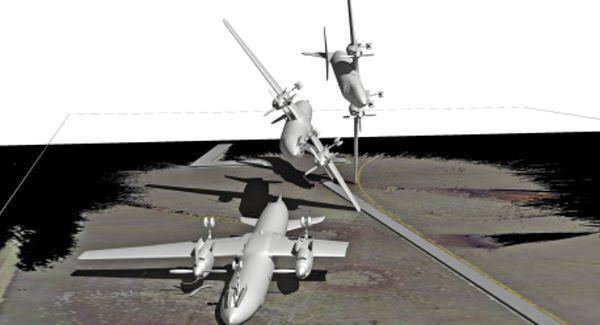
This led to the loss of control of the aircraft, which crashed in dense fog with the loss of six lives, the report published yesterday confirmed.
But it has also identified a catalogue of systemic deficiencies at operational, organisational, and regulatory levels which oversaw the operation of the flight, including pilot training, the scheduling of flight crews, and maintenance.
These deficiencies led to tiredness and fatigue on the part of the crew, inadequate command training and checking, inappropriate pairing of flight crew members, and inadequate oversight.
The report confirmed that pilot Jordi Lopez had been made a captain just four days before the crash, and his co-pilot, Andrew Cantle, had not completed his training and checking.
Given their relative inexperience, they should not have been rostered together to fly the aircraft.
Both had insufficient rest before their flight duties on the day of the accident — in fact, Mr Cantle had exceeded the flight time limitations just two days before the accident.
And there was no record in the aircraft’s technical log of a fault in the aircraft’s number two engine — the AAIU identified a faulty sensor which controlled fuel flow to the engine, resulting in a mismatch of power coming from both engines. This is despite the fact that the flight data recorder shows that the fault was present for 106 hours before the accident.
The aircraft, a Fairchild SA 227-BC Metro III registered in Spain as EC-ITP, was on route from Belfast City to Cork on Feb 10, 2011, with two pilots and 10 passengers on board.
The flight involved three separate undertakings — Spanish company, Flightline BCN, which held an air operators certificate to operate the flight; Manx2.com, an Isle of Man- based company which sold the airline tickets; and a second Spanish company, AirLada, which supplied the aircraft and flight crew.
The aircraft crashed upside-down at around 9.50am while on its third attempt to land in dense fog. Six people, including both pilots, were killed.
Four passengers were seriously injured and two received minor injuries.
In its final report, the AAIU said the probable cause of the crash was “loss of control during an attempted go-around initiated below Decision Height (200ft) in Instrument Meteorological Conditions”.
The unit identified the following factors as being significant:
* The approach was continued in conditions of poor visibility below those required;
* The descent was continued below the decision height without adequate visual reference being acquired;
* There was an uncoordinated operation of the flight and engine controls when the go-around was attempted;
* The engine power-levers were retarded below the normal in-flight operational range, an action prohibited in flight;
* A power difference between the aircraft’s two engines, identified by the AAIU in 2012, then became significant when the engine power levers were retarded.
The report said Flightline’s super-vision of the service, and the Agencia Estatal de Seguridad Aérea (AESA), the Spanish Civil Aviation Regulatory Authority’s oversight of Flightline, was inadequate, and both were a contributory cause of the crash. It also found that AESA had no oversight of Flightline’s service in Ireland.
AESA told the investigators that it was “unaware” that Flightline was operating in Ireland, even though it had regulatory responsibility for the company.
The report found that the flight captain was not properly trained for a command role, and was ill-prepared for the crisis in the cockpit in the moments before the crash.
The report found that the co-pilot’s training was not completed, and that some of Flightline’s operational responsibilities were being inappropriately exercised by AirLada and Manx2.com.
The AAIU said it recognises that this is a difficult time for the families who lost loved ones and for the surviving passengers, and it acknowledged their patience and understanding while the lengthy probe was being conducted.
“Our deepest sympathies to all concerned,” a spokesman said.
“This investigation was the most challenging of the more than 500 investigations that have been completed by the unit since its formation in 1994.
“The complexity of the accident sequence, examination of components at overseas locations, the international dimension of the operation including the intricate relationship between the various agencies and associated undertakings, translation of technical documents and natural justice obligations determined the time taken to finalise this report.”
* The AAIU has made 11 safety recommendations to various entities in the hope of preventing future similar accidents.
* Four are made to the European Commission Directorate responsible for Commercial Air Transport regarding flight time limitations, the role of the ticket seller, the improvement of safety oversight and the oversight of operating licences.
* Three are made to the European Aviation Safety Agency (EASA) regarding the number of successive instrument approaches that can be conducted to an aerodrome in certain meteorological conditions, the syllabus for appointment to commander and the process by which Air Operator Certificate (AOC) variations are granted.
* Two have been made to the operator, Flightline SL, regarding its operational policy and training.
* One has been made to AESA regarding oversight of air carriers.
The report recommends that AESA reviews its policy regarding oversight of the carriers for which it has regulatory responsibility, particularly those conducting “remote” operations in other countries.
* And another safety recommendation has been made to the International Civil Aviation Organisation (ICAO), regarding the inclusion of the approach capability of aircraft and flight crew on flight plans.
CONNECT WITH US TODAY



Be the first to know the latest news and updates