Many questions unanswered on banks’ prior knowledge of crisis
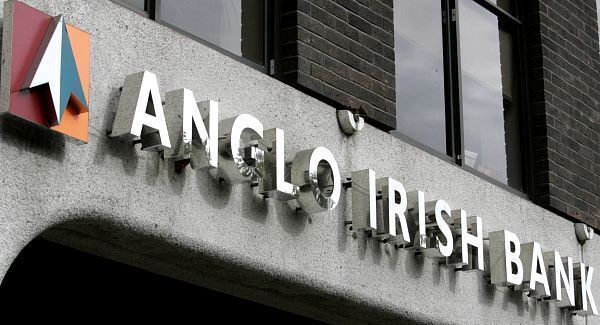
It is not possible to jump to any firm conclusions based on a few minutes of an incomplete exchange, but what has entered the public domain conflicts with the official narrative of what happened on the night of the bank guarantee.
The reason this country was forced into a humiliating EU/IMF bailout in Nov 2010 was because the State could no longer fund itself at sustainable rates on the markets. And that was because it had backstopped the huge contingent liabilities sitting on the balance sheets of Anglo Irish Bank, Irish Nationwide, Bank of Ireland, AIB and Irish Life and Permanent, owners of Permanent TSB.
It eventually cost the taxpayer €64bn. Of this amount, Anglo Irish Bank accounted for just under €30bn. It was all a far cry from the statement made by the late finance minister, Brian Lenihan, in the wake of the State guarantee of the banks, that it would one of the cheapest bailouts in the world.
It is not known what precisely happened inside Government buildings on the night of Sept 29, 2008.
But what the public has been led to believe is that the key executives of the domestic banks told Mr Lenihan that they were experiencing severe liquidity problems following the collapse of Lehman Brothers two weeks earlier, and if the Government stood behind the banks, then that liquidity problem would disappear. It was widely accepted until now that the bankers genuinely did not know that they were facing a massive solvency problem and that they were in fact bust.
The tapes released by the Irish Independent put a serious question mark over this version of events.
The then head of Anglo’s retail banking, Peter Fitzgerald, rang the then head of Anglo’s capital markets, John Bowe, to get a health check on the bank.
A number of statements made by Mr Bowe suggest he knew that the bank faced more than a liquidity problem. He acknowledged that it was in breach of its capital requirements and unless the Central Bank stepped in, then it had a very bleak future.
Moreover, the strategy was to get €7bn in emergency liquidity as an initial step in securing a much large amount of financing. Mr Bowe said the money was unlikely to be repaid.
The revelations obviously have a number of implications. Legals proceedings are scheduled to commence next January against three former Anglo executives: Sean FitzPatrick, Willie McAteer and Pat Whelan.
The Irish Bank Resolution Corporation (IBRC) was the entity set up to wind down the operations of Anglo and Irish Nationwide.
The family of the bankrupt businessman, Seán Quinn, has a huge legal case against IBRC coming up. Incidentally, Mr Bowe and Mr Fitzgerald both featured prominently in the legal action taken by IBRC against the Quinns.
Mr Fitzgerald became the head of corporate communications at IBRC and Mr Bowe was IBRC’s head of corporate development who played a lead role in the restructuring of the Quinn Group.
A THEME running through most of these cases is how much the Anglo executives knew about the true financial position of the company prior to the state guarantee and its subsequent nationalisation.
Mr Bowe will either become a key witness in these proceedings or even worse for him, he could face charges in the future. At the time of the conversation, he was the head of capital markets at Anglo. He would not have been senior enough to conduct the negotiations with the Central Bank on his own, but he was obviously a key player in the proceedings.
It is also interesting that these two high ranking employees of the bank would have such a conversation about highly sensitive information on the internal phone system in the knowledge that it was being taped.
The then financial regulator, Patrick Neary, is mentioned in the taped conversation. The regulation of financial institutions at that time was a complete mess. Supervision of the banks was split between the Central Bank and the financial regulator.
The focus was on consumer protection, while prudential supervision was very light touch. Ireland was not unique in this context. Thatcherism and Reaganism in the late 1980s unleashed the forces of financial market deregulation. By the noughties, the prevailing wisdom was that self regulation was the most effective method of supervising the banks.
Ireland had embraced this approach with abandon. There have been many explanations offered about the cause of the financial crash. Ireland’s membership of the euro was a big part of the problem. The economy overheated because monetary policy was far too loose. Moreover, there was an unprecedented flow of credit around the eurozone as cross border lending increased significantly.
Ireland attracted a disproportionate amount of this capital, which in turn helped inflate a massive property bubble. Even though financial services was becoming increasingly cross border, regulation remained the responsibility of governments.
THE Fianna Fáil-led coalition governments acted like a cheerleader for the property bubble by introducing tax breaks for property developers. The Central Bank did nothing to shout stop.
It is true to say that it is extremely difficult to spot a bubble forming. But Irish banks had grown to a scale that dwarfed the economy. They were heavily exposed to the property market and they were also heavily reliant on wholesale funding — none more so than Anglo Irish Bank.
If anything happened to either the property market or wholesale funding, then they would be in an extremely vulnerable situation. By Sept 2008, the property market edifice was beginning to crumble and in the wake of the collapse of Lehman Brothers, the wholesale markets had become paralysed.
Given these factors, how could the Central Bank be hoodwinked about the nature of the problem by the banks?
But that is exactly what happened on Sept 29.
Unfortunately the late Brian Lenihan will forever be associated with that decision to guarantee the banks, but he was only in the job three months. He was largely reliant on the advice of the regulatory arms of the State.
It is impossible to say at this stage what the then government could have done if it had the full details about the banks. In the absence of a guarantee, would the entire system have collapsed? Would the European Central Bank have forced the Government to introduce a full guarantee anyway?
Could the Government have introduced a partial guarantee that would have reduced the contingent liabilities on the State? Or could it have allowed Anglo go bust and stood behind the other banks? Or was the country heading for financial ruin regardless what course of action had been taken?
These tapes throw up many more questions that will be answered by either an Oireachtas banking inquiry or possibly through the many legal cases that will be heard in the future.
Of course the question of who leaked these tapes, and what was the motivation, also remains.
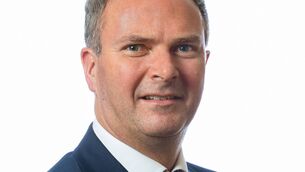
* John Bowe was the head of capital markets at Anglo at the time of the taped conversation. He joined the bank in 2001 and was director of treasury from Dec 2008 until Jan 2010. He subsequently became director of corporate development at IBRC.
Now an independent financial consultant, he played a key role in IBRC’s legal proceedings against the Quinns.
* Peter Fitzgerald was the head of retail at Anglo at the time of the taped conversation. He became the head of corporate communications at IBRC. A chartered accountant, he is currently interim CEO of the Addition Counsellors of Ireland.
* Patrick Neary was the financial regulator at the time of the bank guarantee. The Central Bank governor, Patrick Honohan, in his report into the banking crisis, noted Mr Neary appeared unwilling to “rock the boat”. Even in the weeks after the bank guarantee, his public comments suggested he didn’t fully grasp the scale of the crisis. A lifelong civil servant, he resigned from his position with a €630k handshake at the start of 2009.
* Brian Lenihan, the late former minister for finance, took over the key cabinet post in Jun 2008 just as, in his own words, the “economy came to a shuddering halt”.
A barrister by profession, he admitted to having a less than comprehensive understanding of the economy or the financial system. It would be a baptism of fire. Almost the entire banking system was nationalised under his stewardship. Moreover, the economy collapsed. He died in Jun 2011.
* David Drumm, the former CEO of Anglo is now in self-imposed exile in the US. He was appointed CEO at the end of 2004. He has applied for bankruptcy in the US, which has been contested by IBRC. The case is currently going through the courts.
He has declined requests by the Irish authorities to return home to answer questions about the demise of Anglo.
* Seán FitzPatrick is the former chairman of Anglo. He took over in 1986 and grew it into one of the fastest growing banks in the world through its relentless focus on lending to property developers. He is due to stand trial on financial irregularities next January.