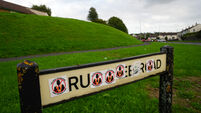
An end to residents’ lengthy nightmare
Street brawls, drunken late-night parties, souped-up cars driven recklessly, theft from neighbouring houses, and drinking and urinating in public — all linked to the tenants or visitors to the two rented houses — had become a regular feature of life in Bishopscourt Drive in Cork’s western suburbs.
With their quality of life in tatters, and feeling threatened and intimidated, a group of 13 neighbours united to take on the landlord. And won.
After two Private Residential Tenancies Board hearings, an appeal, and two independent tribunal hearings, the landlord has been ordered to pay the residents almost €30,000 in damages.
Local politicians who supported the residents said the victory would send a warning to absentee landlords around the country that they could face similar sanctions if they fail in their duty to neighbours.
It’s been a long struggle for the residents, who first raised concerns about properties owned by West Cork-based landlord, Flor Harrington, in 2006.
But things came to a head earlier this year when residents banded together and used the Residential Tenancies Act 2004 to take their complaints to the PRTB in relation to Mr Harrington’s management of tenants at No 10 and No 13 Bishopscourt Drive.
Using two sections — Section 16 (h), which outlines the tenant’s obligations not to behave in a way that is antisocial, and Section 15, which details the duty owed by a landlord to third parties to enforce tenants’ obligations under the act — they alleged Mr Harrington was in breach of his duties as a landlord for failing to tackle antisocial behaviour linked to tenants of, and visitors to, the properties.
They alleged that the occupants of both properties, or their associates or visitors engaged in persistent antisocial behaviour, including excessive noise and disturbance, cars driven dangerously fast and noisily at night, drinking in public, urinating in public, and out-of-control parties.
They said gardaí had to be called regularly.
They claimed that, as a result, they were living in fear and felt intimidated, and that their enjoyment of the normal social amenities of their homes was affected.
The cumulative effect of the antisocial behaviour affected the amenity and resale values of their houses, they said.
The PRTB found in favour of the residents in relation to both cases and imposed a nominal penalty on the landlord, but the residents appealed both decisions, which triggered two independent tribunal hearings in Cork on Aug 22.
The PRTB has just published both determinations which, for the first time, reveal the full extent of the shocking behaviour which blighted the lives of residents.
The burden of proof rested with the residents, who had compiled a detailed dossier of incidents linked to both properties over the years.
In relation to No 10, the residents said the incidents included:
* A violent incident outside the house on Mar 10. People emerged from the house brandishing clubs, sticks, and hockey sticks and engaged in an altercation with a group outside who had arrived by car;
* A disturbance at the house on May 22 involving a motorcyclist who tried to gain entry to the house. The residents claimed his behaviour was violent and dangerous. The tenant acknowledged that the perpetrator was a friend or associate of her son;
* Gardaí were called to an “out-of-control” party at the house on Feb 18, 2011, with excessive noise, shouting, disturbance, drinking and urinating in public. These allegations were not denied by the landlord’s agent or the tenant;
* Gardaí were called to the area at 10.30pm on Apr 21 after a disturbance at the house, and again at 1.30am. The tenant said her partner was drunk, and had “fallen asleep or gone to sleep under a jeep” parked near the house.
In relation to No 13, the residents’ dossier outlined incidents including:
* Gardaí had to use pepper spray after they were attacked by several women as they arrested a man at the house on Feb 1;
* A man being arrested at the house by gardaí at 5pm on Mar 20;
* A man being led away in handcuffs from the house by gardaí at 8am on Apr 25. Gardaí were pursued by a large number of screaming women and children;
* A man was arrested at the house at 8am, May 17;
* A family argument spilled out in to the garden of the house on Mar 28, with a man shouting at a woman;
* On Jun 16, gardaí called to the house after a man, who had been driving a noisy car in the estate, was seen driving it in the garden of the house;
* Another neighbour gave evidence that her house was burgled on Dec 13, 2011. Gardaí investigating the robbery later found a laptop taken from the house on the person of an occupant of the rented house.
Local Fianna Fáil councillor Mary Shields gave supporting evidence at the tribunal hearing in relation to complaints linked to No 13.
She said the reports of antisocial behaviour she had received over the years relating to one of the rented houses put all other such complaints to her into the shade.
She said her ward area contained many houses rented by students, who would be the subject of most of such complaints she received, and that it was a rare to get complaints about antisocial behaviour concerning families.
She said she had met Mr Harrington some years before, who had promised to remedy the situation, but never did.
The landlord’s agent, Dylan Cullen, attended the hearings and accepted some antisocial behaviour was attributable to the tenants of both properties.
He said he had sympathy for the residents, and agreed there had been difficulties for some time between the residents and the landlord.
However, he disputed the extent, seriousness, persistent nature, and intensity of the behaviour, and suggested that some of the claims were exaggerated.
Mr Cullen confirmed he had spoken with one of the residents about their concerns and always took these seriously.
But he said some of the residents’ demands were unreasonable. He told the PRTB’s tribunal hearing he had always passed on any correspondence he received from the residents to Mr Harrington.
He said he contacted the tenants after complaints and had always found that it came down to one person’s word against another, leaving him without the required evidence needed to serve a notice of termination on the tenants.
He also said he sent a colleague to one of the properties after complaints of late-night disturbances.
This person would arrive within minutes and had found nothing untoward there, he said.
Mr Cullen also noted that a Garda station is 200m from the houses, and he found it difficult to believe that gardaí would not have acted if the disturbances were of such a serious nature as was being alleged.
The tenant of one of the properties involved denied the allegations and said he believed that there was anti-Romanian feeling in the community.
However, the tribunal said it was satisfied that there was “sufficient admissible credible evidence” from the residents and those called on their behalf to prove that the core complaint of alleged persistent antisocial behaviour had taken place as alleged.
The tribunal said it was satisfied the incidents were witnessed by residents living in the neighbourhood, and that it had interfered with their peaceful occupation of their dwellings.
It said the residents’ evidence regarding the effect the antisocial behaviour had on them and their families was “clear, credible, and compelling”.
It said their quality of life was greatly affected by the behaviour, and that this was “particularly stressful, frightening and upsetting for older persons” nearby.
It said the residents’ expectation regarding the behaviour of their neighbours was reasonable, and that the landlord was made aware of the legitimate complaints on numerous occasions but “effectively ignored them”.
In relation to the complaint about No 13, the tribunal said while Mr Cullen gave evidence that residents’ complaints were taken seriously, it was clear that no effective action was taken.
“The tribunal notes that no written complaint or notice was made to the tenants after any of the communications were received from the neighbouring residents or their representative.
“It is claimed that the tenants were requested to modify their behaviour, but there is no evidence that this was effective, or that the requests were accompanied by any threat of sanction if they failed to do so.”
It found that in both cases, the landlord was in breach of his duty towards the neighbours, and that the residents suffered “inconvenience, loss, stress, distress, and upset and that their entitlement to peaceful enjoyment of their own dwellings was adversely affected”.
The tribunal ordered the landlord to pay €1,000 to each of the residents in relation to the complaint about No 10, and €1,250 to each in relation to the complaints about No 13 — a total award against Mr Harrington of €29,250.
“The tribunal consider that the sum awarded in damages is reasonable taking all of the circumstances of the case into account,” it said.
Mr Harrington, from Ardgroom in West Cork, declined to comment.
Both properties are now on the market. The tenants of one of the houses have been served with a notice of termination of tenancy, and are due to vacate the property by Dec 31.
The tenants of the other property have been put on notice that the house has been put on the market, and that they should find alternative accommodation.
CONNECT WITH US TODAY



Be the first to know the latest news and updates