Kerry hopes to gain from focus on cottage industry
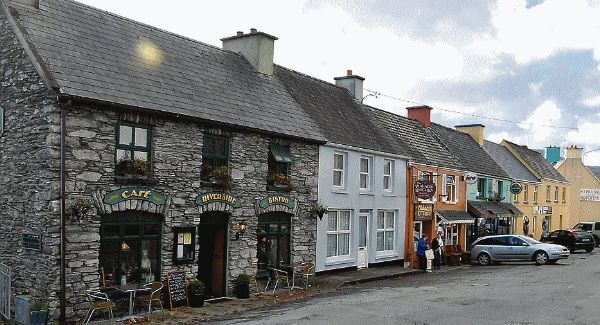
Returning tracts of land to their original zonings is among the proposals in the local authority’s draft local area plan ((LAP) for south-west Kerry.
The land is being dezoned in accordance with the housing needs of the predicted population in the years ahead.
The plan, which will cover a six-year period, will also discourage controversial one-off houses in rural areas. It proposes, instead, a “development boundary” in villages and other centres, within which would be designated housing land.
“This plan will encourage the development of compact and sustainable village structures,” the draft report states. “New houses will be located where they are contiguous to existing development, and make effective use of infrastructure and of backland and infill sites.”
However, senior executive planner Declan O’Malley said sons or daughters of land owners would still be entitled to apply for planning permission to build houses for themselves on family-owned land in the countryside.
The plan also aims to assist job creation and the general development of the area, but the success of measures in the plandepend on population growth and employment creation — two areas which have been in decline for several years.
For instance, census figures show the population of Caherciveen and surrounds fell 138 to 5,074, between 2006 and 2011.
While the town’s population rose a little, the rural population fell, which reflects a continuing trend of people moving from rural districts into towns, including Killorglin, Killarney, and Kenmare.
Rather than trying to attract large-scale manufacturing industry, there is a now a focus on local enterprises based on food, crafts, and tourism. South-west Kerry is seen as an ideal location for such enterprises.
The plan also aims to develop established towns and villages, again underlining the need to boost population by making such settlements attractive to live in. Quality of life is being flagged as a key attraction, along with a clean environment, good educational facilities, and natural amenities.
The downside is that many smaller settlements have no defined village core and no capacity to dispose of treated effluent. The provision of sewage facilities is regarded as a priority.
“For long-term growth of the settlements, high quality, attractive environments need to be combined with employment opportunities if the quality of life potential is to be capitalised upon,” says the plan.
The “huge potential” for eco-tourism is highlighted, but investment is called for if it is to be realised.
The region is ideal for walking, hill and mountain climbing, bird watching, sea-based activities, and cycling, stresses the plan.
Given that it encompasses the spectacular Ring of Kerry, the possibilities for tourism are underlined. But planners are concerned about the large number of holiday homes — around 1,250 — which has led to a ban on such homes in rural areas under the current Kerry County Development Plan.
Holiday homes account for 40% of all housing stock in south-west Kerry. The percentage in Waterville is around 50%.
Unsurprisingly, the plan does not want to hear of any further holiday homes, remarking that such developments now “totally dominate” some villages.
A large number of holiday homes are for sale — with scarcely any demand — and unoccupied holiday homes do nothing for local communities, but act as a deterrent to local people wishing to live in smaller settlements, the plan says.
The plan pinpoints Caherciveen town as the main focus for development, while Sneem and Waterville will continue to service villages and rural areas in their catchment.
The plan, now out for public consultation, will become part of in the county development plan.
Famed for its fishing, its local-born football hero Mick O’Dwyer, and as a favoured holiday destination of screen legend Charlie Chaplin, Waterville has plenty to boast about.
However, despite a huge increase in housing in the village during the Celtic Tiger era, the population of the area fell by 8% to 1,185 between 2006 and 2011.
Half of all houses in Waterville are holiday homes, according to the plan.
Some estates consist exclusively of such homes, which are unoccupied for most of the year.
On top of that, planning has been granted for a further 40 dwellings on which work is either unstarted or unfinished. Many existing holiday homes have been on the market for years and possible buyers are scarce.
Waterville is built around a seafront and promenade, with a much-photographed statue of Charlie Chaplin. But this area is under- utilised, says the draft plan, which proposes a well-kept open space in the waterfront area.
The plan suggests a “polish the prom” initiative, including seating, a public square, lighting and landscaping, public art and a centrepiece fountain or clock. The council promises to work with local groups to get the work done.
But, like neighbouring Caherciveen, the plan says Waterville has failed to maximise its tourism potential.
Neither does it have a designated bus stop that would encourage visitors to take a break there.
Fishing, marine life, and golf on two challenging local courses, including the championship Waterville links, are flagged as attractions that could be further developed.
Better marketing of Waterville as a tourist destination is also urged, as well as improved signage and efforts to extend the season.
Local history, including that of the cable station which operated transatlantic links, could also be developed to lure visitors. Established in 1880, the station ceased operations in 1962.
One of the most attractive towns in the country and a former winner of the Tidy Towns competition, Sneem, saw gross overdevelopment of holiday homes in the boom years _ to the extent that Kerry County Council does not plan to zone any additional land for housing in the village.
Sneem has unfinished and derelict estates — 26 vacant completed units, 36 started units and 31 unstarted. Clearly, there is more than enough houses in an area where the population continues to fall.
Between 2006 and 2011, the population of Sneem and surrounds dropped by 3.8%, from 577 to 555.
The main source of employment is the service industry and tourism-related activity. However, Sneem suffers from traffic congestion during the peak season and parking is also a problem.
Two former fair greens in the town have been carefully nurtured as parks and there is also a riverside town park.
Monuments to statesmen who visited Sneem adorn the greens, as well as a bronze statue of locally born Steve ‘Crusher’ Casey, world heavyweight wrestling champion of the 1930s.
Haphazard parking around the greens adds to congestion. the council’s plan says.
“Parking for coaches and cars is, therefore, an urgent requirement in the town. It is recognised that any new car/coach parks need to be centrally located so that they will be used by visitors and locals as an alternative to parking on both squares,” it says.
The council also says the housing for the six-year period of the plan should only be for dwellings in which people reside permanently.
“It is considered that further holiday home development will militate against the creation of an attractive town for permanent residents,” the plan says.
Tourism offers the greatest potential for employment in the Caherciveen area, which, in contrast to many other areas in Kerry, suffered a 5.6% population decline between 2006 and 2011, according to the draft plan.
A fall-off in agriculture and fishing, which traditionally mitigated the effects of remoteness, has hit the area.
More recently, the slump in construction, the closure of the local ESB generating station, and the loss and downsizing of manufacturing have been massive blows to an area where emigration has always been part of life.
On a positive side, a location on the Ring of Kerry, and its harbour, marina, scenery, leisure activities, and association with Daniel O’Connell, are all seen potential sources of growth.
But Caherciveen has not benefited to the extent it ought to from tourism. A local hotelier once said “all Caherciveen gets is the steam from the buses”.
The plan aims to encourage more visitors to stop in the town, and to promote the area more aggressively.
Some practical things need to be done, however. For instance, Caherciveen does not have a designated tourist coach stop in the town centre, which discourages tours from stopping and sends them to cafes and shops outside the town.
The plan highlights the potential for ecotourism in the area, including fishing, hill-walking, cycling, marine activities and visits to Sceilig Michael, a Unesco World Heritage site.
Unlike many other towns, Caherciveen did not see a huge upsurge in holiday home development during the economic boom — about 15% of its dwellings are holiday homes.
Nevertheless, it has unfinished housing developments, and planning permission has been granted for 150 houses on which work has not started, or been completed.
As for sustaining Caherciveen as a shopping centre, the plan will encourage new retail developments in the town centre, which should help curb “substantial retail leakage” to bigger towns.
Described as one of the most attractive rural seaside areas in Kerry, Valentia Island suffered a 6% drop in population between 2006 and 2011, down to 664.
The local hospital and coast guard station are the biggest employers on the island, along with SMEs and agriculture.
Job opportunities are limited and many islanders travel to work on the mainland. During the building boom, 20% of the population was employed in construction, but that figure has since greatly diminished.
Tourism has job creation potential in Valentia. Influential local people, however, say indigenous business and the sea, especially, offers the best prospect of sustainable employment. The local area plan encourages the development of niche areas such as food production and boat building.
To capitalise on the island’s natural environment, the plan proposes a number of ‘green’ routes to facilitate walking, rock climbing, cycling and nature observation.
Valentia is also famous for its slate quarry which opened in 1816 and which continues to operate. Valentia slate has been used in many prominent buildings, including the British House of Commons. Close to the quarry is Glanleam Gardens on a 40-acre site.
The island also has a strong sporting tradition and is home to legendary Kerry footballer of yesteryear Mick O’Connell.
However, creating year- round employment continues to be a huge challenge in Valentia. While tourism is important to the local economy, the season lasts no longer than two to three months.
The island is also rich in architectural, archaeological, historical, natural and cultural heritage. It was the eastern terminus of the first, commercially-viable transatlantic cable, with telegraph cables operating from the island for 100 years until 1966. The cable station building is one of more than 50 protected structures on the island.
Successful Valentia Island entrepreneur Fionan Murphy passionately believes rural areas must look to indigenous resources to create jobs.
In his case, it’s the sea and boats, which he loves and which have always been part of his life.
Having worked as a fitter with Valentia Marine Ltd for 18 years, he set up his own company, Murphy Marine Services, as a boat storage and service facility, in 1995, and currently employs six to eight people.
Over the years, the dynamic Mr Murphy branched into building boats in the 24-40 foot range and is currently building a fishing craft for a French customer.
Recently, the yard made boats for customers in Greece, Whitby, in England, the Shetland Islands and Belgium and is quoting for business in Norway. Each boat is bespoke, made exactly to customer specifications.
While the recession is having an impact on Murphy Marine Services, storage and servicing provides stability and regular business, with several customers in Kerry.
The yard, which has Cyclone and Patrol mouldings, has a slip for retrieving and launching boats of up to 40 tonnes.
The Murphy mission statement is: “To offer a total solution to all boaters.”
Mr Murphy feels there has to be a “hands-on approach” to job creation in rural areas.
“It’s all very well to talk about jobs in IT and tourism etc, but I believe we also have to look to indigenous resources to create sustainable jobs that will last,” he said.
“Around here, the sea is obviously the biggest asset and I think there’s huge potential for aquaculture, an area hardly touched on up to now. Valentia also has a tradition of scallop fishing which could be developed.
“We really need to come up with some original thinking to halt rural decline.
“Without the financial assistance and advice from the Leader programme and South Kerry Development Partnership, many new enterprises would not have got off the ground, but the ideas must come from people themselves,” he added.
Mr Murphy is a member of Valentia Island Development Ltd which aims to attract jobs and help existing local businesses.
With hopes of attracting manufacturing industry to the extreme south-west diminishing by the day, more people are looking to indigenous resources, such as land and sea, for survival.
One example is the Ring of Kerry Quality Lamb enterprise, under which 23 farmers are setting out to produce a top class product.
“Our dream is that when people come to Kerry they will look for quality Ring of Kerry lamb. Kerry is already an international brand name for good food and we can build on that,” said the group’s spokesman Denis Carroll.
The group was set up in 2009 out of frustration arising from poor prices, inadequate marketing and lack of proper presentation.
The group’s aim was to pay the primary producer a fair price, while at the same time ensuring the consumer received a good value product which consistently delivered a pleasant taste.
Lamb, processed in Waterville, is now sold directly to hotels and restaurants and for customers to deep freeze in their homes.
With the support of South Kerry Development Partnership, Teagasc and other bodies, the group is well established, producing upwards of 2,500 lambs for slaughter annually.
Most of the market is in Kerry, but expansion is gradually taking place, with a hotel in Co Meath and TV chef Neven Maguire, who has a well-known restaurant in Blacklion, Co Cavan, now among the customers.
“The emphasis is on quality more than anything else and all our meat is traceable from farm to fork. Quality comes at a price and we have one price for our produce. We want to ensure price stability for our producers so that they can have a future,” Mr Carroll said.
“If a lamb is not up to the required quality, it is returned to the producer. All farmers supplying the group are also in the Bord Bia quality assurance scheme.”
Prior to the group being established, there were fears that traditional hill sheep farming would not survive, but at least three such farmers are now finding a market for their lamb.
“Having sheep on the hills helps preserve the environment for tourism. The message we’re trying to get through to the tourism industry is that if sheep come off the hills the whole landscape will change,” Mr Carroll said.
The group’s current price is €10 to €11 per kilo, or around €150 per lamb.
The unusual sight of a London double-decker bus raised eyebrows when it first appeared on the narrow, twisting, roads of south Kerry.
However, the vehicle, built 31 years ago, is becoming part of the scene, especially at festivals and food events.
Eileen Gaffney, who lives 9km from Sneem, came up with the idea of a BusStop Café last year, and bought the bus on eBay for less than €5,000.
Following major conversion work during the winter, the bus started operating as a streetside café in a casual trading area in Sneem last March, but later changed focus to events happening elsewhere, including festivals in Kenmare, Waterville, and Newcastlewest.
Serving pastries and cakes, everything it sells is hand-made at the Copperpot bakery in Sneem, and there are plans to park permanently in a busy tourist area from May to September next year.
Ms Gaffney, who started the project under the Back to Work Enterprise Allowance in co-operation with South Kerry Development Partnership, also caters for parties.
“It’s been an interesting first year,” said Ms Gaffney. “There were a few setbacks, but I’m positive about the future of the business, given the right location.
“Children just love getting on board, while the bus also brings back memories for Irish people who worked in England 20 or 30 years ago.”
Both floors of the bus have been adapted to seat people at tables, while water-boiling and other facilities have been added.
All drinks, hot and cold, cost €1 each, with cakes costing around €2.50.
“The aim is to have a competitive price structure and the bus is definitely an attraction in itself,” Ms Gaffney said.
“Having coffee on the bus is something different and innovative.”
* Population rose by 3.7% from 376 to 390 between 2006 and 2011.
* Port and fishing village, with niche market tourism based on marine activity and adventure holidays. Departure point for ferries to Skellig Michael.
* Development focus on lands east of village core.
* Traditionally, construction, fishing, farming, and manufacturing have provided most male employment, while most female workers are in the service sector.
* Both villages are in the Gaeltacht area, and share many services. Just 1.5km apart, they are in the Ballinskelligs district electoral division, where the population rose by almost 5% between 2006 and 2011, from 355 to 372.
* Ballinskelligs is a key tourist settlement on the Skellig Ring, an offshoot of the Ring of Kerry.
* The blue flag Ballinskelligs beach is a prime amenity, as two types of salt marsh enjoy conservation protection under EU Habitats legislation there.
* Holiday homes now far outnumber permanent residences in Ballinskelligs. Future housing will be in backland and infill sites.
* Small coastal settlement where many residences are holiday homes. Population of the district fell by almost 9% between 2006 and 2011, from 273 to 249.
* Kells has a blue flag beach and the plan is to promote the sea-fishing and angling potential of the area. Eco-tourism is also seen as an area of future growth.
* Beach attracts visitors during the summer, but the amenity lacks any tourist facilities. The nearest shop is 2km away on the Glenbeigh to Caherciveen road.
* No sewage treatment facilities; no plans for such.
* No specific census returns in an area of dispersed rural housing 5km from Caherciveen.
* Seasonal car ferry to Valentia sails from Renard.
* A fish processing plant, Kerry Fish Ltd, is main source of employment, and fishing is a major source of income locally.
* Pier in need of repair and council says objective is to promote sailing, fishing, and angling in the area.
* Population of Caherdaniel, in the Gaeltacht area, fell 10% between 2006 and 2011, from 348 to 312. In contrast, Derrynane’s population went up by 10% from 170 to 189.
* Primarily a tourist area, on the Ring of Kerry, it saw large-scale holiday home development in the boom, but few houses built as permanent residences.
* Blue flag Derrynane beach very popular during the summer, while the home of Daniel O’Connell is an historic attraction.
* A number of invasive plants introduced to the area, including Japanese knotwood, giant rhubarb, rhododendron and butterfly tree, are out of place and need to be eradicated.
* Small Gaeltacht settlements 9km north-east of Waterville. Population of Mastergeehy fell by 16% and that of Kileenleigh by 1%, between 2006 and 2011.
* Area has suffered from the closure of services, including a school and church. The Kerry Way walking route passes through and is seen to have potential for tourism.
* Aim to develop niche tourism, mainly eco-tourism.
* Population increase of 9% between 2006 and 2011, from 293 to 319.
* High quality natural environment of coastal village which needs to be protected from inappropriate development.
* Having regard to predicted limited growth of Castlecove, the council does not intend zoning any land for housing during the six-year lifetime of the new plan.
* Small village, 6km on the Kenmare side of Sneem. Population rose 8.3%, from 193 to 209, between 2006 and 2011.
* Very limited facilities, except for a church and school, and no shops.
* The strategy is to promote permanent residential development in the area.
* Only 247 people in south-west Kerry, less than 3% of the population, speak Irish daily, which gives rise to fears for the future of the language in the peninsula.
* The Waterville area has the highest number of people who speak the language outside the educational system.
* As the percentage of Irish speakers in the peninsula falls, the plan says the trend is a “cause for major concern” and indicates a massive decline in the use of the language in everyday life.
* However, council policy is to promote Irish and to encourage the provision of facilities for learning the language and promoting Irish culture, as well as conducting business in Irish.
* Areas in the Gaeltacht tend to be small and thinly populated.

CONNECT WITH US TODAY



Be the first to know the latest news and updates