Priory Hall developer fined, jailed, then freed
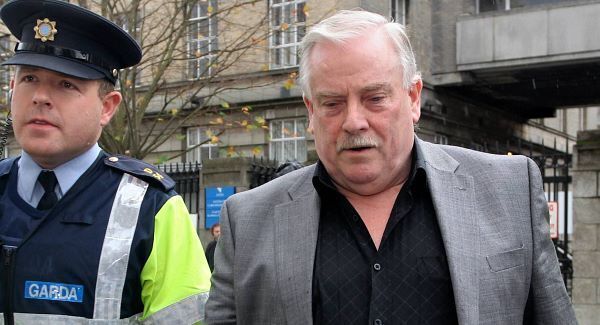
The committal order was sought by Dublin City Council and made by the president of the High Court over “egregious” contempt of orders and undertakings aimed at completing urgent fire safety works at the Priory Hall apartment complex by November 28.
The committal order was made just after 1pm and McFeely was directed to remain in the court environs until he would be committed to prison at 4pm, but he was instead taken to the Bridewell Garda Station and locked in a cell.
Frank Crean, for McFeely, asked the Supreme Court at 3.45pm for a stay on the fine and committal orders pending the appeal. Dublin City Council’s lawyer had been informed of the stay application, but had said the council was not participating in that matter, the court was told.
Mr Justice John Murray said the court regarded the council’s position as “extraordinary” and would grant the stay and direct the immediate release of McFeely. Arising from confusion among gardaí as to the exact status of McFeely, he was not produced before the Supreme Court until just after 5pm.
In the High Court earlier, Mr Justice Nicholas Kearns said that, while McFeely had been ordered off the Priory Hall site two weeks ago, the law “should not be seen to sit by limply while those who defy it walk free and those who seek its protection lose hope”. He was satisfied beyond reasonable doubt there was “a most severe breach” by McFeely of orders, and undertakings by the developer, aimed at completing works by November 28.
He fined McFeely €1m, to be paid by March 1, failing which the court would consider “other measures”.
Given the gravity of the case and “unprecedented” level of disrespect shown by McFeely, he jailed him for three months in Mountjoy Prison and refused a stay on his orders.
He was addressing a court packed with many of the 240 Priory Hall residents, evacuated since mid-October on the application of the council, and being housed at a cost of €240,000 weekly to the council.
Earlier, McFeely, through his counsel Martin Hayden SC, denied any willful disobedience of court orders and argued the court’s finding of breach of orders made on November 4 last was unfair and made after a flawed process. McFeely had been engaged in works, but was given no opportunity to complete them by November 28 because he and his workers had been ordered off site.
Conleth Bradley SC, for the council, said there was evidence McFeely had failed to adhere to a schedule concerning completion, on a weekly basis, of specific works and had “moved the goalposts” concerning the nature of works.
CONNECT WITH US TODAY



Be the first to know the latest news and updates