Two sides to doctor at centre of scandal
The first is of a workaholic who never seemed to go home and who once, it is said, declared in all sinceritythat “the only safe ovary was the one in a bucket in front of you”.
The second is of the family man who once left his bed in the middle of the night to save the life of a child who had been treated for appendicitis but was left with a massive ovarian cyst apparently missed by other medics who treated her.
Whichever the more accurate description, the Co Louth-based obstetrician now finds himself on the wrong side of the legal process in a controversy that could end up in compensation pay-outs exceeding 15 million.
Dr Neary, originally from Mayo but a long-time resident of Drogheda, was asked to take leave from his post at Our Lady of Lourdes Hospital in the town in late 1998 following complaints by a number of women whose wombs he had removed, they felt, without medical justification.
A review of his work followed when the North Eastern Health Board called in an expert from Britain. However, while this was going on, Dr Neary asked three of his peers from the Institute of Obstetricians and Gynaecologists to conduct their own separate review.
In the publicity that followed, the number of women with complaints against him rose from a handful to dozens. In early 1999, the Medical Council went to the High Court to have him suspended from the medical register and subsequently Dr Neary took early retirement.
He has still not been permanently struck off. The council’s Fitness to Practice Committee heard his case over a year ago but have yet to deliver a verdict, meaning he could possibly practice again although probably only in a private capacity.
He only turned 60 during the summer and his enforced inactivity is not something he enjoys. His three children are grown up and he lost his wife six years ago to ovarian cancer. Dr Neary has never sought to link his actions with anxieties about cancer resulting from his wife’s experience. Instead he has argued in some detail that each procedure complained of was warranted because of peculiarities that occurred at the time.
He has claimed an above-average number of uterus abnormalities in his patients, hinting at links with anecdotal evidence of Sellafield-related defects in the Louth area. He has also said blood transfusions were not an easy option for haemorrhaging women because blood was in short supply and the hepatitis C scare meant patients were reluctant to receive it.
Some see these arguments as cheap shots that play on popular fears. Others say they are valid arguments that deserve further investigation.
Sheila Martin of the Louth-Meath Help Group which lobbies on a range of patient issues throughout the region knows Dr Neary personally and credits him with saving the life of her then eight-year-old
daughter 10 years ago after her ovarian cyst went undetected.
“We would have lost her only for him. I know people think this whole thing is about one doctor who went over the top and started removing women’s wombs for no reason but there’s no way it’s as simple as that.” “I know this is heart-breaking for Dr Neary. There is a lot of support in Drogheda for him from people who know him to have been a good doctor to them over the years. It’s devastating for him not to be able to work.”
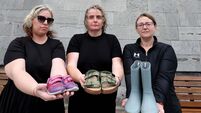
Dr Tony O’Sullivan of patient support organisation Patient Focus is more concerned with the devastating effect the removal of their wombs had on the 60 or so women who attend the organisation’s meetings.
“Their lives have been turned upside down. They wanted more children and they lost that chance.”
Patient Focus also hopes a compensation tribunal will be set up to spare other women having to go the route of Alison Gough.

CONNECT WITH US TODAY



Be the first to know the latest news and updates