BYD Sealion 5 review: Cheap, practical and packed with technology, but not without flaws
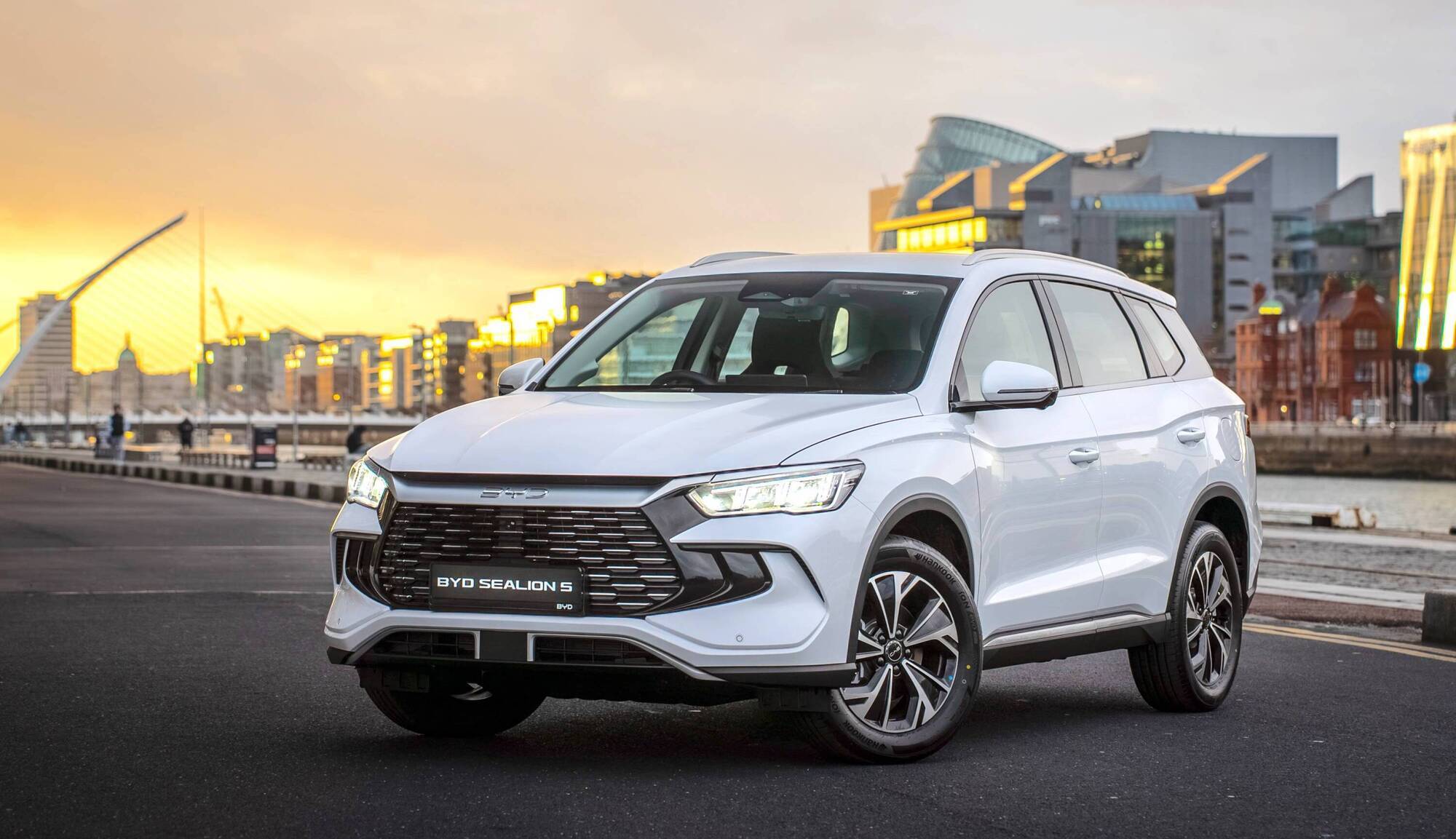
With a range of well over 1,000km, the BYD Sealion 5 is well suited to Irish needs even if the electric-only range is a barely useful 86km.
|
BYD SEALION 5 |
|
|---|---|
|
|
★★★☆☆ |
|
|
from €36,990 - €40,990 as tested in Design spec |
|
|
1.5ltr PHEV with a 212bhp |
|
|
Over 1,000km but only 81km on electric alone |
|
|
High levels of spec, but the endlessly irritating technology is a real pain |
|
|
Cheap, practical and roomy, but not a great driver |
The Asian automotive car manufacturing sector has long been known for the somewhat silly names it adopts for its products. Now we have another example.
The BYD Sealion 5 in a fine car indeed, but it does have a weird name. I mean, ‘Sealion?’ I know the company already makes such as the Dolphin and the Dolphin Surf and the Seal, and to some people maybe the furthering of this aquatic animal nomenclature makes sense.
Perhaps it’s me that’s losing the plot, but I simply don’t get it. And worse, finding the necessity to add the number five to the title, seems a bit mystifying as well.
I thought it was only phone manufacturers indulged in that carry on – iPhone 56, or Samsung Galaxy 427… you get the drift. Hmmm, is the ‘Car-as-mobile-phone’ phenomenon about to engulf us? I don’t know, but it all seems a bit wacky to me.
I suppose BYD, or Apple, or whoever, can call their products whatever the hell they want, but the aquatic species thing has me a bit flummoxed. They also have a BYD Atto in their line-up? Where did that come from?
An ‘Atto’ to the best of my knowledge, is a prefix in the metric system denoting one quintillionth of a unit. It does not, therefore, swim.
Anyhow, ours is not to reason why and so on, but for what it’s worth, BYD’s naming strategy still seems silly to me.
Read More
What’s not so silly is the product itself – cheap, technically advanced and increasingly popular, here in Ireland and elsewhere. As we’ve noted before, the company’s rise from being a battery manufacturer to a major player in the global automotive sector has been hugely impressive – as has that of other Chinese car makers like MG, Leapmotor, Xpeng etc.
But there’s a rather simple answer to how they go about their business and have frightened the gizzard out of their European rivals – they share parts.
This is the simple but crucial secret behind how the Chinese brands have managed to develop cars so quickly at costs much lower than those faced by manufacturers in Europe, but it also runs counter to the way traditional car makers work.
The ability to use standard parts across multiple models isn't new, and it is one of the big reasons why global car giants such as the Volkswagen Group and Stellantis have grown to the size they are. The more you build (or source) of a single part, the cheaper it becomes.
Common parts, from door handles to springs to engines, are shared among Chinese manufacturers, thus cutting costs greatly.
This, and the fact that its factories are largely devoid of humans – robots do all the work – provides the Chinese with significant advantages over their European rivals and has allowed BYD to become the world’s sixth largest car maker (it sold more units than Ford last year) and has the company aiming at Toyota.
Company founder Wang Chuanfu told a recent shareholders meeting it wants to sell more cars than the Japanese behemoth within five years. That would entail doubling BYD sales from its current output of 4.5 million units annually to over the nine million Toyota made last year.
To this end, it also plans – which emerged earlier this week – to take individual country distributors in-house, which will ultimately spell the end for its involvement with Motor Distributors Ltd (MDL), the O’Flaherty family operation which has run BYD operations here since 2023, as well as owning the Mercedes franchise in Ireland, as well as that of another Chinese outfit, Xpeng.
MDL also owns a substantial retailing arm, MSL, which sells a variety of brands through its extensive dealer network.
It seems certain that BYD will, at some point in the not-too-distant future, assume control of its own retail operations here. And, of course, this week’s tester, the Sealion 5, will be on BYD dealer forecourts, whoever they may be by then.
Whatever about all that, BYD currently markets nine different products, five electrics and four PHEVs, and the Sealion we’re testing this week is one of the latter. There are actually two Sealions – the 5 and the 7, with the former being a straight-up SUV and the latter being more of a coupe SUV and coming only in EV form.
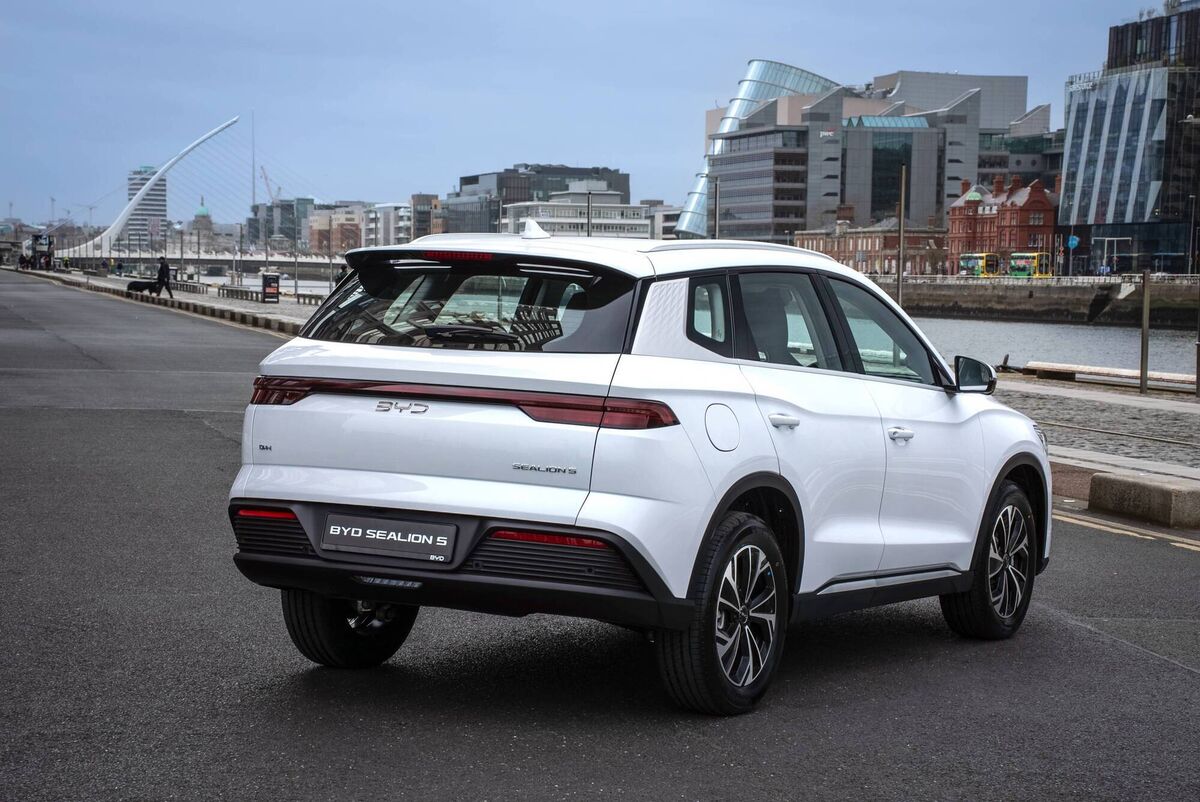
The 5 is something the BYD hierarchy here in Ireland (at present) rightly feels is a better option for the Irish market as a PHEV, and this one, while singularly failing to take the eye out of your head with its looks, will rack up a lot of sales here.
Ironically, you might have thought that its name indicates something to do with its seating capacity – i.e. that the 5 seats five and the 7 seats seven. It doesn’t, as both are five-seaters. And I don’t know the answer to your next question.
Read More
With a range of well over 1,000km, it is well suited to Irish needs even if the electric-only range is a barely useful 86km.
In terms of looks, the Sealion 5 is no great shakes and, as ever, many of the design cues are lifted from other manufacturers. Audi ‘singleframe’ grille – tick that box; so too the aluminium C-pillar insert, which was originally seen on various SEATs and Hyundais. It’s all a bit hacked together, to be honest.
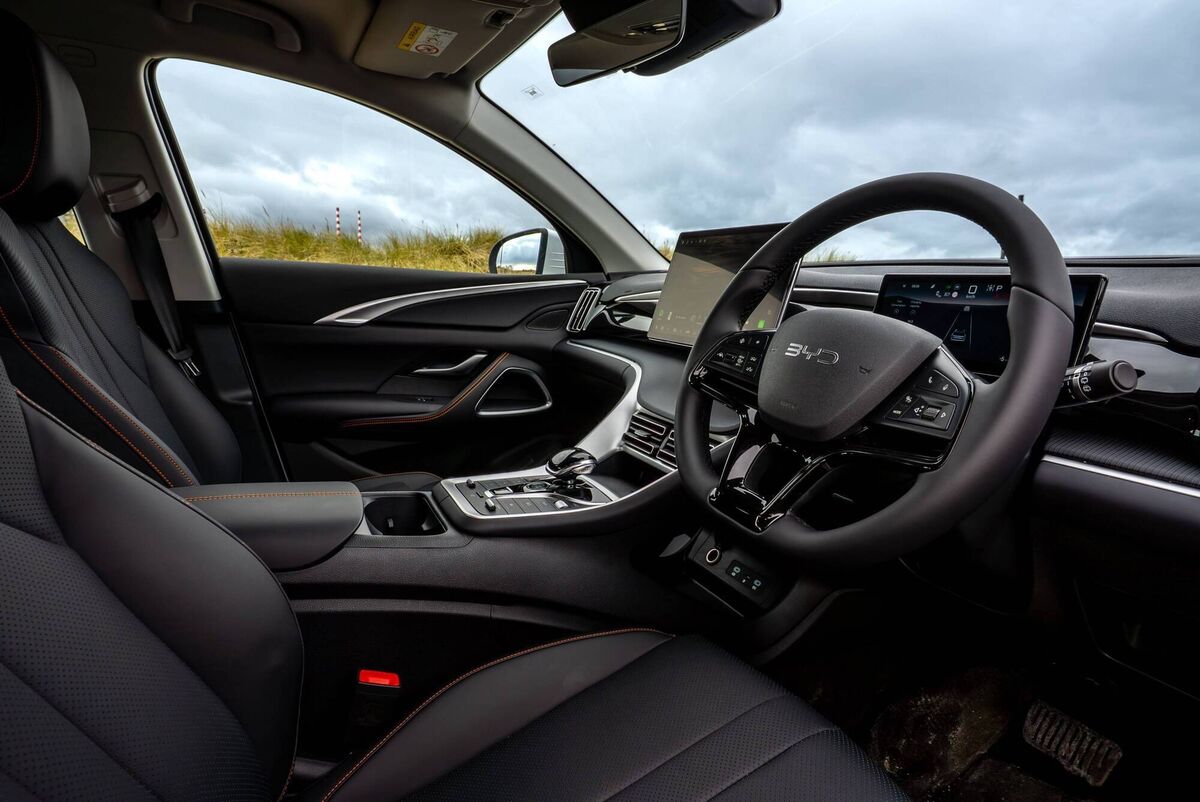
The interior is a bit less messy, although dominated by the twin infotainment and instrumentation screens. Space is very generous (including the boot) and well thought out; comfort levels are good and the build quality impressive, but, yet again, the overbearing technology is a pain in the ass.
Aside from the steering wheel-mounted controls, there are few buttons and switches, and everything is operated through the infotainment screen. It’s annoying, distracting and unintuitive. It might wow innocents who’ve never seen its like, but trying to operate it is akin to fighting a Tasmanian Devil – you’ll never best it.
On the road, the handling is okay, but never confidence-inducing; pitch it into certain corners and the seat of your pants will tell you you’ve over-reached, but it does cling on, although such a driving technique will definitely test the strength of your bum cheeks. Ride, frankly, is poor and anyone who appreciates such dynamics will definitely baulk here.
This is also a PHEV which utilises a normally aspirated 1.5 litre petrol engine with a 212 bhp output and an 8.1 second 0-100 km/h time. But it is allied to a CVT transmission which largely blunts the amount of fun you can extract.
Range, when fully fuelled and charged, is over 1,000 km and claimed consumption is an astonishing 2.1 l/100km. The reality is a little different, and expect an average rate of somewhere in the region of 6.5 l/100km (43.7 mpg).
All told, this is an average but very cheap car for what it is. Those bald facts will not in any way blunt sales – and they are confidently expecting to sell lots of them – because its price alone will swing many buyers, along with the interior space and practicality.
Those demanding a hint of dynamism, however, will definitely look elsewhere.