Leapmotor C10 REEV review: Chinese SUV offers EV driving without range anxiety
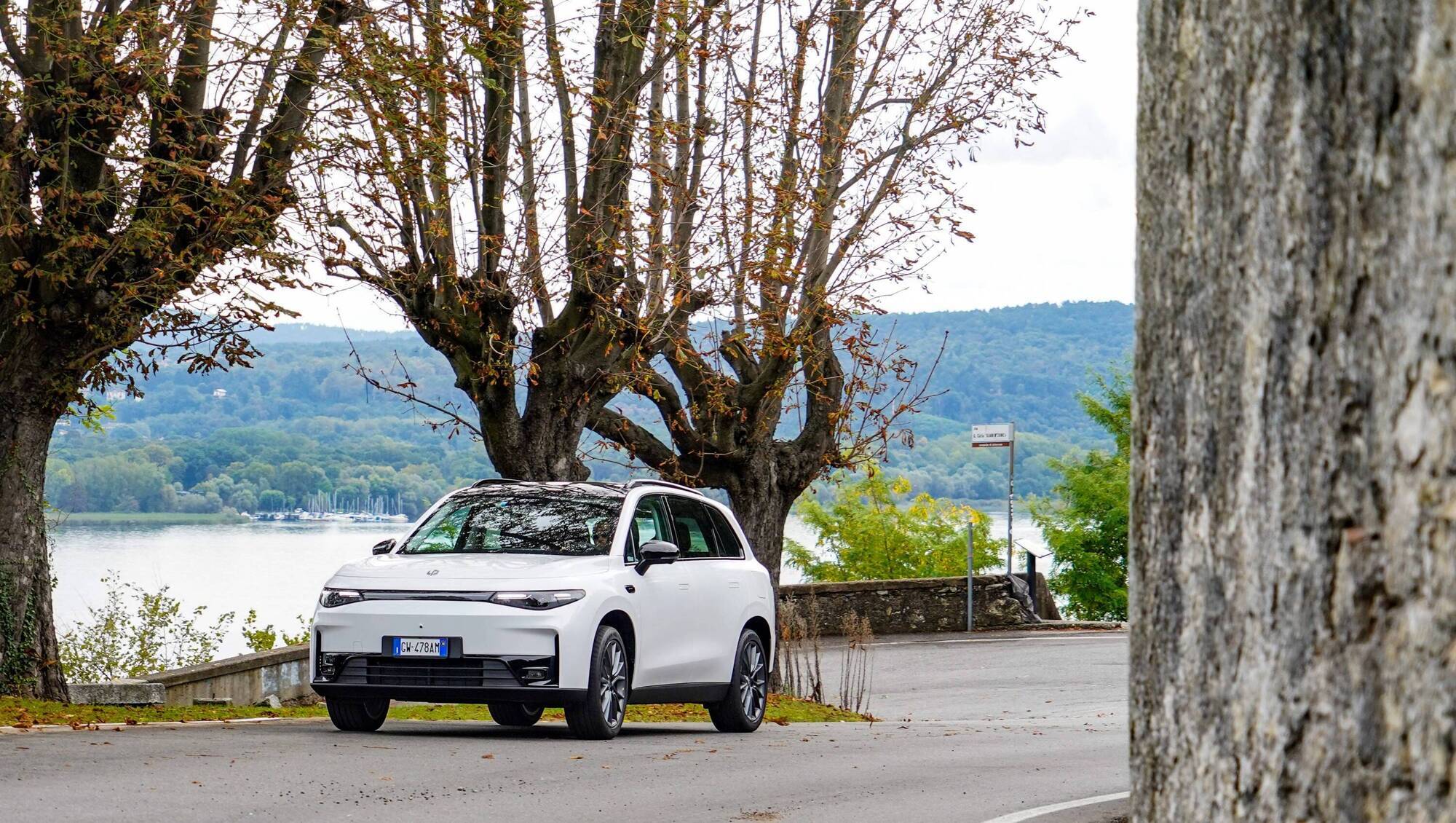
The Leapmotor C10 REEV combines electric driving, long-distance practicality and affordability in an impressive new Chinese SUV
|
LEAPMOTOR C10 REEV |
|
|---|---|
|
Rating |
★★★★★☆☆☆☆☆ |
|
Price |
From €38,995 - €45,420 as tested |
|
Engine |
An unusual but effective take on the petrol/electric mix with 215bhp |
|
Range |
No worries on that front – nearly 1,000 km |
|
The Spec |
Almost mind boggling for the price |
|
Verdict |
A really good car let down by the tech-centred controls |
Covering all the bases is a common thread among car makers who are anxious to have every angle covered in their battle to attract punters in the doors of their dealer network.
Even as relative newcomers to the marketplace, the Chinese are not immune to this sort of box-ticking exercise, in which automakers try to have within their ranks the different power choices they believe consumers will demand.
What they come up with, invariably, has nothing to do with whimsy, but rather the best engineering solutions to customers’ desires and needs and sometimes those answers come in the shape of something unexpected.
Take the range extender, for example. This is where the manufacturer decides the answer to the ever-thorny issue of EV range is to actually install some sort of small petrol engine into their car, but one which does not drive the wheels. Rather, it powers an electric motor, which does that job instead.
Read More
There have not been so many such systems put into production cars, and the first we came across some time back was the BMW i3 REX and, more recently, the Mazda MX-30 R-EV, which added a small 0.8 litre single rotary engine to what had been a pure EV.
Similarly, the excellent i3 used a 125-kW electric motor mated with a tiny 647cc two-cylinder petrol engine, which dramatically increased the car’s range and, therefore, its usability. Indeed, I remember testing the original i3 EV and, to get home in west Cork from the city, necessitated driving with no lights, no air con, no radio and having to freewheel where possible.
Even at that, I pulled up outside my door after the 125km trek with just 4km of juice left. A rather sweaty ordeal, let me tell you. With the REX system, there were no such issues, and the journey was successfully completed without any ado whatsoever.
The added bonus was that the petrol tank was tiny and took just about a tenner to fill, and allowed you get to places you could not have countenanced reaching under electric power only. It was pretty much the same with the Mazda.
Now Leapmotor has joined the party with this week’s test car, the C10 REEV (which stands for range-extending electric vehicle), and you’d have to conclude that it is a decent addition to the Chinese newbie’s model line-up.
Their system incorporates a (somewhat larger) 1.5 litre petrol engine producing 215bhp, allied to a single 158KW electric motor and a lithium-iron-phosphate battery with a 28.4kWh capacity. The net result is a car whose range potential is limited only by the amount of petrol you put in it.
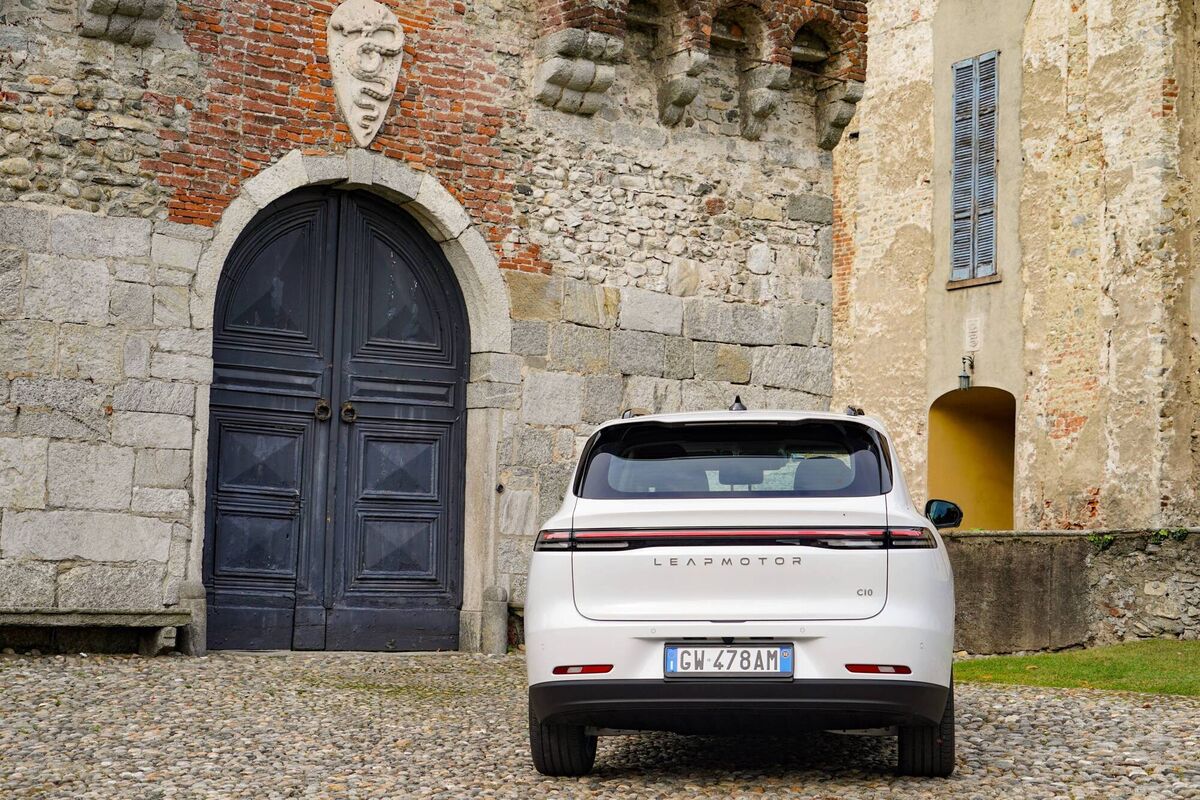
Despite the fact that this is quite a big SUV, this is a car, Leapmotor says, aimed at city dwellers who might have the occasional need to travel extended distances without the necessity of having to stop en route to charge the thing up.
In some respects, therefore, the C10 is a vehicle that provides the best of both worlds – EV motoring without the charging headaches. Even on just one tank of fuel, Leapmotor claims, this thing will allow you cover some 960km in one go. That’s pretty impressive, you’d have to say.
What’s more is that it pretty much blows out of the water the manufacturer’s own claim to be aimed at urbanites who have to visit their Aunty Agnes in Donegal every now and then to make sure they’re not cut out of the will. This, effectively, is an everybody car.
We tried the straight EV version of the C10 not so long ago and found it to be a big, comfortable, well-equipped and cheap mid-sized SUV, and the REEV version boasts many of the same characteristics and will – confident prediction here – sell by the shedload.
Looking at the two cars in isolation, you’d be hard-pressed to distinguish any differences between them, but they are in fact quite the polar opposites. This week’s tester’s battery pack is a good deal smaller than the EVs – 28.4 as against 69.9kWh – and that brings the all-electric range down from just over 420 to 144km, but that still gives you a lot more latitude than most of the opposition, which will be equipped as PHEVs and are not as generous with their EV-only range.
And you have to remember that this bus is solely reliant on electric power because the engine is not connected to the wheels. Its crankshaft is hitched to a generator, which sends a constant 50kW of power to the battery when the engine is running.
This allows the engine to constantly run at its optimal revs, but the price you pay at the other end is that recharging capabilities are diminished. On the upside, both of these cars have a vehicle-to-load function that allows you to power external devices using the battery.
Ironically, both have the exact same output at 215bhp, but the REEV version is considerably slower from 0-100km/h (8.5 seconds as against 7.5 for the EV), but this is explained by the fact it is more weighty, what with all the extra stuff it has on board – like the engine.
That means that the driving experience with both these cars is nearly identical, especially as they have the same amount of power and the chassis set-up is nearly identical. This is not a performance machine in any shape or form, but it offers relaxed driving and that in itself will appeal to a lot of punters.
As with the EV, some have suggested the on-road behaviour of either car is a little on the slack side, but I found both to be well capable of handling Irish conditions with relative aplomb, while the ride is well cushioned and pleasant, rather than anything notable.
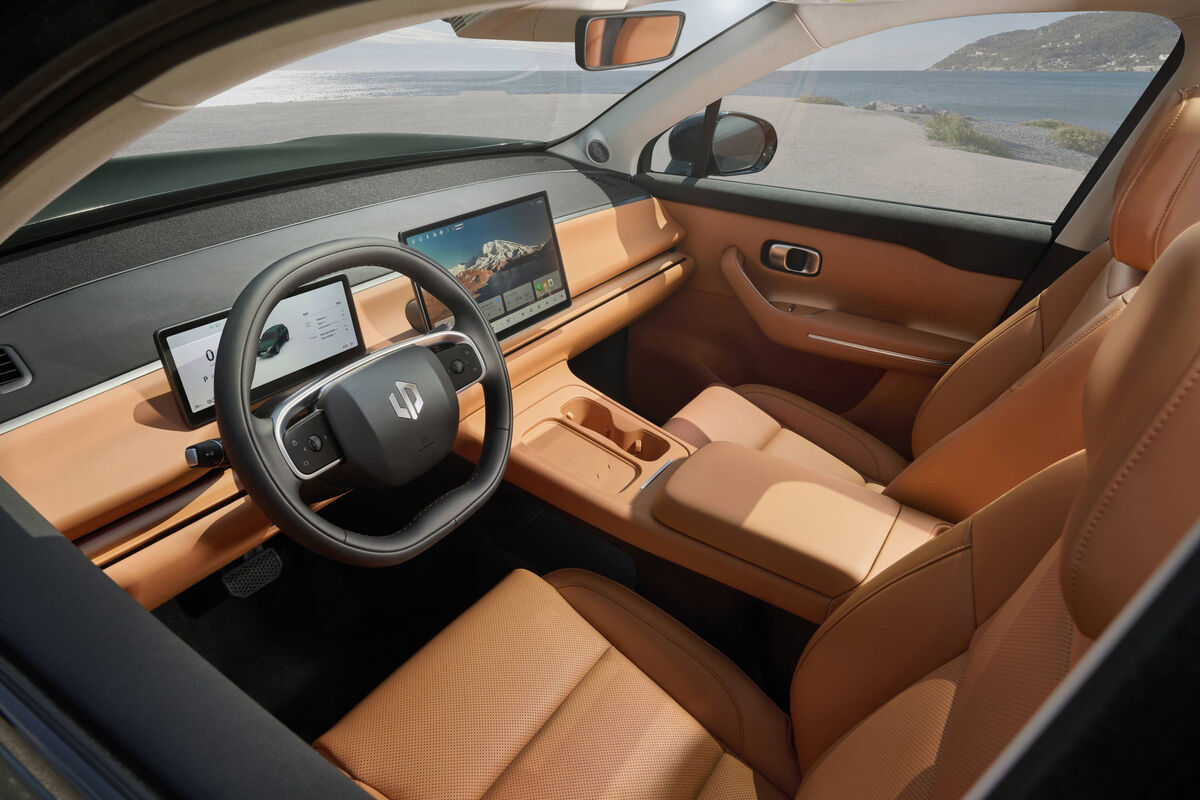
The interior of the tester was exactly the same as the EV – ie, huge. This one, however, was kitted out in a rather yucky shade of tan for the faux leather upholstery, and I thought it was awful. I wasn’t mad either about the sort of off-cream exterior paint job and would thoroughly recommend the beautiful Emerald Green overcoat the electric came with – it can be specced here too.
But then we come to the button-less cockpit, which is so de rigeur with the Chinese at present. Everything has to be operated through the giant touchscreen in the centre of the dash, and this is a major pain in the derriere as well as presenting safety issues because if you want to adjust your door mirrors while on the move, you have to do it via the screen.
This is distracting and dangerous, in my view, because driving anywhere these days really does need your full attention at all times. If there was one thing I’d change about this car, this is it. It might seem passe to have buttons and knobs to control heat, lighting, radio and a range of other controls, but they actually make the job of driving much easier.
Once more from Leapmotor, then, we have an excellent car which is actually left short by the amount of technology which is crammed into it. On almost every other front, it is a winner, and the REEV technology, too, is not only different, but very effective.
The Stellantis group – Peugeot, Fiat, Opel etc – must be delighted by its investment in this Chinese outfit and particularly so as it gets such access to their tech and their almost fantastically cheap end product – things which they can effectively exploit here on the Irish market and across Europe too.