New Mazda CX-5 review: Why the latest family SUV falls short of expectations
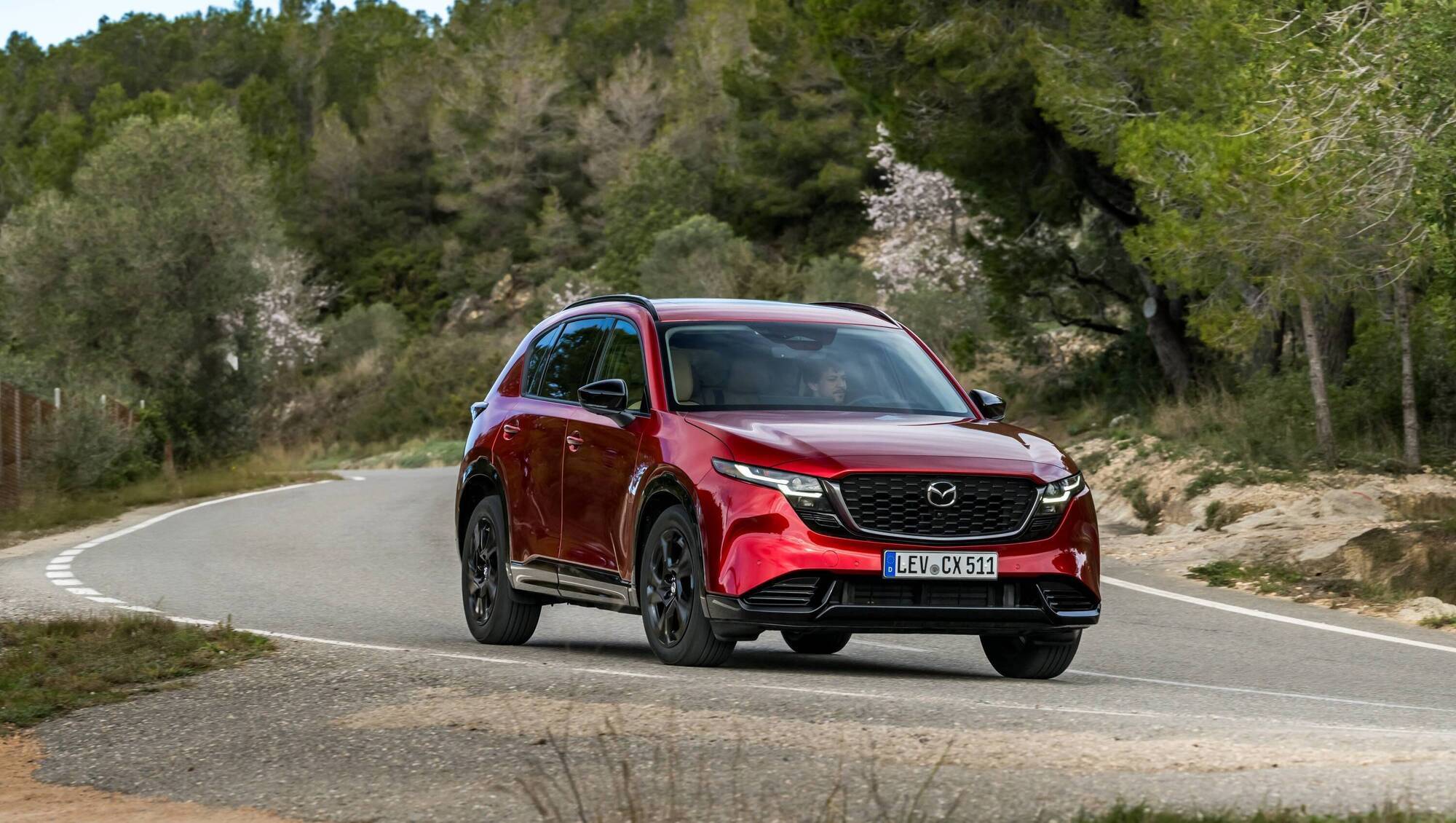
The Mazda CX-5 has been a huge success and now, as it gestates into its third generation, has proven to be the company’s bestselling model since its 2012 introduction.
|
MAZDA CX-5 |
|
|---|---|
|
|
★★★☆☆ |
|
|
from €49,045 - €54,833 as tested |
|
|
a 2.5-litre mild hybrid petrol with an unimpressive 139 bhp |
|
|
one area where the CX-5 doesn’t fall through any cracks |
|
|
Meh |
THERE are times when you get a glossy new car to review and you desperately want to love it, but you’re not feeling that level of commitment back from the vehicle in question.
So it was recently when we tried the new Mazda CX-5.
Now this is a car which has been hugely successful for what is one of Japan’s smallest mass producers of cars. That might seem a little dismissive of Mazda, but it’s not, because it is still one of the world’s biggest manufacturers, but in Japanese terms diminutive by comparison with companies such as Toyota, Nissan and Honda.
Nevertheless, the company has still managed to achieve impressive levels of market penetration across Asia, America and Europe — not to mention Australasia — with cars that largely stand out from the pack with imaginative designs, fresh interiors and a level of engineering sophistication that its bigger brethren cannot often match.
Mazda also tends to take the road less travelled with some of its cars and has scored remarkable successes with that policy. Who’d have thought that the production of a two-seater roadster would have put a mainstream company into the realm of automotive legend, but that’s exactly what happened with the continuously brilliant MX-5.
But it has been its mainstream contenders such as the 2, 3 and the 6, not to mention its CX series of SUVs, including the 3, 5, 6 and 8, all of which have struck a winning chord with the buying public.
That Mazda was the only company to persevere with rotary-engined designs (even winning Le Mans with one) and persisted with diesel and turbodiesel-engined cars when everyone else was dropping them.
They emerged some time ago with the CX-8 with a 3.3-litre straight six mid-hybrid turbodiesel (it later evolved into the CX-80) and what a thing that was. So excited was I by that car, my musings were taken very seriously by a number of readers who went straight out and ordered one.
Read More
There are still a cabal of people in this country who want diesel- powered cars despite their relative unpopularity in the era of clean motoring. But Mazda worked hard on this engine, making it one of the cleanest diesels ever made, not to mention one of the silkiest, smoothest, and most powerful you’re ever likely to come across.
My brother, never a particularly big diesel head, was one of those convinced by my rantings, and he spent months tracking down the version he wanted and, tragically, cannot now stop proselytising about how much genius he displayed in doing so. Bottom line: he loves the thing, and I know so many more do too.
The CX-5, on the other hand, was never quite so revolutionary (or mad, depending on your point of view), but it too was a huge success and now, as it gestates into its third generation, has proven to be the company’s best-selling model since its 2012 introduction.
That’s not been surprising given that it presented more practicality than most family SUVs and driving characteristics that left a lot of them for dead too.
Unsurprisingly, therefore, Mazda has been unwilling to mick-act around too much with this third-gen car. It took a while for the message about how good this car was to sink in with buyers, but it did and, consequently, the vibe here is one of evolution rather than revolution.
They have modernised the styling, updated the drivetrains, developed the interior and made it more technology-focused. The first three evolutions were welcome (if not altogether achieving what was needed to keep the car up ahead of its many rivals), but the latter is possibly the area where the car falls rather short of its competition and the reason why we ended up not loving it as much as we thought we would.
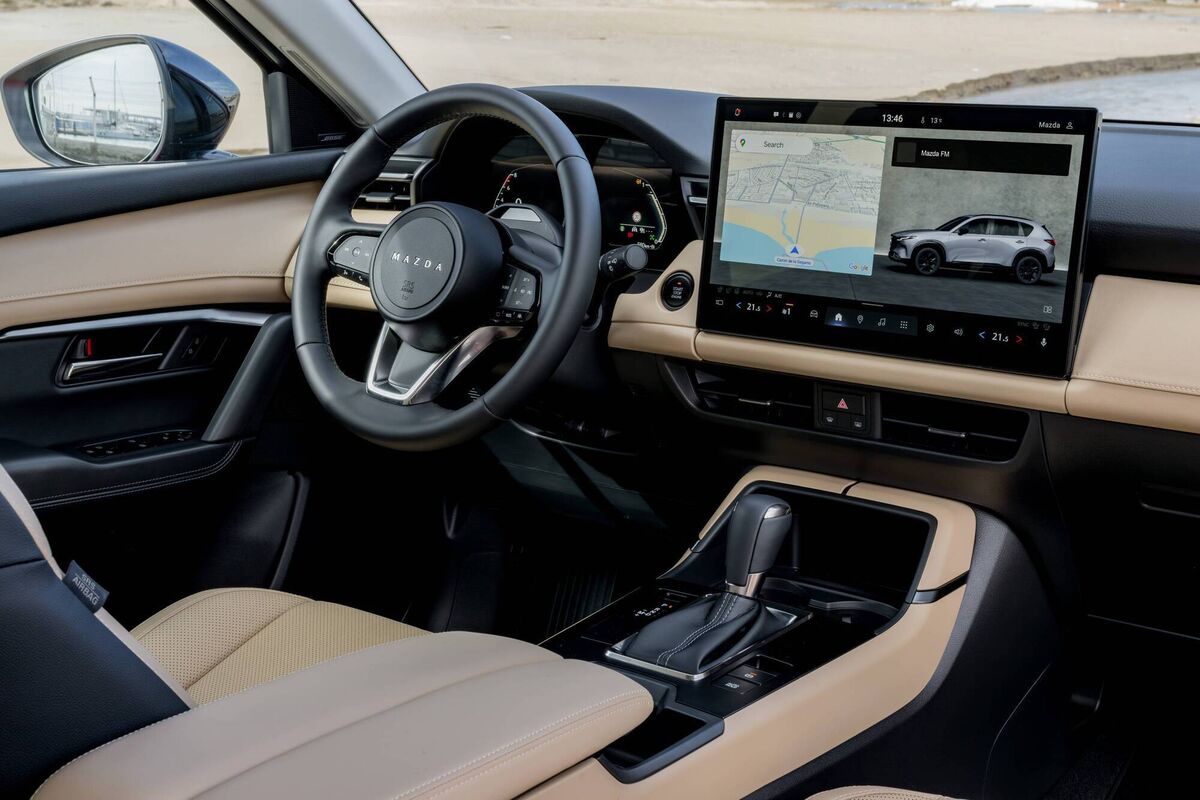
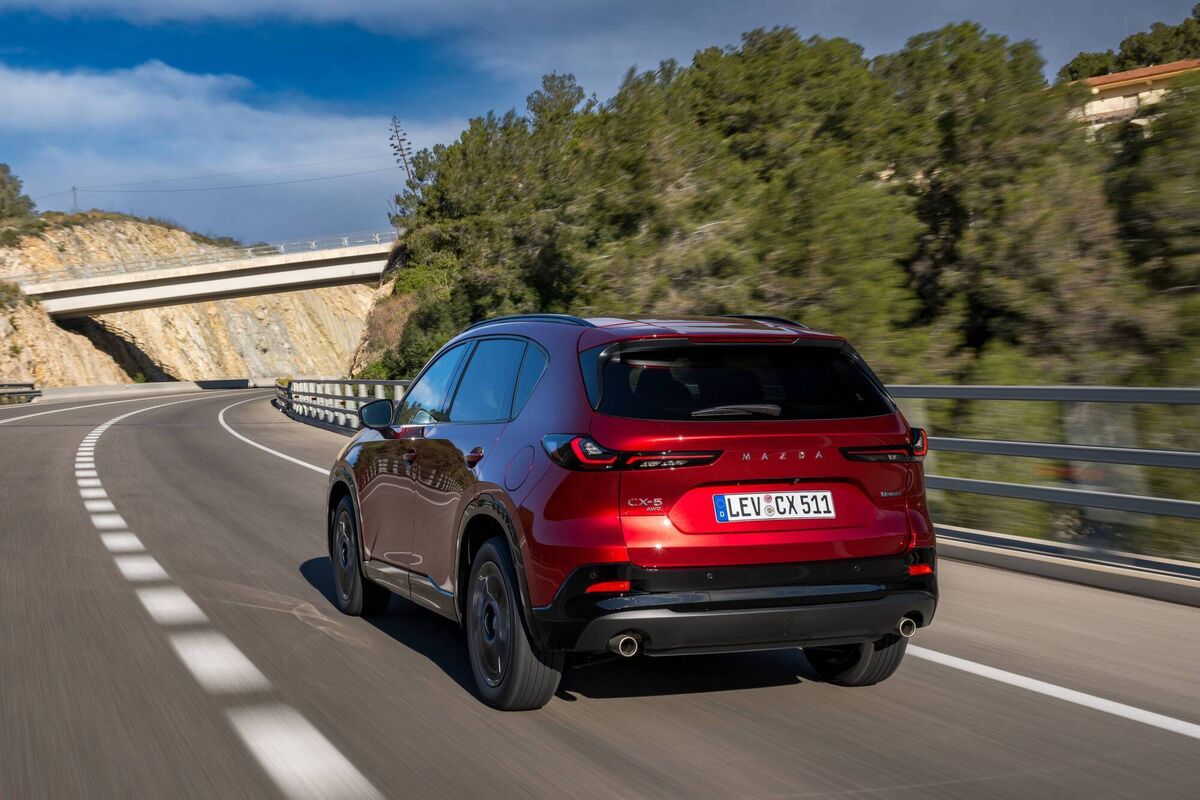
The styling and the interior are areas where the CX-5 scores heavily against the opposition, but the engine is feeling the heat of opposition and the loss of the previous rotary controller for the infotainment system, and its replacement by the sad, follow-the-trend, all-powerful centre screen which controls everything, is a regressive step.
On the engine front, the tester was powered by the 2.5-litre e-SKYACTIV G powerplant, but it was largely unimpressive. Replacing the previous two-litre engine, this one only outputs some 139 bhp and 238 Nm of torque, which combines to put it somewhere close to being behind the eight-ball.
The engine is supported by Mazda’s 24V M Hybrid system, which uses an integrated starter generator and a lithium-ion battery to recover energy while braking is taking place and provides some assistance under acceleration.
Not much, it has to be said.
The 0-100 km/h time takes a leisurely 10.5 seconds, and top speed is 187km/h and, truth be told, the whole thing is a little uninspiring to drive. Smart up to a point and very smooth, but a bit insipid as well as being a bit thirsty by modern standards.
We recorded a consumption rate of 6.5 l/100 km (about 43mpg), and that’s pretty poor by comparison with modern hybrids. On top of that, this was a unit that tended to get a bit shouty when you leaned on it any small bit, and we found it inclined to hang on to gears a touch too long.
On the upside, revised damping improved the car’s demeanour on very bumpy surfaces and also settled the car on twisty roads. The steering, too, has been slightly recalibrated and makes the CX-5 a pleasure to drive on B-roads.
It is, of course, aimed at the family driver, most of whom would welcome its relaxed and somewhat languid demeanour. All of this leads us to our biggest issue with the car – the new infotainment system. Gone is the old — excellent, it has to be said — rotary-controlled system, and now it has a massive 15.6” central screen through which pretty much everything is operated.
SOMEHOW, the car reverted to imperial measurements rather than the decimal one we have become so used to, and this was quite disconcerting and ridiculously complicated to revert — something it decided we had to do every time we started it up.
Connecting phones and devices used to be simplicity itself with this car; now it’s not so, and I found the whole thing to be tiresome and annoying. Certainly, the interior is generally well appointed and the seating comfortable. Roominess is not an issue either in the cabin or in the boot, and the relative quiet while on the move speaks volumes of the insulation and vibration tuning which has been applied here.
Aside from the huge central screen, the dash is well laid out, and the materials used throughout are of a hard rather than soft nature, but good to look at, tactile with it, and definitely hard-wearing too.
That it has a 12-speaker Bose sound system, a phone charger and all the other accoutrements demanded by the modern-day driver is only to be expected. The powered tailgate was welcome too.
We here at Examiner Motoring have long loved most of the things Mazda do, but this one left us a little cold, failing, as it did, to spark the same level of awe that is generated by so many other of their products.
A good car, but not a great one by company standards.