Seat Arona review: A practical, value-focused SUV with one very noticeable flaw
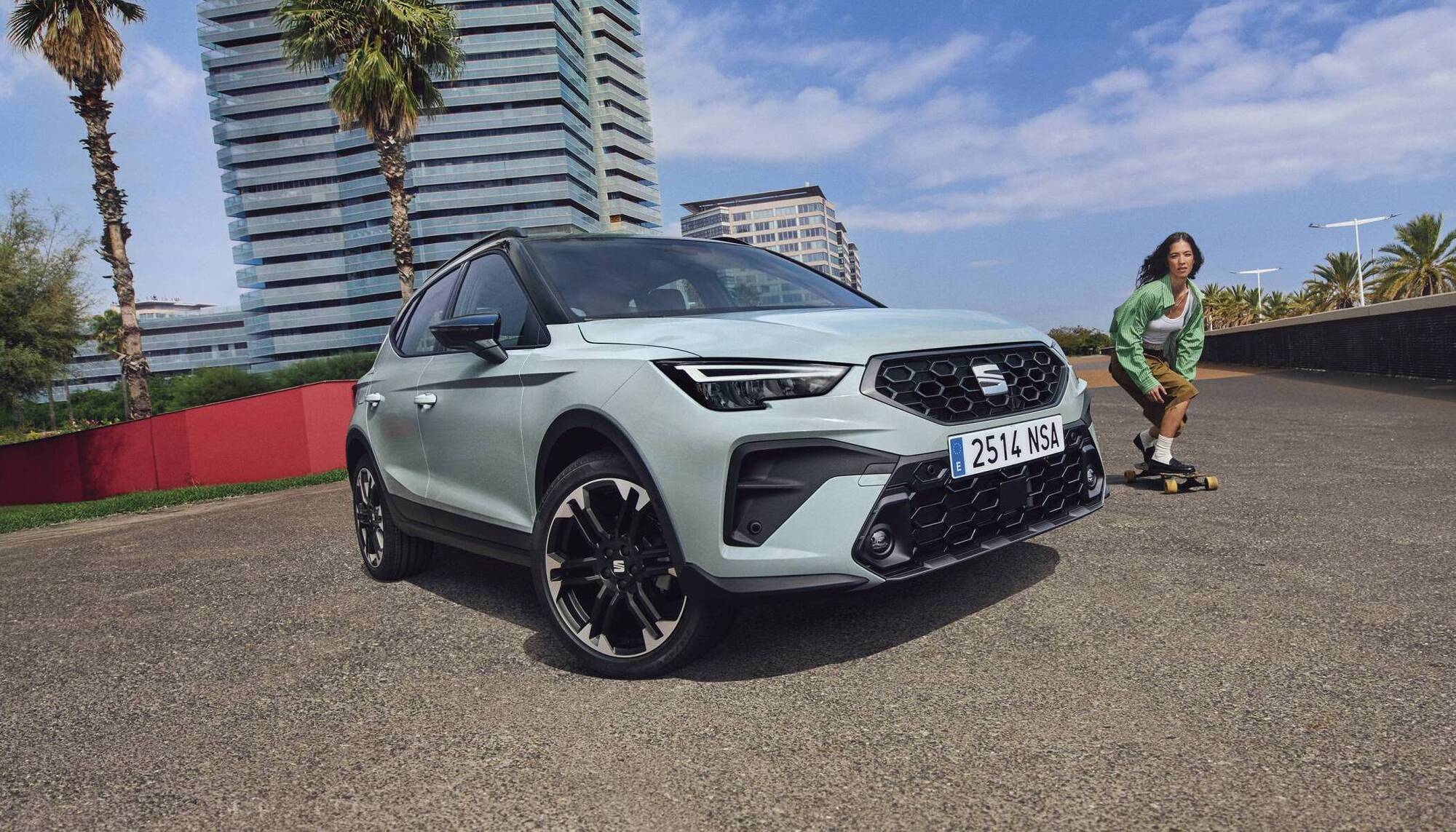
The Arona is good on the road, doesn’t lean unduly in corners and the ride is good, even on the larger 18” alloys.
|
SEAT ARONA |
|
|---|---|
|
Rating |
★★★★☆ |
|
Price |
from €28,175 - €36,146 as tested |
|
Engine |
Old school – a diminutive petrol three-cylinder with 115bhp |
|
The Spec |
Quite the sophisticate for a little car |
|
Verdict |
SEAT hasn’t changed much, but then they haven’t had to |
A wrong colour choice can be a lot worse than simply having your friends take the mick out of you; it can actually impact a car’s resale value when it comes to trading it in, or as someone said recently, it can tank second-hand values quicker than you can say “custom paint job.”
Purple, maroon, turquoise, and teal are among those certifiable no-nos to avoid when choosing a colour scheme for your motor, certain to put off potential punters, sending them away, as was so memorably put in Monty Python’s Life of Brian, quicker than a rat from an aqueduct.
Otherwise notable or worthy cars can be doomed by bad colour choices – remember the awful ‘coffee and cream’ two-tone paint job Mercedes donned on selected models in the 1970’s, or the dreadful green shade adopted by the more recent Ford Focus RS. Truly appalling both.
Read More
Even staples such as black, white or grey can be appalling, depending on the car they’re applied to. A case in point recently was the excellent little SEAT Arona we tested, which came in the fancy-dan titled shade of Oniric Grey.
Many of you may not recall the 1980s, but back then, bathroom suite manufacturers decided to get away from the standard white issue, which had been prevalent since time immemorial and introduced various colour shades which, frankly, were little short of vomit-inducing.
The Oniric Grey of the diminutive SEAT brought those times vividly back to life. A real pity that, because otherwise this was an excellent contender in the small SUV segment.
Worse again was the fact that the colour was an optional extra.
The Arona was launched back in 2017 and has since clocked up cumulative sales of over 750,000 units. It has now been refreshed, but not much, although a raft of small changes have been put in place. This is its second facelift during the course of its lifetime.
SEAT is actually going through something of an existential period at present, what with the purported launch of its’ sub-brand Cupra onto the US market in the not-too-distant future. If that’s a success, will the future of the whole operation hinge on Cupra, or will SEAT still be relevant? These are ‘who knows’ conundrums.
Anyway, their products are still selling in big numbers, and the Arona has been a success story. Keeping it fresh without messing around too much with the core product is therefore of the essence. As Cupra is also at the centre of the company’s EV ambitions, it is very much ICE all the way for the Arona.
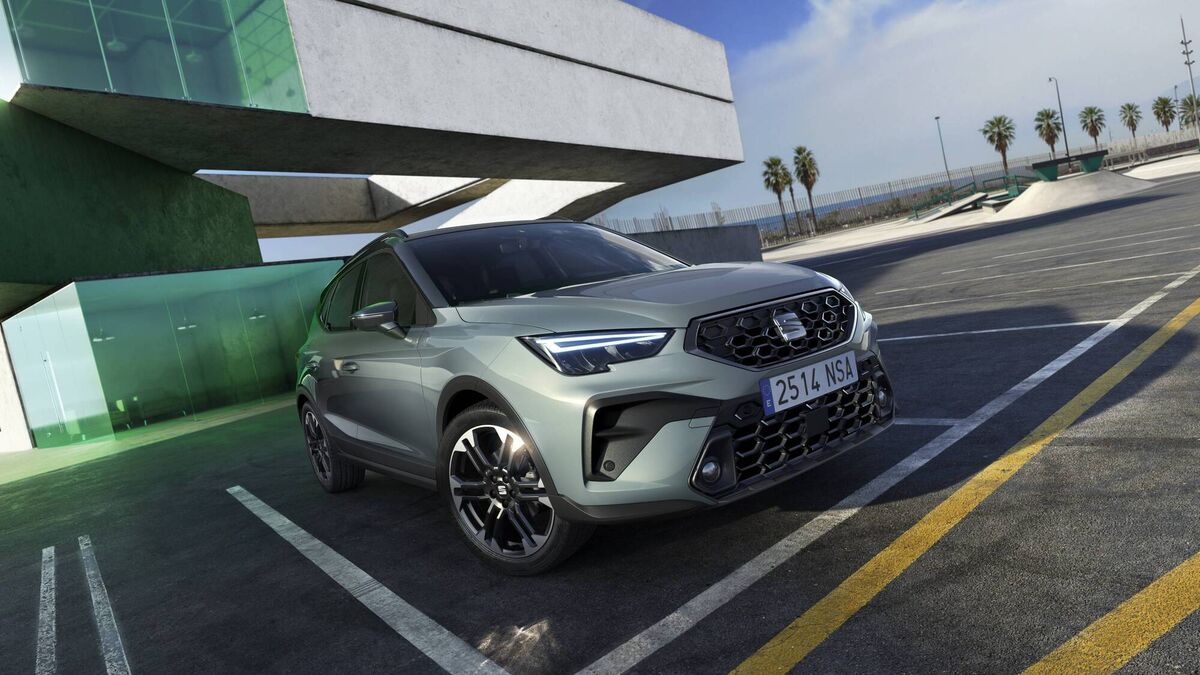
As such, the changes we see here are largely cosmetic: new headlamps, grille, bumpers, new wheel options and new colour choices – as we’ve already referred. On the inside, there’s been a few tweaks too – light trim variants and mild tech refreshes.
The tester came in ‘FR’ trim with a one-litre three-cylinder TSI petrol engine outputting 115 bhp and mated with an auto DSG gearbox. Performance, as you might imagine, is therefore somewhat muted, but when you add stuff like bucket seats, a leather multi-function steering wheel, 18” machined alloys and tinted windows, you can see where they’re going here.
The phrase ‘a sheep in wolf’s clothing’ springs to mind – it takes just shy of 10 seconds to get from a standstill to 100km/h, and top speed is a claimed 195km/h, although I doubt anyone will ever test the veracity of that.
This, being a car that’s more about looking good than going fast, makes for something that will appeal to the youth market, particularly so if their parents are picking up the tab.
SEAT, after all, has confirmed itself as the entry brand for the VW Group and, according to Sven Schuwirth (who is the company’s head of sales and marketing), “SEAT will cover more of the entry segments, as well as having a lower entry with regard to the transaction price.” From that, you get something of a picture of where the brand is going and the latest Ibiza (which we tested recently) and this Arona, mark the start of that process.
We’re still not sure exactly what the long-term plan is, but in the short term, those two cars will form the spearhead of activities and will gain mild-hybrid powerplants next year, while the Leon full-hybrid will appear in 2028, before a completely new version will be unveiled in 2029.
Where this leaves the Ateca SUV is uncertain, but there was no mention of it in the future production plan introduced last year.
In any event, the Ibiza and the Arona are central to SEAT’s plans as it focuses on the production of city cars, superminis and family hatchbacks. This focus will allow stablemate Skoda, which was previously reckoned to be the entry-level brand for the group, to concentrate on the making of larger and roomier cars aimed at providing family value.
For the moment, however, sales efforts will concentrate on this motor and the Ibiza. To be honest, both are honest brokers and good value for money.
The Arona is good on the road, doesn’t lean unduly in corners, and the ride is good, even on the larger 18” alloys. Handling is sharp, and the steering is on point.
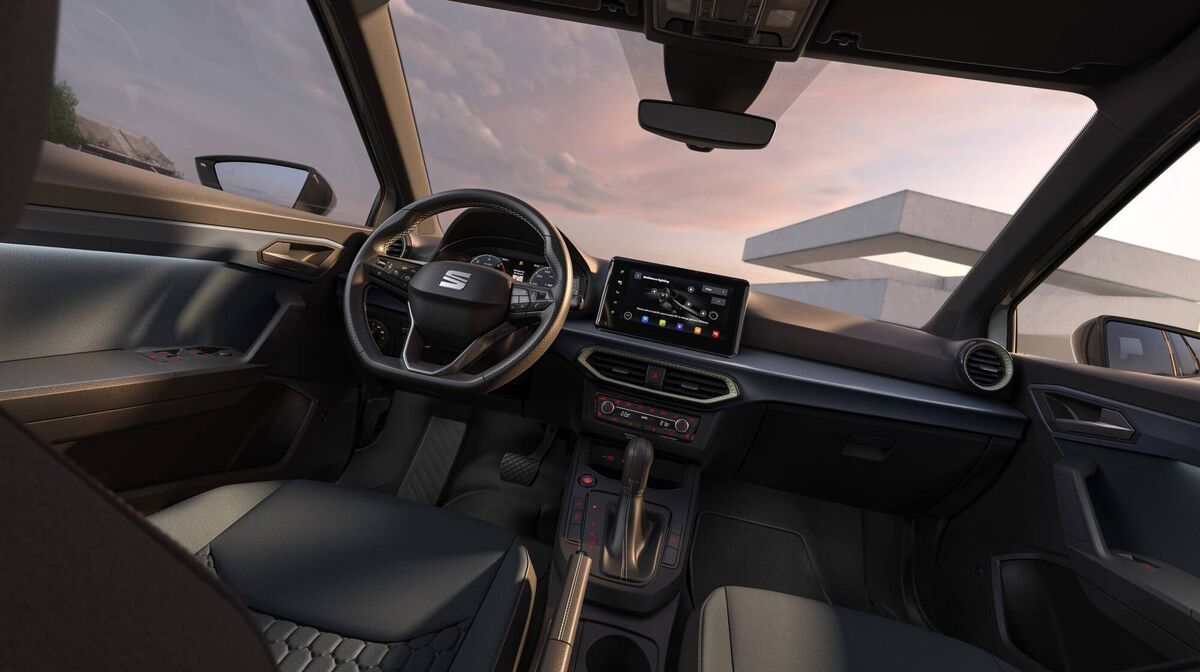
Interior décor is pretty old-school, as you might expect, but that means there are plenty of switches and buttons and the infotainment system – via a 9” screen – focuses on the tasks originally intended for it – music/radio, phone and sat. nav. It’s simple and a pleasure to use.
Worth noting too is that the ADAS menu (lane changing and speed warnings) is controlled via a button on the steering wheel and is very easy to master. Rear head and legroom are better than in the Ibiza and the 400-litre boot is above average in the compact SUV class.
Some might describe the Arona as being a little old-school, but that, in my view, is perfectly acceptable in the face of some of the tech-laden things we are seeing these days and which practically need a college degree to master.
It is, however, a pity about the insipid colour scheme, and it has to be said that last century bathroom ware will never be far from your mind when you look at this in your driveway.