Ireland's islands uncovered: Why the Saltee Islands are one of Ireland’s best wildlife experiences
In the first of a summer series exploring Ireland’s most remarkable islands for holiday adventures, Cían Byrne takes a high-flying trip to The Saltees
Ireland's islands uncovered: Why the Saltee Islands are one of Ireland’s best wildlife experiences

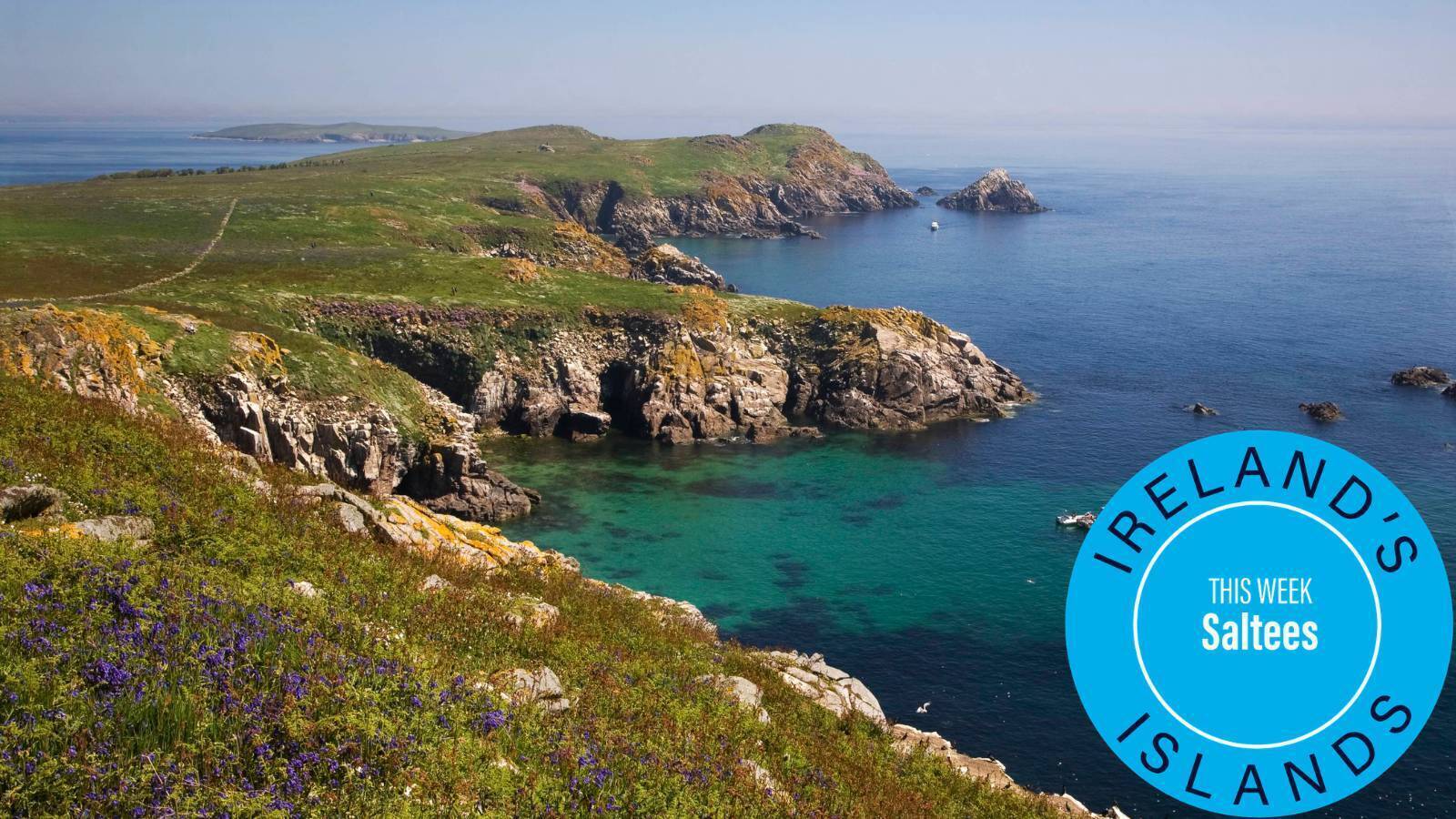
Great Saltee Island, carpeted with moss, heathers and wildflowers

I don't see myself as an islander. I live on one and grew up 10km from the beach, yet I feel there’s a disconnect between myself and the sea. My life isn’t dictated by the tide and ferry timetables like it is for the people living on the roughly 30 inhabited islands of Ireland; I live the life of a mainlander with 24/7 convenience and allow nature to be part of my life when and how I choose. Our islands are intriguing places full of legends and lore but my visits tend to be flying ones — day trips rather than proper immersion, which I plan to rectify.

In this series of journeys to six of Ireland’s islands, I’ll visit some of the country’s most spectacular places, meet the people behind these captivating isles, and experience things that can’t be found anywhere else in the country. I’m beginning with a visit to Co Wexford and the very special residents found here for a short number of months each year.

The local story goes that St Patrick was chasing the devil out of Ireland, throwing stones at him as he scurried off the Wexford coast. These stones landed in the Irish Sea off Kilmore Quay and created a bridge to the Saltee Islands: St Patrick’s Bridge. In truth, glacial deposits created the bridge and it was used to march livestock across to the islands at low tide. Due to erosion and changing tides over the years, the bridge is now submerged, cutting Little Saltee Island and Great Saltee Island off from the mainland.

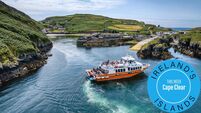
Approaching the Saltee Islands by boat

Livestock graze on Little Saltee but there are no significant predators living there, which makes for ideal conditions for migrating birds that need a place to rest.

Kilmore Quay is one of the busiest commercial fishing harbours in the country and I find myself walking down the slipway to a boat bobbing in the harbour. Fishermen around me are prepping their nets and loading gear onto the boats but I’m here for a different reason — to see puffins.

Puffins gathering in the flowers on the Great Saltee

These black and white birds with a striking orange beak spend the majority of their lives on the water in the North Atlantic and make landfall for a few months a year to breed. Breeding season usually runs from late March until late July, making May one of the best times to visit.

The privately owned Saltees are ideal for these little winged creatures. There are no cats, dogs, or minks to eat their young; they find safe nesting grounds in rabbit burrows; and the waters surrounding the islands are teeming with food sources.

Stepping onto the 12-person RIB and straddling the saddle-like seat, Ruairí Nunn, the skipper of Saltee Sea Safaris, slowly leads us out of the harbour before pushing down on the throttle and skipping the boat across the calm water towards the island at an impressive speed.

Even more impressive is the cormorant flying alongside us; the large, black seabird is easily able to maintain a surprisingly fast speed. In just five minutes, we arrive at the shallow, almost tropical waters surrounding Little Saltee. It’s a scorcher of a day in late May and the birds are out in force: A cormorant stands on top of a rock, wings splayed open to dry off in the heat; guillemots awkwardly take off from the water before rocking up to speed; and razorbills clump together on the rocks, their distinctive white stripe on an otherwise black bill is easily identified.

A lone cormorant dries of above the craggy rock face, Saltee Islands

“Puffins are much smaller than you’d think,” announces Ruairí. “And not all of them have orange beaks either, so they can be tricky to spot.” I notice a shape I haven’t seen before, some 10m away from me. This bird is stout; its head is disproportionately large compared to its body and its wings are an odd shape, with a curved edge to the rear and a flat edge to the front.

It comes in to land and turns its head, revealing a bright orange beak. I’ve just seen my very first puffin.

Great Saltee Island is less than 2km away and has much deeper water surrounding it, allowing us to get much closer to the cliffs and noisy gannets. These large, white seabirds mate for life and, as we watch a male bring a sprig of seaweed back to the nesting female on the cliffs, the colony barks out their guttural krawk-krawk-krawk call.

Below them is the entrance to a sea cave where Bagenal Harvey and John Henry Colclough hid from the British after the 1798 Rebellion. Smoke from a warming fire gave away their whereabouts and the men were soon caught, hung, and their heads displayed on pikes. The islands may be a refuge for birds but apparently not for humans.

‘Big Island’, as the locals call it, is accessible to the public by ferry but, as a circus of puffins, a gulp of cormorants, and a bazaar of guillemots fly almost within touching distance over my head, I’m quite happy with my decision to experience these seabirds from the sea. Not even a hefty smattering of guano for everyone on the boat from the passing birds could dampen the mood on this gloriously sunny day.

Cormorants on the look out on Big Saltee Island 

With no public accommodation on either island, birdwatchers and other visitors to this corner of Wexford base themselves in Kilmore Quay and the nearby rural areas. “We have everything here that you’d expect on a summer holiday. We’re blessed,” says Conor Barry, who runs Saltee Sauna, looking out over Little Beach. He moved here with his thatcher wife and has embraced life in the sunny South-East. Judging by his list of recommendations for beaches, pubs, and bakeries to visit, I could quite easily extend my few days here and not get bored. Saunas are a trend that I hope is here for the long run, especially if they’re all as good as Saltee Sauna.

The wood-fired sauna is roaring hot and the burning birch instantly begins to clear out my breathing. In my mind, the sea is the best cold plunge possible and, luckily, it’s just a few steps away.

Past of the appeal of the islands is the physical disconnect between my life at home and my time away. I can’t stay on the islands but this train of thought leads me to Killiane Castle.

Waves crashing off the Saltee Islands in St George's Channel

Found in the leafy hinterlands of Ireland’s Ancient East, hidden down a grassy lane off a quiet country road, it’s the type of place you have to seek out rather than stumble upon. The castle has been around since the 15th century and was seized by Cromwell and later given to one of his soldiers in 1656.

Cromwellian days are thankfully long gone and the castle and adjoining 17th-century house are now part of a 10-bedroom B&B — a blissful rural refuge. Characterful stairways lead to hallways and nooks lined with historic photos and stacks of books on countryside living. There’s a luxurious, lived-in feeling here, one that encourages me to poke my head into the various parlours and reading rooms, as well as wander the grounds, where I find donkeys, chickens, and a very friendly golden labrador. Long, bright May days make this my favourite time of the year and, as an amber hue flitters through the leaves outside and into my room, I bring to an end the first of my six trips to Ireland’s islands.

The Saltees have allowed me to witness a remarkable moment in Irish nature — one that I have always wanted to see and one that feels so impactful when experienced from the sea.

Escape Notes

  • Saltee Sea Safaris operate daily from Kilmore Quay. Tickets from €45, salteeseasafaris.ie
  • Stay close by in the countryside at Killiane Castle, killiancastle.com, or keep the waterside theme going with a stay at the Ferrycarrig Hotel, ferrycarrighotel.ie
  • Do like the locals do and pop by Mary Barry’s Seafood Bar in Kilmore for locally caught fish and catch-of-the-day specials. marybarrys.ie
  • Stay updated with the latest inspiration on Ireland’s islands at discoverireland.ie

x

More in this section

Lifestyle

Newsletter

Eat better, live well and stay inspired with the Irish Examiner’s food, health, entertainment, travel and lifestyle coverage. Delivered to your inbox every Friday morning.

Cookie Policy Privacy Policy Brand Safety FAQ Help Contact Us Terms and Conditions

© Examiner Echo Group Limited