Ireland's islands uncovered: Let Inis Mór set the pace, there’s no need to rush
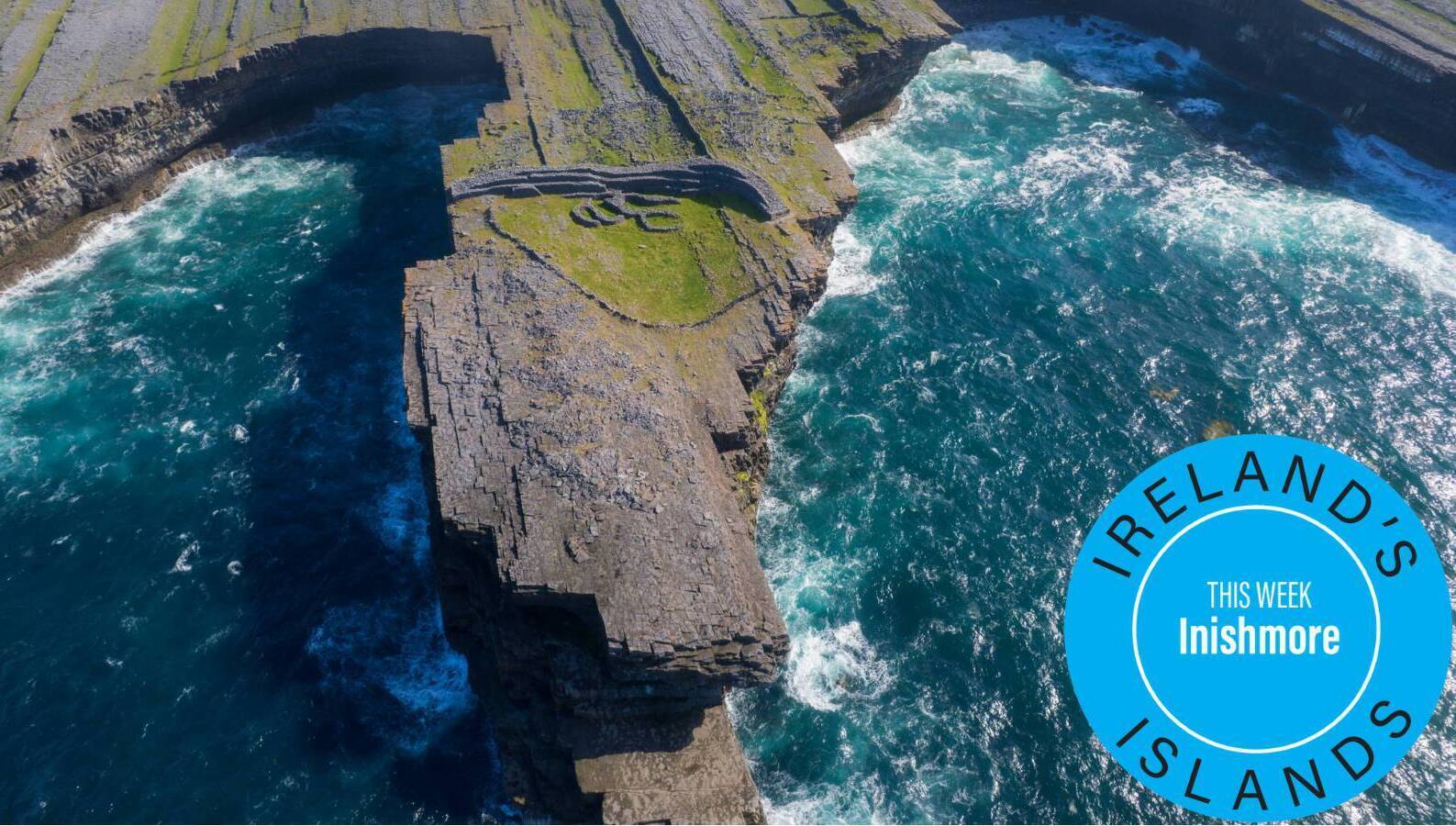
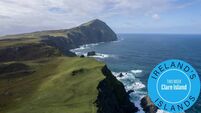
The cliffside edge of the island of Inis Mór
The Island of Inis Mór (Inishmore) was split in two by a set of competing saints in the 5th century. St Brecan built a church in the west and St Enda had a rival monastery in the east. The pair competed for influence over the islanders and decided that the best thing to do would be to divide the island in two. They agreed to say Mass at opposite ends of Inis Mór and as soon as the last blessing was done, they’d walk towards each other and wherever they met would mark the boundary.
Over 1,400 years later, there’s still a divide on the island, but this time the split is between people who day trip here to see the headline sights, and those who stay a while to visit the quieter parts of the island as well.
My theory is that you can tell a lot about the island you’re going to by the boat you’re sailing there in. If you’re clambering onto the deck of an old fishing boat, then the island is going to lack many mainland luxuries. Pulling up at the port in Rossaveal, I see the Aran Islands as the opposite, as a fleet of svelte, almost yacht-like ferries welcome large groups of visitors aboard for the crossing. Tourism is a huge part of the economy for this group of three islands, with Inis Mór being the largest.
Some 250,000 people take the ferry to the Aran Islands, from Rossaveal or Doolin each year. As my ferry reaches Inis Mór, the importance of tourism is immediate: Hotel shuttle vans pick up guests, people hand out leaflets about the sweater shops, and most head immediately for the pubs and coffee shops in the small village of Kilronan.
This isn’t my first time on Inis Mór and like most others, my previous visits were day trips spent mainly on the west side, where most of the popular attractions like Dún Aonghasa are. I’m keen to go walk away from the usual routes this time and plan to see St Enda’s side in the east of the island, the side that far fewer tourists venture to. The Aran Islands Hotel feels like the entrance to the east side. It’s a short walk from the port in Kilronan, but most importantly for me, it’s closer to the places I want to see, particularly Dún Dúchathair. Also known as Black Fort, this prehistoric site is thought of as Dún Aonghasa’s little sibling, though not much is known about the history of this rock structure that backs onto the cliff edge.
Empty country roads roll over the rocky terrain and lead me towards the Aran Cliffs before the tarmac crumbles away into a gravel trail and onto the limestone rocks. The rocks run in stripes across the ground, with the dark stone protruding from the surface and in the gaps between, sheltered pink and yellow flowers bloom. The black rocks give the fort its name, and it cuts a striking figure on the landscape, sandwiched between a bright blue sky above and shimmering green waves below. The fort was never excavated, so many of its mysteries are still a secret, but it’s thought to be a Bronze Age defensive structure originally that’s changed with the chapters of time.
The Early Christian period of St Brecan and St Enda can be seen here in the remains of clocháns (stone beehive huts) where believers would show their devotion by enduring the elements and isolation in remote places. A total of 146,089 people visited Dún Aonghasa in 2024 (averaging 400 people per day), but here on the lesser visited side of the island on a sunny May morning, I meet only one other person. The quietude is only interrupted by a private helicopter flying overhead towards Dún Aonghasa in the west.
I’m quite content to seek out the slower parts of wherever I visit, but sometimes the hits are the hits for a reason and this logic certainly applies to the pubs on Inis Mór. Stepping into Tigh Joe Mac in Kilronan by the port and walking across the stone floor, I’m taken out of my setting by the loud south Dublin accents cheering on the Leinster game on the TV. I find myself a seat in the thronged bar and notice the diversity of the people here. Alongside the Dublin rugby fans are European walkers, Americans practising their cúpla focal and a large group who are here for a wedding over the weekend. There’s a buzz and busyness here that’s quite unexpected for a pub on an island of 800 people, 40 minutes from the mainland.
That liveliness seems to be everywhere on the island this weekend. Wandering inland, I make my way to Ti Joe Watty’s for dinner, where the speciality is seafood. There’s not a spare seat in the gastropub and most tables are packed with bowls of mussels almost spilling over the edge. Fishing was once a way of life here, but has died off in recent years with strict fishing quotas blamed, but the story of the industry can be seen through photographs and maps on the walls here.
My travels to the islands of Ireland has meant I’ve eaten plenty of fish and Ti Joe Watty’s is one of the highlights so far. The hake is flaky and soft, and is turned into a standout dish thanks to the mushy peas that have a hint of mint.
The staff switch between speaking Irish and English and one particular moment catches my ear when I hear a food runner say “gabh mo leithscéal” in a heavy Eastern European accent as he weaves between the tables. The Irish language doesn’t feel forced on Inis Mór — it’s as much a part of daily life as English is.
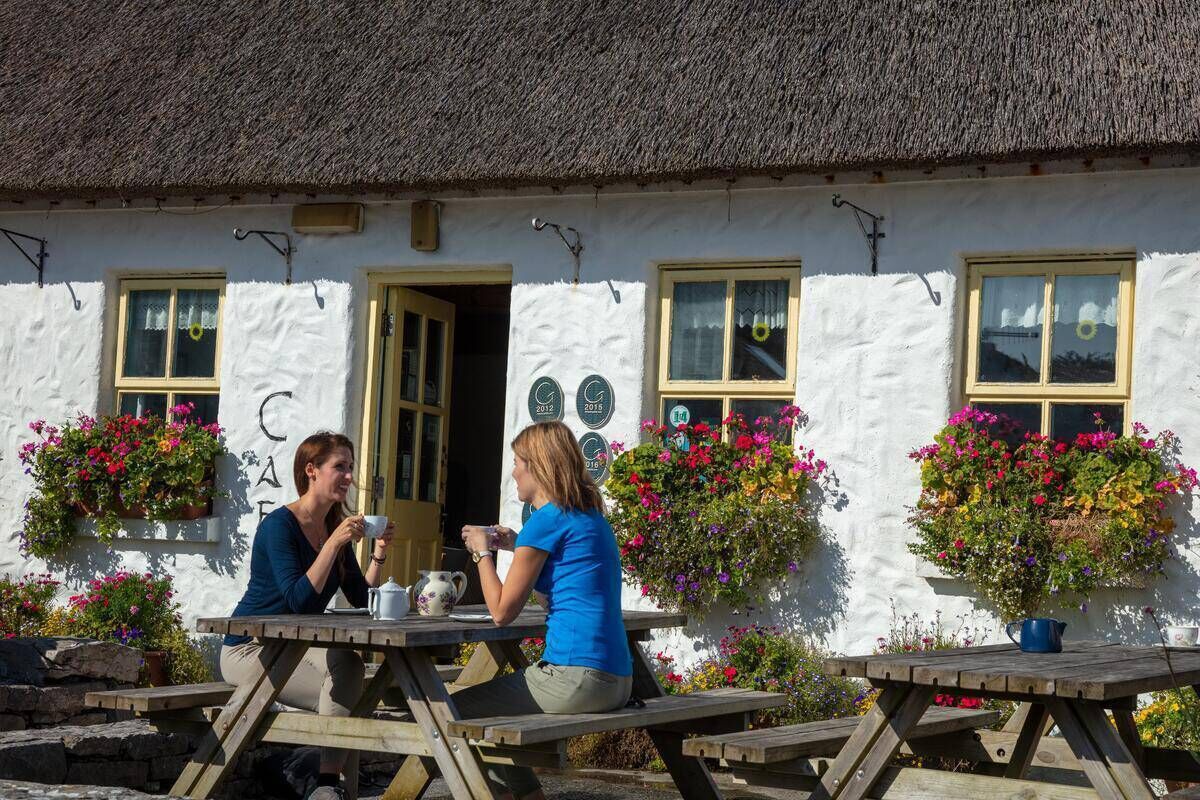
Calling the accommodation at the Aran Islands Hotel chalets is underselling them; they’re more like hotel rooms that happen to be in self-contained units that overlook the sea with large windows and patio doors that draw me outside.
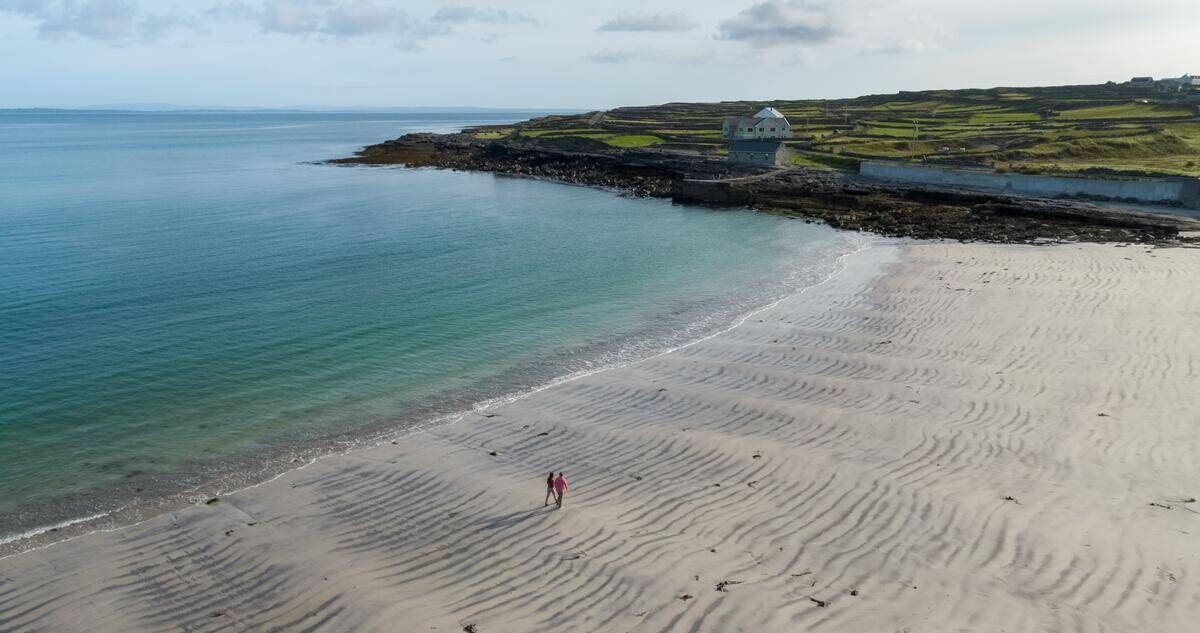
On my unhurried wanders around the island, I hear of a man making goat cheese and I give him a call to go on a tour of his farm. Horse and carts have been a cornerstone of transport for visitors to Inis Mór, but the advent of ebikes has seen more and more people opt for battery assisted travel these days.
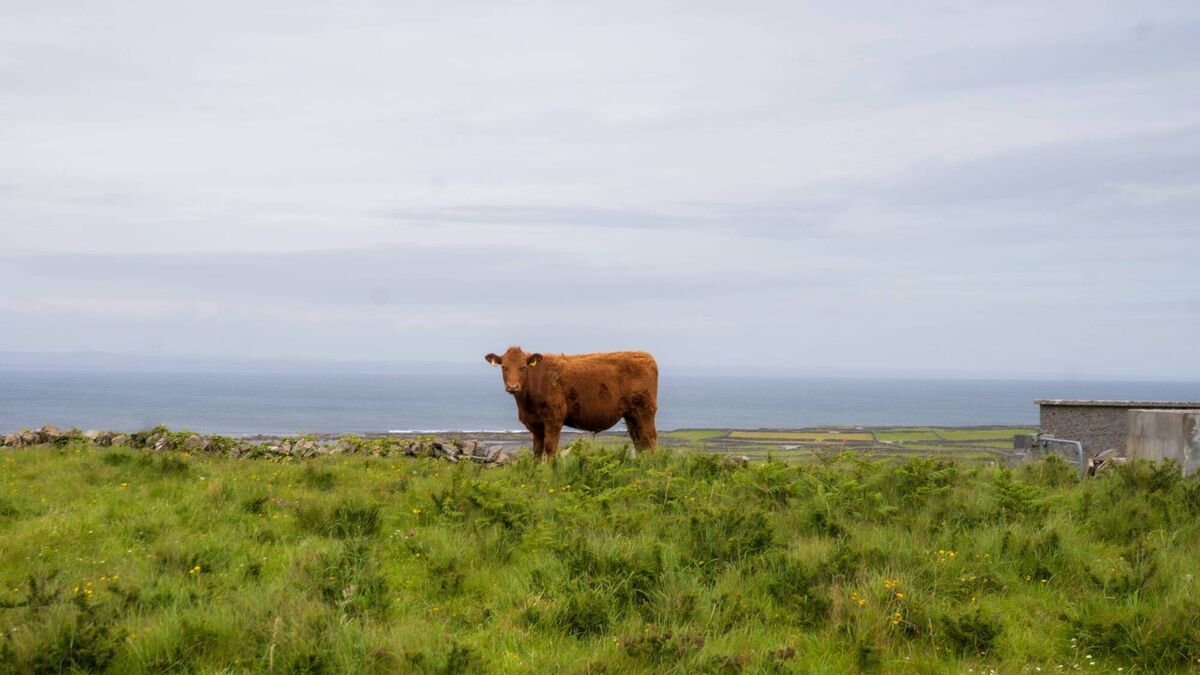
But I'm in no rush during my weekend here. I’d rather walk the country lanes to Aran Island Goats Cheese, giving me time to hear the spring birdsong in the trees and see the cows chewing the cud. “Cían, is it?”
A clattered Land Cruiser pulls up beside me with the goat farmer Gabriel Faherty behind the wheel. He flicks his head towards the empty passenger seat and says, “Hop in”.
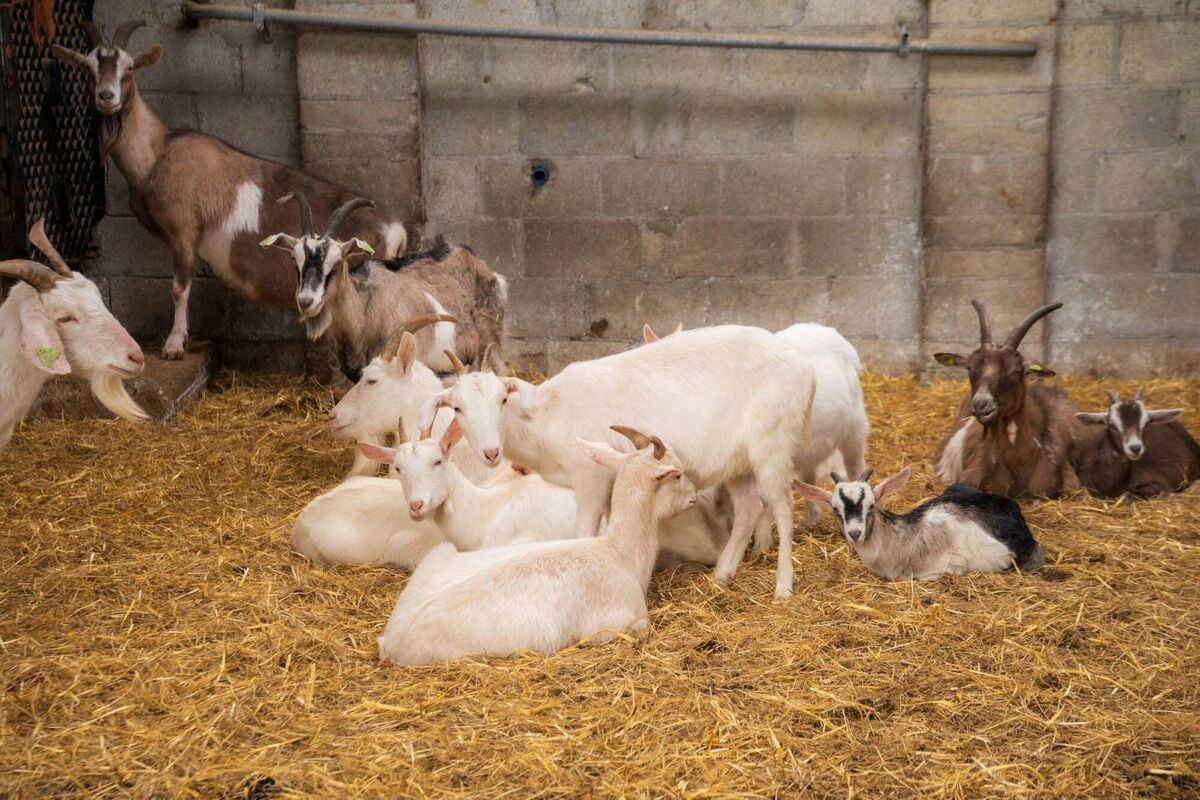
Gabriel grew up on the island (he was born in a house on the hill behind the farm) and goats have been a part of his life since he was a kid.
“A goat was my first pet. You couldn’t tame a wild goat, but you could get a baby goat and nurse them. We’d call them sips.”
He followed the local trade at the time and became a fisherman, proudly showing me photos of the last boat he worked on. The boat was sold as the industry began to die and he knew his job was at risk. Gabriel took a cheesemaking class to keep busy and his wife bought him 50 goats as a present. That’s when his business started and his cheese soon found a home in restaurants and shops across Galway. He explains more and more people seek out experiences on holiday and petting a baby goat on an island in Ireland is something rare for most people.
Spending a few nights on Inis Mór has allowed me to work off loose and minimal plans. I wanted to spend time in St Enda’s east of the island, see Dún Dúchathair, and eat in Ti Joe Watty’s, but for the rest of my time I was happy to let Inis Mór decide what would happen. That flexibility allowed me to find brief moments among the landscape and with locals that I otherwise would’ve missed if I only day tripped to St Brecan’s west side of the island.
- Plan your visit to the Aran Islands by visiting discoverireland.ie
CONNECT WITH US TODAY



Be the first to know the latest news and updates