The insider's guide to Nice: How to get around, where to eat, and the beaches that locals actually use
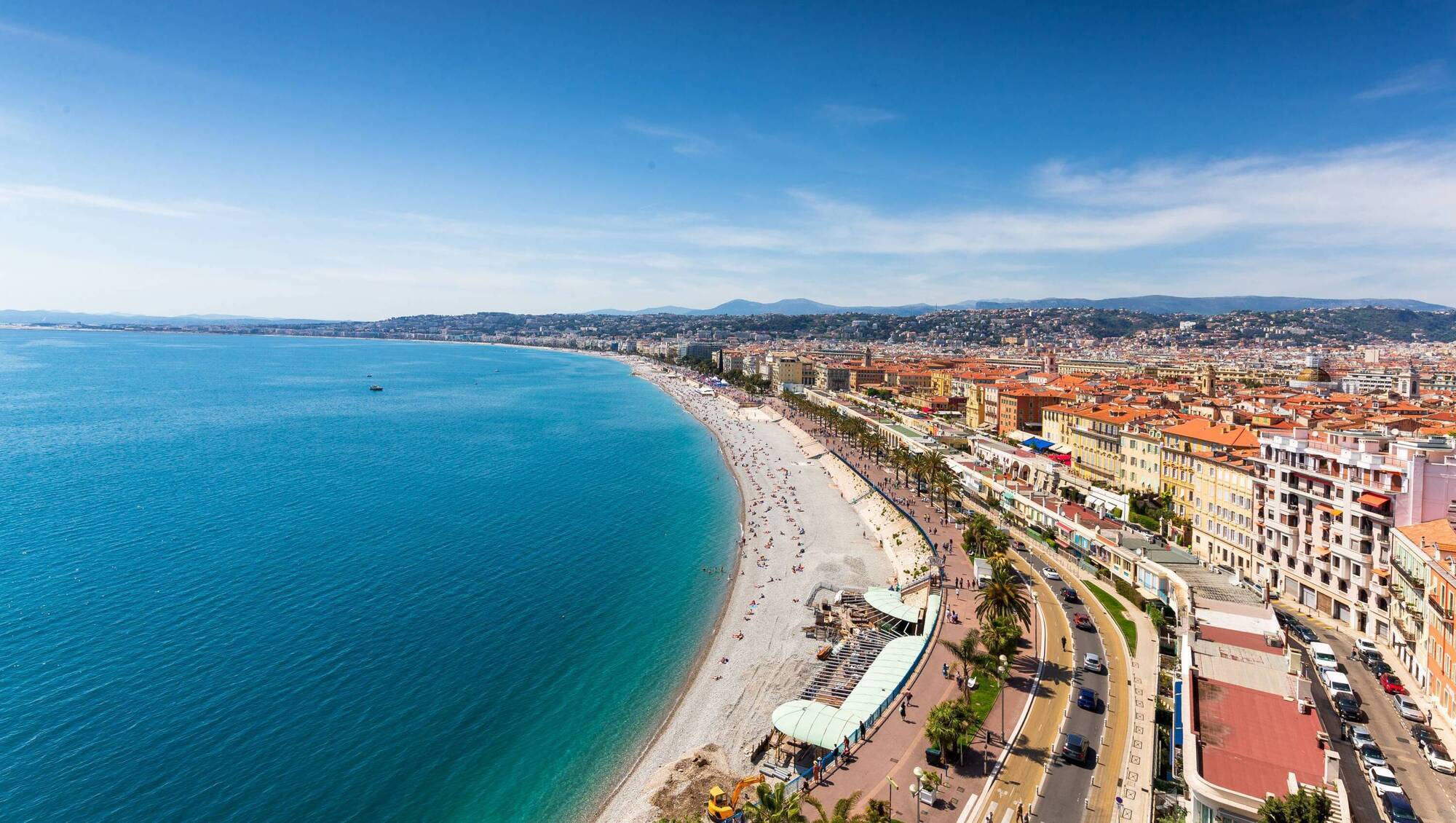
View from Cap de Nice
I want to tell you about the moment I decided to upend my life and move to the south of France, because, reader, I hope you’ll find it instructive. It was a holiday evening in Saint-Jean-Cap-Ferrat, a beautiful little peninsula that juts into the Mediterranean between Nice and Monaco, and my husband and I were sitting with a bottle of pale pink rosé at the lighthouse, watching the sun go down. (Sounds dreadful, I know).
London, we agreed, right there and then, was over. That was a decade ago. We made our home in Nice and two French-born, Anglo/Irish bébés later, we’re still here. The lesson? The use of rosé in decision-making should be exercised with extreme caution.
Aer Lingus launches a new direct route from Cork to Nice today, departing twice a week until the end of September. So, why should you visit the capital of the French Riviera?

Allow me to give you 300 reasons. Nice is one of France’s sunniest cities, with 300+ days of sunshine a year. The fabled light that drew artists like Matisse, Chagall, and Picasso to the Côte d’Azur is a tonic for the soul year-round. The Victorians came here in their droves for winter.
La Promenade des Anglais bears testament to the town’s past as an aristocratic wellness resort. Come snow season, you can ski in the Alpes-Maritimes and be back on the beach for sunset. The Mediterranean in December is roughly the temperature of the Irish Sea in July. Then, there’s the food! The wine! The jazz festival! Ready to pack your bags? Allez! Let a local show you around.

Here is the thing about Nice beaches that you might not know before you arrive, and which will either delight or devastate you, depending on your personality type: They are made entirely of stones. Big, round, grey pebbles, called galets. Pick up a padded mat and water shoes from Decathlon or a seaside shop and make your peace with it. Sand is overrated and gets everywhere, anyway.
Much of the 7km stretch of the promenade is lined with beach clubs. For swimming, Castel, at the foot of the Castle Hill, is the best, as its most sheltered. Plage Amour has a cool, relaxed beach with frequent live music, and Le Galet is good shout for a Niçoise salade at lunch. For a more local experience, Coco Beach, east of the port, is a rocky cove and a true Niçois swim spot.
My favourite beach is a five-minute train ride away in Villefranche-sur-Mer. You’ll recognise this rainbow-painted town from just about every bougainvillea-framed picture you’ve ever seen of the French Riviera, and from Netflix mega-hit Emily in Paris. Villefranche is set in one of Europe’s deepest bays and the calm, turquoise waters are perfect for paddleboarding (it’s one of the reasons we moved here).
The stones are finer underfoot; the water has a shallower gradient and is popular with families. Hire a paddleboard or kayak from the hut near Plage des Marinières at the end of the car park. Further round, on the No 15 bus, is A-list favourite Saint-Jean-Cap-Ferrat. Plage Paloma offers spectacular views, crystalline waters, and, crucially, some natural shade. Get the bus early in summer. It fills up fast, as do the beaches.

Mont Boron is my favourite place for a hike or a run. It’s also the corner of Nice we call home. Rising above the Mediterranean, it’s a hilltop forest with 11km of trails. From the 16th-century Fort du Mont-Alban you can see the coastlines of France, Monaco, and Italy glisten below.
The Sentier du Littoral runs east from Coco Beach for an ocean-side walk. Watch out for the steep steps up the Cap de Nice at the end.
Nice is a good city for children. But bear in mind that in the height of summer it can reach 35C+ in a heatwave. Shoulder seasons or winter/springtime visits are best. The Colline du Château sits 92m above sea level and has two adjacent playgrounds: One for teeny tinies with shade and one for bigger children. There is a waterfall at the top of the hill, show-stopping views, and a free lift near the Bellanda Tower on Quai des États-Unis, if you don’t fancy the 400 steps.
The Coulée Verte (aka La Promenade du Paillon) is a long green corridor that runs for over 2km from the sea right through the heart of the city, with wooden climbing frames, slides, and swings dotted throughout. My children love to cool off at the fountains at Le Miroir d’Eau, just off the central Place Masséna.

Crocodiles, lemurs, and wallabies are just some of the inhabitants of Nice’s botanical garden, Parc Phoenix. From age 3+, children can enjoy forest adventures at the park’s Accro Branche. Clipped into a harness, children swing, clamber, and zip line their way through the trees. Great fun.
Nice is seriously cycle-friendly, with around 100km of cycle lanes. I whizz everywhere on my cargo bike. Lime and Pony bikes (with a seat for a passenger) are readily available for hire. A comprehensive tram-and-bus network connects you throughout the city and to the airport from as little as €1.70, if you buy the rechargeable card for tram and bus. Remember to validate it! Beep it against the machine inside on entry. Ticket checks are frequent and inspectors show no mercy.
The Cours Saleya Flower Market, in the beguiling Old Town (Vieux Nice), runs every morning, except Monday, and it’s where you should start your day. In February, there are glorious armfuls of yellow mimosa. Summer brings outrageously sweet and juicy nectarines. Find the Marinette bakery stall under the pretty, fringed parasols for fresh juice and patisseries.
Then: Chez Pipo, on Rue Bavastro, for socca, the wood-fired chickpea flour crepe that is the local dish. Alongside socca in the Nice food hall of fame sits the pan bagnat, a sandwich bap of tuna, anchovies, hard-boiled egg, tomato, olives, and basil, soaked in virgin olive oil. Claim one of Nice’s iconic blue chairs, face the sea, eat it. You’re welcome.
I love Hotel Amour’s cool bar, Greek-inspired menu, mismatched antique furniture, and well-thumbed French novels. The vibe is chilled, yet très chic. Le Bistrot de Jan, on Rue Lascaris, is the relaxed sibling of Jan Hendrik van der Westhuizen’s Michelin-starred Restaurant JAN. Try the chicken pie, and the cult ‘Malva’ pudding. Come hungry, because portions are enormous. Zéniro is the Japanese-Mediterranean restaurant for exquisitely crafted sushi and Eastern takes on Provençal produce.

For coffee, Café Fino is excellent, La Popote d’Ondine makes cakes French mammies would be proud of, and Éburnie is where Nice’s flat-white revolution is happening, along with what I will go on record as calling the best chai latte of my life. There are lots of great dining options around the port. Dine on a rocky outcrop, accessed by a bridge in the middle of the sea at Le Plongeoir, or head to Epiro, a Roman-family run restaurant; the amatriciana is bellissima. For ice cream, it has to be Fennochio’s in the heart of the Old Town. It has every possible flavour under the sun, and some that should not be possible at all (sorry, is that…cactus?!) My personal favourites are rose and lavender. Make of that what you will.

Hôtel du Couvent is a loving renovation of a former convent, 10 years in the restoration, and a beautifully considered, luxury hotel with spa and outdoor pools. For a rooftop pool, personality, and a bed so comfortable you will interrogate the team about the mattress brand, Mama Shelter delivers.

The all-you-can-eat Saturday and Sunday brunch with a children’s club means parents can eat their bodyweight in mousse au chocolat and drink cocktails in something approaching peace. There is no shortage of the ever-ubiquitous Air Bnbs in the Old Town; be prepared to schlep up steps.
Wherever you choose, by day three you may find yourself sitting at sunset with a bottle of rosé, making some big life decisions. You know how this ends.
- Aer Lingus flies direct from Cork to Nice twice weekly from May 2;, fares from €87.37; aerlingus.com
- Rebecca McVeigh is the co-author of ‘The Fodor’s Guide To Provence And The French Riviera’.