Cecelia Ahern: I am drawn to books with heart — I don’t want to read an AI novel

As she prepares to publish her 21st book, Cecelia Ahern talks to Kathy Donaghy about the joy of creating, why AI has no place in fiction and how the removal of a love lock bridge inspired her latest novel
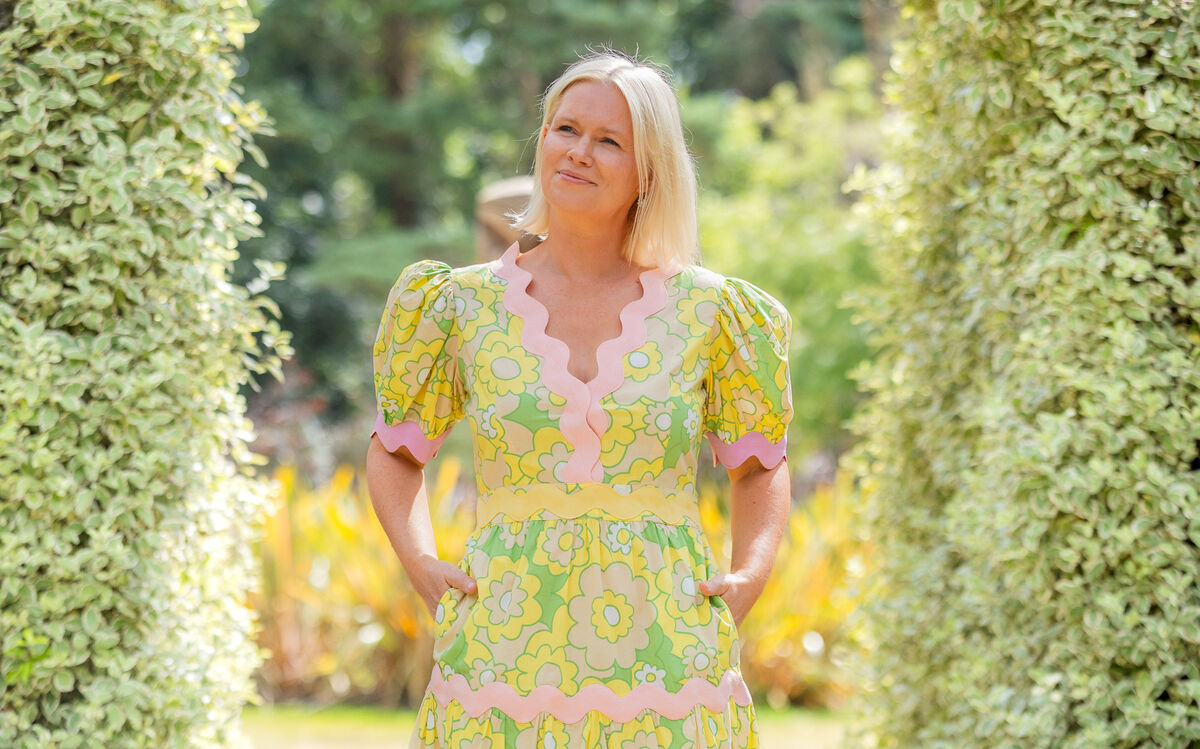
Author Cecelia Ahern: "The joy [of writing] is in creating something yourself and in working out how to express the story yourself" Picture: Gareth Chaney

Author Cecelia Ahern: "The joy [of writing] is in creating something yourself and in working out how to express the story yourself" Picture: Gareth Chaney

On A glorious summer’s day in Malahide, Cecelia Ahern is the epitome of calm.

You wouldn’t guess that the author is about to publish her 21st book, having released her first children’s novel just weeks earlier.

Love Unlocked, which marks her return to romance, hits shelves later this month, while Detective Thingy Majiggy was released in July.

Two decades after PS I Love You introduced her to millions of devoted readers around the world, Ahern is still as driven — and hungry for stories — as she was then. Talking to her, it quickly becomes clear that the engine behind it all is her imagination. In an industry grappling with how to embrace AI while putting boundaries around its use, Ahern is clear about why it holds no appeal for her.

“The joy [of writing] is in creating something yourself and in working out how to express the story yourself,” she says.

“I don’t want to read an AI book. I want to read something that was written by a human, by someone that felt something. I am drawn to people with heart and drawn to work with heart.”

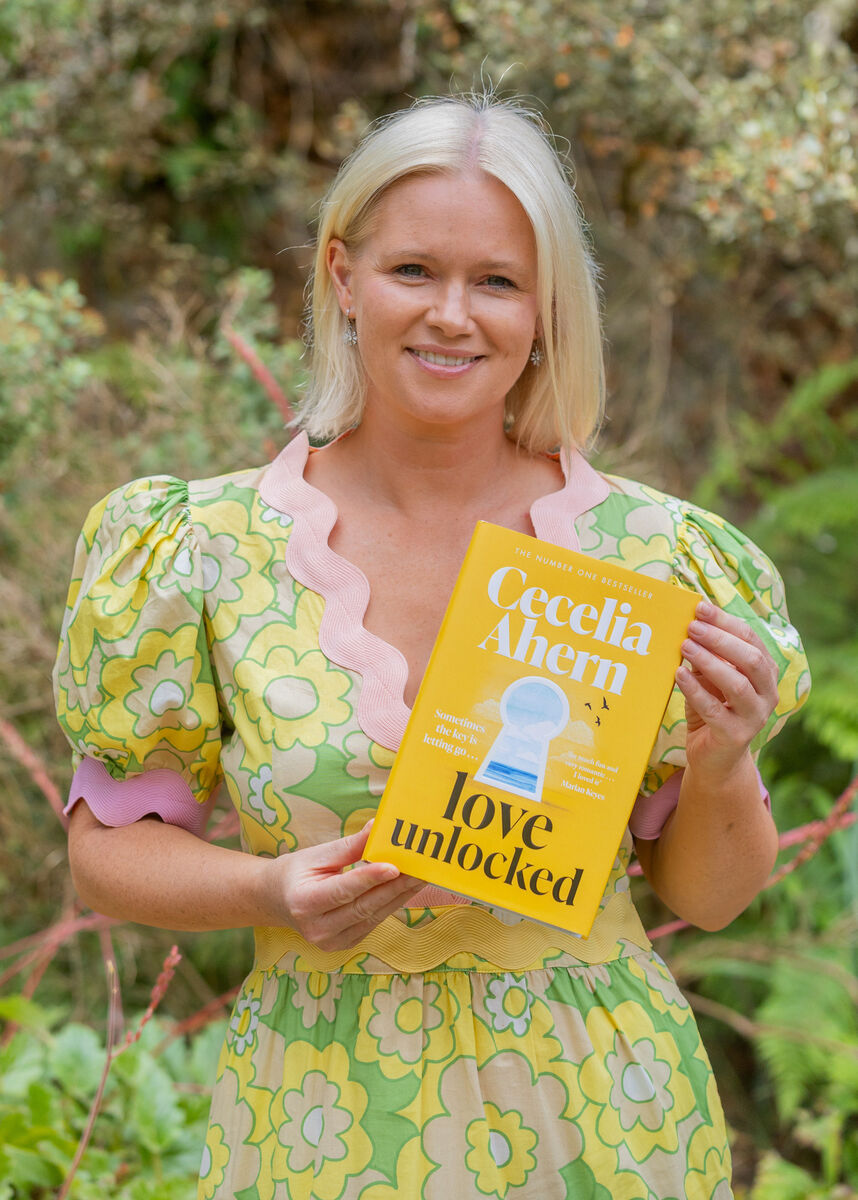
As she speaks, her copy of Love Unlocked is close to hand. The final product arrived just the day before our interview, and she is enjoying the simple pleasure of holding this tangible manifestation of her imagination.

The novel is an unputdownable romance and one that most certainly has heart.

It tells the story of Melody, who has vowed never to fall in love again; and Al, a hopeless romantic, who has had his heart shattered to smithereens.

The idea for it came when she was researching another novel, Into the Storm, and she came across the Pont des Arts, a pedestrian bridge in Paris where couples famously attached locks to symbolise their love.

When there were concerns about the bridge collapsing under the weight of the locks, Paris authorities removed thousands of padlocks, replacing sections of the bridge with glass panels.

Ahern, having seen a news report on the story, says she immediately wondered about what happened to the couples whose locks had been removed. She imagined them all breaking up suddenly, as if a spell had been broken.

“It was instant,” she says. “Like, what happened to everyone when those love locks were severed? Was the love severed?

“I got that exciting burst of question, question, question. The story kept travelling and growing in my head.”

In the story, Al – in the middle of his heartbreak – orders the removal of all the lovers’ padlocks from one of Dublin’s bridges. As Melody begins investigating the mysterious spate of breakups for her podcast, she crosses paths with Al and sparks fly.

While it’s a return to her romance roots, Ahern describes the characters as layered. Yes, there’s romance and fun but there’s also complexity and darkness, she says.

“I write my first draft and then I’m kind of layering and layering. It’s like putting more paint on the canvas. With Love Unlocked, I’d like to think there’s lots of layers. It’s a love story but then I wanted to have the dark and the light, not just with Melody and Al but also with Joseph Mary Plunkett and Grace Gifford,” she says.

The true and tragic love story of Joseph and Grace, who married just hours before he was executed for his role in the Easter Rising and whose love inspired the iconic song Grace, is a beautifully woven leitmotif appearing throughout the novel.

It’s the removal of the love locks from the Grace Plunkett Bridge, a fictional bridge in the story that stands in for the Pont des Arts in Paris, which gets the ball rolling for her tale.

Grace and Joseph’s story is, according to Ahern, kind of like the flagpole to this other story that’s waving in the wind; demonstrating her ability to anchor the fun and light elements with something substantial and heavy.

She knows it’s time to start writing when she hears the voice of the character, when she gets their tone and they’re almost talking to her, saying sentences over and over again.

“I’ll think I have to write this down because it’s almost in a loop in my head and I need to get it out,” she says, adding that this is, for her, the most exciting part of being a writer.

Coming up with the idea is what gets her adrenaline pumping and from there she disappears into the world she’s creating and that keeps growing and growing until a first draft is completed.

“That first draft is like an avalanche of ideas that are just, I don’t know where they’re coming from. With Love Unlocked, I think I was just holding the pen, honestly, and the idea was just flooding out,” she says.

“With this, I was 50,000 words, hand-writing, because I just couldn’t stop. It was still coming; I didn’t want to stop that flow of ideas.

“When I got to about 50,000 words, I thought, I better go back now and type this up and see where I am in terms of how much I’ve written.”

Her writing life has changed over the years as her children have grown. She’s mum to Blossom, 6, and two teenagers, Robin and Sonny. Typically, she writes from 10am-1pm, and in the case of Love Unlocked and its predecessor Paper Heart, going back to the desk from 9pm till midnight — the story constantly pulling her back in.

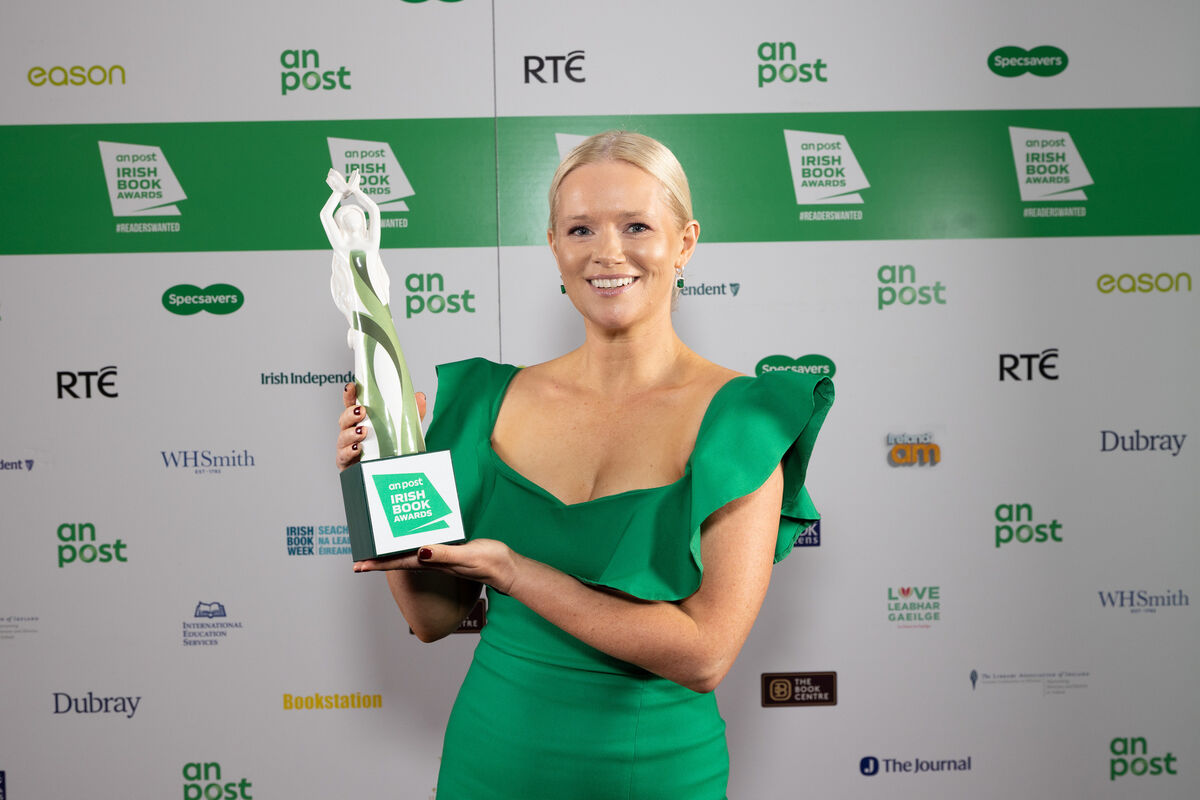
Cecelia Ahern won the WHSmith Popular Fiction Book of the Year for her book 'Paper Heart'

One of her recent novels Into the Storm took readers on a deep dive into the spiritual world and the pagan world of beliefs and traditions, something that Ahern is deeply interested in.

“I like to think the older I get, the more I’m returning to that kind of way of life, of kind of trying to root yourself and ground yourself and turn to nature for inspiration, understanding where we’ve come

from and why we are the people we are,” she says.

“And what a beautiful people we are and where we’ve come from; this kind of celebration of the changing seasons and searching for light – that’s who we are as people.”

She adds that she and her mother will spend a day at the weekend on a foraging walk, visiting passage tombs.

Her inspiration, she says, is fired by everything in life and she describes how she soaks everything up.

“I think I’m a sponge; I love observing people. I love listening to people. I’m not the biggest of chatterers. I listen to my friends, but I do like to listen and read people and I love watching facial expressions. I have to remind myself sometimes to talk,” she jokes.

Reading people, not just listening to the words they say but their body language and the way they say things, is for her very revealing.

“When you’re tuned in that way, everything is very revealing,” she adds.

Her inspiration for writing Detective Thingy Majiggy, her first children’s book, was not only reading with her six year-old daughter Blossom but also her childhood self, who read tirelessly.

The book follows 10-year-old Mia, who has just moved into a new foster home with Detective Lucy. Plucky Mia harbours a unique secret: She has the extraordinary ability to communicate with inanimate objects. From hats to toasters and pens, Mia can understand them all and with their help, she can solve mysteries.

Ahern explains that giving voices to objects helped her own children navigate little milestones in their childhoods. She would give voices to the toilet in potty training or the broccoli and peas when trying to encourage her kids to eat their greens.

“I’ve always turned everything around into characters. I had a child that was kind of anxious going to school some mornings, so I had the trees that lined the way all talking to her and welcoming her, and it got us there, it got us through the day. That’s how I parent, teach, help,” she says.

She also remembers how special it was to get lost in the world of wonder of a book as a child and wanted to create those memories for a new generation of readers.

“I can remember those stories, like they were my memories, like I was a child in the story. To hopefully be giving that experience to another child feels really, really special,” she says.

In a world where screens are ubiquitous, Ahern believes that reading should be encouraged and children should read what they want, whether that be graphic novels, sports books, or whatever they’re interested in.

“It will help their empathy with compassion for others — we all know the benefits of it. But it will also help you slow down and slow your mind down and give yourself time to yourself. And all of that is so valuable,” she adds.

The importance of taking time out to walk, to go to the gym, to hike a mountain trail — all of these are things she practices. But she’s also a fan of the old-fashioned hands-on analogue practices of making things.

For a woman who has achieved stratospheric success in publishing, her stand out pinch me moments have tended to be rooted in the reflective, in family, and in the personal journey.

One occurred just this summer on a big family holiday in Kerry, which is a kind of spiritual home for Ahern. She has recounted before about being on the set of PS I Love You with hundreds of cast and crew, feeling slightly outside of events.

On that day of filming, her mother Miriam looked at her youngest daughter and simply said: “Look what you started.”

More recently on a windswept Kerry beach with all the family and grandchildren gathered as someone tried to make sure everyone was in for a photograph, it was Ahern’s turn to say those same words to her mother.

“We got our full circle moment.”

Another of these moments happened just a few weeks ago when her teenage daughter was doing acting classes in Ahern’s old secondary school, somewhere she hasn’t been for many years.

She explains the feeling of passing her younger self in the halls and in the corridors, eventually making her way to her old English class, going in and sitting in her old seat and thinking of the woman she is now and all that’s happened since she was a student there.

That feeling of passing her younger self is one that crops up often in her life in her homeplace of the coastal village of Malahide.

“And I’m starting to tell myself things like, you know, give that child who was there at that time or that young woman the message that, ‘it’s going to be good; you’re going to be OK,” says Ahern.

But rather than looking back, she says it occurred to her to send these little messages to her future self, reminding the woman she’s still becoming that it’s also OK.

“It occurred to me, why am I doing it in the past? So now what I’ve done is send it forward to the future; send these messages that you’re OK, you’re going to be OK,” she adds.

“I kept looking back all the time because I was such a dreamer. I wanted to do so many things, and I wondered what the world was going to be for me”.

“That’s okay. Keep wondering. It’s going to be good. But the looking forward, I don’t know who I’m going to be or what I’m going to be, but there’s going to be moments where I’m going to be unsure, you know? So that’s the younger me sending to the older me and I hope I pick that up when I’m older at some stage.”

Author Cecelia Ahern with her latest book, 'Love Unlocked'. Picture: Gareth Chaney

  • ‘Love Unlocked’ by Cecelia Ahern, published by HarperCollins, is available from August 27

More in this section

Lifestyle

Newsletter

Eat better, live well and stay inspired with the Irish Examiner’s food, health, entertainment, travel and lifestyle coverage. Delivered to your inbox every Friday morning.

Cookie Policy Privacy Policy Brand Safety FAQ Help Contact Us Terms and Conditions

© Examiner Echo Group Limited