My heart jolted when I saw the Blasket caretaker position advertised — it felt like a dare
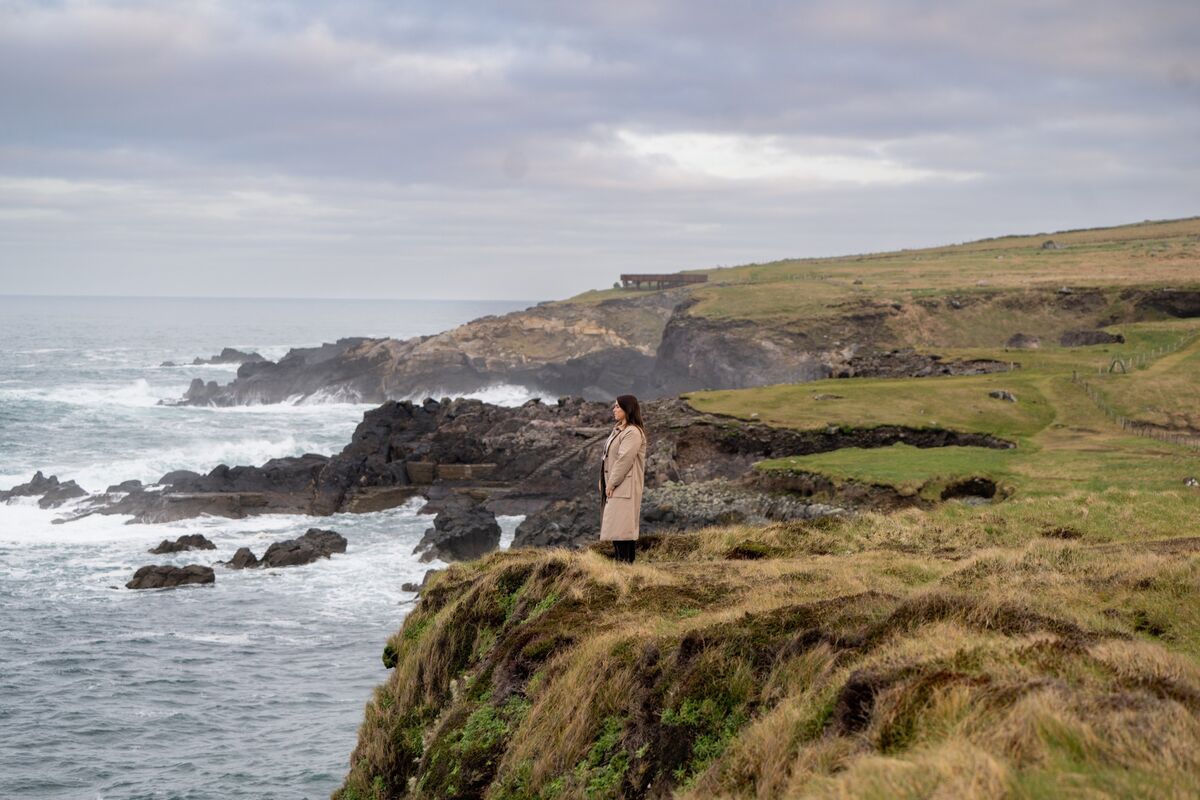
I am standing in Dunquin, in Co Kerry, at first light, with Lesley Bond, looking out from a cliff top at the curved spine and sleeping face of the Blasket Islands before the light wakes them, and it feels, wistfully, as if I could just reach out my hand and touch them.
We had been planning a trip to the Great Island for the past month. Everything was in place. The storms that had been battering the coastline with a force that felt indifferent to our intentions had finally abated.
The sea in the early hours looks calm. The air is still. The sun is just beginning to edge its way over the hill behind us.
But we’re not going.
We have just received the call: The Atlantic swells make landing impossible, so our sailing has been cancelled.
The island remains unmoved.
The Blaskets have always been difficult to reach, both physically and spiritually. They lie just beyond the claim of modern life: Abandoned, austere, and yet romanticised.
For Lesley, that elusiveness is part of the islands’ enduring power. She spent six months there in 2019 as the island’s first live-in caretaker, along with her partner Gordon, and has written a book, Blasket Bound, about it. I ask her what it feels like to be this close to the Blaskets, but not able to go back.
She pauses.
“It will always be a bittersweet experience to be here and not there. It’s the price I have to pay for loving it so much.”
I didn’t know, when I picked up Lesley’s book three weeks earlier, what I expected it to be: Perhaps something indulgent, a personal journey; or an interweaving of history and diary. Maybe a romance or adventure set against a dramatic, remote backdrop.
But it wasn’t any of those.
Instead, it was something far more restrained, and far more affecting.
The prose is simple, descriptive, and poetically beautiful. You find yourself reading, and then reading a little more, and suddenly you are halfway through. Slowly, you begin to see what she sees and feel what she feels. Through her carefully painted words, the island comes to life.
“The island breathed salt,” she writes. “Long fingers of rock reached below the surface.” It stirs.
“The island’s heartbeat lay in movement,” she writes. And, referring to a headland that was historically an unconsecrated burial ground: “The island holds that sorrow, and standing there, I have never been more sure of the land’s ability to remember.” And soon the island inhabits a place in your mind just as it does in hers.
Even the objects in the cottages begin to take on character under Lesley’s gaze, “The sturdy wooden chairs looked slightly surprised to be indoors.”
The first half of Blasket Bound reads like a series of tender recollections, written to the island as much as about it. Lesley arrives with a regard borrowed from other people’s stories, but by living there — through texture, presence, and walking the land — she exchanges that for a deeper, more intimate affection.
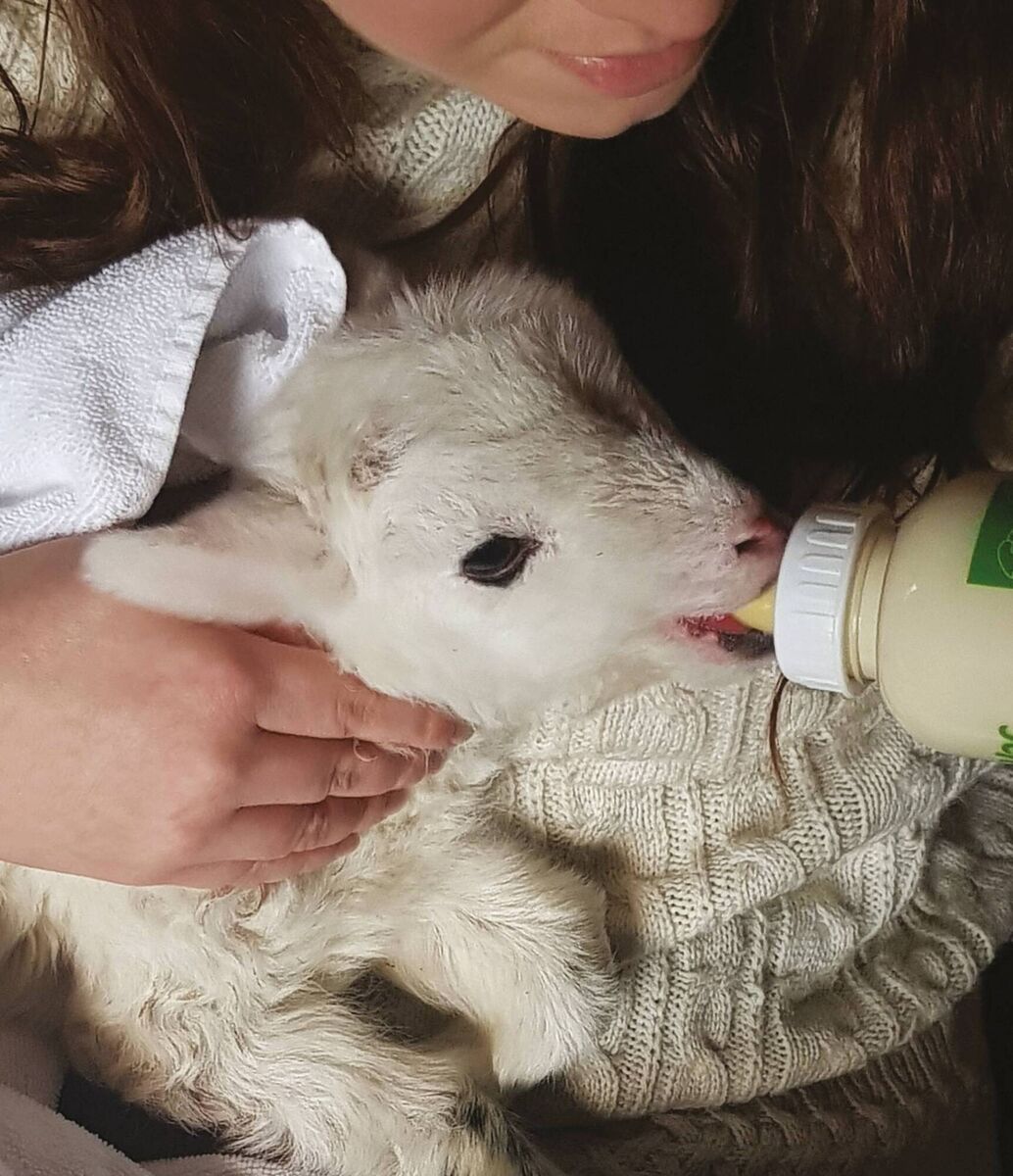
Early in that journey, Lesley stumbles upon an abandoned newborn lamb. Gordon, ever-practical and quick-thinking, feeds the little-one through a teat fashioned from a rubber glove. The lamb, Bixby, for a few fragile and fleeting days, thrives under their care and attention, until he doesn’t and Lesley learns early that the island offers no warmth and demands only endurance.
I cried. Lesley did, too, but her grief is never overstated, and the island’s story continues.
Midway through the book, Lesley’s tone changes. Faced with leaving, her narrative shifts to those who came and left before her, the dwellers, wanderers, and writers. She places herself among them, one more voice in the song of the island. However, by the final chapter of Blasket Bound, I have realised something else.
I know very little about Lesley.
There are glimpses, enough to understand that applying for the caretaker role was not a whim, but there are no explanations and no backstory. I kept coming back to a particular line.
“People are always drawn to edges,” she writes. “The cliffs, the coves, and the high places where danger meets beauty. Yet the heartlands, the centre ground that holds everything together, are what make those edges possible…without the ordinary ground, the extraordinary would have nowhere to begin.”
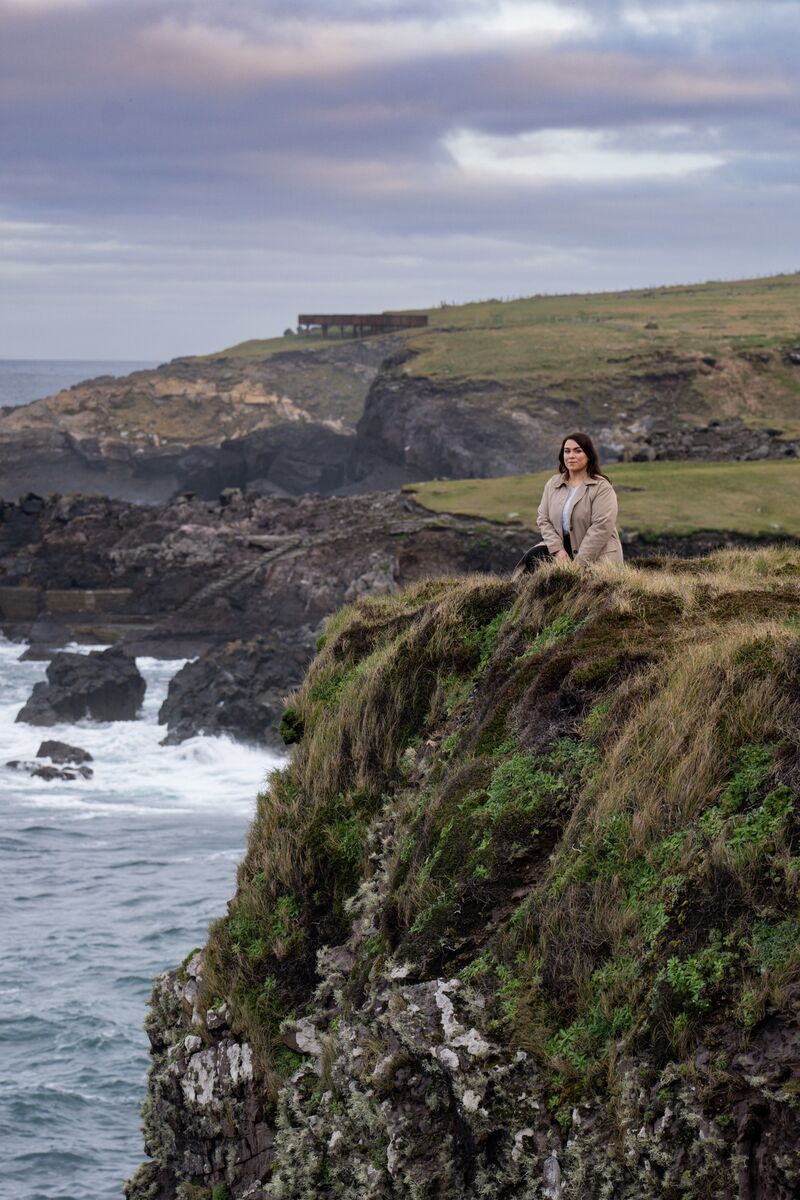
I wanted to know what drew Lesley to that edge in 2019. And this morning in Dunquin, I have the chance to ask the questions her book beautifully, deliberately leaves unanswered.
What drew you to the island? Were you searching for something or escaping something?
When someone leaves everything to live on a remote island, we are tempted to retrofit meaning onto the decision, to assume something must have been missing or broken.
“I still can’t quite put my finger on it,” the Kildare native admits. “I was living a happy life, very normal; a job, a circle of friends. I wasn’t running away from anything, and I enjoyed my comforts.” She laughs, recalling how pointless her meticulously packed bottle of Jo Malone shower gel was on an island without electricity or hot water.
“It was the Blaskets themselves,” she says, describing a long-standing pull that began with a faded photograph and a memory of watching a video clip of Gearóid Ó Catháin recalling his childhood on the islands as the only boy among 30 adults. (The island was evacuated in 1953.)
That led Lesley to study cultural heritage, and her dissertation centred on the Blaskets. Despite never having been there, she had read everything, from the well-known to the obscure and the forgotten.
A friend found her reading an article, Primitive Communism and the Blasket Islands, and began to worry she had lost the run of herself.
Long before Lesley had ever set foot there, she had frequently made the journey from Kildare simply to stand at the pier in Dunquin and cast her gaze.
“I used to come down just to look at it,” she says. “To imagine what life might be like there.” She describes in the book the moment she saw the caretaker position advertised online.
“My heart jolted. It felt like a dare, an invitation, something that had been waiting for me all along. I called Gordon. He told me to breathe. Two weeks later, the job was ours.”
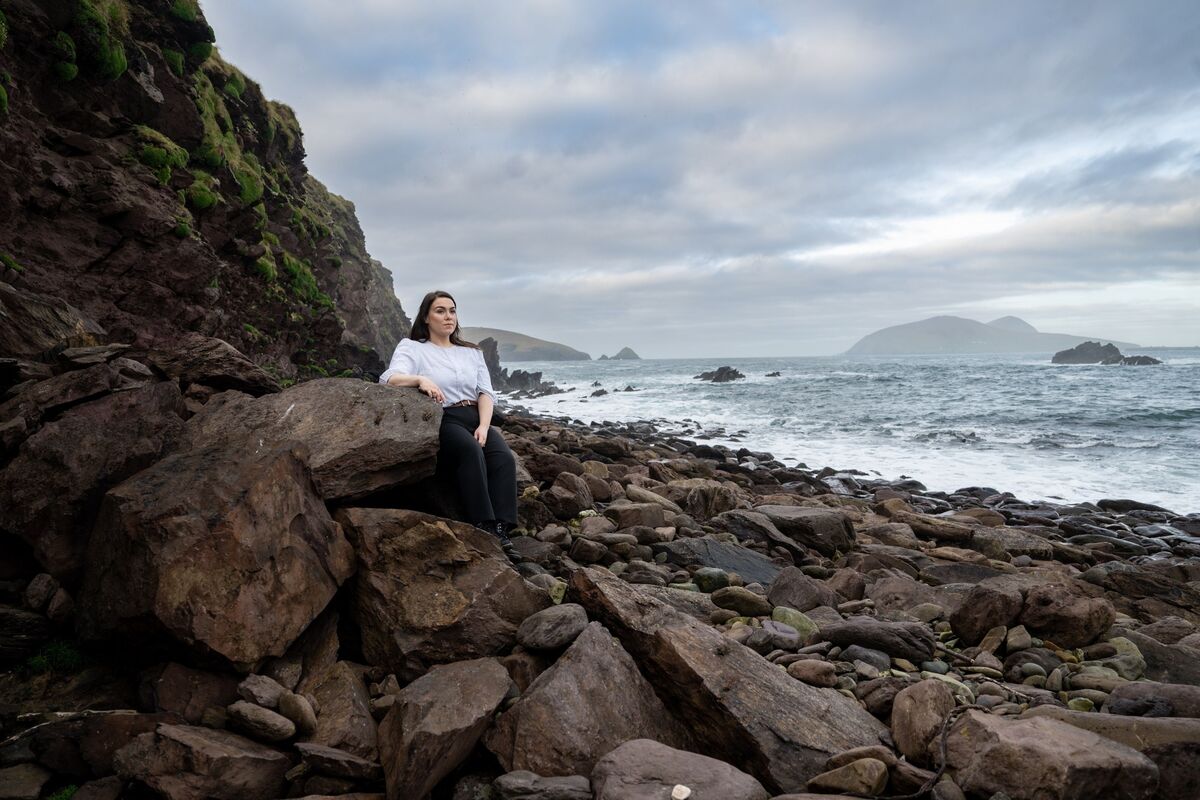
What surprised me most, both in the book and in speaking to her, is the lightness with which Lesley describes the deprivations of island life, which was structured around physical, repetitive work, tasks that needed doing regardless of mood, time of the month, or weather.
There is a temptation, particularly in writing, to elevate difficulty in to something heroic, but Lesley resists that. Instinctually, her books feel like a continuation of voices, such as Peig Sayers’s and Eibhlís Ní Shúilleabháin’s, women who carried hardship without framing it as anything other than life.
The work was difficult, certainly, but it was also purposeful.
“There’s joy in the toil itself,” Lesley says. “That’s what people don’t always understand. The work keeps you present. You don’t have space to drift too far ahead or back.”
“By the end of that summer,” she writes, “I realised that despite my best efforts, the island would never be fully known. I would never see it all. But I was okay with that.”
When the six months ended, Lesley left knowing it was time. “There was never a sense that I should stay longer,” she says. “We were temporary custodians of a life that had existed long before us and would go on long after we left. It was enough to be part of it for a while. We would still have each other when it was all over.”
Returning to everyday life was not without its challenges.
“It’s louder than you realise,” she says. “Life off the island.” Perhaps the most revealing part of her story is how long it took for the book to emerge. She tried to write it soon after leaving, but found the experience too raw.
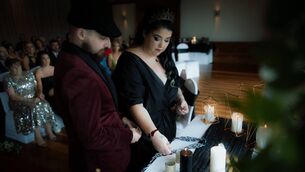
“It would have been a very different book,” Lesley says. “Much more melancholy.” It took a couple of years for her to go back to the island. By then, she had settled back in to the busyness and distractions of everyday life and it was Gordon who suggested the return. She had expected a great rush of emotion as she stepped onto the rocks, but, instead, there was a calm familiarity. Fittingly, that evening, in Peig Sayers’s cottage, ablaze with candlelight, Gordon bent one knee down onto the cold, bare floor. Lesley, of course, said yes and they celebrated with mugs of tea, another lifetime memory tied to the island.
The book eventually came, a few years later, after the birth of Lesley’s son, during a period she describes as unsteady; not unhappy, but uncertain. She found herself returning mentally to the island.
“I thought back to the time I felt strongest, bravest, and most capable,” she says. “And that was there.”
Writing became a way of returning. Each evening, she would sit down and write for a few hours as a way of going back to that feeling.
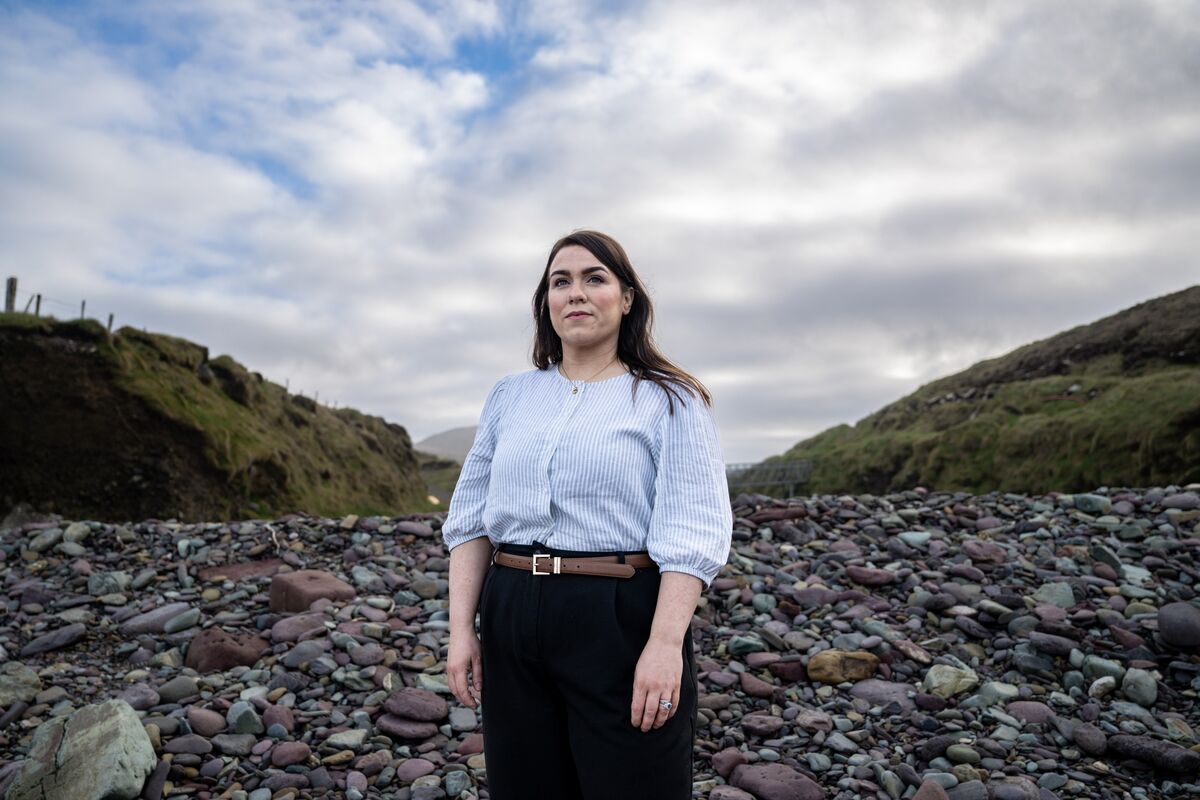
Gordon took something else from the island: Recycling. “Very serious recycling,” Lesley laughs. “Toothpaste tubes cut open and washed out.” It is not quite the poetic takeaway you might expect, but it fits.
We walk along the cliffs for a while longer, the wind picking up now, the light shifting across the water. I ask if you ever really leave a place like that.
She thinks about it.
“No,” she says. “Not really. The Island is always with me, not as a conscious thought, but like a building block, holding the new parts of me together.”
As we turn back, the island is still there, now aglow with a golden hue. It watches us silently.
And I realise that not reaching it today is perhaps just as it should be. Its allure grows in my mind, the sense that it exists on its own terms and that it is not my time to become part of its story. Not yet.
- ‘Blasket Bound’, published by Gill, is out now

CONNECT WITH US TODAY



Be the first to know the latest news and updates