Inside the Kabin Studio — the music sanctuary for the youth of Cork's northside
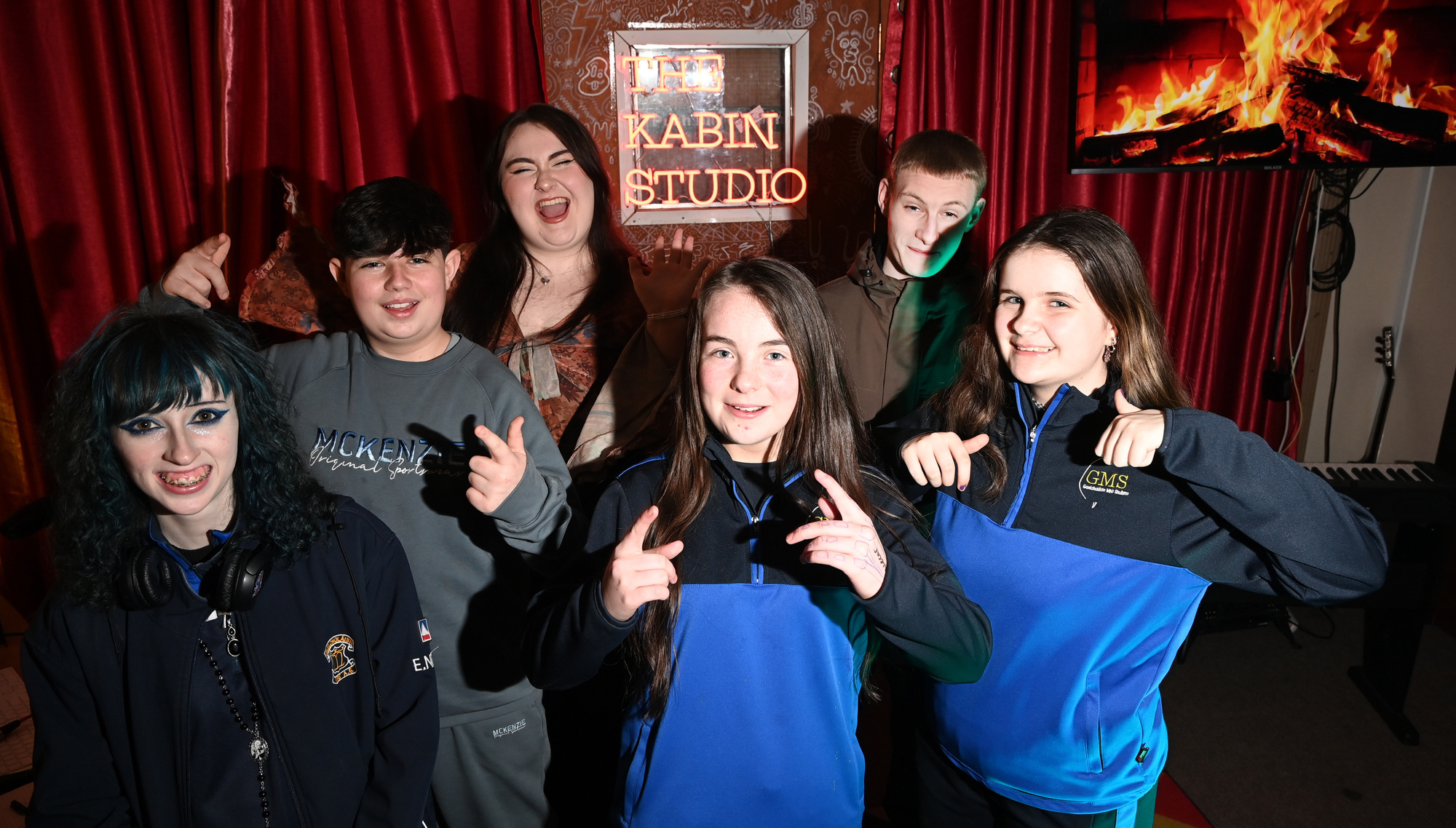
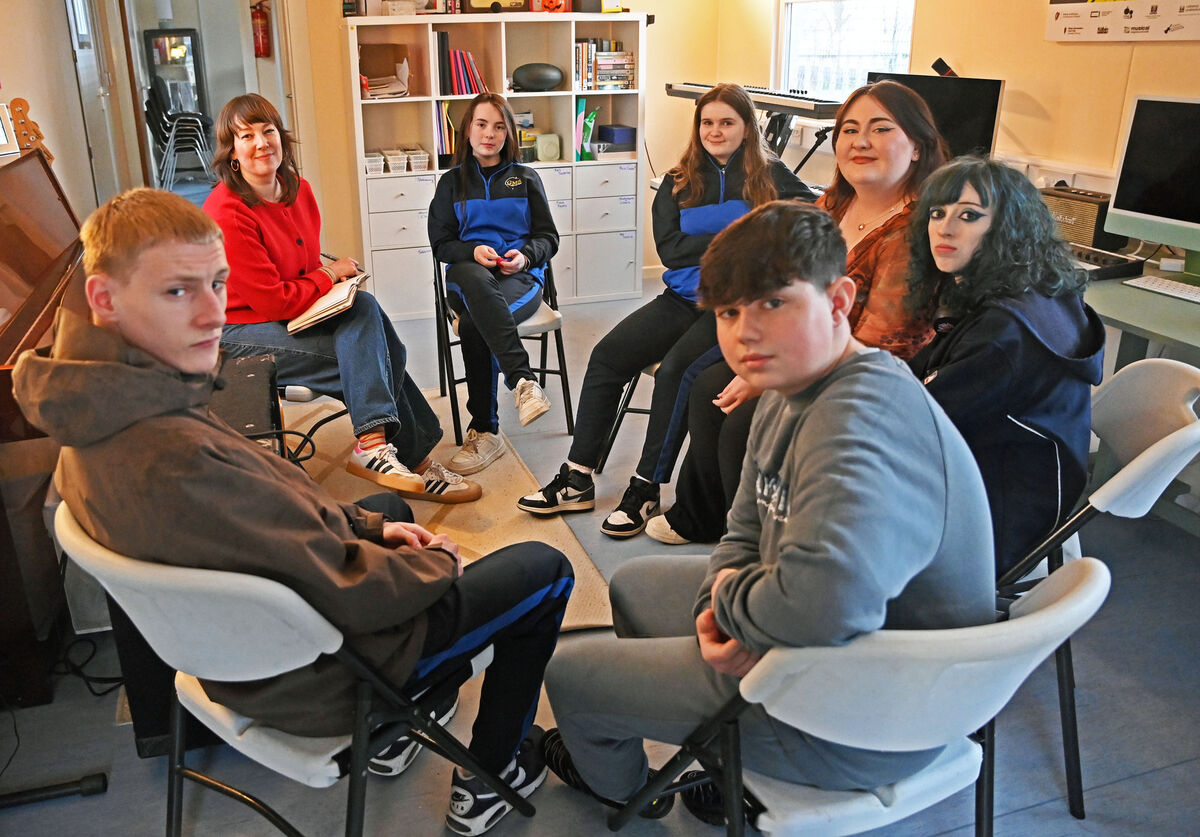
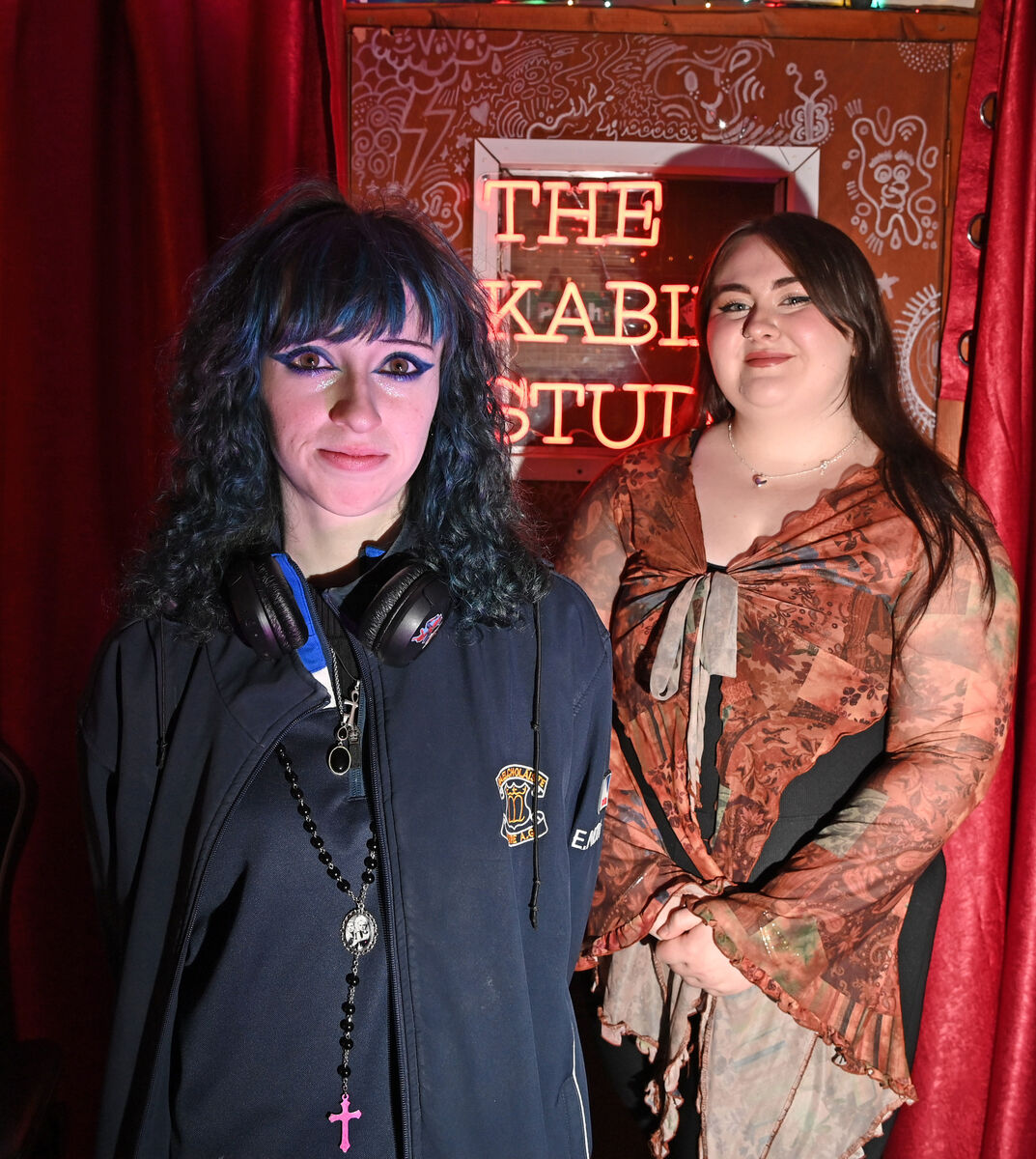
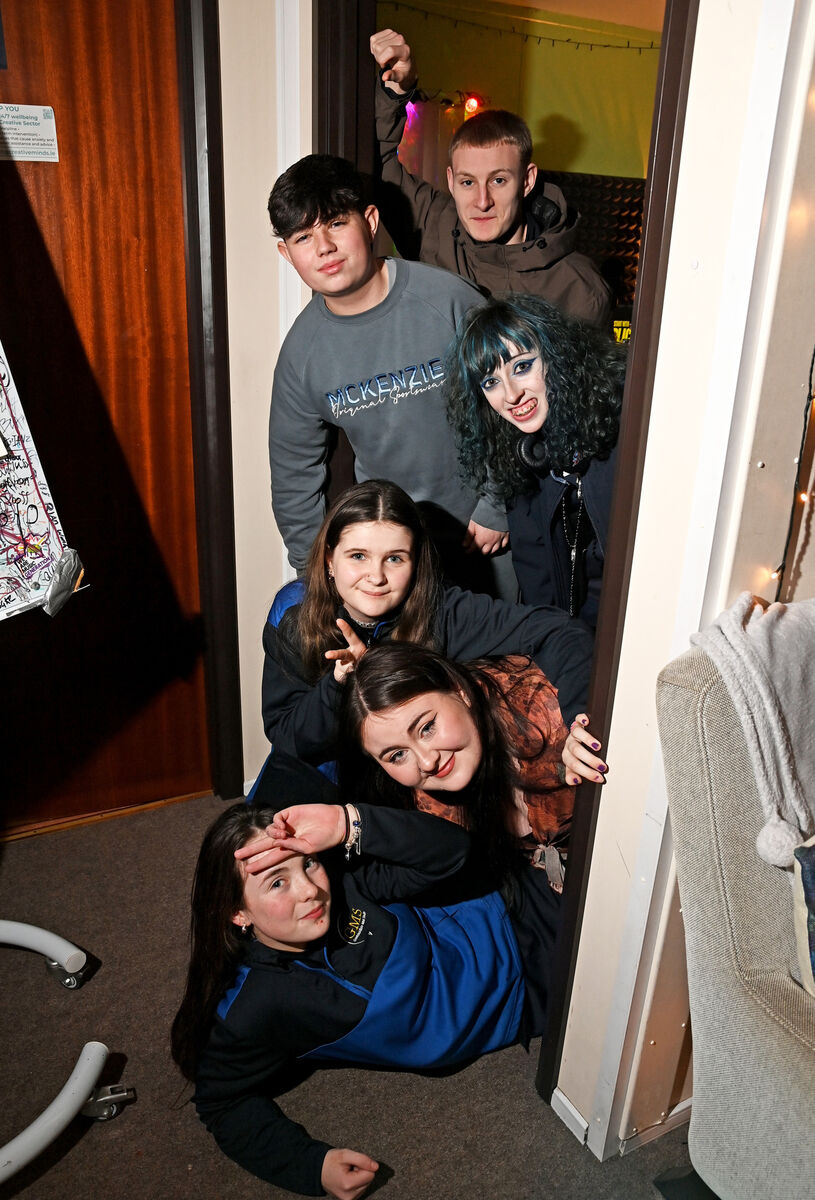
Ellen Martin, Aaron Foley-Hennessy, Rosaleen Brady, Sophia McNamara, Darren Stewart and Heidi White from the Kabin Krew. Picture: Eddie O'Hare
Next to a busy roundabout in Knocknaheeny on Cork’s northside, two colourful cabins are lit up in the winter dusk. Inside one cabin fairy lights glow, music hums, and the bright energy of teenagers fizzes throughout. Welcome to the Kabin Studio, a creative “sanctuary” for local youngsters.
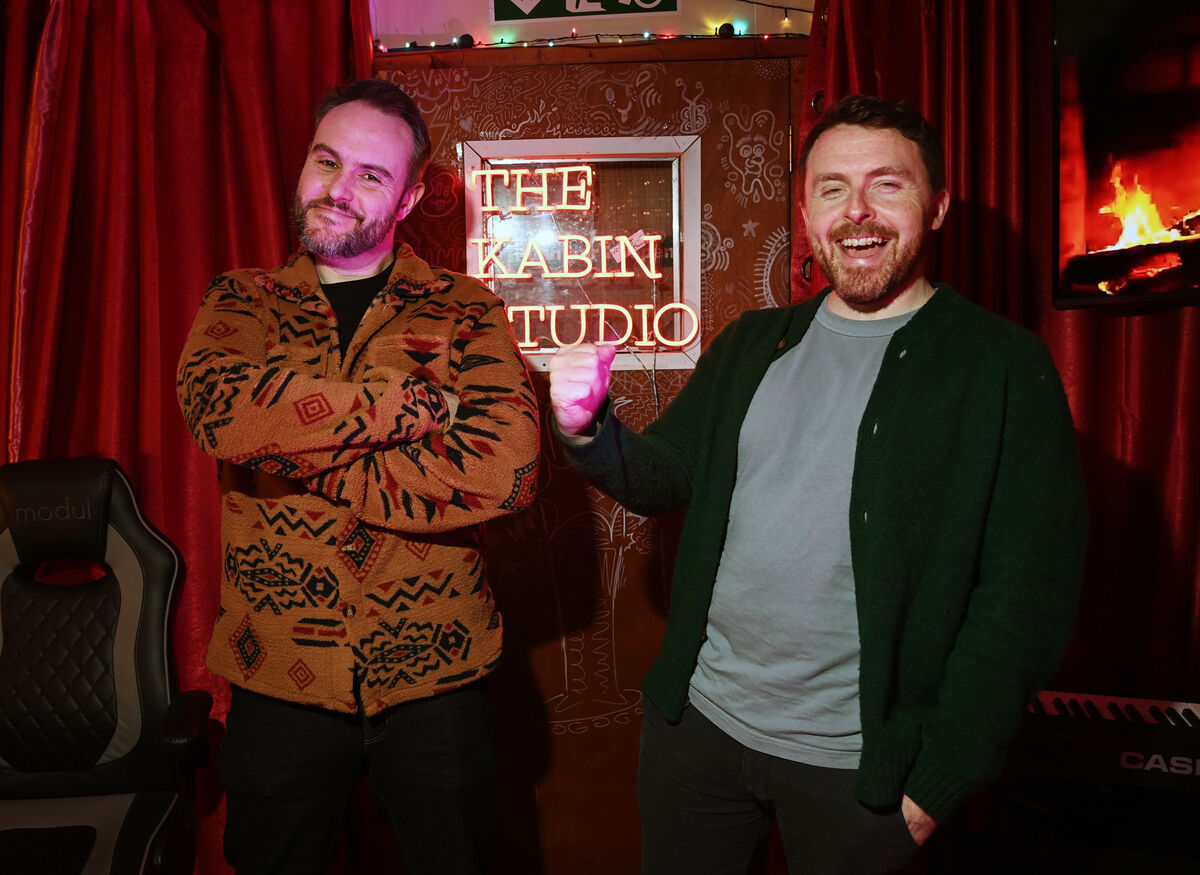
At the helm of the Kabin Studio — whose members are called the Kabin Crew — is Garry McCarthy, a friendly, calming presence who set up the organisation in 2012 with the support of Music Generation Cork City. He makes music under the name GMCBeats and is a mentor, guide, and pal to the Kabin Crew.
On this Tuesday evening, a workshop is wrapping up. In one studio a tutor is working with a member, while in another a young girl works on her own.
Posters and pictures on the wall commemorate big moments for the gang. Members gather at the cosy Kabin for workshops on Mondays, Tuesdays, and Wednesdays, and the Kabin does outreach work too with local schools and groups. Overall, there are 90 members of the Kabin Studio, including adults.
McCarthy, who has facilitated 2,500-plus music workshops over the years, watches on as a group of Kabin Crew members perform their song Fáilte Go Knocka, which imagines if Knocknaheeny was in the Gaeltacht.
They wrote the song with rapper Súil Amháin, aka Listowel native Séamus Barra Ó Súilleabháin, and now Cork filmmaker Brendan Canty has made a documentary called Gealtra about the fruitful collaboration.
Canty also directed the 2019 short Christy and its follow-up, the 2025 IFTA-nominated film Christy, which both feature members of the Kabin Crew. Gealtra is a gorgeous, sensitively-made documentary which shows not just how the youngsters embraced Irish alongside Ó Súilleabháin, but how the Kabin has given them a sense of confidence and belonging.
The documentary was funded under TG4’s ilDÁNA scheme and will premiere internationally at Hot Docs in Toronto.
“I’ve been involved with the Kabin [for years], and all of that time I was like — someone has to make a documentary about this place,” said Canty. “There is a feeling in the place. It’s so striking, and I’m like, what is that? I think the work that Garry does, it’s really phenomenal. The kids are so eloquent and confident.”
Turning to McCarthy, he said: “I don’t even think you probably understand the levels of what you do.” The confidence of the Kabin Crew members is remarkable. Sophia McNamara, aged 13, started at the Kabin aged nine, after McCarthy did a rap workshop at her school. “My rap was like, ‘I love the colour green and I like to eat ice cream’” laughs Sophia, who is a bundle of energy. Learning how to rap in Irish for Gealtra had such an impact that she now attends the local Gaelscoil.
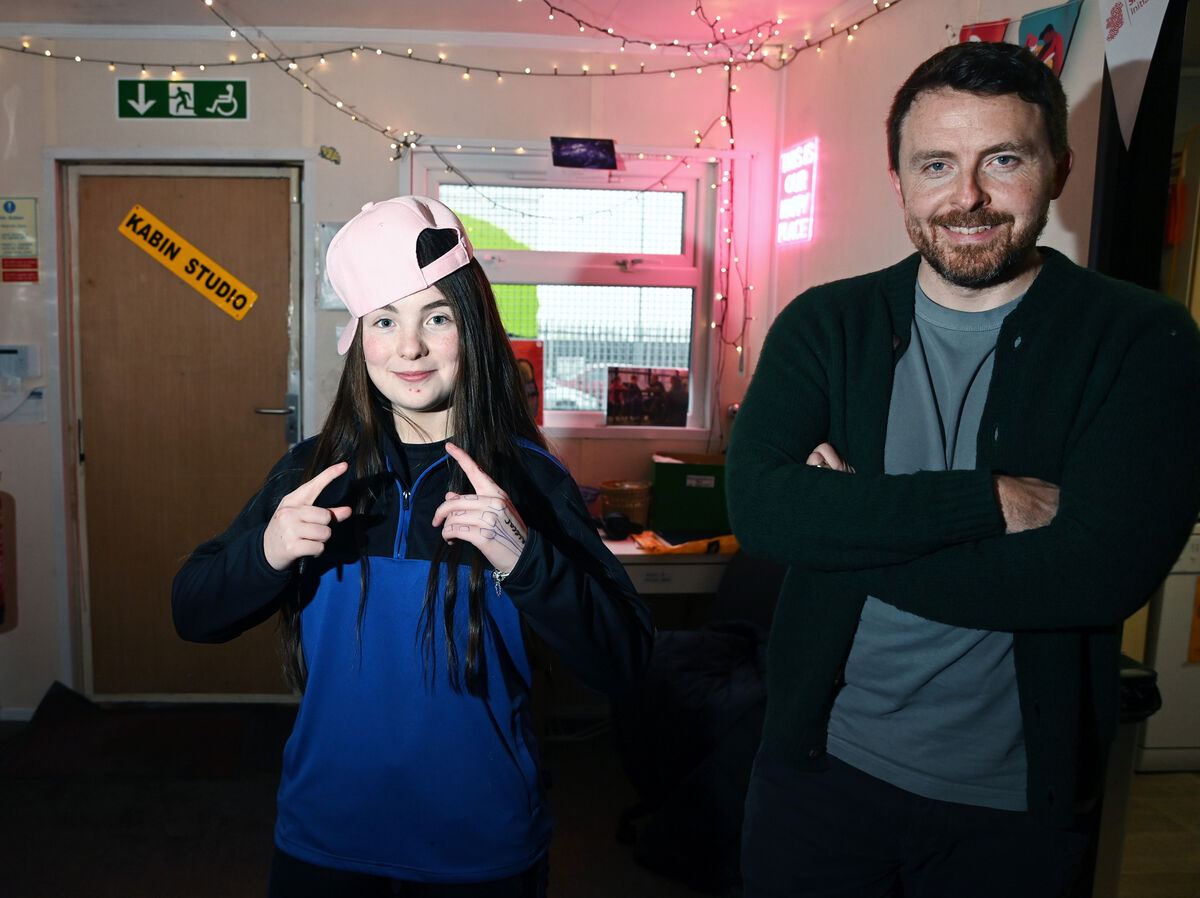
Heidi White, 13, was a musicals fan and started at the Kabin aged 10. “The Kabin has introduced me to different ways of expressing myself,” she said. “It’s just a place to feel safe, really. It’s basically a second home — and a third home, because there’s two cabins now.” The second cabin — the Two-dio, or Kabin Eile — was installed in October 2025.
Rosaleen Brady is 19 and on the Kabin’s Youth Council. She first met McCarthy aged 11 when he visited her school. (“They wanted to sort out the dog poop, so they brought Garry in,” she teased — the raps were about having pride in the local area.) Her brother Alex, a longtime Kabin member, told her she would “regret it” if she didn’t attend a Kabin summer camp five years ago. “So I threw on some clothes, and I strolled away up to the Kabin, and I’ve been coming ever since,” she said.
It helped her “fall back in love with music and creativity”.
“It’s done wonders for my confidence, and I think for everyone’s confidence. It’s a sanctuary, and it gives people a safe space to talk and express their emotions.
“I’ve gone through a lot of hard times that I don’t think I would have been able to go through if I didn’t have a space like the Kabin to help me get through it.”
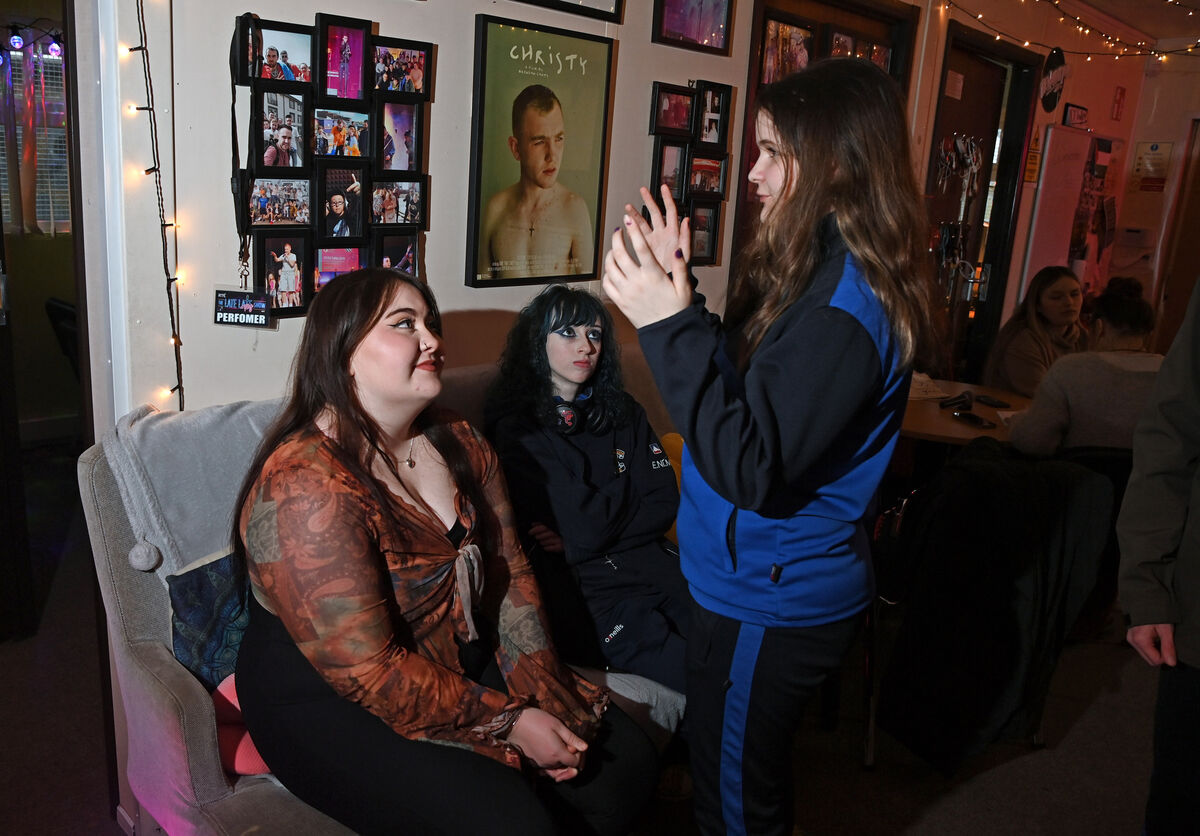
Ellen Martin, aged 17, has been coming to the Kabin since she was 13. “I honestly don’t remember the first time I came to the Kabin, because I’ve been a prisoner ever since,” she joked, with Rosaleen adding: “We lock her in the vocal booth.” For Ellen, the Kabin is a “safe haven”. “I was getting bullied in school, and I had a place to come after school to wind down,” she said.
“After school on Mondays would be my favorite time of the day, because I get to come here and just forget about everything. It’s a place where I can just be myself, with no one telling me ‘you’re such a weirdo’.”
Bodhrán player Aaron Hennessy, 16, joined at 12. “From the outside the Kabin looks tiny, but when you open it, there’s multiple rooms. There’s so many stations where you can write stuff. There’s microphones, laptops, iPads, everything,” he enthused.
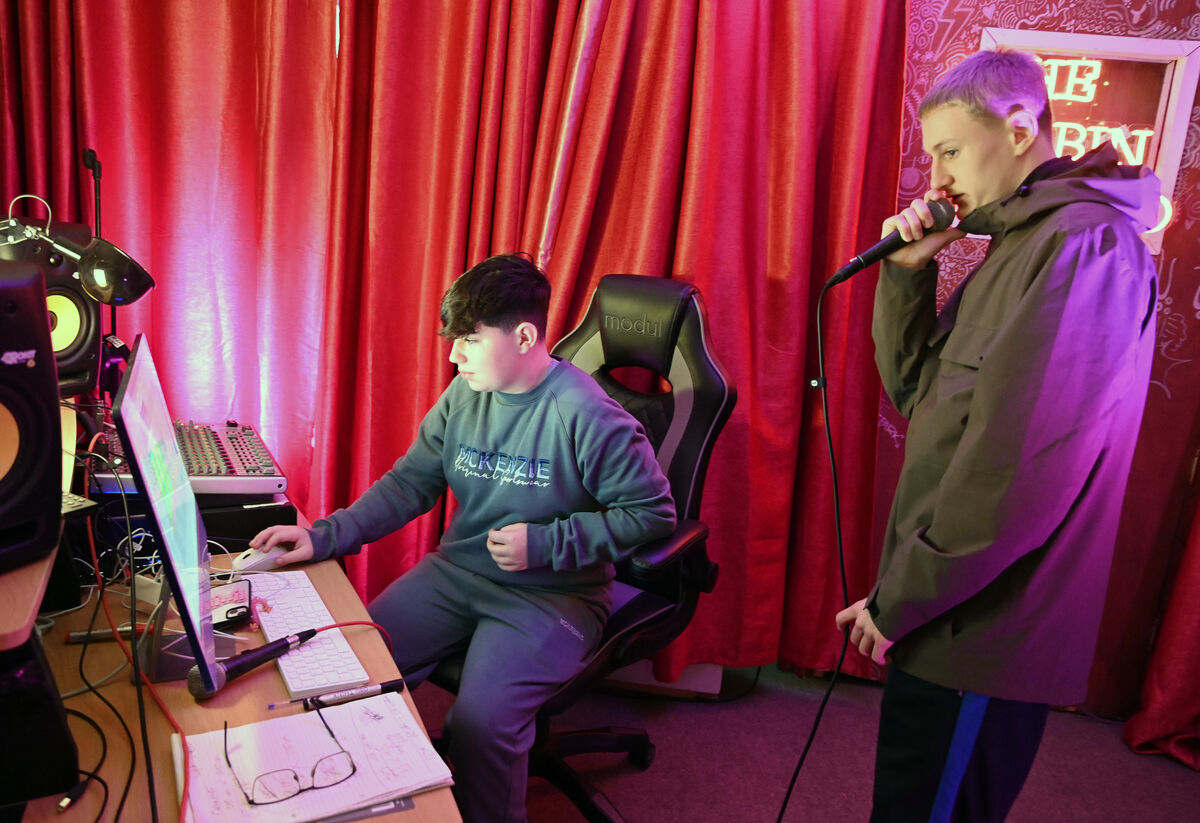
Darren Stewart, 17, aka Tiny, joined at age eight. “I was over doing a workshop in his school, and his principal at the time said ‘you have to meet this kid, he loves rapping’,” recalled McCarthy of first meeting Darren. “He was six or seven, and he started freestyling for me.”
“It’s helped me so much, and I made friends that I can never take for granted,” said Darren. “Garry has genuinely made such an impact on my life and been such a good friend to me. I think without him I wouldn’t be Tiny, so big ups to Garry.”
Rapping as Gaeilge helped the teens unlock a new level of their creativity. “Filming Gealtra was a way of me reclaiming the language and using it in a way that I thought was positive and meaningful,” said Rosaleen.
“It modernised it as well — a lot of what we were learning [in school], it’s not Irish that is applicable to everyday life.” Ó Súilleabháin encouraged them to use Irish as they would English, and to include slang. Rapping in Irish felt “so casual, it wasn’t a chore”, said Darren, who was introduced to the poetry of Seán Ó Riordáin by Ó Suilleabháin and wrote his own raps based on his work.
“I have a great deal of respect for Súil Amháin for showing me that, and showing me that the language is more than just being in a classroom.”
As Gealtra shows, Ellen wrote a Crystal Castles-inspired track about anxiety.
“I used to be a very anxious person. So my song Imní means anxiety/worries in Irish. It’s about not letting your worries or your anxiety get to you, and just be yourself,” she said. “It’s something so special, writing as Gaeilge, because people mightn’t even know what you’re saying, but just the way you’re saying it can convey a message.”
Rosaleen agrees: “I find it hard to write vulnerable stuff in English. But if I want to be vulnerable and have the extra safety net of knowing that not everyone’s going to understand what I’m saying, I’d write it in Irish.”
“I find it easier to speak Irish if I’m doing it through music,” added Heidi. She was initially planning to attend an English-speaking secondary school. “But then after doing Irish in the Kabin and learning it through music, I learned that I actually have a passion for it, and now I go to a Gaeilscoil.”
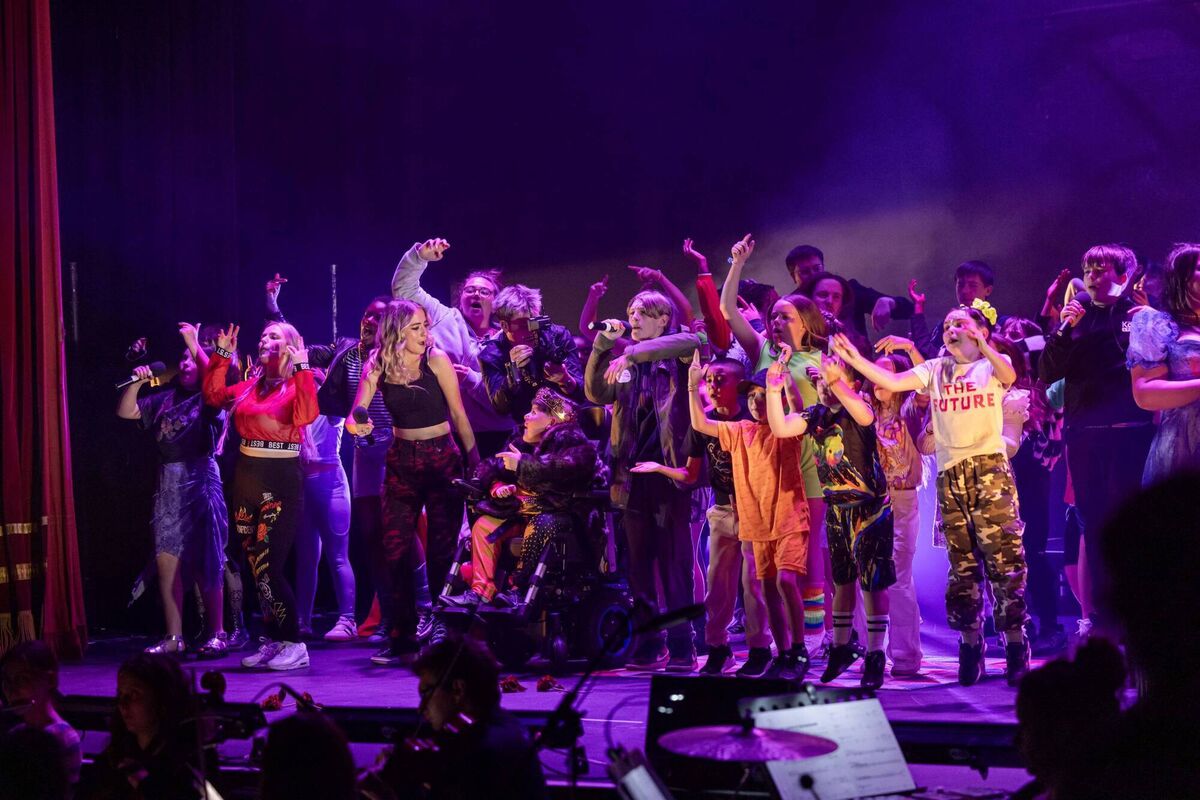
In 2023, the song The Spark, written for Cruinniú na nÓg by a group of 13 Kabin Crew members and seven members of the Lisdoonvarna Crew, who are in Direct Provision, went unexpectedly viral. It garnered over 1bn combined views online.
“When it took off it was like, how do we approach this?” said McCarthy. “Because there were so many young people involved in the process... So we learned loads from it, but that was quite a stressful time.”
He said they could have decided to “milk” the success, “but it wouldn’t have been authentic, and we would have left a lot of other young people behind.” They had to make sure to “remain true to our ethos — that we’re here to encourage young people to be creative, and to build their confidence”, said McCarthy, which Canty said shows McCarthy has “a good head on [his] shoulders”. The Youth Council or a summer camp is as important to McCarthy as The Spark getting billions of views online.
“We do our best to try and treat everyone equally… What’s important is that what they write is authentic and that when they perform it, they feel good doing it, and the people listening to it enjoy the performance,” he said.
“Whether they’re performing at Pukkelpop to 15,000 people in Belgium, or over at Hollyhill Library.”
McCarthy now also enjoys using Irish through music. “I never had the confidence to speak it around Gaelgeoirs. I still struggle with it. But if I’m in a school helping kids or teens to write a rap in Irish, I find I’m a little bit more confident with it. I don’t mind messing up a bit more,” he said.
How does he feel hearing the positive things the members say about the Kabin? “It’s amazing to hear. It’s validation to say that the work that’s going on here is positive, and it’s allowing young people to, as they said, to be themselves, to be their quirky, funny, different, weird, however you want to call it [selves].”
If there’s any rule at the Kabin, it’s “use your time creatively”.
“They’re encouraged to amplify what makes them different or unique or weird, or however you want to call it,” he said. “But at the same time, they’re all very different individuals.” There’s no set syllabus. “It’s: who’s in the room, what do we sense that they need as a group, or individually?
“We heard that one of the teens in one of the schools nearby was being bullied. So we were able to use the Tuesday evenings here to focus one-on-one time with them, and they wrote a song about it. And from that, now they’re writing their own songs.”
When Sophia had a difficult experience performing live on , McCarthy was “devastated” for her. But she harnessed the Kabin spirit, writing a song about it the next morning. “I was like, ‘yes, that is the exact right thing to do’,” he said. They recorded the song and called it Hiccup. “If anything, she’s come out stronger and learned from it, and shown people that’s how you approach failure: talking about it, meeting it head-on.”
In January, McCarthy was “shocked” to be named Cork Person of the Year. He’s typically magnanimous about it, seeing it as a community award. “It’s recognition for not just my work, but the work of all the other tutors and the people in the community, and the kids and the families, and people like Brendan,” he said.
It’s anticipated that Gealtra will be aired on TG4 in the near future. Canty’s documentary captures the essence of how the Kabin is a particularly special and unique place. As Rosaleen puts it: “It’s a welcoming sanctuary for people who are a bit different — but that’s okay, because you’re allowed to be different here.”
CONNECT WITH US TODAY



Be the first to know the latest news and updates