Bernard O'Shea — The Dad Bod Diaries: Whisper it, but am I afraid to succeed?
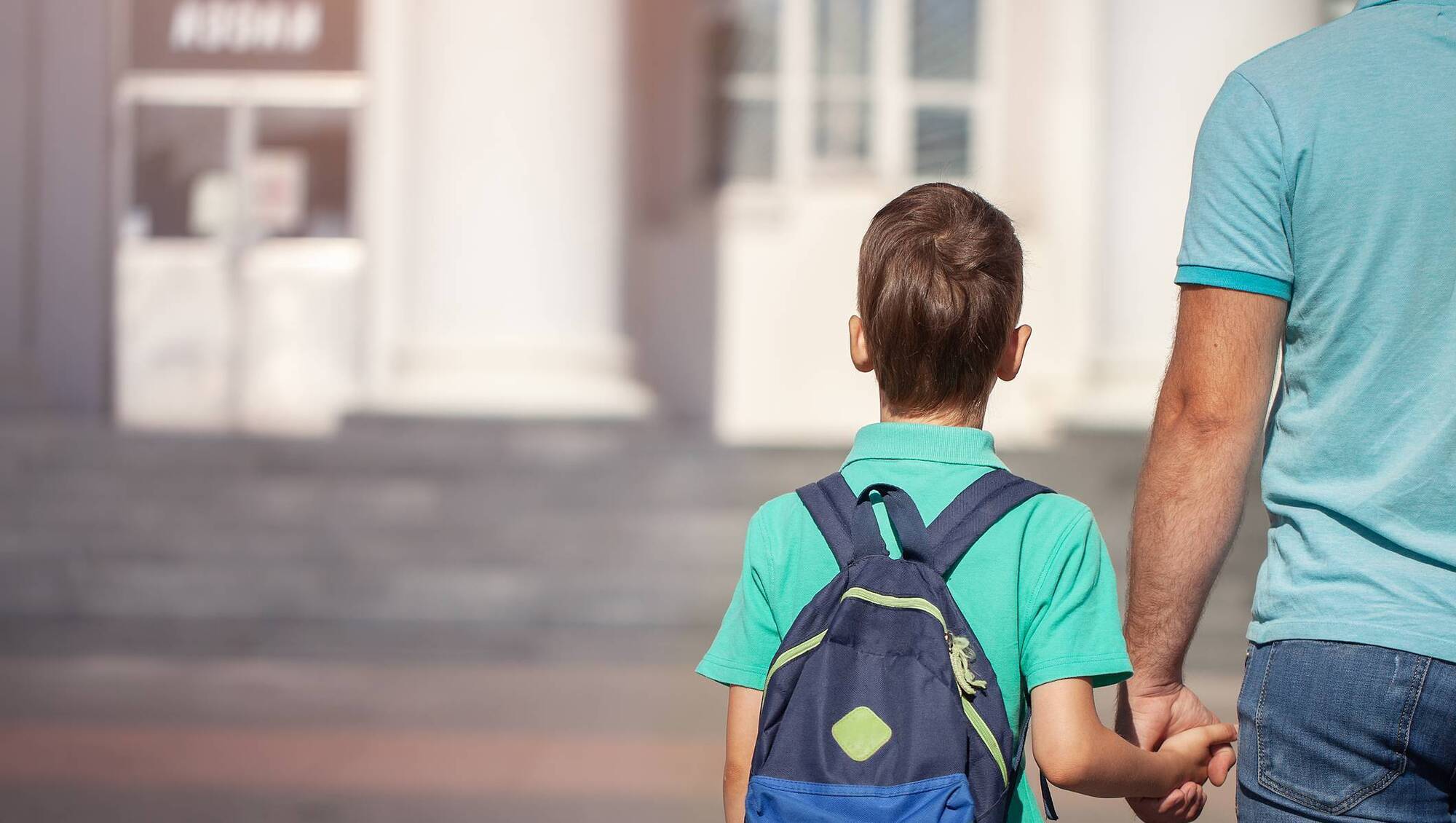
'My youngest stopped holding my hand while crossing the road. I walked the rest of the way home thinking about it more than I probably should have.' Picture: iStock

It wasn’t dramatic. No announcement. He’d already looked both ways, already decided the road was clear, already moved. I was the one standing slightly behind, arm half-extended, reaching for something that had quietly decided it didn’t need me anymore.
I walked the rest of the way home thinking about it more than I probably should have.
Here is the thing about wanting to get fit that nobody really says out loud: for most of us, it has very little to do with weight. Not really. Not underneath it. What I actually want — the thing I could feel standing at that kerb — is energy. The capacity to keep up. The ability to be fully present with my kids in a way that doesn’t involve me watching from a bench with my hands on my knees, breathing like a man who has just outrun something.
So I’ve been making changes. Small ones. Aiden, my PT, now runs me through one session a week, built specifically around exercises I can replicate at home on my own. One session I can actually do — not a programme that requires me to be a different person with different habits and a better relationship with six o’clock in the morning.
At some point, the hand lets go — or you let it go — and you have to walk across the road on your own and hope you’ve absorbed enough to not get flattened. Which brings me, inevitably, to Instagram.
I open the app most mornings and find it absolutely wall-to-wall with self-discipline content. Stoic quotes in bold white text on black backgrounds. Podcast excerpts of men with shaved heads explaining that the key to everything is waking up at five and doing things you don’t want to do.
Clips of people jumping into cold water with expressions suggesting they are enjoying this. Navy Seal maxims. I consume all of it. Lying down. The irony is not lost on me.
Self-discipline, of course, is not a modern invention. The Stoics were writing about mastery of the self in ancient Greece — the idea that virtue lived not in your circumstances but in your response to them.
Marcus Aurelius, who was Emperor of Rome and presumably had access to a great many comfortable options, wrote extensively about resisting softness.
Medieval monks built entire lives around the disciplined structuring of hours — prayer, labour, silence, more prayer. The military industrialised it. The Victorians turned it into an ethical framework, the belief the undisciplined man wasn’t just unproductive but somehow spiritually deficient.
What’s changed in the modern version is the noise around it. We have taken an ancient idea and fed it through a content machine until it resembles less a philosophy and more an aesthetic.
And somewhere underneath all of that content, people like me scroll and nod and feel, briefly, as though agreeing with something is the same as doing it.
The honest question — the one I keep turning over — is why I don’t have it. Or why I haven’t found it yet. And I think the answer, if I’m being truthful, has less to do with laziness than with something slightly more uncomfortable.
I think I’m afraid it might work.
That sounds ridiculous when written down. But there is something in the self-destructive brain that has quietly organised itself around the assumption of failure. Not because failure is enjoyable — it isn’t — but because it is known. The side of me who tries and falls short is a character I understand. I know his habits, his excuses, his routes home past the places that sell things he shouldn’t eat. He is familiar.
The form of me who actually succeeds? Who has energy, who keeps up, who doesn’t need the bench? That man is a stranger. And there is something in the brain — something I think a lot of people recognise but rarely admit — that finds the stranger more threatening than the failure.
Because if the plan works — if the session with Aiden actually becomes a habit, if the two months without Jill becomes competence rather than negligence, if the discipline holds for longer than three weeks — then I am out of excuses.
There is a version of this that resolves cleanly. I discover discipline, I change, I keep up with the kids.
I don’t fully trust that version yet. But I’m standing closer to it than I was.
My youngest crossed the road last week without looking back. Just moved, confident, already onto the next thing.
I’d like, eventually, to do the same.
CONNECT WITH US TODAY



Be the first to know the latest news and updates