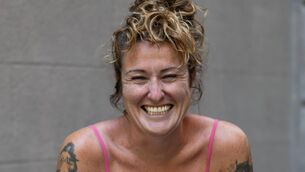
Ciara O'Connor: 'My dog Gwen was a comfort during my hearing loss journey'
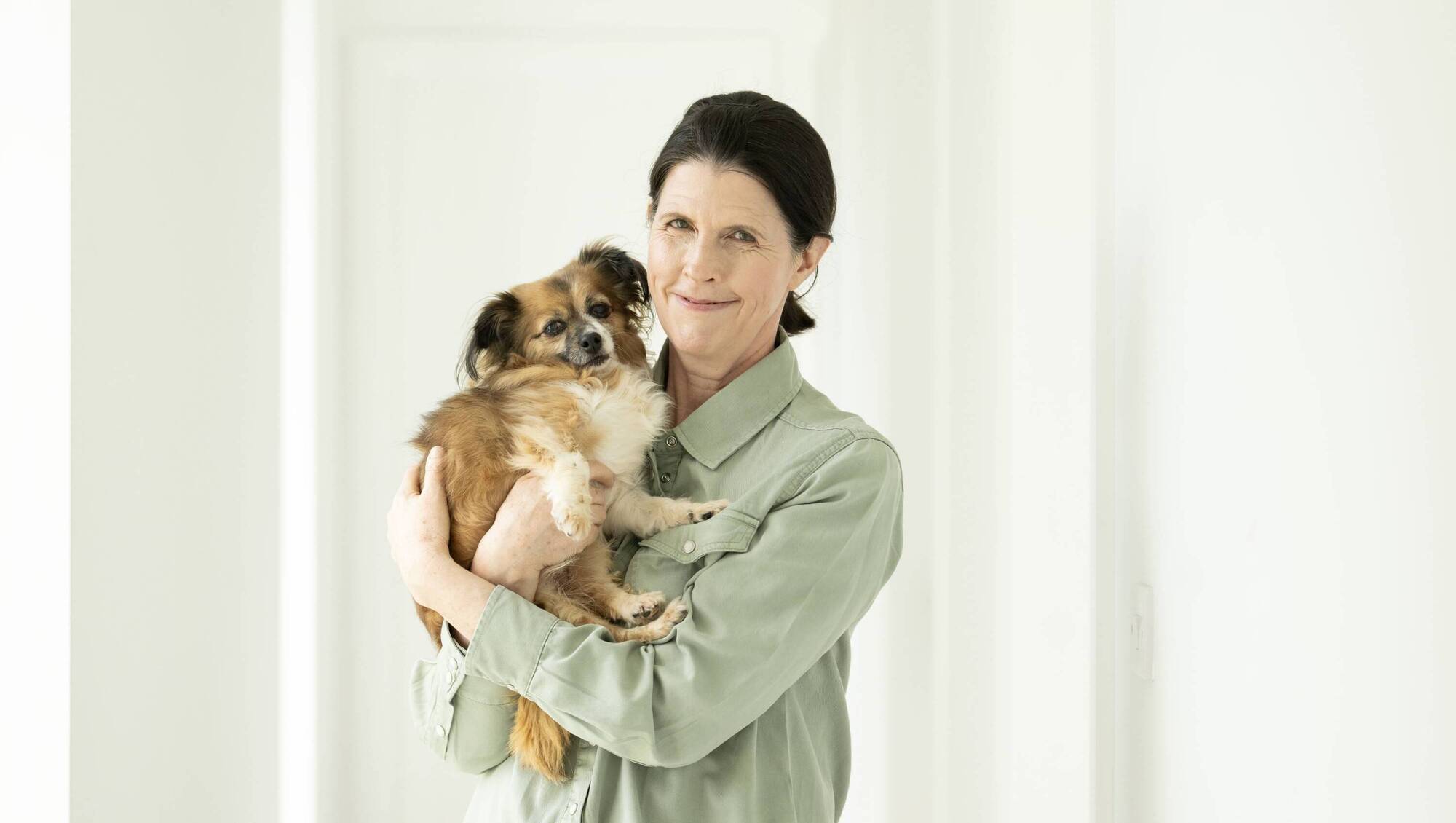
Ciara O'Connor, author of new children's book The Skidderwolves with her dog Gwen.
At first, I relived those 24 hours — if I hadn’t had that cup of coffee, if I hadn’t been running around like a mad thing, would it have been different?
I always had really good hearing, but on Friday, June 14, 2024, my left ear suddenly closed at work. I was on a rooftop garden with a colleague; there was construction nearby. I wondered if debris had lodged in my ear — that’s how fast and sudden the closure was.
I thought maybe it’s just wax. I kept going with my day — I’m a lecturer at Dundalk Institute of Technology and, coming to the end of the semester, there was a lovely feeling of relief in the air.
I felt dizzy all day. At 5pm that evening, getting the Dundalk to Dublin train for my sister’s birthday weekend, I felt extremely dizzy. I boarded but had to get off. The panic, thinking I’d get sick there in front of everyone.
Funny how you do the normal things — I messaged my sister to cancel our plans. Back home, still dizzy, I was getting sick, bowl by the bed, having to crawl to the bathroom. I Googled ‘blocked ear’ but never made the connection between vertigo and ear closure; never for a second thought my hearing would be compromised.
The rest of the summer, I was dealing with roaring tinnitus, like a hair-dryer being blown into my ear. I had hyper-acuity in that left ear — going into a café, staying there, was unbearable — the noise was so elevated. I couldn’t walk in a straight line with the vertigo; I couldn’t drive.
Read More
I sought medical help. Diagnosis was delayed; it came in late July: sudden sensorineural hearing loss. It affects about 1,000 people in Ireland every year.
If steroids are given within the first 24 to 72 hours, some or all of the hearing can potentially be saved.
I felt very out of sorts, was trying to keep everything going. I was living in a bubble. Not really able to go out or do much. In August, I decided to take a year out of work.

Counselling was a game-changer in helping me come to terms with it. My dog, Gwen — a cross-bred rescue — was on my knee the whole time during those rocky months, like she knew something wasn’t right with me. That was a comfort.
In October 2024, I got word a publisher was potentially interested in a children’s story I’d sent them months earlier. I’d written the first draft of when my sons were in primary school — a couple of years ago I updated it. There was nothing definite at that stage, but it was like a light being switched on, a ray of hope through a dark time, a secret that kept me going.
Those wolves got me through a winter of constant tinnitus. Weirdly, I don’t really hear the tinnitus when I’m writing; I’m so focused on what I’m doing. Sometimes, I think hearing loss is the easiest part — I’ve got good at lip-reading. I have to concentrate a lot more on conversation now. And the hyper-acuity — someone stacking the dishwasher is very difficult to cope with; a door closing reverberates for a while.

If I go out for dinner, I’m impacted for days. I have to decide what I’m going to put up with and make choices. It’s like having a certain amount of ‘ear dollars’ a day. I think about how I’ll spend them. Going out for dinner for someone’s birthday is worth it. I have to tiptoe around the edges of life a bit. I’ve found balance therapy very useful — daily eye exercises to keep the vertigo under control.
I went back to work in May 2025. Everyone has been so understanding. My job is front-facing — after teaching I have to lie down for a few hours to decompress. The tinnitus never stops, like living with your head inside a fridge. I’m learning to cope, and yoga, running, and writing all help.
I feel I’m living a whole new stage of my life. In one sense I’m much more careful and measured about what I do but I’m also more adventurous.
Airports are very tricky, the noise, but I went to Rome with my older son and to Iceland with my younger. My sons are in their early 20s, in college, I felt a need to spend time with them. I have deeper, more significant conversations with people now. I’m definitely more empathetic, more tuned-in. I’m more likely to be open. I advocate for people with this condition. It feels important to make a difference.
I don’t have a total handle on what has happened to me, but I have these structures and strategies in place that I go back to when I need. I’ve learned you have to listen for the bird-song — I can hear the birds, though not in stereo sound anymore! You have to focus on the colour.
- Ciara O’Connor's book longlisted for the Staróg debut children’s fiction prize, is out now.
- Visit beaconaudiology.com for more information on sudden sensorineural hearing loss.