The rise of endurance sports: Why are we so drawn to events like HYROX and Ironmen?
Once upon a time a marathon was a marker of elite athleticism. Now ultra endurance sports like HYROX are redefining fitness. Ironman aficionado Micheál Costello explains why – and how – he pushes through the pain
The rise of endurance sports: Why are we so drawn to events like HYROX and Ironmen?

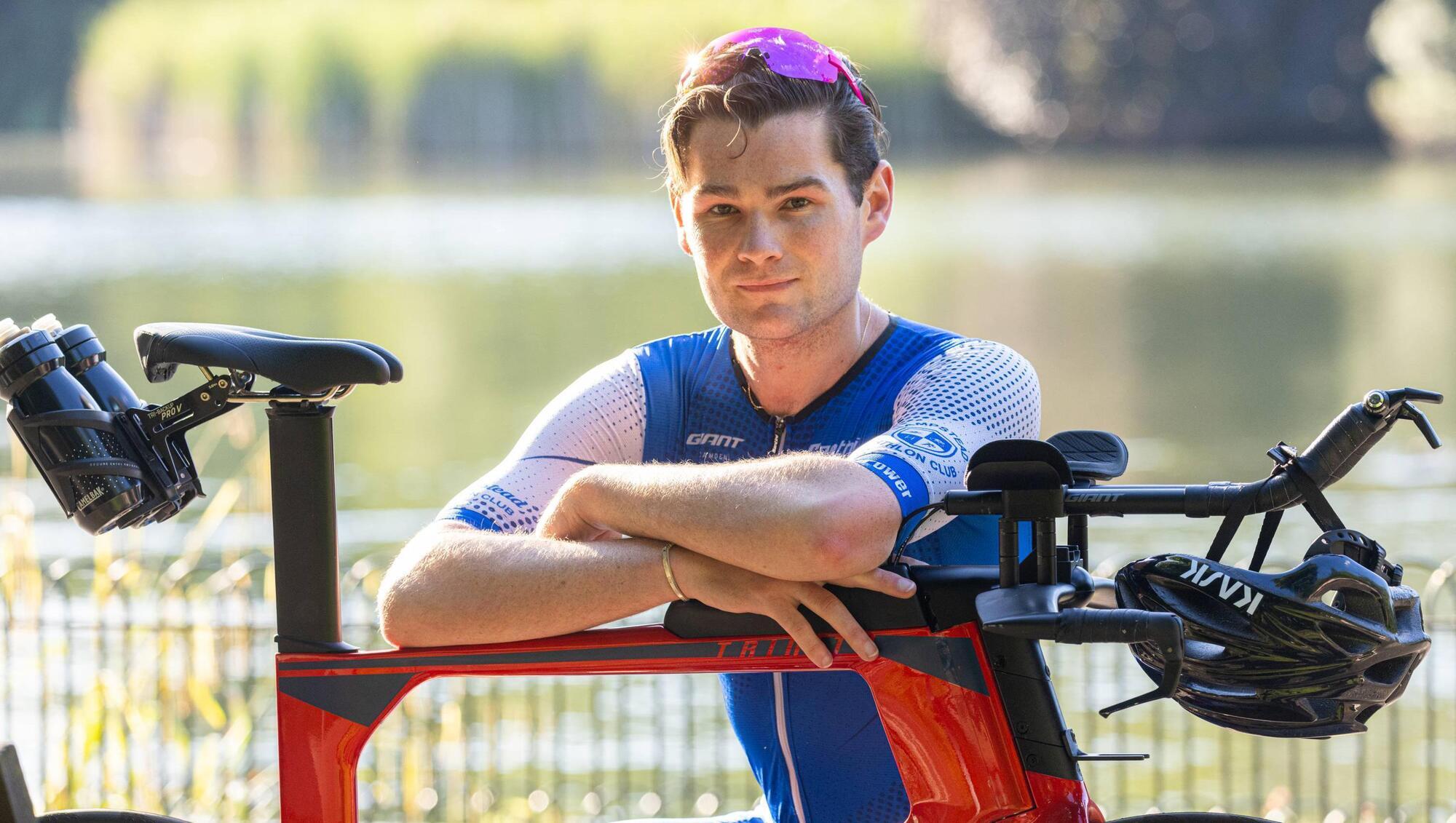
Michael Costello training in Battersea Park, London to take part in the Ironman Cervia, Italy in September
Picture: Andrew Dunsmore

Group fitness clubs and classes, particularly in running and hybrid sports like HYROX and triathlon, are blowing up. 

As an Ironman triathlete, I feel like one of those annoying people who say “yeah, I was doing this before it was cool”. 

Why did I even consider swimming 3.8km, cycling 180km and running a marathon one after another in 11 hours and 25 minutes? Well, it helped me regulate my exercise. 

This sounds counter-intuitive, but it’s true. I got hooked on Ironman triathlon as a chronic over-exerciser. 

Following a diagnosis of an eating disorder and exercise addiction, I needed something to hook my exercise on and not just grind myself to exhaustion from mornings and evenings at the gym. The natural solution, of course, was an Ironman.

Micheál Costello says training for an Ironmen helped him regulate his exercise. Picture: Andrew Dunsmore

In October 2023, I rocked up to my first Ironman in Barcelona anticipating nerves and anxiety to take over. This was not the case. 

After years of exercising to the point of clinical exhaustion and nine months of training in a healthier manner, I finally felt like I was where I belonged. 

The level of fitness and mental endurance I had built from training in a damaging way was tainted with guilt, it wasn’t something to boast about, I was ashamed of it. 

As I stood on the shores of the Mediterranean amongst 2,500 other athletes with their own stories to tell, I felt at peace. I knew I was on the cusp of changing my outlook on exercise and fitness. 

For the first time, I was proud of my fitness and my ability to endure. As I crossed the finish line I felt the closest I think I’ll ever be to feeling like a superhero.

Half a year on from my first Ironman, I’ve invested in a ‘proper’ triathlon bike and booked my next Ironman event, Italy in September of this year. 

The warm-up event was the Hardman Waterville, a half Ironman distance triathlon in my beautiful (when sunny) home county of Kerry last weekend.

When you sign up to an event like an Ironman, ultra-marathon or a HYROX, you aren’t just signing up to an event — you’re signing up to a lifestyle. And, another full-time job. 

Micheál Costello: 'I finally felt like I was where I belonged.' Picture: Andrew Dunsmore

These events may culminate in one big day, but months of training precede every endurance challenge. Graham Keenan, personal trainer at Excape Gym in Dublin and HYROX competitor sees his participation in the functional fitness race as a way to chase sustainable improvement and get a sense of achievement from his daily efforts in the gym.

Graham is not alone, when tickets went on sale for Dublin’s HYROX, they sold out within minutes. 

Graham remembers crossing the finish line at HYROX Dublin last year as a moment to celebrate his physical abilities and perseverance along with motivating him to improve his results for future races. 

HYROX gives Graham and his clients a sense of purpose that is based solely on their own work and its theirs to hone.

The sense of community is strong, there is an unspoken camaraderie and respect amongst endurance athletes as we know what it takes to complete events that defy the usual physical and mental demands of daily life. 

While walking around London where I work in public relations, I often spot an Ironman finisher backpack on another seemingly normal commuter and we exchange a knowing glance.

The community support aspect of participating in endurance events couldn’t be more important for Brenda Dennehy, who went from smoking, treatment for alcoholism and addiction to prescription medication, to running marathons all over the world including London and New York.

Brenda Dennehy at Ballincollig Regional Park, Cork. Picture: Dan Linehan

Running became her friend

For Brenda, exercising was never about getting the ‘perfect body’. Instead, Brenda needed a release.

It was the midst of lockdown, she had been through treatment in a centre in Galway for alcoholism and addiction to prescription medication.

The first few times she popped on her runners and headed out for a run around her home in Cork she recalls how mortified she was. “I was so scared everyone would be saying, ‘who does your one think she is?’”

But as soon as she experienced the endorphins from her runs Brenda was hooked, running became her friend. 

In a time when the world was turned upside down and she was left to rediscover who she was after a stint in a rehabilitation facility, running gave Brenda the chance to be alone with herself and revel in her physical capabilities.

The addiction that had stolen so many years from her could now be harnessed and channelled into a healthier and more fulfilling way of living, she could rebuild her life. 

Mine and Brenda’s stories are different but I couldn’t relate more to this.

Almost five years since leaving treatment, Brenda has found the perfect way to mark her fifth anniversary of being sober by signing up to the epic Dublin Marathon, which she will run in memory of her biggest supporter, her father Dano, who died suddenly just days after she crossed the finish line of the London Marathon. Over the coming years she has her sights set on the remaining five major world marathons; Berlin, Boston, Chicago, New York, and Tokyo.

In an effort to get more women involved in running, marathon, ultramarathon or shorter distances, Brenda is launching a running club. 

Called ‘The Fast and the Curious’, this group is targeted at people of all genders who want to try running in a safe and welcoming environment. 

Armed with the slogan, “lace up, gear up, never give up”, Brenda wants to create a community of runners who all understand that we have to start somewhere and that we need to pat ourselves on the back for getting out there.

Michael Costello training in Battersea Park, London to take part in the Ironman Cervia, Italy in September

A welcome shift

For the majority of people today, our sense of community extends beyond the bounds of real life. Our presence online and on social media is blending more and more with our lives in the real world.

Pre-covid, there was seldom a Friday or Saturday night when I would scroll through Instagram and not see a friend, acquaintance or influencer dancing drunkenly on a table.

Over the past two years, these clips and pics have slowly been phased out to be replaced by screenshots of Strava routes, wholesome post-run and cycle pastries and ‘get ready with me’ videos, not for a night out, but for a HYROX, cycle or a run.

Carbon-plated super shoes have replaced high heels, running vests and lycra shorts are the new ‘jeans and a nice top’ for men and women. 

No longer are we trying to stomach shots of baby Guinness or sambuca, People under 40 these days are knocking back shots of ginger and energy gels, whilst sipping on electrolytes.

This shift is a welcome one for me, I don’t have to explain why I’m not drinking at parties, nor do I feel the need to defend my enjoyment of exercise and running 30km on a Saturday and cycling 100km to 180km on a Sunday.

However, as much as I enjoy basking in the orange glow of my active Strava account, it is important to not fall into the trap of letting your pace and duration of whatever activity you like to do become an indicator of your worthiness of doing said activity. 

Strava, Apple Watches, FitBit, Oura Ring etc. should all be used as tools to aid your fitness journey, not a judgemental piece of tech that follows you ceaselessly.

The rise of apps like Strava and fitness trackers gives that feeling of connection without being beholden to the unobtainable visual lifestyle of Instagram.

Micheál Costello. Picture: Andrew Dunsmore

For Brenda and me, exercise has become an escape. Truly, no one ever is cured of an illness like an eating disorder. 

These illnesses and others like them have the unrelenting ability to colour every waking day a shade of depressing, monotonous grey.

But alongside counselling, therapy, and medication, an essential tool in our belt for managing our illnesses is exercise.

Getting up every morning to pound the pavement, hit the cold water for an outdoor swim, or take to the roads for a cycle can be a slog. We live in Ireland and Britain, it’s hardly the Azores. Braving the rain, wind and cold can be a task in itself.

Sure, I abide by my training but that doesn’t mean it is always enjoyable, sometimes a 10km run is tougher than an Ironman. 

However, after years of enduring mental and physical illness, as well as the uncertainty that covid, recessions, housing crises and more have brought to our lives and many more millennials and Gen Z like us, the mental endurance we’ve built can now be put to good use in endurance events. 

We no longer want the numbing effects of a few too many drinks at the weekend, we want to feel something and enjoy the sense of achievement that comes with completing physical fitness events.

More in this section

Lifestyle

Newsletter

The best food, health, entertainment and lifestyle content from the Irish Examiner, direct to your inbox.

Cookie Policy Privacy Policy Brand Safety FAQ Help Contact Us Terms and Conditions

© Examiner Echo Group Limited