Colman Noctor: Sharenting is about being seen in a world where the village has moved online
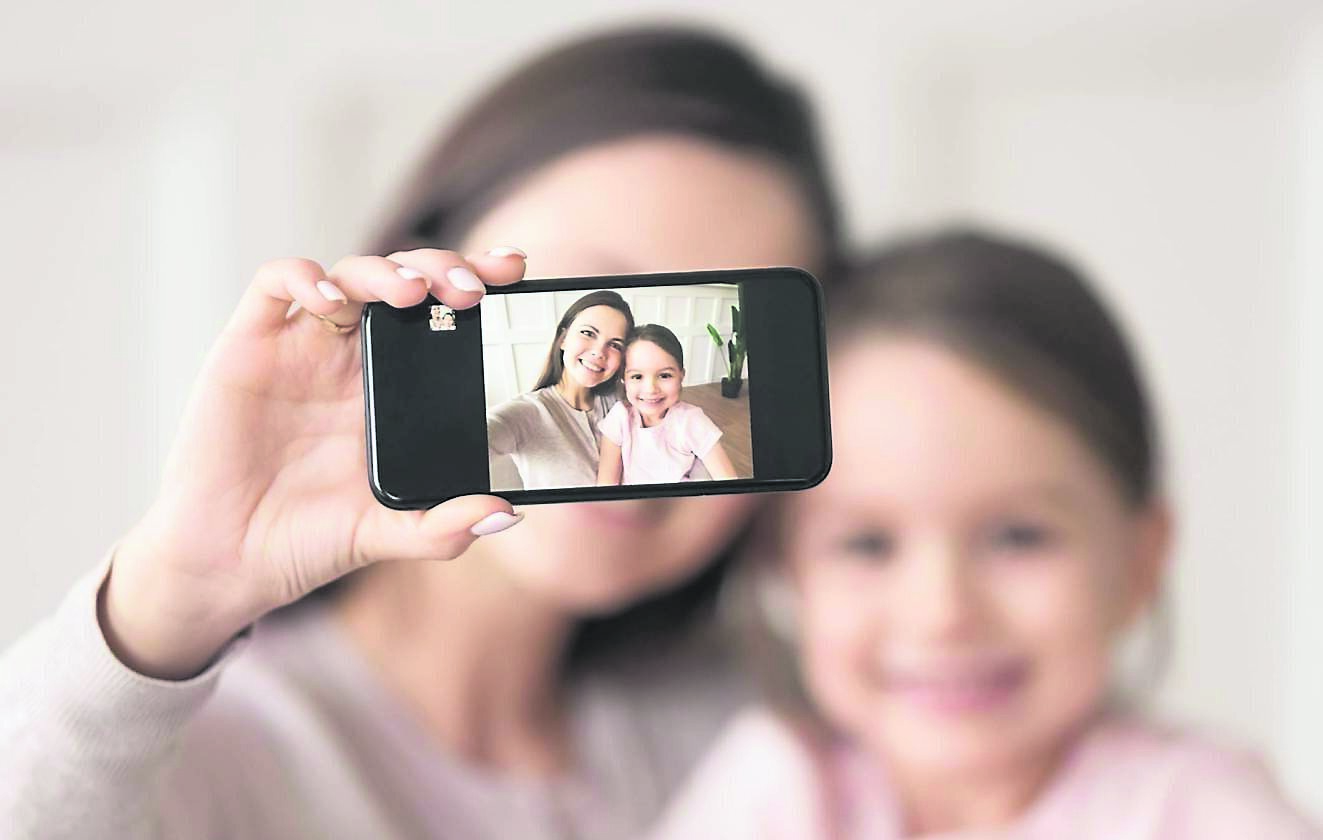
Modern-day parents are much more involved in their children’s lives, and given that almost everyone has a high-quality camera in their pocket, the volume of content shared is higher, too. Picture: iStock
Around three in four parents in Ireland say they post pictures of their children online either to stay connected with family and friends or to create a lasting record of childhood memories. This statistic from the Data Protection Commission (DPC) highlights how deeply “sharenting” — sharing information and images of children online — has become embedded in modern family life.
While the recent DPC research found that parents are increasingly aware of the risks, from privacy breaches to image misuse, many continue to share sensitive information about their children without first obtaining their children’s consent.
The DPC findings suggest that parents aren’t lacking good intentions, but seem unsure how to balance the joy of sharing family moments with the need to protect their children’s digital privacy.
This phenomenon has been especially visible over the past few weeks, with many social media feeds awash with children in school uniforms posing for a photo to mark their final day of primary school or their playschool graduation. Smiling faces holding graduation certificates, or children displaying signatures on their sixth-class hoodies, are commonplace, alongside familiar snapshots of end-of-term sporting achievements and award ceremonies.
Predictably, these posts ignite polarised discussions about the rights and wrongs of parents sharing their children’s lives online. Some argue that parents should never post images of their children because of concerns about privacy, consent, and digital footprints. Others dismiss these concerns, insisting they are simply sharing happy family memories.
Sharing joyous experiences
With the exception of those who post images of their children for monetary gain, most parents share photos of their children online out of love. They are celebrating moments that feel significant, documenting memories, and inviting family and friends to share in experiences that bring them joy.
The behaviour itself is not particularly new. What has changed is the size of the audience.
A generation ago, those photographs might have been shown to grandparents over Sunday dinner, to colleagues during a coffee break, or to neighbours who called at the house. Today, our communities increasingly exist online. Facebook and Instagram have become the places where life’s milestones are acknowledged. So while the instinct to share images of special moments is the same, the platform has changed. It is also worth noting that modern-day parents are much more involved in their children’s lives, and given that almost everyone has a high-quality camera in their pocket, the volume of content shared is higher, too.
But perhaps the more interesting question is not whether parents should post these photos, but why sharing them has become so important.
As social beings, we all need to be seen, and a key psychological idea is that we develop our sense of self through “the gaze of the other”. From infancy, a parent’s smile tells a baby they are safe, a teacher’s encouragement tells a child they are capable, and friends’ acceptance tells an adolescent they belong.
That need for recognition does not disappear when we become adults. It simply takes new forms of expression.
Parenthood is deeply rewarding but often unseen. Much of what parents do occurs behind closed doors, with no recognition for enduring sleepless nights or assisting with homework after a busy day. Also, there are no awards for the countless acts of patience, consistency, and love that gradually influence a child’s growth. For many parents, especially those raising children without extended family nearby, parenting can feel isolating.
Previous generations often raised children within communities. Grandparents often lived nearby, and neighbours knew one another. So, parenting usually happened in full view of people who noticed your efforts, encouraged you when things were difficult, and celebrated your child’s achievements almost as if they were their own.
Many parents today simply do not have that experience of connection. Families are scattered across counties, work is often remote, and neighbours are more distant than ever. Even school-gate conversations are hurried because most are rushing to their next commitment.
Could it be that social media has stepped into the space once occupied by community?
When a parent shares a photograph of their child completing primary school, they are obviously celebrating their child. But they may also be seeking something deeper: asking for their experience to be recognised.
In this scenario, a congratulatory comment or a heart emoji says more than “well done”; it also says, “I see you”. There is something deeply human about this need.
Seeking validation online
I did my doctoral research on ‘the psychodynamics of online sharing’ and found that it is far more complex than it appears on the surface. When people share content, they are not simply saying, ‘I have something that I think you will like’; they are saying, ‘this content says something about me’.
Sometimes discussions about sharenting imply that parents who post regularly are simply seeking attention. I think that is psychologically simplistic, because attention and validation are not the same thing.
Validation is one of our most basic emotional needs. We all want aspects of our lives to be recognised by others. We want our efforts to count for something, especially in parenting.
Of course, this is also where we need to think carefully about how we create the feeling of being seen.
If social media becomes our primary source of validation, it can subtly begin to shape our behaviour. Likes and comments provide immediate emotional rewards and reassure us that people are paying attention. Over time, we can find ourselves sharing not because a moment feels meaningful, but because we have become dependent on the affirmation that follows.
It is not vanity or attention-seeking — it’s how psychology works.
When sharing pictures of our children, the challenge is to ensure that our need to be seen does not overshadow our child’s right not to have a digital tattoo of their childhood visible to everyone.
Children are not extensions of their parents. They are individuals who will eventually form their own views on what they are comfortable sharing publicly. A photograph that seems entirely innocent to a parent may look very different to the teenager or young adult looking back years later.
I am not suggesting that parents should never share family moments. I am simply asking that they reflect on their motivations.
Before posting, perhaps we might ask ourselves one gentle question: ‘Who is this post really for?’
Perhaps we will realise that we are hoping someone notices our moment and seeking reassurance that we are doing OK. Or perhaps we simply feel isolated and want to feel connected.
There is no shame in admitting that. In fact, recognising these needs is healthier than pretending they do not exist.
Maybe the answer to sharenting is not simply encouraging parents to post less, but helping them feel seen more often in their everyday lives.
Building stronger neighbourhoods and creating opportunities for genuine connection between families can only help. In such communities, milestones are more likely to be celebrated in person, and parents feel validated.
Because underneath many of these social media posts is something far more significant than self-promotion. It is the timeless human desire to be seen.
- Dr Colman Noctor is a child psychotherapist
Read More

Cancel anytime
CONNECT WITH US TODAY
Be the first to know the latest news and updates