‘It was horrendous leaving my wife and baby’: Fathers call for more paternity leave
As a new campaign aims to extend paternity leave in Ireland, EMER HARRINGTON talks to three fathers who believe it would be a crucial benefit for themselves and their families
‘It was horrendous leaving my wife and baby’: Fathers call for more paternity leave

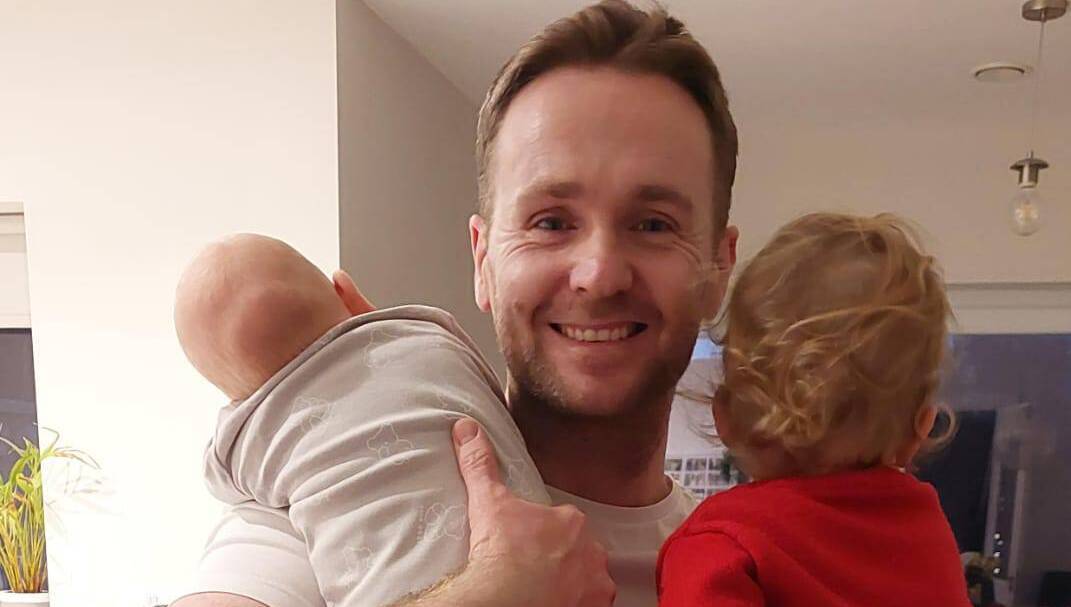
James Costelloe, father of three-year-old Isabelle and 16-month-old Robbie. He says of fatherhood: 'It's arguably one of the biggest changes, if not the biggest change you're going to experience in your adult life'

When Daniel Gleeson’s son was born seven weeks early in 2024, he was moved into the Neonatal Intensive Care Unit (NICU) at University Hospital Galway.

It was late, so Gleeson stayed for a short time before heading home to get some sleep. He didn’t want to leave his wife and premature baby, but he had work in the morning.

“My son was born at 9pm, and the birth was fairly traumatic for my wife,” he says. “He went up to NICU, I held his hand through the incubator for five minutes — I didn’t get to hold him at all — and I had to go to bed and go to work the next day.”

Like all fathers in Ireland, Gleeson, who works as a business analyst in Galway, was entitled to two weeks paternity leave. He knew he would be most needed when his wife and son came home from hospital, so he chose to defer his leave until then.

Ireland’s two weeks of paternity leave at a weekly rate of €299 is among the lowest in Europe, and a new campaign is calling for it to be increased to eight weeks at a higher rate. By comparison, Spain offers 16 weeks at full pay, and in Iceland fathers get six months leave at 80% of the salary.

The ‘8 Weeks For Families’ campaign was founded by Shane O’Connor, who runs the Lads2Dads peer support group in Cork and is a father of two young sons.

“Two weeks isn’t enough,” he says. “It’s not enough for fathers whose babies end up in neonatal care. It’s not enough for partners recovering from C-sections or complicated births. It’s not enough for any family trying to find its feet.”

“Through Lads2Dads, I’ve seen what this does to people. Men burning through every day of annual leave just to be present for their own families. Teachers returning to the classroom at the exact moment their partner needed them most, then taking extended leave on reduced pay — adding financial pressure to what should be one of the most joyful periods of their lives.”
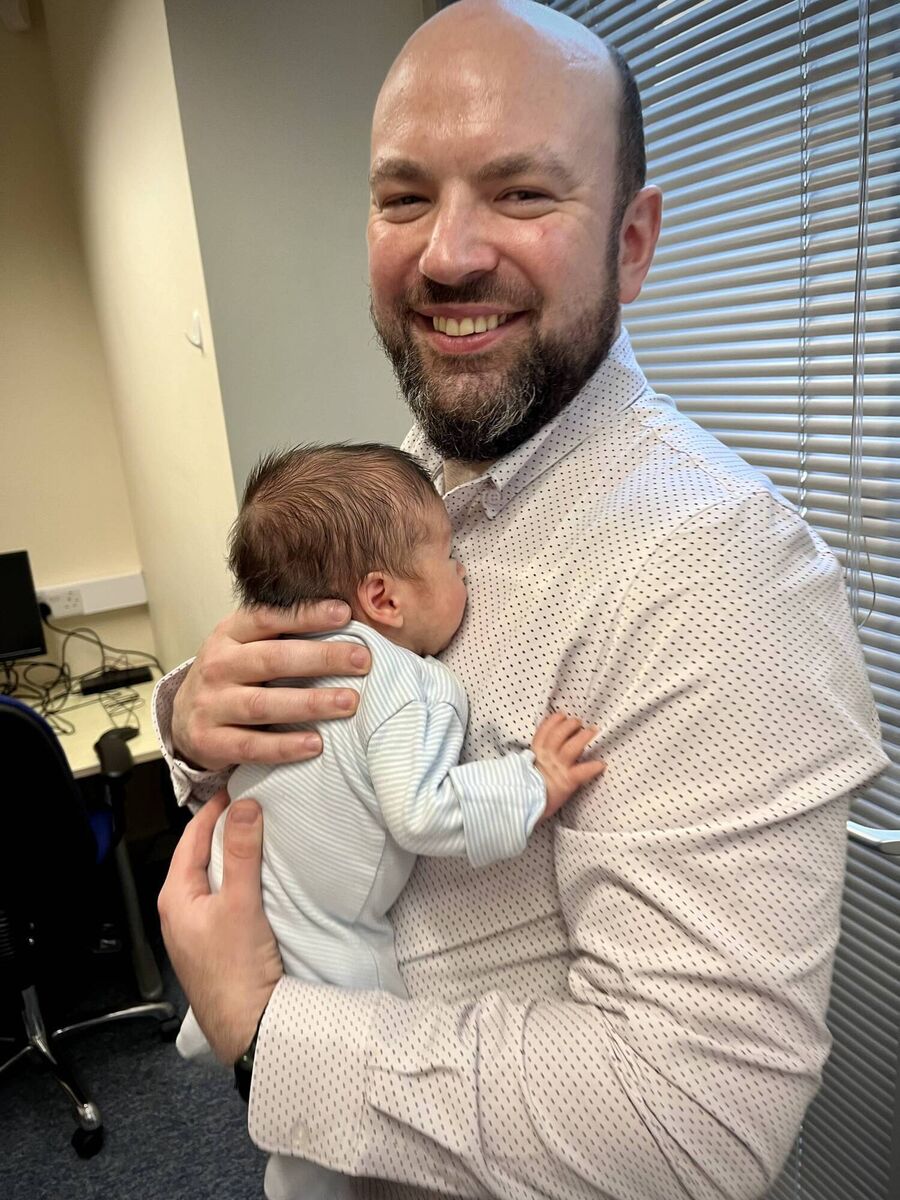
Daniel Gleeson with his son. He believes a change in paternity leave entitlement will give families a chance to settle into parenthood, rather than just surviving the first few weeks

During the four weeks his son spent in hospital, Gleeson struggled to focus on work.

“It was incredibly difficult… my brain was just nowhere near functional at work,” he says. “My head was all over the place, because I was constantly messaging my wife, checking in how she was, because she was also all over the place.”

When his son came home, Gleeson took additional parental leave — parents in Ireland can get up to nine weeks of leave each in the first two years of their child’s life at a weekly rate of €299.

“If I’d only taken the two weeks, my son would have still been pre-term when I had to go back to work after the paternity leave,” he said,

While his paternity benefit was topped up to full pay by his employer, parental benefit is capped, so he could only afford to use a small portion of his entitlement. “We had to make sure that we could cover rent and save for a mortgage,” he says.

Not all employers top up statutory paternity pay, which means many fathers can’t afford to take any time off at all.

In 2025, the Irish Human Rights and Equality Commission (IHREC) and the Economic and Social Research Institute (ESRI) published research revealing that only half of fathers avail of paternity leave.

“The financial pressure is too great,” says O’Connor. 

Lower-income families can’t afford the hit to their income, so fathers stay at work despite being entitled to leave.

When Gleeson returned to work, a knowledge gap grew between him and his wife, leading her to take on more responsibility for their son’s care, a pattern that has continued despite them both being working parents.

"That inequality in mental workload and physical workload I am very aware of, and it basically all stems back from that gap between paternity and maternity leave," he says.
He believes a change in paternity leave entitlement will give families a chance to settle into parenthood, rather than just survive the first few weeks. “One of the big benefits is it just gives you time to be a family and not just have to deal with the logistics of having a newborn,” he says. “To actually emotionally sit with it, come to terms with it… and just enjoy being with your child.”

Eoin’s story

When I speak to Eoin Leahy from Cork, he is preparing to return to his role as a clerical officer in the HSE following his paternity leave. 

His wife, Orla, gave birth to their two-week-old son, Liam, by Cesarean section, which has an initial recovery period of six weeks.

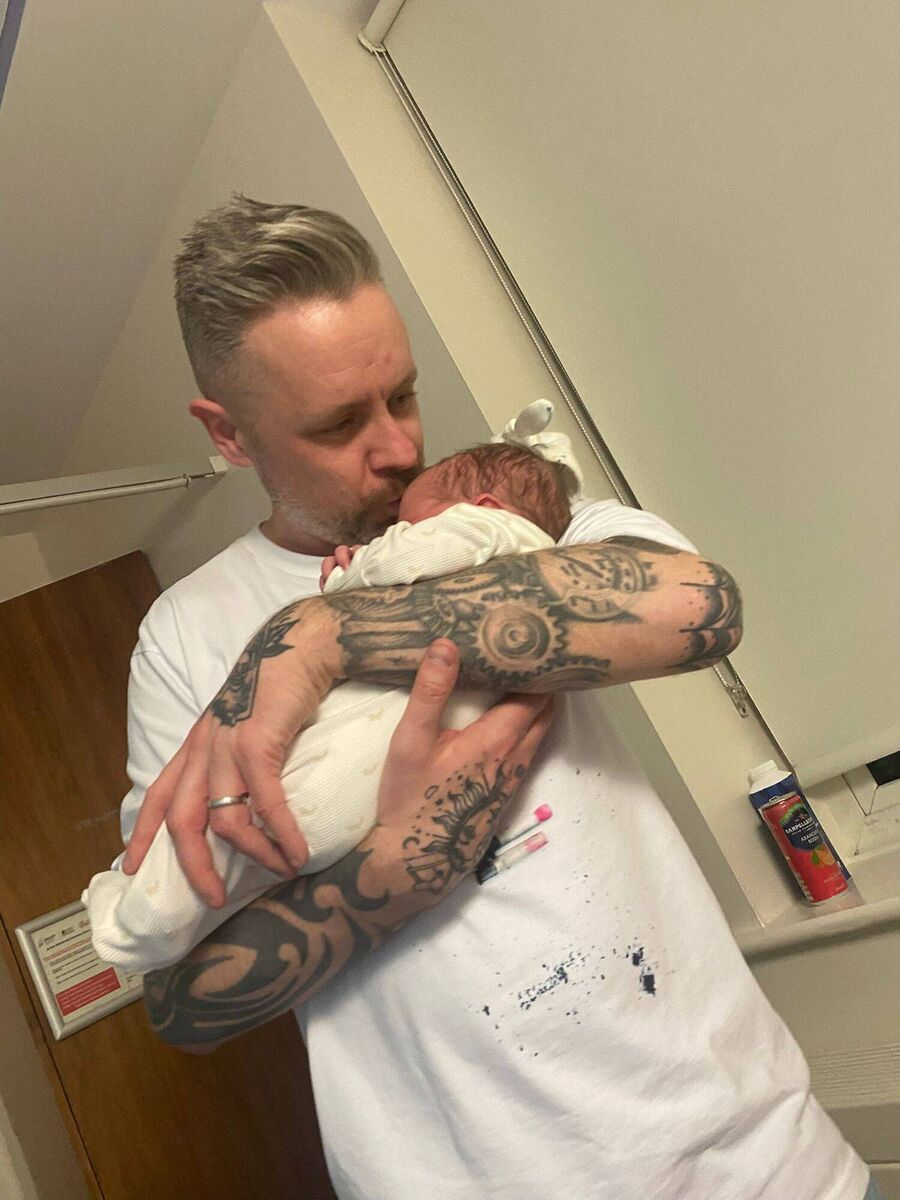
Eoin Leahy with his son Liam. "If you look at some places, they have six weeks' paternity leave, they have eight weeks off… whereas here it's just two weeks,” he says

“[I’m] stressed out knowing that she’s at home with a baby and she’s recovering from surgery,” Leahy says.

“She can’t drive a car, can’t bend over, can’t pick up heavy things. It’s very limited what you can do within the six weeks. So it’s just crazy then with two weeks [leave] for men.”

He believes any extension to the two-week period would be an improvement on the current situation in Ireland.

“If you look at some places, they have six weeks off, they have eight weeks off… whereas here it’s just two weeks,” he says. “At least four of those days are in the hospital. Then, when you’re coming home, you’ve only got about a week and a half at home, and you’re back into work.”

James’s story

James Costelloe, father of three-year-old Isabelle and 16-month-old Robbie, also works for the HSE. After the births of both of his children, he received two weeks paternity leave with full pay and topped it up with annual leave.

His wife, Aoife, gave birth to their first child at 38 weeks, and his daughter had to spend an extra week in hospital with jaundice.


“It meant a week [of leave] was nearly gone by the time we could actually get her home,” he recalls. “It definitely wasn’t an easy birth… the recovery for my wife was pretty extensive. She wouldn’t have been going for little mini walks for a few weeks actually, so there was a lot of help needed.”

Although they live in Cork, the couple are originally from Dublin and, like many new parents, they struggled with the lack of support nearby. “We’re not local… although we could have some support, it would be fairly reduced. There wouldn’t be people who live up the road, they would be coming from a distance to try and support us,” he says.

When the time came to return to work, all Costelloe could think about was his wife and newborn daughter.

“It was horrendous, leaving both of them, and quite a surreal experience, knowing that both of them needed care.”

While his own needs were down his list of priorities, he believes additional paternity leave is also important for new fathers.

“It should be down the pecking order, but I also think there’s a lot happening for fathers in those times,” he says. “It’s arguably one of the biggest changes, if not the biggest change you’re going to experience in your adult life.

And regardless of your job, regardless of who you are, you have to figure it out… you have to learn as a father.

The ‘8 Weeks For Families’ campaign is seeking an increase in both the duration and benefit for paternity leave.

“Our primary ask is to extend statutory paternity leave to eight weeks,” says O’Connor. “But if we’re serious about actually making it usable for working families, we need to move to earnings-related pay.

“The real solution is eight weeks at 70 to 100% of salary, so that families aren’t choosing between being present and staying solvent.”

When the petition reaches 10,000 signatures, it will be formally submitted to the Oireachtas, and to Minister for Children, Disability and Equality, Norma Foley TD, and Minister for Social Protection, Dara Calleary TD.

“We won’t stop at signatures. We’ll keep pushing until this is set in stone in policy,” says O’Connor.

See 8weeksforfamilies.ie

More in this section

Cookie Policy Privacy Policy Brand Safety FAQ Help Contact Us Terms and Conditions

© Examiner Echo Group Limited