Classroom toys helping minds stay focused
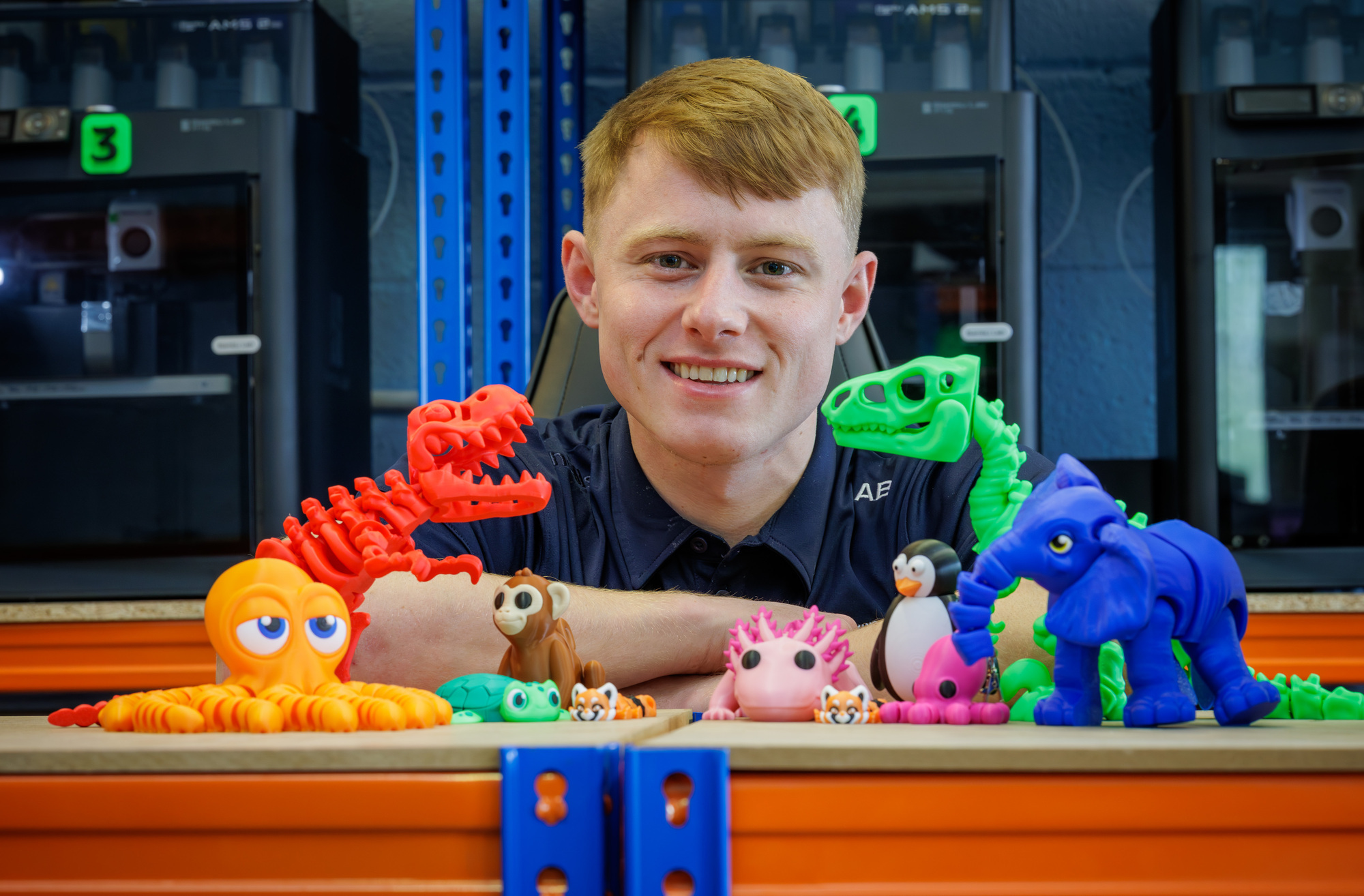
Adam Brennan used his experience as an engineering and special needs teacher to make sensory toys for his pupils. Picture: Dylan Vaughan
A special educational needs teacher at Heywood Community School, Co Laois, Brennan was not long teaching when he saw the benefits of sensory/fidget toys for students.
“I was part of the Nurture programme, which takes a group of four or five students, twice weekly, who find it difficult to be in a big class and to learn — they might have ADHD or ASD. I saw that different fidget toys helped improve their focus, helped them be more regulated in class.”
Around the same time, at a school open night, Brennan was introduced to 3D printing. “It fascinated me that you can have an idea and have it printed off in a couple of hours. I made a flower pot that first time, which I still have.”
Brennan, who was raised on a dairy farm — he helps his dad during silage season and gives a hand with milking — bought his first 3D printing machine in 2024. Seeing a gap for Irish-made sensory toys “with a thoughtful design”, he began making animal fidget toys. Sona Sensory, his company, was born. ‘Sona’ means happy in Irish.
His first toys were reptiles, and then dinosaurs. Along the way, he got support from the Local Enterprise Office in Kilkenny. Two years ago, he began introducing his own sensory and fidget creations to his students, mostly 14- to 16-year-olds. “The toys are in bright, vibrant colours with a friendly, cartoonish design; some have smiley faces. They’re attractive to kids to take up.”
Brennan knows a student constantly clicking a pen in class has an energy build-up. “So if they can use a fidget toy, they’re releasing energy through their hand. The toys I make are small, hand-sized, and discreet — I’m conscious that kids might think it somewhat childish to have a toy in [class] — they have articulated joints, so they’re solid and joined, but they move around; you can wrap them around your fingers. That’s part of the sensory aspect.”
Brennan has seen the benefits in his classroom. “Instead of doing something disruptive, like getting up out of their seat or talking to someone beside them, they’re able to relax more, to sit and focus on a task for longer — they’re more positive about doing the work,” he says. The children have favourite toys: The axolotl, red panda, and octopus.
Brennan did not want his business to be an environmental burden, so the toys are made from bio-based plastic materials, such as sugarcane and corn starch.
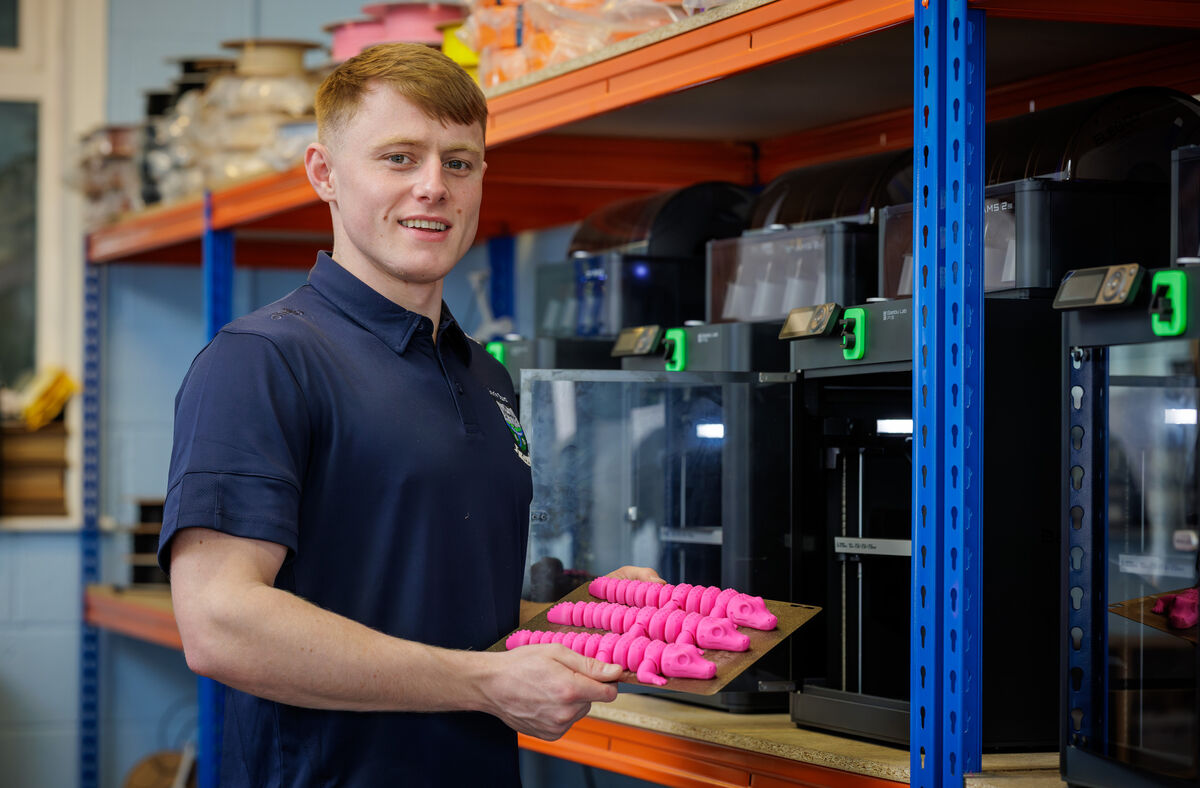
The toys won three prizes at this year’s Irish Print Awards, including gold for innovation and technology. The HSE has purchased his sensory bundles, which contain five small fidget toys suitable for all ages. The toys are also used by people with dementia.
Brennan himself uses a hexagonal-shaped fidget toy that makes a rustling sound. “I use it when sitting at my desk doing a task; sometimes it helps me not pick up my phone.”
Sorcha Rice, a senior occupational therapist and clinical manager at Neurodiversity Ireland, says we must stop viewing sensory toys or tools as ‘special supports’ only for autistic or ADHD students.
“Nervous system regulation is a human need. Everybody regulates themselves through the day, [often] without thinking. So, after a stressful meeting, we might go for a walk, have a coffee, listen to music, change into comfy clothes when we get home: All are forms of regulation. Children need regulation, too.”
Rice says regulation is neither luxury nor reward. “It’s not ‘spoiling’ children. It’s the foundation of learning, wellbeing, participation, and inclusion for all.”
Sensory tools can be essential for neurodivergent students. Rice says: “Many are navigating school environments incredibly overwhelming for their nervous systems: Noise, unpredictability, sitting still for long periods, social pressure, fluorescent lighting, transitions, constant demands. Their bodies are often working overtime just to cope. Sensory supports help reduce that load.”

But sensory supports benefit neurotypical students, too. Rice says: “Some children simply need more regulation support than others. Imagine you’ve just come back from a huge concert, your body buzzing with energy, adrenaline, movement, noise, excitement.
“Someone tells you walk silently into a quiet library, sit perfectly still, stop talking, and focus. Most adults would find that difficult. Your body would still need movement and regulation.
“You’d probably bounce your leg, whisper to your friend, fidget, move around in your seat, or feel restless, uncomfortable, trying to suppress all that energy.
“If you had to hold it in for long enough, the pressure would build, eventually exploding out — what so many children experience every day in schools.
Rice says we need to start working with nervous systems, instead of expecting children to constantly fight against them.
The biggest benefit is that regulation supports learning.
“A dysregulated brain can’t learn effectively. The brain shifts into survival mode, not learning mode. So regulation has to come before expectations.”
Cork-based play therapist Anne Fenton says while fidgeting might be frowned upon in many classrooms, it is necessary for some children. “They need a way to regulate and calm their nervous system,” she says.
“Once it’s calm, they’re a better-functioning person overall.”

Fenton points to other behaviours that could indicate a child might benefit from a sensory toy.
“Doodling, chewing on pens and pencils. The child who’s a ‘messer’ probably needs to move a bit more.”
Giving children access to a fidget box, even for two minutes before the next subject, can hugely help, Fenton says.
“Each child will know exactly what they need. Some might need something to squeeze, to push, or pull with their hands. A fidget cube is a good alternative for someone who clicks their pen — it has buttons and spinning parts, things they can push and twist.
“Another child might have no interest in that, but they’d want to cuddle a teddy.”
Fenton recommends parents observe their child to identify whether they are seeking sensory input through body movement, fidgeting, or showing unusually high or low energy levels and at different times of the day.
She suggests:
- Create a calm space to help regulate their sensory system. This could include: Cushions, bean bag, blankets, teddies, books, headphones, and calming music;
- Support big body movements with gym ball, wobble board, trampoline;
- On wet days, create indoor obstacle course using chairs and cushions. Include movement prompts: Crawl under table, jump on spot three times, hop from cushion to cushion;
- Keep fidget box available, including during mealtimes or television-watching. Include fidgets your child enjoys using;
- Avoid overstimulation. Too much sensory equipment can overwhelm. Encourage regular movement breaks. To help with transitions, use countdowns, sand timers, or visual timers.
Sorcha Rice shares professional knowledge and lived experience: instagram.com/ot_sorcharice/?hl=en
Irish Play Therapy Association conference, Cork, October 16 and 17: tickettailor.com/events/irishplaytherapyassociation/2174092


CONNECT WITH US TODAY



Be the first to know the latest news and updates