‘My son has Down syndrome and he's the light of our whole world’
Two mums whose sons have Down syndrome say their children have changed their outlook on life and want to celebrate and advocate for children like them
‘My son has Down syndrome and he's the light of our whole world’

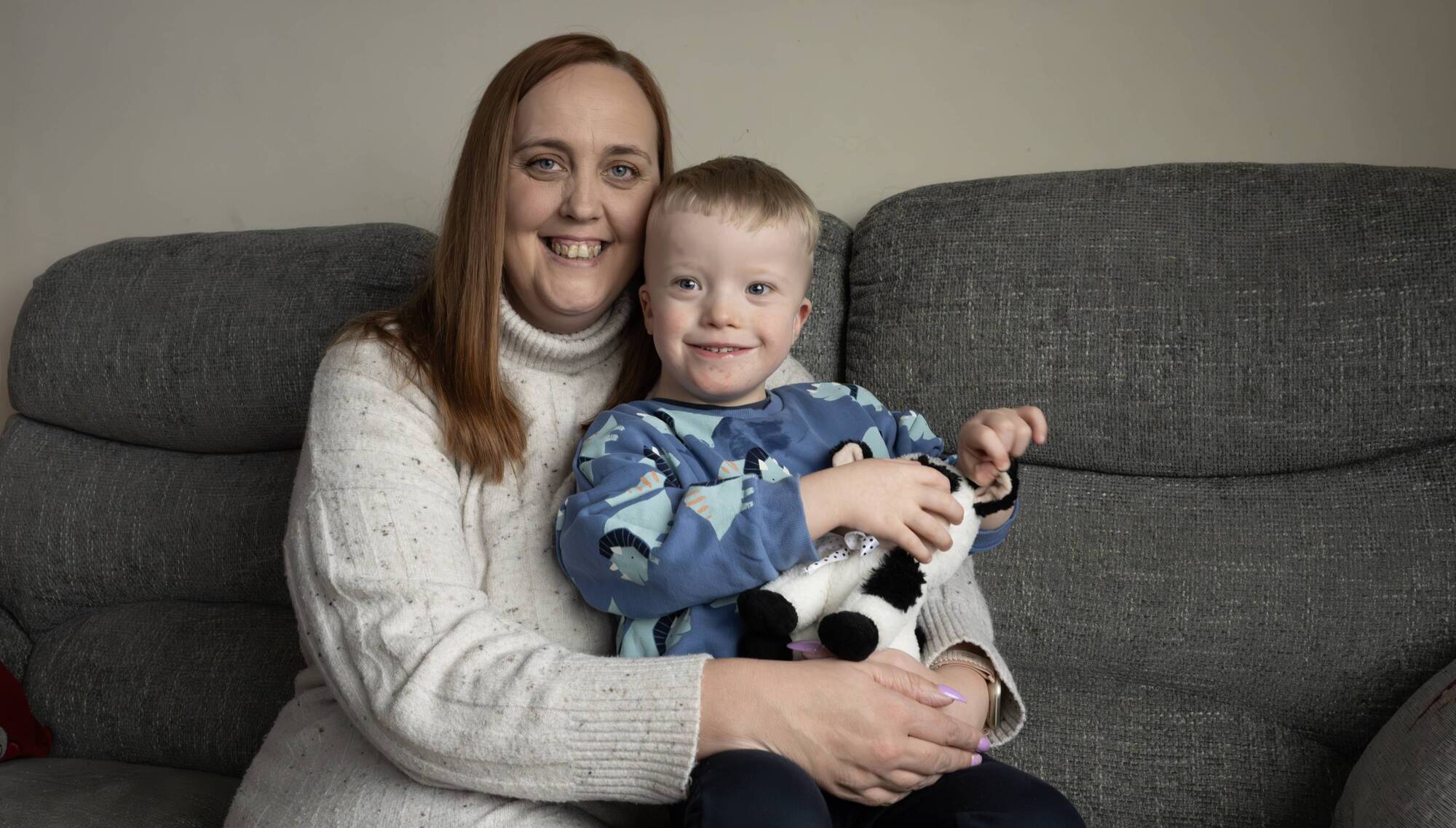
Joanne Cunningham, from Tralee Co Kerry, at home with her son Joseph. Picture: Dominick Walsh/Eye Focus 

JOANNE CUNNINGHAM always felt she would be a mum. The Tralee-based hospital clerical officer and her husband David were trying to conceive for two years before being advised that IVF was their best route.

She recalls how very lucky they were to conceive on their first try.

“Joseph was our only egg that fertilised. He was meant to be. He fought from the start,” says Joanne, aged 40, whose stepson, Dylan, is 21.

After a healthy pregnancy during which Joanne discovered she was having a boy — “I was shocked but delighted, there are lots of girls in my family” — their baby was born just before St Patrick’s Day four years ago. Gazing at her newborn, Joanne saw her husband’s side of the family — and also features suggesting he might have Down syndrome.

“I said to David, ‘I think he has Down syndrome’… I had waited so long for him, once he was here safe, once he was crying and OK, I just wanted him in my arms,” she recalls.

"The protectiveness came in straightaway. I just wanted to get him in a bubble and wrap him in my arms."
The next morning, the consultant noticed the signs Joanne had remarked on: “The extra skin on the back of his neck, the arch of his nose flatter, the line on his hand, the oval-shaped eyes. He said he had the characteristics of Down syndrome but we’d need a blood test to confirm.

“I said, ‘I don’t mind, is he healthy?’ And thank God he was.”

The blood test was done on World Down Syndrome Day, March 21, and two weeks later, it was confirmed that Joseph had the condition: “At that stage, they could only say he mightn’t walk or talk as fast as other children, he might be floppier… I kicked into momma bear and said, ‘You’ve no idea what my child’s going to achieve in life’.”

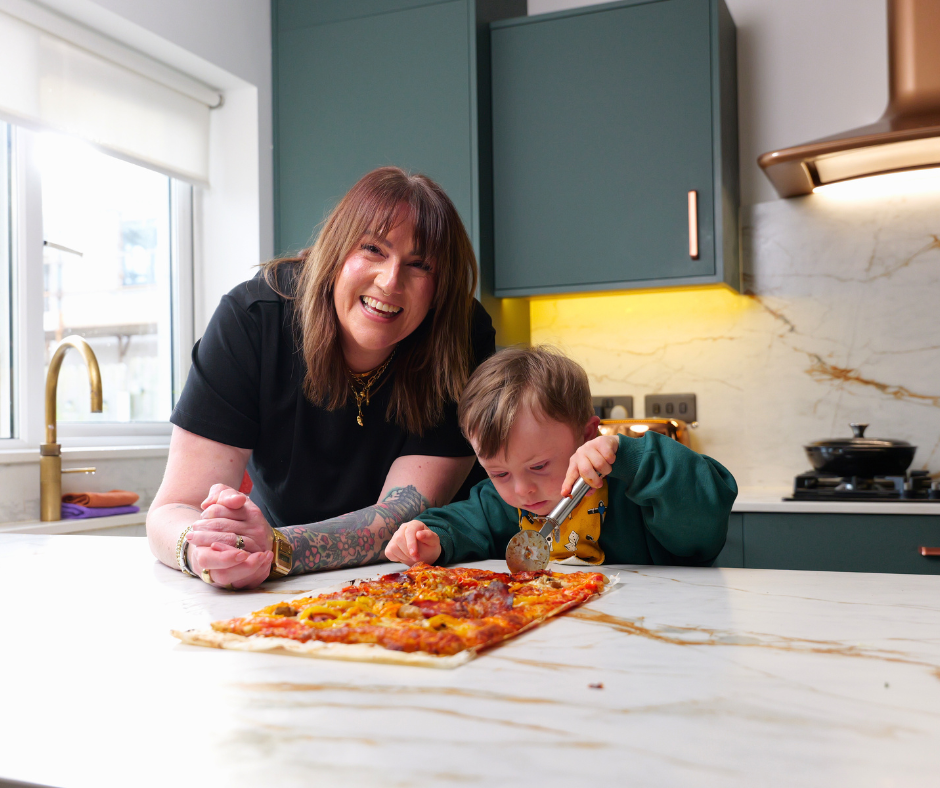
Gina Daly with her adored son Gene.

In hospital for eight days, Joseph was quite jaundiced and needed fluids. Joanne is grateful for the midwife who looked after them: “She had a daughter with Down syndrome. She was so positive, telling me to relax, there was nothing to be scared of, and that these are fantastic kids. It was great for me to meet another mom — we’ve remained friends.”

Once home with Joseph, Joanne says: “He was the same as any newborn, wanting to be fed, winded, his nappy changed. I’d never been around a baby 24/7, so everything was new, everything was learning.

“From early on, David and I were very easy-breezy about things. 

We put no pressure on Joseph, just followed his lead. He walked at 18 months; we never had to do any physio on him.

"He said ‘dad’ very early on — that’s his favourite word. He’s in pre-school and absolutely thriving — he has a fantastic AIMS [access and inclusion model support] worker who’s like a member of the family.”

Early on, Joanne went to the Kerry branch of Down Syndrome Ireland (DSI): “I wanted advice on whether there were certain therapies we needed to be doing — Joseph has been doing fortnightly speech therapy since before he was one.

“I also wanted to meet more moms, to meet people like Joseph, so he’d have his own little community. I’ve celebrated him from the day he was born — I never hid him or his diagnosis from anybody.

“He’s fantastic, a superstar, the light of our whole world. I couldn’t imagine life without him. He’s a personality with abundance, absolutely wild, into everything, a real boy’s boy — he loves his cars, mud, and being messy. He has opened up a world to David and me we’d never have thought possible.”

Joanne runs a monthly toddler group for children aged up to five with Down syndrome, and she’s a parent liaison officer with DSI’s Kerry branch, as well as in the hospital where she works.

“If the doctor suspects someone has given birth to baby with Down syndrome, I go chat with the parent,” she says. “A lot of the time these parents are confused, they didn’t know they were having a baby with Down syndrome. They’re scared, not knowing what the future holds. They’re grieving because they’re not getting the baby they thought they were.”

All these parents want to hear, she says, is ‘Congratulations!’ “It’s the most important thing you can say. I tell them their child with Down syndrome is the same as any other child, just they see the world in a completely different way — they’re not born with negativity. That they make you slow down, appreciate the little things.”

Fragmented support system

DSI head of advocacy Ruth Hickey says for many Irish families, the arrival of a child with Down syndrome brings both joy and a rapid education in navigating a fragmented system of supports. 

She says the central issue is not lack of goodwill but a system that quietly assumes families will do the work themselves.

“The biggest thing families tell us is they’re exhausted. Parents will always advocate for their children. But the system has come to depend on that advocacy,” she says.

“Families are acting as coordinators, therapists, educators, and campaigners simply to access basic supports. That’s not sustainable.”

Hickey has spent recent months leading consultations with members country-wide as part of DSI’s new national strategy.

The message she repeatedly hears is that policy progress has not translated into consistent on-the-ground delivery: “We hear a lot about inclusion. But the lived reality for many families is that access to services still depends too much on postcode, persistence and personal resources.”

One huge issue is access to speech and language therapy.

“This is not an optional extra for our community. Communication sits at the heart of everything — learning, confidence, independence, and participation in society,” she says.

With Down syndrome existing across a spectrum, individuals experience a wide range of communication needs, which is why specialist support matters.

“When we support communication early and consistently, we unlock so many other aspects of a person’s life,” Hickey says.

“Yet we regularly hear from parents who waited so long that the early intervention window had already passed. That delay doesn’t just affect childhood. It affects education outcomes, employment opportunities, and independence later in life.”

Challenging stereotypes

Celebrity chef, cookbook author,

and mum-of-three Gina Daly discovered she was pregnant with Gene, who has Down syndrome, on World Down Syndrome Day. At the time, she didn’t know the date’s significance.
“And then it all made sense,” she says. “Now we celebrate Gene and all our friends — and that very special time finding out we were expecting him.”

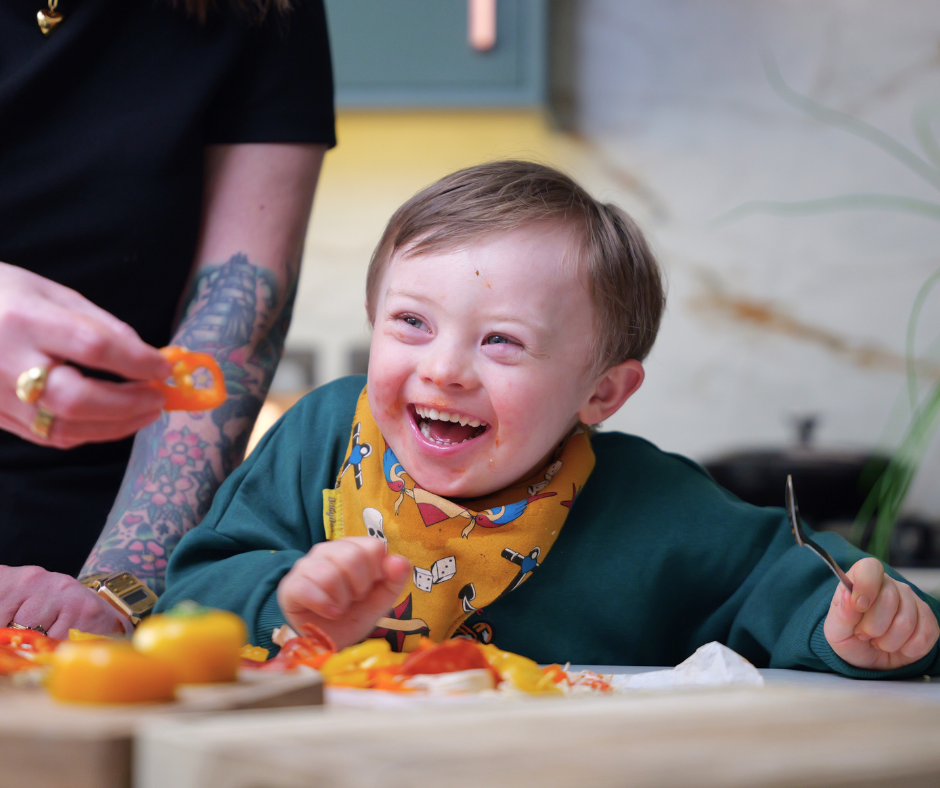
Gene Daly: His mother Gina doesn't want sympathy or stereotypes. 

A passionate advocate for the rights of people with Down syndrome, she feels strongly about breaking stereotypes and celebrating the abilities of those with the condition.

“I’ve met stereotypes, not many but a few," she says. "The first was in the supermarket. I’d just had Gene. Someone I sort of knew said, ‘Oh Jeez, my heart goes out to you, I feel so sorry for you’. 

“I said: ‘There’s absolutely no reason for you to feel sorry for me. I feel sorry for you that you don’t have a wonderful little child like I do'.”

She has learned that when such remarks are made, not to “snap back” in anger or frustration: “Instead, I say, ‘This is our world — Gene is amazing, so capable’. And that people with Down syndrome are not defined by it — it’s a really wonderful part of them.”

In Kerry, Joanne feels very lucky that no one ever saw Joseph in terms of his disability: “They just saw Joseph.”

She loves talking about Joseph, about people with Down syndrome: “I’m just a mom who loves talking about my boy.”

Gina Daly and Gene have teamed up with DSI on its ‘Lots of Socks’ campaign ahead of World Down Syndrome Day on March 21. They’re asking people across Ireland to host a Lots of Socks party in their community or to pick up limited-edition socks from downsyndrome.ie

x

More in this section

Cookie Policy Privacy Policy Brand Safety FAQ Help Contact Us Terms and Conditions

© Examiner Echo Group Limited