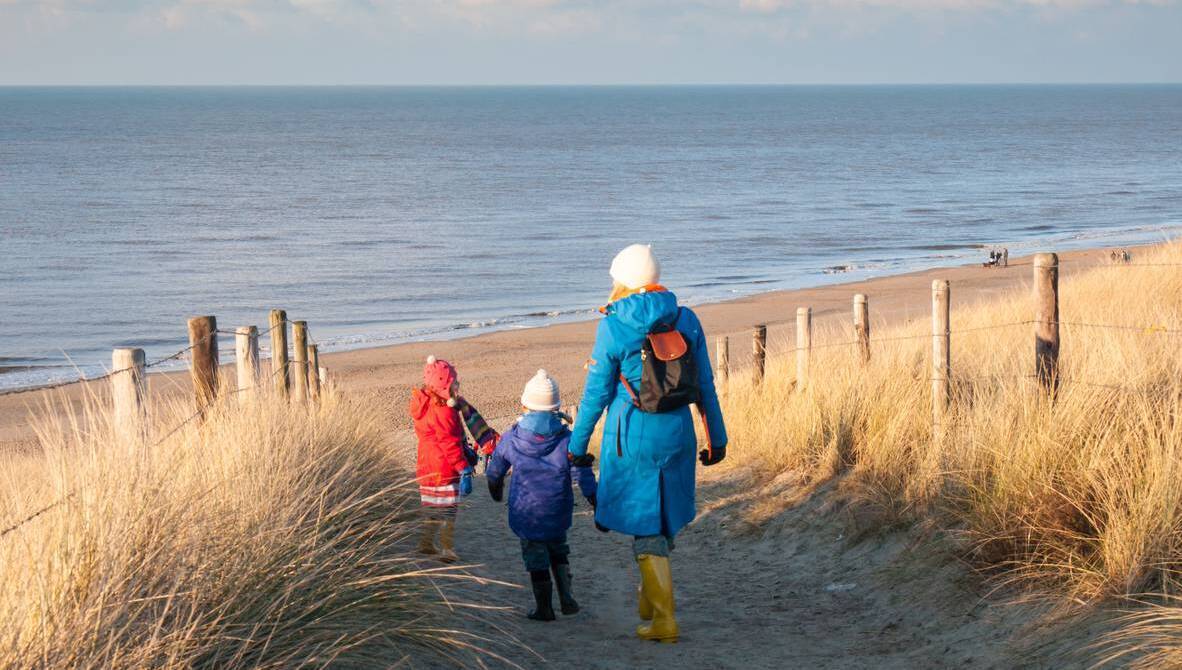
There is beauty in simplicity, and outdoor play is as simple and natural as it gets. Fostering a love of the outdoors in children doesn’t just benefit them, it has advantages for the whole family, and not just in the summer months, but throughout the whole year.
The many benefits of children playing outdoors are well documented. Aside from the obvious physical benefits of being outdoors — exercise, and the exposure to sunlight and fresh air — playing in nature also aids children’s cognitive skills, concentration, and creativity.
Outdoor play can also promote emotional resilience, and not unique to kids, a calming natural environment helps reduce stress and anxiety.
In playing outdoors, children are also building up a connection with nature that will last a lifetime. This in turn gives them a richer understanding of nature and the environment. Something that the Nordic countries focus on is how outdoor play encourages children to learn risk management skills.
It also helps them develop confidence in their abilities — if you’ve ever seen a young child learn how to climb a tree, you’ll have noticed their confidence growing with each step.
'Being outdoors is hugely beneficial to us as a family'
Melissa and Paul Sexton have three young children. As the kids have grown Melissa and Paul see just how much the outdoors has helped them. For the Sexton family, being outdoors means happy, calm kids.
“After being in school all week, they need a release, and that’s what being outdoors is for them. It’s a sensory outlet where they can run around, climb a tree, experience nature, enjoy the fresh air.
"They have so much freedom, whether we’re in the forest or at the beach. Being outdoors re-energises them.”
But you have to make the effort to get outdoors, especially in the winter months. When the colder weather comes in, and the evenings get darker, it can be tempting to turn on the TV, and curl up on the couch.
“You have to get out of that comfort zone, and make the effort to get out. It’s always worth it,” says Melissa.
“We’ll put on all the gear and the wellies, and head to the beach or the forest. This is where we make memories. On a recent trip to the beach, our older boy caught a crab using a length of fishing rope and a barnacle. The excitement and the joy we all got out of that. It was the best day, and one the kids will always remember.”
Playing outdoors throughout the year means the Sexton children have an affinity with the environment, says Melissa.
“The kids know a lot about the different seasons. We’re out and about in all seasons so they’re experiencing them, the different weather and the patterns of nature. All of the kids are into gardening as a result. They love planting vegetables, watching them grow and then pulling them up.
"In the pre-school they went to they often came home with carrots and radishes they had picked. They’ve made soup out of the vegetables and jam out of the fruit. I think that gives them a great connection with where things come from.”
Outdoor play suits all ages
The beauty of the outdoors is it suits all ages. For a family with kids of different ages it can be difficult to find an activity that’s fun for everyone. For Melissa, whose children are eight, six and three, the typical indoor activities don’t fit the bill for all three kids, and the family like spending time together, so splitting into smaller groups doesn’t work for them.
“On the beach, one of the kids will be running around, the other building a sand castle, and the other dipping their toes in the water. There’s something for everyone outdoors. They’re all happy.”
And it’s not just the kids who are happy. Happy kids usually means happy parents.
“If we’re all cooped up indoors inevitably the kids will start arguing with each other, then we’ll have to intervene, and it gets stressful. When we’re outdoors that all goes away. There’s no bickering between them, they’re all doing their own thing. And we get to just relax and enjoy being out and about.”
Any parent will be familiar with the near-constant “can I have something to eat?” throughout the day. They’re “so hungry” during the day for snacks but come dinner time and suddenly they’re not hungry anymore. Melissa finds that when they’re all out and about during the weekends the kids rarely ask for snacks, and after a couple of hours playing outdoors the kids all tuck into their dinner when they get home.
“They’re so busy running around that they don’t think about snacks, and then all that running around and the fresh air means they’re ravenous for their dinner.”
'There’s no such thing as bad weather'
“There’s no such thing as bad weather, only unsuitable clothing.” This quote from author Alfred Wainwright rings true for any outdoor pre-school, or indeed any parent. Pop on the right gear — waterproof clothing, warm layers, wellies, hats, waterproof gloves — and you can get outside in any weather, within reason of course (you’re not going to make any unnecessary journeys in a storm). When children are having fun, they’re completely oblivious to the rain and the cold.
In the Nordic countries, being outdoors is a way of life. In fact, author Linda Åkeson McGurk charts this ethos in her book, There’s No Such Thing as Bad Weather: A Scandinavian Mom’s Secrets for Raising Healthy, Resilient, and Confident Kids. Here in Ireland, in the early years sector, we are slowly moving towards this ideal, and we’re using the Nordic model as a guide.
A 2023 survey conducted by Early Childhood Ireland revealed that 64% of parents agreed that the Nordic approach should be adopted in Ireland, with that figure rising to 70% for parents with children under two. Frances Byrne, Director of Policy at Early Childhood Ireland, says there is a renewed interest at policy level for outdoor play in early years settings, and though we are lagging countries like the Nordics and Scotland, early years providers in Ireland are being innovative with their outdoor settings.
As always with change, there is often reluctance, and this is the case here too, says Ms Byrne, at least in the beginning.
“Pre-schools who are introducing outdoors to their facilities have noted that some parents are concerned at the beginning, but once they’re shown the space, and then see for themselves how happy and bouncy their children are after a few weeks, all those concerns go away.
“Outdoor settings offer a wonderful opportunity for children to develop relationships with nature,” says Ms Byrne. “That connection between humans and our environment is so important, and learning that at an early age is a huge benefit to children.”

Cancel anytime
CONNECT WITH US TODAY
Be the first to know the latest news and updates