A new inclusive TV series features children with communication difficulties who use the signing system Lámh, writes Helen O’Callaghan
THE day the TV film crew arrived at Ruadh Pierce’s home, he couldn’t believe he was allowed to fling flour at his siblings, create mayhem in the kitchen, and make a funny birthday cake for his granny.
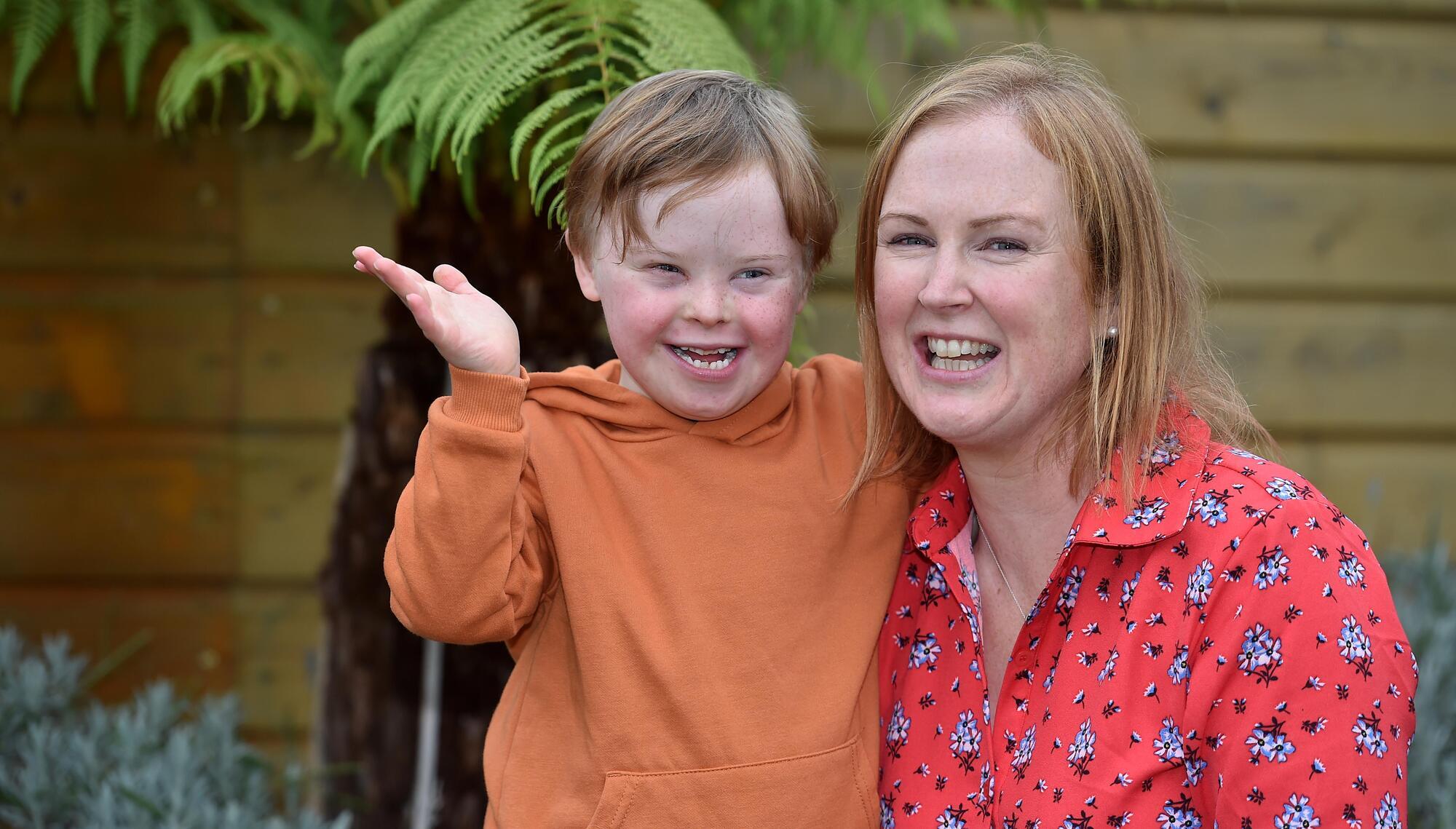
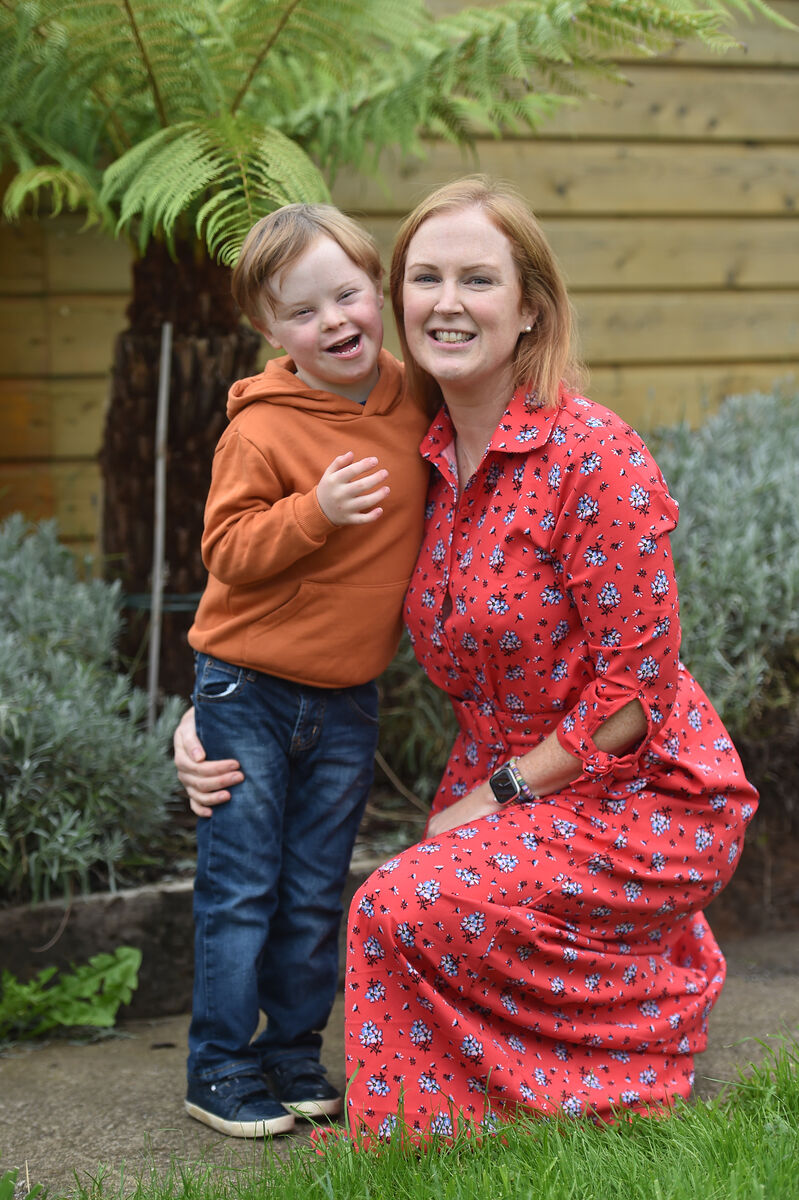
Based in Bishopstown, Cork, seven-year-old Ruadh has Down syndrome. He’s one of more than a dozen children who feature in Dizzy Deliveries, a new inclusive Irish TV series for children.
Launching on RTÉjr tomorrow, the show has two central elements: The first is Lámh, a key word signing system used by children and adults who need support with communication.
The young people with Down syndrome, autism, and communication difficulties, who use Lámh to support their self-expression, represent the other key element of Dizzy Deliveries.
The 13-part drama series is directed by Bafta award-winning Welsh writer/director Nia Ceidiog, who produced and directed the highly-acclaimed Something Special series with Mr Tumbles for CBeebies. Each 13-minute episode of Dizzy Deliveries features central characters Joe, the accident-prone delivery guy with magical powers (played by magician Joe Daly), his robot assistant Ozzy, and Aisling (Lámh Tutor Deirdre Coleman) who gives Joe his daily jobs and teaches Lámh to the viewers.
“ Dizzy Deliveries is a fun, cheery TV series for all children,” says Lámh charity manager Mary Cullen. Joe, she says, is zany and slapstick. “He gets paint all over himself, he falls over — the kind of thing all children love — and in the midst of it all he happens to be signing Lámh.”
With each episode featuring a different child, also using Lámh on-screen, Cullen says: “They’re in the show as a character, helping Joe deliver his packages. They become an actor.”
Cullen says a TV show has been a long-time dream for families and the Lámh team. “ Dizzy Deliveries is a huge deal. Families whose children use Lámh have been seeing Mr Tumble on CBeebies using a different sign language. They’ve been asking why there wasn’t a version for Lámh users.
“They want it so their children will see people use the same communication system as they do on TV, so that it’s represented out there, so it’s visible. And so the children can look at something on TV and follow it,” explains Cullen, who loves that the show will teach even existing Lámh users some new signs.
“Lámh signs are used all through the programme, but in each episode three specific signs will be taught – not a heavy burden to take away from the show.”
And because diversity and inclusion are at the project’s core, Cullen says what’s great about Dizzy Deliveries is it’s for all children. “So, for Lámh users, their classmates will have been watching the same TV programme the evening before. And because the signs are ones you can use in everyday life, it’ll really propel things forward, making it more possible for classmates to pick up and use the signs.
“It’s a wonderful opportunity for all children to see children with different needs and difficulties on TV, to raise awareness.”

‘A lovely thing to do’
When Ruadh’s parents, Fia and Jason Pierce, were approached — as big Lámh fans — about their son participating in Dizzy Deliveries, Fia admits she initially shied away from the idea. “I thought ‘oh gosh… TV cameras’. Then I thought what a lovely thing to do with Ruadh.”
Everyone in the Pierce household — including Billy, 10, and Clara, 4 — uses Lámh. “It’s intrinsic in every part of our day. We all use and understand it,” says Fia.
Before Ruadh’s birth, there was no red flag he’d have Down syndrome, but as soon as she set eyes on her “little man”, Fia suspected it — it was later confirmed by a midwife.
“Your whole world changes in a second. In my head, I pictured that other generation of children with Down syndrome, who became adults standing next to elderly parents at bus stops. I was thinking 40 years down the road. I was thinking the life I’d planned with my husband had completely changed. I couldn’t see any positive in it.”
Time passed and one day Fia realised Down syndrome hadn’t been her first thought when she’d woken that morning. “It felt like I’d been carrying it around with me. That changed. I got to know Ruadh as a baby, a little boy and the young man he’s turning into. You couldn’t but have the biggest fun with him because he’s just a ball of fun.
“If his brother and sister are giving out, he’ll use his signs and say ‘no fighting’. He’ll make sure one pulls the other over for a hug. He can’t understand anyone being cross for long — it’s not in his DNA.”
But until he was six months old, Fia believed Ruadh would need others to communicate for him. Then speech therapists at Down Syndrome Cork offered Lámh sessions. And Fia, a primary teacher working in special education, did further courses.
For Ruadh, Lámh isn’t just a form of communication, it’s a huge confidence-builder. Attending Scoil Éanna, Cope, Ruadh stands up every Monday in front of his four classmates and teachers and gives his news. “He stands up, proud out, and gives a full sentence with his Lámh signs: ‘I went to the party’ or ‘I saw my granny’. And because the others use Lámh, they understand what he’s saying,” explains Fia.
Lámh benefits users in multiple ways, says Cullen. It reduces frustration, enabling the person to use signs to ask for what they want, to answer and to participate in conversations. And because they’re more easily understood when they use signs, they’re encouraged to try new words and say more. “Signing naturally encourages people to slow down so there’s more time to work out the message. It encourages eye contact and attention to movement — important skills for supporting speech development.”
Making himself heard
Fia never experienced the ‘terrible twos’ or ‘troublesome threes’ with Ruadh, which she attributes to his knowing the specific sign attached to each emotion. “Lámh meant he could make himself heard and understood in a busy classroom, in a busy house.”
Ruadh attends swimming classes — all because of Lámh. “Billy and Clara were starting back to swimming in September. They were getting into their swimsuits, goggles, hats. Ruadh was getting really frustrated. He signed to me ‘Ruadh sad’ and then ‘same’, so I knew he wanted to go to swimming lessons too.”
Magician Joe Daly has become a big Lámh fan since taking up his Dizzy Deliveries role and learning the signing system. “I didn’t realise how absolutely important Lámh is for those with communication difficulties. I want to start introducing it in my own theatre and magic shows. I do a kids’ magic show and I want to have a talking segment using Lámh, so kids go home with five signs.”
The new series represented a learning curve for RTÉjr’s AbraKIDabra star. “I’m all about the magic and this was more of an acting role. It’s a comedy educational show with little bits of magic to grab the kids’ attention. I relished creating and playing this character, this delivery man.”
Doing kids’ magic shows since he was 15, Daly says he “gets” kids, but for this show he had to learn to communicate with them in new ways. “By nature, I’m big, I’m loud, I’m very commanding, especially with kids in an audience. I had to totally pull back on that. I met the kids beforehand so I’d get to know them and they’d get to know me. I introduced myself softly — let them see how friendly I could be, that I was no threat. Once they saw that, they warmed up. It brought them out of themselves. That was the key thing — letting the kids be their natural selves.”
With episodes on school, bus depot, zoo, birthday party (in which Ruadh features), and the bakery, Dizzy Deliveries launches on RTÉjr from tomorrow, October 19, at 9.50am. It runs weekdays for 13 episodes, repeated daily at 12.10pm and 4.30pm.
Tomorrow is also National Lámh Day, an inclusion initiative from Lámh, which aims to encourage us all to use Lámh to say ‘hello’.
- For more info on National Lámh Day, see lamhsigns.org. Share your Lámh videos on social media tagging @lamhsign and using #lamhsign
CONNECT WITH US TODAY
Be the first to know the latest news and updates