Birds of Ireland: Starling
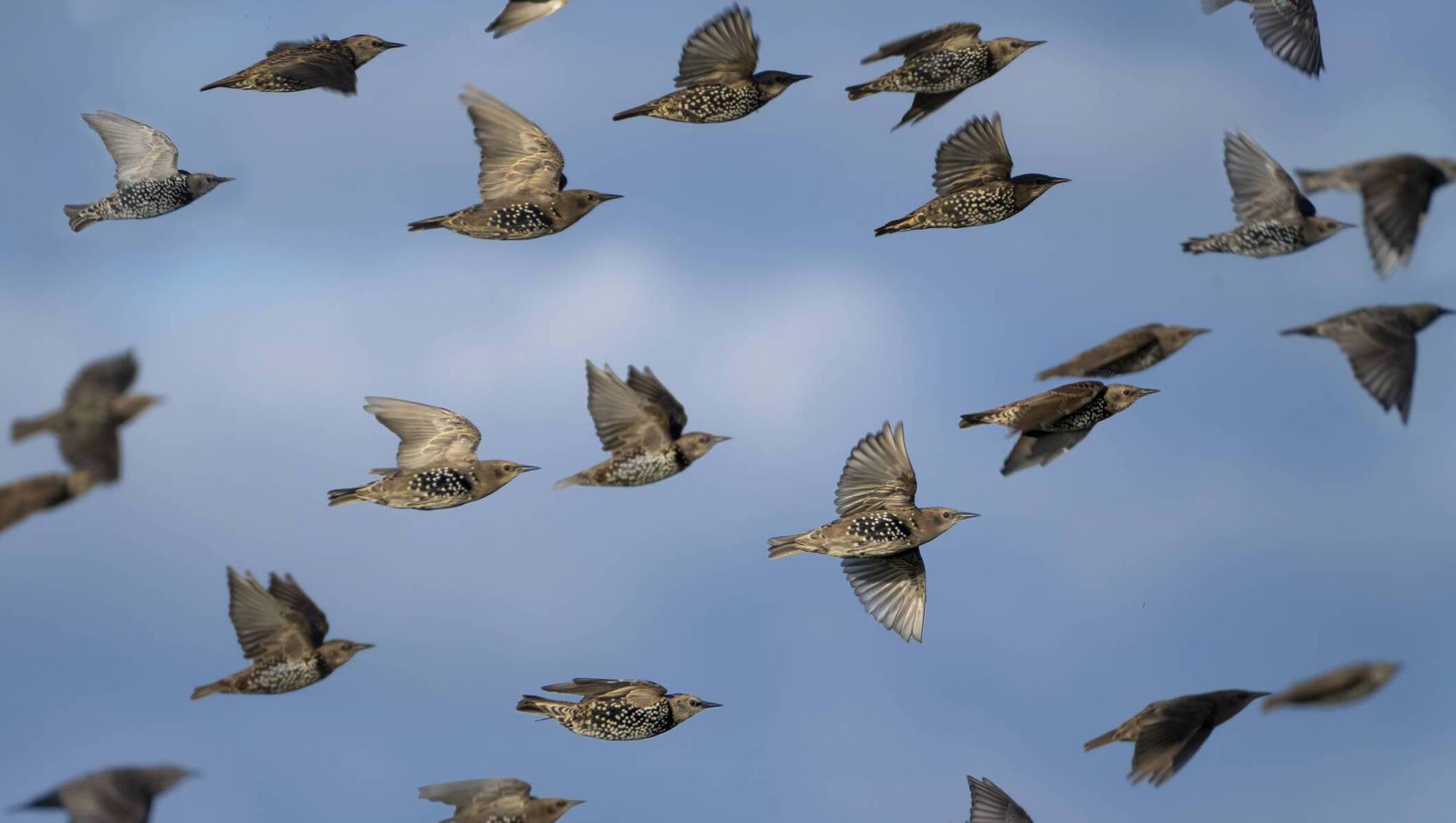
In flight starlings look all dark, and their short tail and broad-based, short pointed wings are visible.
- Starling (Druid / Sturnus vulgaris)
- Starlings are blackbird-sized (around 20-22cm long and with a wingspan of 40cm).
Starlings are found here all year round, typically in farmland, suburban, urban, and wetland areas across the country.
Starlings have long pink legs and short tails; and their breeding plumage is glossy black with a blue-green sheen and with faint spotting on the back and undertail. They have pointed, yellow beaks with a blue-grey base (male) and pink base (female).
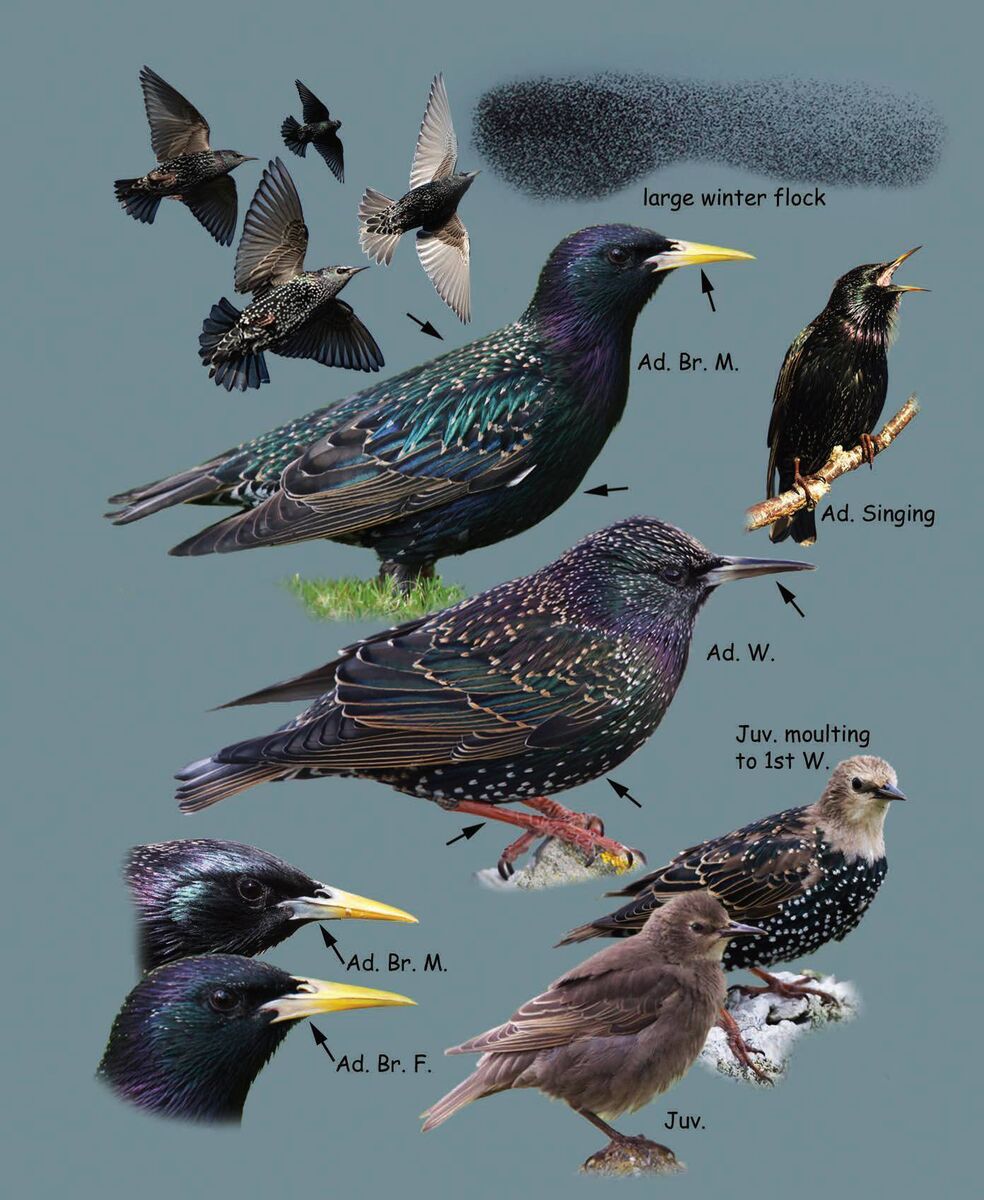
The non-breeding plumage is dark glossy, heavily spotted — most concentrated on the head — with pale brown-edge wing feathers and a dark beak.
Juvenile and immature starlings are initially plain grey-brown with a pale throat, moulting to adult-like pale-spotted, dark plumage. The head is usually last to lose plain grey-brown plumage.
In flight starlings look all dark, and their short tail and broad-based, short pointed wings are visible. Their flight is straight or slightly bouncing with rapid wingbeats; they gather in flocks which are sometimes very large, before going to roost. Starlings' calls and song are very varied and they are excellent mimics including man-made sounds.
There are two main types of bird call: the contact call and the alarm call. An example of the contact call is the calls of finches in a flock as they fly over a field, or that of a flock of long-tailed tits moving along a hedgerow. These contact calls help keep the flock together.
The other type of call is the alarm call, usually louder than a contact call and often used to raise the alarm when danger is near. The song on the other hand, is usually very musical to our ear, and is primarily to attract a mate and tell rival birds of its own kind to keep out of its territory.
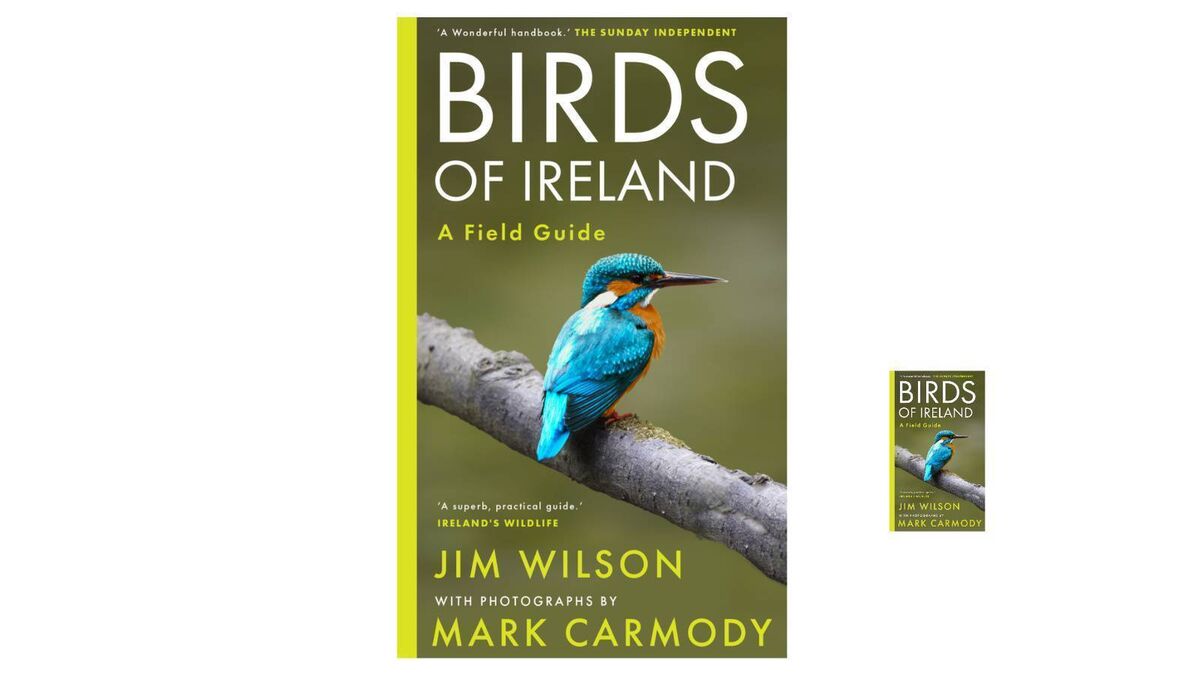
- Featured in , (Gill Books) by Jim Wilson, with photographs by Mark Carmody.
- Jim Wilson is a wildlife writer, broadcaster, tour leader, and former chairman of BirdWatch Ireland. He has been involved in the study and conservation of birds in Ireland for more than 45 years, contributing to several major surveys and international projects.
- Mark Carmody is an award-winning wildlife photographer, has a PhD in biochemistry and works as a European patent attorney.
Jim Wilson is a wildlife writer, broadcaster, tour leader, and former chairman of BirdWatch Ireland. He has been involved in the study and conservation of birds in Ireland for more than 45 years, contributing to several major surveys and international projects.
Mark Carmody is an award-winning wildlife photographer, has a PhD in biochemistry and works as a European patent attorney.


CONNECT WITH US TODAY



Be the first to know the latest news and updates