Human nature: Rewilding as a means to avoid a future of decline
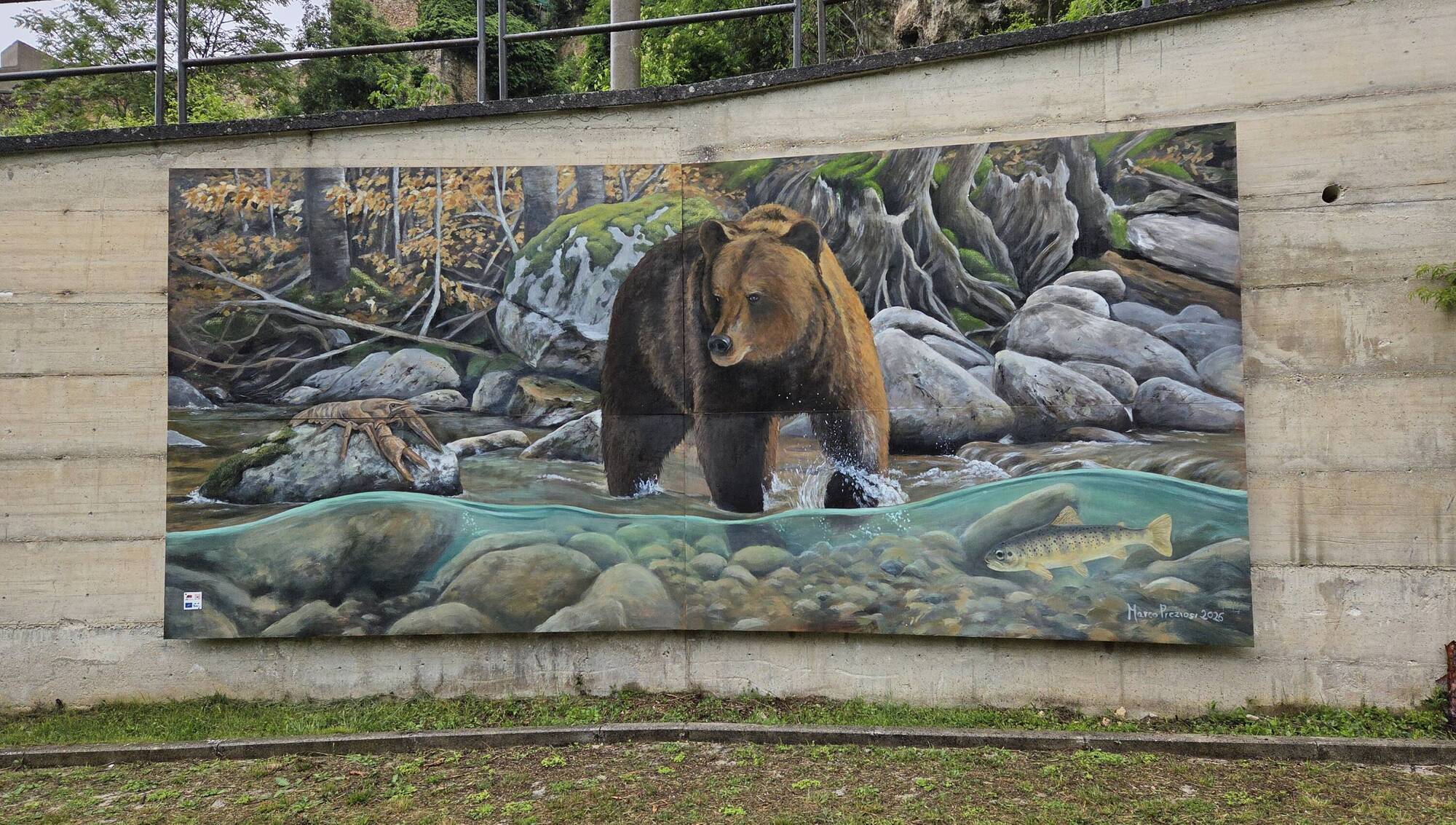
The unique Marsican brown bear, pictured in a mural in the Abruzzo region of Italy. The abandonment of land a villages to nature has allowed a phenomenal recovery of wildlife in the area. Pictures: Pádraic Fogarty
What does rewilding a landscape look like? Recently, I travelled to Italy to find out. There, I found that rewilding is not only promoting healthier natural ecosystems and wildlife populations but is addressing long-standing social and economic challenges as well.
Italy’s shrinking population is on stark display in its Apennines region, a couple of hours south-east of Rome. Modern motorways and railways that link Rome with the Adriatic coast bypass idyllic hilltop villages that are increasingly abandoned and aging. Picturesque medieval castles perch above labyrinthine alleys lined with brick houses clinging to slopes that plunge into forested valleys.
Photos of these mountainsides from a hundred years ago show bare hills where there is now a canopy of oak, hornbeam and beech. Mass emigration, followed by declining birthrates and the concentration of economic activity in urban centres, have led to abandonment of land to nature – a vacuum that has been filled not only with trees but also wolves, red deer, wild boar and the unique Marsican brown bear.
This pattern, familiar across many rural areas of Europe, has allowed a phenomenal recovery of wildlife at a continental scale. Since bears and wolves never completely disappeared from this part of Italy, tolerance among local people is higher than in some countries where they are returning after a long absence.
Still, living in harmony with wild nature requires on-going work.
CLIMATE & SUSTAINABILITY HUB
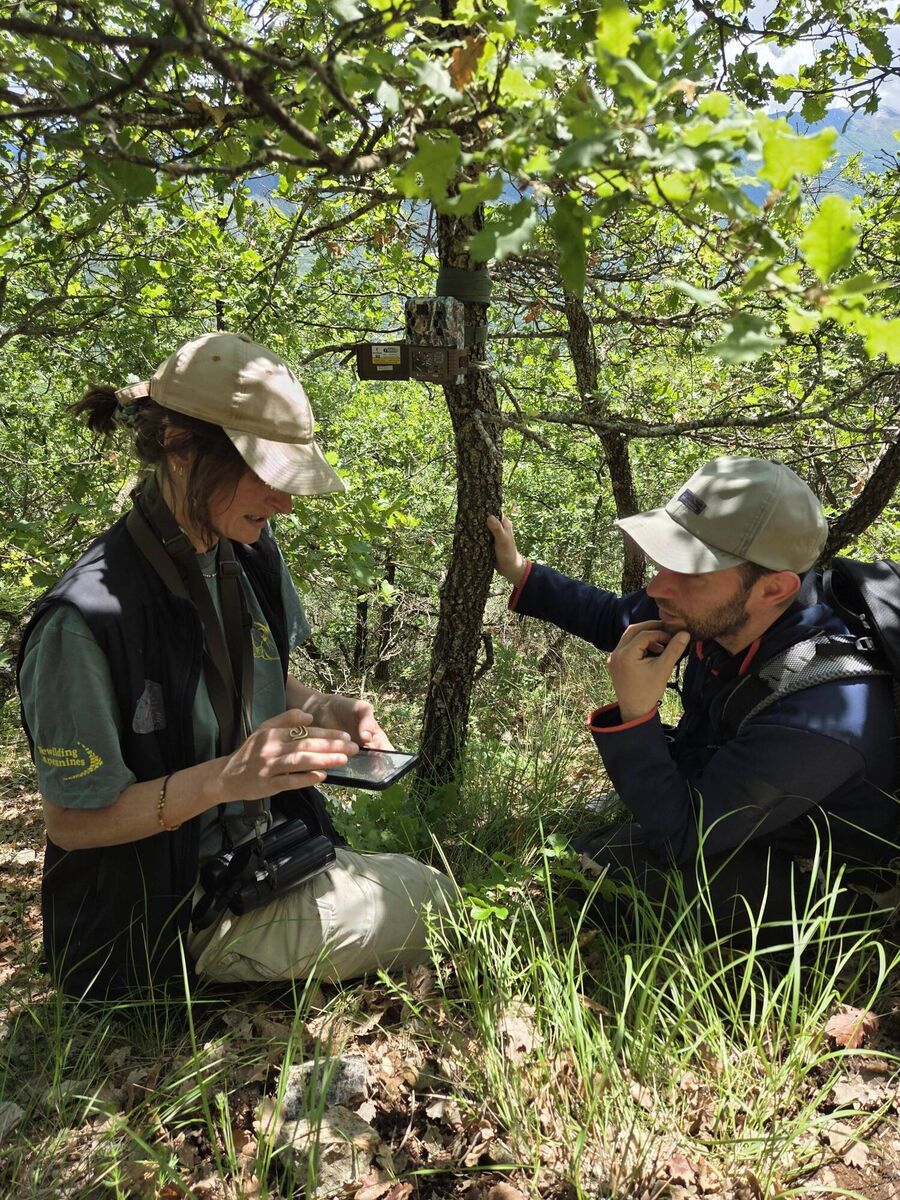
While Italy can be held up as a great success in terms of the numbers of key wildlife species (the wolf is now found nearly everywhere and numbers around 3,300 individuals; bears, although still endangered, are growing in number and expanding their range) challenges remain. In March of this year, a mass poisoning event, where at least 18 wolves were killed within the Abruzzo National Park, attracted international headlines.
Rewilding is often portrayed as being no different to land abandonment. But the case of Italy’s Abruzzo region shows this to be far from reality. Here, Rewilding Apennines, one of eleven landscapes within the Rewilding Europe network, has been working since 2014 to support the recovery of wildlife. I spent nearly a week with them for a ‘rewilding experience’, a mix of guided hikes, talks, wildlife watching and hands-on activities.
The established wildlife is impressive; few parts of Western Europe have such an abundance and diversity of big animals. Rewilding Apennines have been reintroducing griffon vultures, an imposing bird that was once common around the Mediterranean basin. They are also breeding white-clawed crayfish in captivity, a lobster-like crustacean that is also found in Irish rivers and lakes, as well as the unique Mediterranean trout. Both are threatened by alien invasive species and were formerly much more common. The team has also been removing dams and weirs on rivers, opening up habitat for aquatic fauna and restoring more natural flow patterns.
Beavers were illegally reintroduced by unknown actors, but the authorities decided not to remove them as few people seemed to be upset at their arrival. So far, they are doing well and will help to restore wetlands in valley floor areas.
The baseline in Italy, at least in this region, with vast expanses of natural forest and populations of big predators and other animals, is astounding when compared with Ireland.
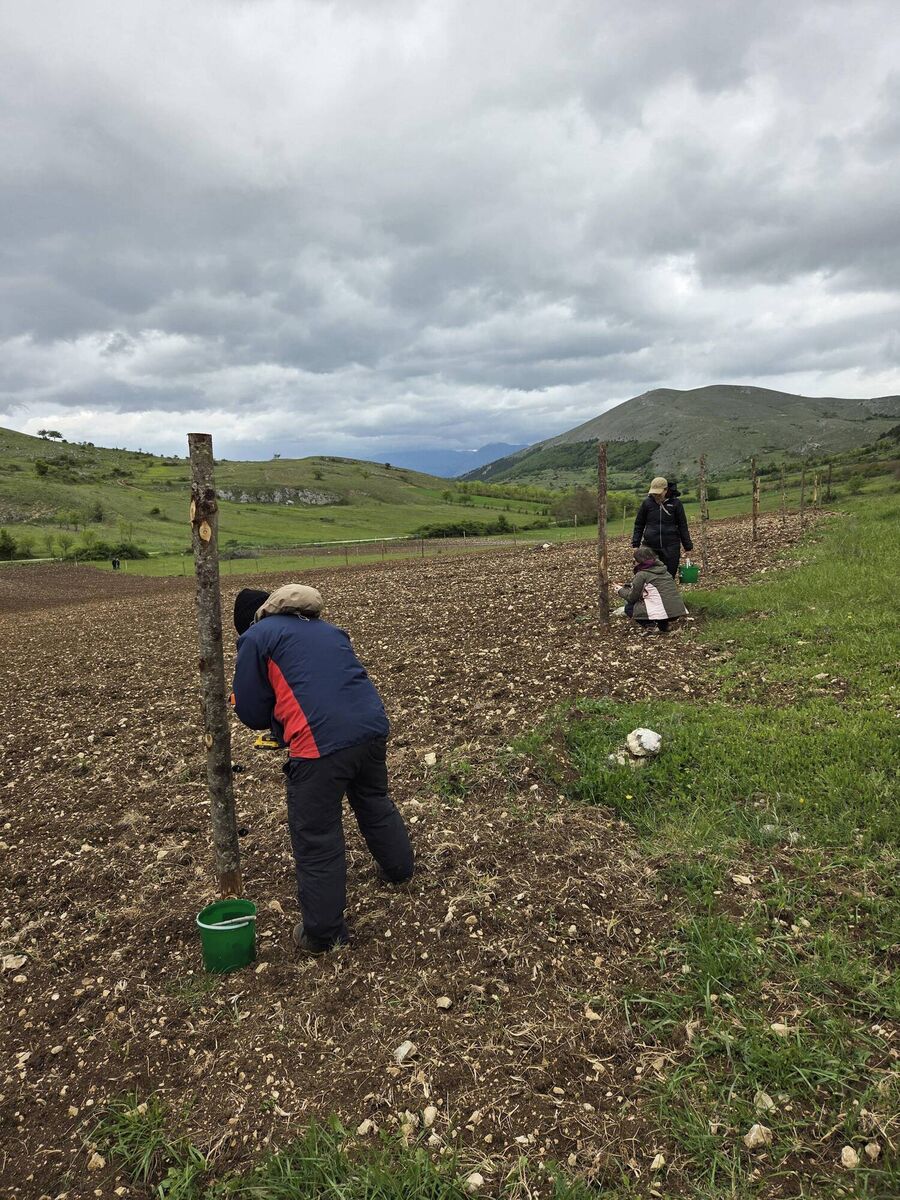
However, perhaps the most rewarding part of this trip was not the encounters with wildlife but with people. This included one vegetable farmer who we visited. When asked which animals come onto his field he replied: “all of them”, and when asked what damage they do he replied: “they eat everything”. Our group of eight people built him an electric fence, something that will stop the deer, wild boar and porcupines from snaffling his potatoes. The farmer paid for a share of this work, with the rest covered by public money, but costs are kept low through the use of volunteers, teams of which are recruited by the Rewilding Apennines team.
Another stop brought us to an artisanal cheese-maker whose herd of goats graze on mountain pastures throughout the summer. Attacks by wolves and bears have been non-existent for this farming family as the goats are constantly supervised, either by shepherds or guardian dogs.
A nearby apple farmer told us about the range of bugs, birds and bigger beasts that would gladly eat his crop. He produces small batches of delicious cider and suffers few losses, without using chemicals, as he regularly attends to his trees and has a range of preventative measures, including nets to stop birds eating the apple flowers.
Rewilding Apennines plant fruit trees and prune older orchards as a way of providing a food source for bears away from human settlements. These activities are popular with local people as they connect with traditional practices.
The Apennines region is already home to a number of National Parks and Nature Reserves that are managed by public authorities. There were, and are, NGOs other than Rewilding Apennines that are dedicated to protecting the environment, including one protecting the Marsican brown bear. With the help of EU LIFE funding, these organisations are now working together to enhance co-existence with bears across the landscape and particularly in the gaps between protected areas to create ‘bear smart’ corridors. Rewilding principles, with their focus on the health of the entire ecosystem, help to glue the various pieces together. The future for these communities is uncertain. Climate change is leading to prolonged droughts, something that is affecting the sustainability of food production. There are obstacles to new people moving to the half-empty small towns, such as the lack of services, from schools to healthcare. Italy’s sluggish economy makes finding a job difficult. Tourism is part of the solution, but people want a more diverse economy, including traditional livestock grazing and food cultivation.
Rewilding does not aim to solve all of these problems, the principal goal after all, is repairing natural ecosystems. But the work of Rewilding Apennines is showing that nature and people can live together, that abandonment is not required for wildlife recovery and that a future of decline is not preordained.

CONNECT WITH US TODAY



Be the first to know the latest news and updates