Thorny tales: Whitethorn may owe its abundance to prickly folklore
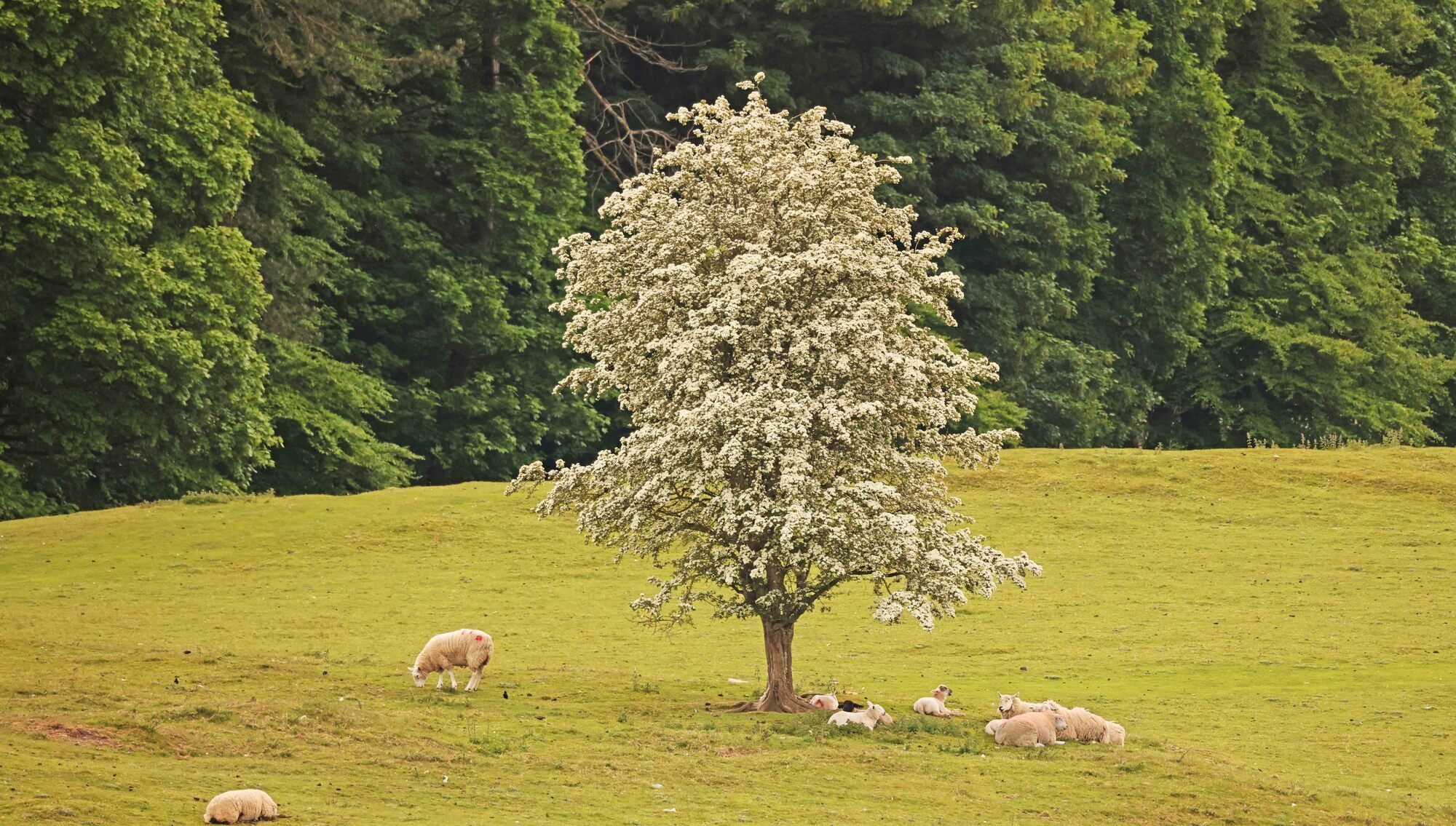
Whitethorn is ideal hedging for land division, it provides food for caterpillars and bees, cover for some mammals, enables pollination, and creates nesting areas for birds. Picture: Eamonn Farrell/ RollingNews.ie
Hopefully, the bloom of whitethorn, now gloriously adorning the countryside, will continue into June. We witnessed this welcome, annual spectacle on ditches and hedgerows all the way from Cork to Mayo, last week.
And could it be that the survival of so many of these trees and bushes — which account for a large chunk of our natural hedging — may somehow be due to an old superstition that it could be unlucky to damage them, or cut them down?
For centuries, whitethorn has been linked to fairies and fairy forts, as stories in the national schools folklore collection from the late 1930s testify. Such beliefs survive into the 21st century: we’ve examples of roads being built around lone whitethorns to avoid their destruction, for instance.
In the collection, pupils in Glanworth, Co Cork, tell of a tradition that anyone who cut a whitethorn limb would die within a year. There’s a reference to a Corbally bush in a Mrs Foley's land which a hag comes to sit under in summer days. “It is unlucky to interfere with it,’’ they cautioned.
Siobhan Ni Leachtain, a pupil in Kilflynn, north Kerry, reported on how her grandfather, whom she described as a hard-working, industrious and thrifty farmer, toiled to plant whitethorn hedges to separate fields.
"To him, these trees were sacred. He said they were shelter for the bean sidhe (banshee, or fairy woman),’’ she wrote.
However, a succeeding generation on the Kilflynn farm — unencumbered by such beliefs —“slashed and cut’’ the whitethorn. “But, the following nights was heard the wail of the bean sidhe after her shelter had been cut away,’’ Siobhan chillingly reported.
Children countrywide collected folklore from older people in their localities and Florence Angland, 75, was the source of a story about a large lios (fort) in Gooseberry Hill, Newmarket, Co Cork.
The fort, with a small, stepped opening and whitethorn growing in the middle and around it, was in a John Flynn’s land. “One time there was a man passing by and he heard beautiful music in it and saw a number of tiny people running within and around it,’’ went the account. The man got frightened and ran away, according to local lore.
On an entirely practical level, ubiquitous whitethorn is ideal hedging for land division, its thick and prickly nature controlling livestock movement. Also valuable for wildlife, it provides food for caterpillars and bees; cover for some mammals, enables pollination, and creates nesting areas for birds.
Whitethorn flowers turns to a frail pink after pollination. Later in the year, the berries are eaten by some bird species and small mammals.
CONNECT WITH US TODAY



Be the first to know the latest news and updates