Folklore says that if you do this you'll catch a glimpse of paradise...
In the footsteps of saints and pilgrims at Glencolmcille
Folklore says that if you do this you'll catch a glimpse of paradise...

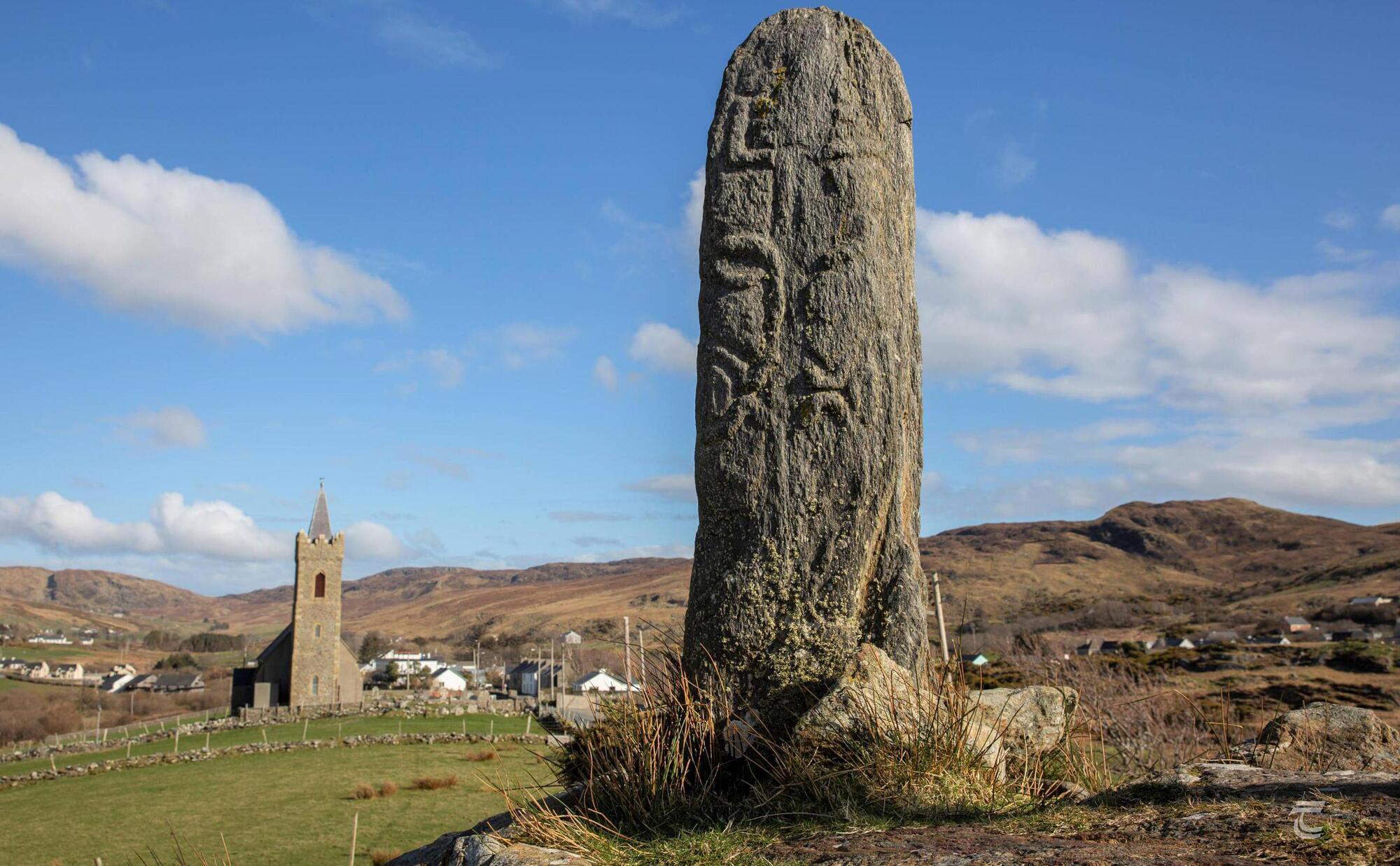
Station 2, Turas Glencolmcille Picture: Tuatha.ie

There are few places in Ireland where you can find as wonderful a wealth of heritage as the scenic valley of Glencolmcille in County Donegal. The valley takes its name from St Colmcille. Also known as St Columba in the Latin form of his name, Colmcille was born in Donegal in either AD 520 or 521. Before his death in Iona on the 9th June AD 593, Colmcille had become one of the most influential figures in Irish and British history. He is one of Ireland’s patron saints, a distinction he shares with Patrick and Brigid, and he is the patron saint of Derry. He and his followers also established monasteries in Iona and Scotland, there are few early figures with as extensive a legacy.

The link between the valley of Glencolmcille and the saint derives from Manus O’Donnell’s 16th-century work: Betha Colum Chille or the Life of Colum Cille.

A Turas, or pilgrimage, takes place in Glencolmcille every year. It begins on Colmcille’s Feast Day on June 9, where pilgrims visit each of the 15 penitential stations that are set out along the valley. These penitential stations are quite varied. Some are cross-inscribed slabs, while others are simple cairns and there’s even a holy well.

The first station is a modified megalithic tomb from the Neolithic period. The tomb's appropriation into a Christian pilgrimage offers a fascinating blend of ancient belief and sacred spaces with Christianity. Indeed, this beautiful valley abounds with prehistoric tombs. This suggests that people have been drawn to its unique tranquility and beauty for millennia and that this valley was considered to be sacred long before Christianity reached these shores.

For me, the Turas Glencolmcille is one of the most rewarding historical and spiritual experiences that you can enjoy in Ireland. The blend of scenery with fascinating archaeological heritage is wonderful. The pilgrim performs particular prescribed rituals at each of the 15 stations as they make their way around the Turas. These rituals usually consist of circling the station, while saying certain prayers.

Station 8 Cloch an Aonaigh Picture: Tuatha.ie

Some of the stations have fascinating stories and folklore attached to them. Such as the Eighth Station, Cloch an Aonaigh — the Stone of the Gathering. This beautiful tall cross pillar has a small hole through the centre of the crosshead. According to folklore, if you look through the hole you can catch a glimpse of paradise. Another interesting tale features the station at Baile na nDeamhan — the Village of the Demons. It takes its name from a tale of Colmcille battling devils that once haunted this beautiful valley.

The Second Station is perhaps the most recognisable, as it stands near to the 19th-century Church of Ireland church. It has even featured in the epic animation Song of the Sea by Cartoon Saloon.

A complex of features surrounds Station Five. This includes the remains of a small drystone church known as Séipeal Cholm Cille, or Colmcille’s Chapel. According to tradition, this was where Colmcille prayed and worked on manuscripts. However, from its size and appearance it is perhaps more likely that the structure represents a small chapel, that may have once housed relics associated with the saint.

Tobar Cholm Cille. Picture: Tuatha.ie

One of the most visually striking is Tobar Cholm Cille — Colmcille’s Holy Well, set high on the hills above the valley. It consists of L-shaped penitential cairn that surrounds a small well. A small folk-art statue of Colmcille, possibly dating from the 1950s, stands near to the well. It is often adorned by rosary beads and offerings left by pilgrims. With its spectacular views and undeniable sense of history, this is one of the most rewarding highlights of the whole Turas.

The full Turas takes approximately three to four hours to complete, beginning next to the Church of Ireland. Most of the route requires walking along public roads. The majority of the stations are relatively accessible, though some are more difficult and may need to be skipped dependent on weather conditions (Colmcille would understand!) You can find information on the route from the Glencolmcille Folk Village.

  • Neil Jackman is an archaeologist, travel writer, and owner of tuatha.ie — an online membership for people who want to explore more of Ireland’s wonderful heritage.

x

More in this section

Revoiced

Newsletter

Sign up to the best reads of the week from irishexaminer.com selected just for you.

Cookie Policy Privacy Policy Brand Safety FAQ Help Contact Us Terms and Conditions

© Examiner Echo Group Limited