Inside Israel’s forgotten Éamon de Valera forest and a vanished chapter of Irish-Israeli relations

A neglected woodland in northern Israel offers a window into Éamon de Valera’s legacy and a lost moment of Irish-Israeli goodwill
Inside Israel’s forgotten Éamon de Valera forest and a vanished chapter of Irish-Israeli relations

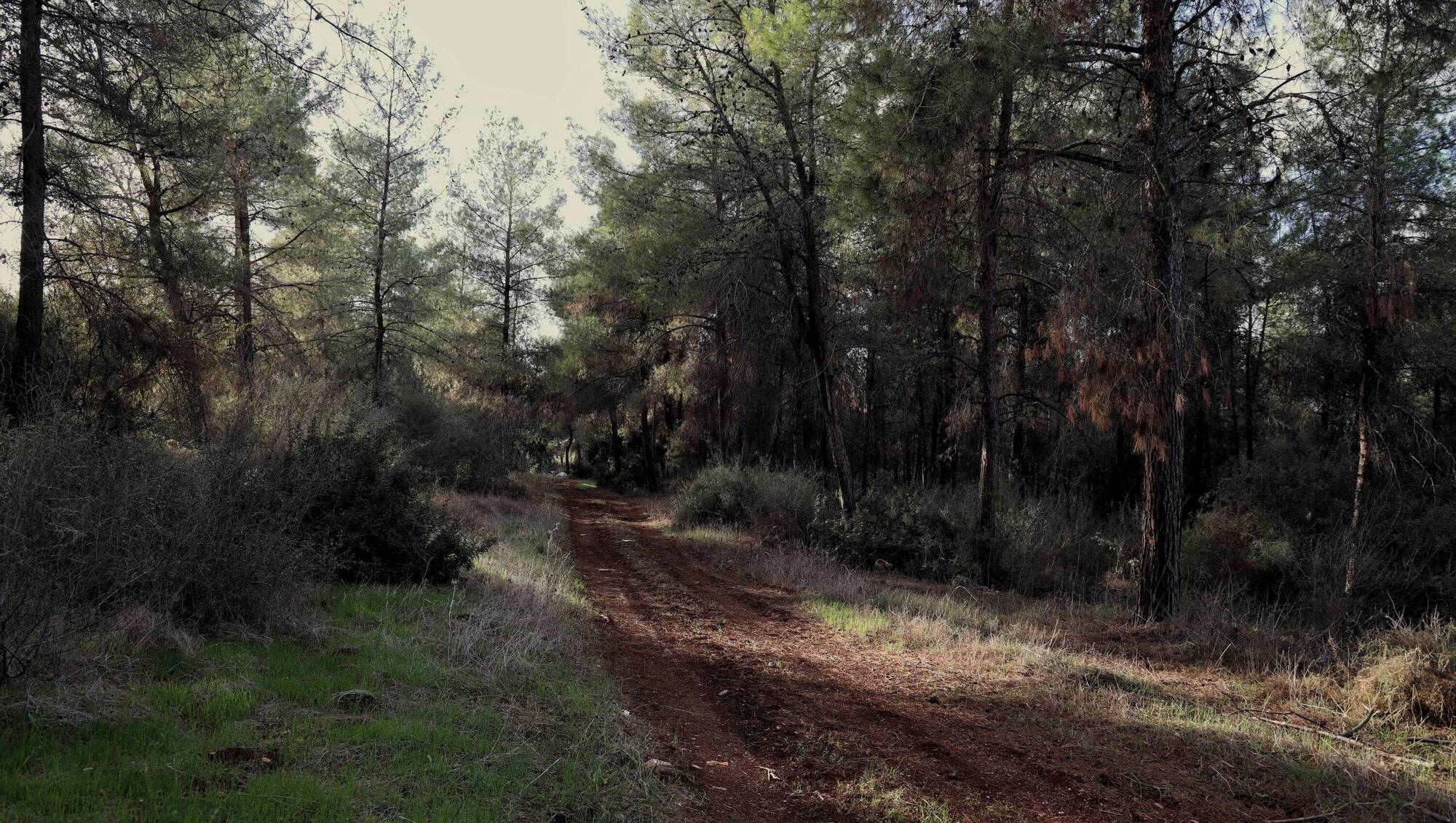
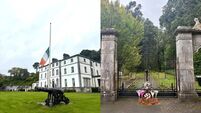
Éamon de Valera Grove in Beit Keshet Forest near the Palestinian town of Kafr Kana in northern Israel.

“Although we often spoke about the de Valera Forest, we weren’t actually able to get in here for many years because of overgrowth. Trees had fallen, bushes had taken over, and the entrance had collapsed,” says Malcolm Gafson, the head of the Israel-Ireland Friendship League.

We are standing in a small open area in Beit Keshet Forest accessible via an unmarked dirt track off a highway near the Palestinian town of Kafr Kana in northern Israel. 

We are accompanied by Toufik, a local forester from Keren Kayemeth LeIsrael-Jewish National Fund (KKL-JNF), a quasi-official authority which oversees this forest and owns around 7% of Israel’s land.

In the middle of the open area, surrounded by pine trees, is a large commemorative wall dedicated to Queen Beatrice and Princess Julianna of the Netherlands. 

In the middle of the open area surrounded by pine trees is a large commemorative wall dedicated to Queen Beatrice and Princess Julianna of the Netherlands.

HISTORY HUB

If you are interested in this article then no doubt you will enjoy exploring the various history collections and content in our history hub. Check it out HERE and happy reading

The Dutch royals fled the Nazis in 1942 for Britain, where they remained until their country was liberated in 1945. 

About 20m away at the edge of the forest is a smaller plinth dedicated to Denmark, the only occupied country during the Second World War that actively resisted the Nazis’ attempts to deport its Jewish citizens. 

“Some names are statutory, while others are given in honour of donors or as a form of recognition and commemoration,” said a KKL-JNF spokesperson, citing "the Éamon de Valera Grove" as an example of the latter.

But there is no sign to indicate that we are standing in the “Éamon de Valera Grove”, although Mr Gafson assures me that we are in the right place. 

“We looked through the archives and eventually found it under ‘D’ — de Valera — and then we got into action,” says Mr Gafson, a native of Dublin who is organising an event to commemorate the 60th anniversary of the forest next year.

Mr Gafson shows me a photo of a gathering in the forest in 2005 to mark the 40th anniversary of the Éamon de Valera forest where the attendees included the Irish ambassador to Israel and the Israeli ambassador to Ireland, who oversaw the opening of the first Israeli embassy in Dublin. 

A photo of a gathering in the forest in 2005 to mark the 40th anniversary of the Eamon de Valera Forest.

The crowd is gathered around a white marble plinth that once stood in the remote woodland with the words: “Éamon de Valera Forest: A Tribute To Their President By The Jewish Communities Of The Republic of Ireland”, alongside the KKL-JNF logo.

“Unfortunately, over the following years, it was broken down and destroyed,” he said. 

In lieu of the engraved white marble plaque, Mr Gafson unfurls a colourful printed sign with an austere image of de Valera and a shamrock logo in the blue and green and brown colours of KKL-JNF above the slogan: “Ireland * Israel | Fighting climate change together.” 

Mr Gafson said: “With the coming 60th anniversary, we hope to put down a more permanent monument.” 

In a follow-up message, Toufik says the plaque was damaged some nine years ago. It is unclear who was responsible for the damage, what their motive was or who took away the remnants of the marble de Valera sign. KKL-JNF says vandalism is a problem across Israel. 

"We know the situation between the countries [Israel and Ireland], and I want to make sure that it's not relevant [that the sign was damaged], because we have this problem all around Israel,” said a spokesperson for KKL-JNF. 

“In order to avoid further damage, mostly from unruly kids and teens”, the KKL-JNF says it began replicating signs in the forest and placed them on a wall in the organisation’s Golani Centre, where a copy of the Éamon de Valera plinth is now displayed.

KKL-JNF has its roots in the Jewish National Fund, an organisation founded in 1901 which acquired land for Jewish settlers in Ottoman Syria — territory which today includes Israel and Palestine. 

While there is no evidence to suggest that the Éamon de Valera Forest is planted on a former Palestinian village, and nearby Kafr Kana is one of the Palestinian villages where residents remained in their homes after the foundation of the state of Israel, KKL-JNF has been criticised for planting trees on the ruins of Palestinian villages whose residents were displaced during the Nakba in 1948 and for displacing Bedouin communities in the Negev. 

The KKL-JNF spokesperson said: “All of KKL-JNF’s activities throughout Israel are carried out in accordance with Israeli law.” 

The Éamon de Valera Forest: A woodland in Northern Israel recalls a bygone era in Irish–Israeli Relations

The first tree in the ‘Éamon de Valera Grove’ was planted on August 18, 1966, as part of a ceremony by the Irish-Jewish community to thank the then President of Ireland for his long public service and his relationship with the Irish-Jewish community.

Cork-born Laurence Elyan, a former actor and Irish civil servant who emigrated to Israel, provided the commentary of the ceremony on Radio Israel. 

At the event in the forest, the following prayer was recited: “In the forest in honour of Éamon de Valera, Make deep their roots and wide their crown, Amongst all the trees of Israel, For good for beauty.” 

While de Valera did not attend the tree-planting ceremony in-person, he wrote to Mervyn Abrahmson, chairman of the Éamon de Valera Committee: “I am deeply grateful to the Jewish community here for the honour that they are thus conferring upon me, and to the authorities in Israel for giving the necessary permission. Will you please thank the members of your community here, and also the Government of Israel. 

"I should like particularly to be remembered to Dr Ben Gurion, who showed me such kindness when I visited Israel some 16 years ago, and to Dr J. Herzog, whose father I knew so well when he was Chief Rabbi here in Dublin."

Malcolm Gafson, head of the Israel-Ireland Friendship League.

“The gesture by the Irish Jewish community had a strong impact on those who knew de Valera well,” wrote the late historian and professor at University College Cork, Dermot Keogh, in Jews in Twentieth-Century Ireland. 

“He had forged a deep friendship with leading members of the Jewish community during the War of Independence and afterwards. Those Irish Jews who knew the Fianna Fáil leader during the interwar years remember with gratitude his support during the time of the Blueshirts and the period of Nazi triumph in Europe.” 

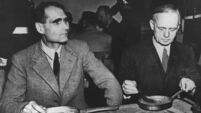
“But,” wrote Mr Keogh presciently, “for all his closeness to the Jewish community, de Valera’s visit to the German minister following the death of Hitler in May 1945 was not, and never will be, forgotten.” 

References to de Valera’s grave diplomatic error in visiting Eduard Hempel are frequently referenced in Israeli media coverage of Ireland and its pro-Palestine stance. 

“Ireland’s World War II neutrality, condolences for Hitler’s death, and alignment with Iran and Hamas sympathisers expose a moral rot,” wrote one blogger for The Times of Israel in earlier this year.

But 1966 was a different time for Irish-Israeli relations. 

Jacob Herzog, a Dublin-born Israeli diplomat and son of the former Chief Rabbi of Ireland 

Dr J Herzog was serving as political director in the Israeli prime minister’s office at the time. 

He wrote: "The name of Éamon de Valera is not only enshrined for all time on the tables of Irish independence. His name is a byword across the world as one of the pioneers of the present epoch in human history, a central theme of which is the emergency of small countries of independence, their assertion of their freedom and right to pursue their national destiny without external interference and to make their contribution on the international scene in equality.” 

Mr Herzog continued: “Éamon de Valera’s leadership, integrity, deep humanity and sense of purpose have for many decades not left their imprint on the international community. In Israel, it is not forgotten that in the crucial years of struggle for independence, he evinced understanding and sympathy toward the restoration of Israel in the land of its fathers. The forest which will rise in his name in the Galilee will, I have no doubt, be a lasting symbol of friendship between Ireland and Israel.’ 

The Israeli prime minister, Levi Eshkol, wrote to Mr Abrahamson regarding the forest dedication: “I saw in the planting of trees in President de Valera’s distinguished name a fitting expression of the traditional friendship between the Irish and the Jewish peoples, two nations that have so much in common of history and fulfilment.” 

In lieu of the engraved white marble plaque, a colourful printed sign with an austere image of de Valera and a shamrock logo in the blue and green and brown colours of KKL-JNF above the slogan: 'Ireland * Israel | Fighting climate change together.'

Mr Eshkol hoped that the forest would serve to strengthen the links “of mutual regard and respect between Ireland and Israel.” 

The tree-planting ceremony took place less than a year before the 1967 war between US-backed Israel and several Arab armies. 

During the six-day war, Israel began its ongoing military occupation of Palestinian territory in East Jerusalem, the West Bank and Gaza, as well as the Golan Heights in Syria. The Sinai was returned by Israel to Egypt in 1982, as part of a peace deal which remains largely intact today.

Belfast-born Chaim Herzog, a Second World War veteran who fought the Nazis before serving in the Israel Defence Forces, became the first Israeli military governor of the occupied West Bank. 

He would later serve as president of Israel from 1983 until 1993. Herzog Park in Rathgar is named after the Israeli statesman.

In the aftermath of the 1967 War, Ireland’s minister for foreign affairs, Frank Aiken, addressed the UN and said that while Israel had the right to defend itself, it "had no right whatsoever to annex the territory of [its] neighbours". 

Mr Aiken called for Israel to withdraw to its border before the war as part of a UN-guaranteed peace settlement.

The start of the Troubles in Northern Ireland, soon after the 1967 War and the occupation of Palestinian territories, as well as the experience of Irish peacekeepers serving with the UN in south Lebanon, had an influence on Irish public opinion regarding Israel’s occupation of Palestine and led to increasing solidarity with the Palestinian cause.

x

More in this section

Lunchtime News

Newsletter

Keep up with stories of the day with our lunchtime news wrap and important breaking news alerts.

Cookie Policy Privacy Policy Brand Safety FAQ Help Contact Us Terms and Conditions

© Examiner Echo Group Limited