Richard Collins: More animal magnetism studies needed

"Many animals are sensitive to magnetic fields", which have a "wide variety of uses, from navigation to a role in helping to catch prey"
In 1774 Franz Anton Mesmer, a medical practitioner friend of Wolfgang Amadeus Mozart, attached magnets to the body of a patient suffering from ‘hysteria’ and fed her particles of iron. She reported feeling a strange current flowing through her body and her symptoms declined temporarily.
Mesmer argued that a ‘magnetic fluid’ was responsible. He became famous, the term ’mesmerise’ remaining in the lexicon ever since. But his claim that magnetism can cure illness was disputed by the medical establishment, leading Louis XVI to commission an inquiry.
The commissioners included Benjamin Franklin, the chemist Antoine Lavoisier, and Joseph-Ignace Guillotin who was not, contrary to popular belief, the inventor of ‘a machine that beheads painlessly’. These luminaries found no evidence of ‘animal magnetism’ in the body — a reasonable conclusion at the time.
But Mesmer was not entirely misguided. Some living things do respond to this invisible force, although doing so confers no discernible health benefits.
The Earth is a giant magnet. Being able to detect its lines of force, it was suggested, might explain the extraordinary migrations of birds over vast oceans where there are few visual cues. But it was "a faculty sometimes hypothetically invoked, but not known to exist" declared the Scottish ornithologist Landsborough Thompson in , published in 1964.
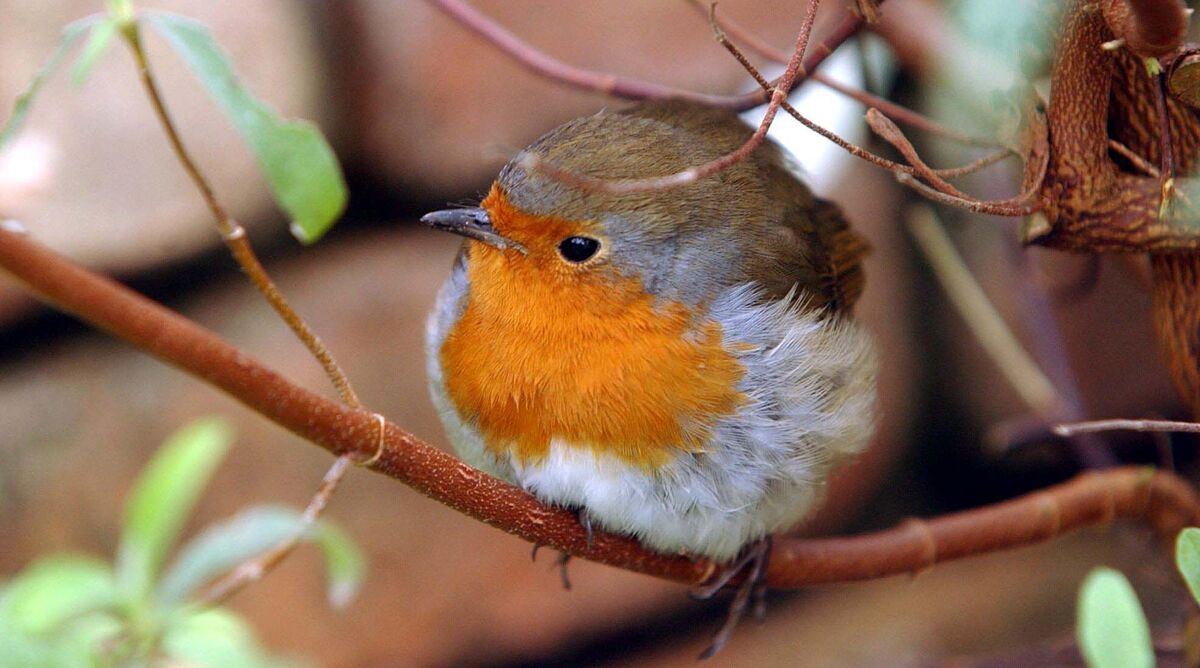
We owe the first reliable demonstration that this sixth sense exists to two German researchers: Wolfgang Wiltschko and his wife Roswitha. They studied the behaviour of robins in an aviary in which artificial magnetic fields could be generated. They showed that robins use the Earth’s magnetism when migrating.
This ability, it was then argued, must surely apply to such ocean migrants as salmon and sea turtles — they can’t use landmark sightings or star-fixes to navigate in the murky depths where they live. The experimental evidence of ‘magneto-reception’ in some insects, molluscs and plants is convincing.
Could this mysterious faculty be present to some degree in all organisms? Cattle, it was suggested, align themselves with the Earth’s magnetic field when resting but close examination shows that they don’t.
A paper published in 2013 claimed that dogs tend to orient themselves in a north-south direction when they defecate. Whether the human body responds to magnetism, as Mesmer believed, remains an open question. Recent experiments by Korean scientists seem to show that it can do so, "mediated through a light and magnetic-field resonance".
Paper out today with @bgyraho @oliverlindecke @FPackmor on animal navigation via magnetoreception. We highlight potential issues with virtual magnetic displacements (effecting almost all studies we looked at) and present a tool to help future exp. design. https://t.co/2AogWTbjKS
— Will Schneider (@willtschneider) February 20, 2023
Will Schneider and colleagues at Bangor University, in a paper just published, argue that behavioural studies "must go hand-in-hand with other fields if we are to advance our understanding of the magnetic sense".
Up to now, they say, investigations have relied heavily on behavioural observations. Recommending a wide multi-disciplinary approach to the problem, they describe the techniques currently available.
In a review of progress to date, they conclude that "many animals are sensitive to magnetic fields", which have a "wide variety of uses, from navigation to a role in helping to catch prey". They warn, however, that "a variety of psycho-physiological effects of magnetic fields may lead to both false positives and negatives in behavioural experiments".
CONNECT WITH US TODAY



Be the first to know the latest news and updates