Take me to Church Island — this one's in Roscommon
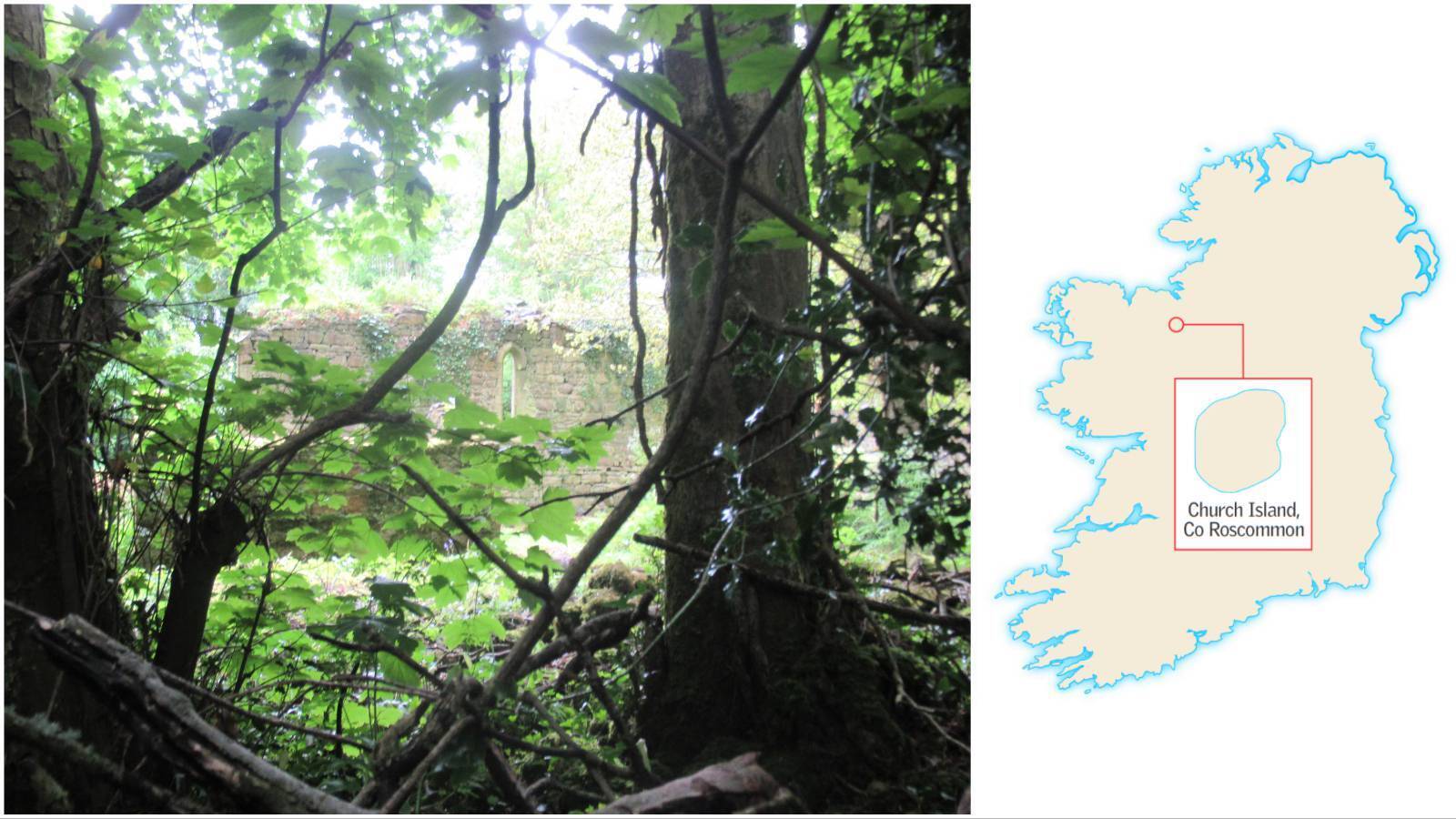
As well as an abbey there is a cilín, or children’s graveyard with rows of uninscribed grave-markers
Take me to Church Island — this one's in Roscommon

Islands of Ireland: Artifacts found at a burial site on Roscommon's Church Island were carbon-dated to Ad1021-1216

This is another Church Island to accompany the collection of islands so named around the country.

  • There is the diminutive one adjacent to Valentia Island, County Kerry
  • the one on Lough Currane, also County Kerry, rich in monuments
  • or the wooded one on Lough Gill, Co Sligo

What they have in common is that the churches after which they were named were built in out-of-the-way places, in harmony with the landscape, and where only the faithful could find them.

This Church Island is near the shore on the serene Lough Key, County Roscommon, which is sprinkled with more than 20 islands, among them, Castle Island with its crumbling ruins of the 19th century McDermott’s Castle.

On a short kayak trip from the shore of the lake opposite the castle, it is at first hard to detect Church Island as it blends into the background of the larger mainland wood. Eventually, it reveals itself and a colourful splash of marsh marigold indicates a spot where the kayak can drift in.

 Part of the Inchmacnerin Abbey complex on Church Island, Lough Key, County Roscommon. Picture: Dan MacCarthy
Part of the Inchmacnerin Abbey complex on Church Island, Lough Key, County Roscommon. Picture: Dan MacCarthy

The abbey was built in the interior of this small island in a site well chosen to keep it away from prying eyes. The island’s perimeter is of native woodland with a circular path of ferns around the old abbey. Leaves have tumbled to fill several of the small buildings — a change from the sand that fills old houses on some of our coastal islands. The roof of the abbey may have gone but the granite blocks of the gables are still standing nearly 900 years after construction and they are in impeccable condition.

The abbey probably dates from between 1140 and 1170 and was built on the remnants of a church dating from the sixth century, the dawn of Christianity in Ireland.

Curiously, there is no historical reference to the foundation or early history of the abbey apart from a few details. It is known as Inchmacnerin (Mainistir Inis Mac nÉirín) or ‘Island of the Sons of Éirín’ and followed the Augustinian tradition through an abbey called St Mary’s. On the nearby Trinity Island, a community of Augustinians known as the White Knights or the Premonstratensians established a much bigger abbey around 50 years after the establishment of the Church Island community.

It is possible that through ecclesiastical links the latter order moved to set up its abbey on Trinity Island after contact with the St Mary’s brothers. One of the few historical records relating to the Church Island abbey is the death of the prior, Muiredach O'Gormley, in 1229. The order maintained a presence there until the 1590s.

In addition to the abbey there is a cilín, or children’s graveyard. It is described in archaeology.ie as having “rows of uninscribed grave-markers placed circa 1m apart”. There is also a ‘saint’s shrine’ at the end of the church ‘visible as a masonry structure, surviving as foundations with a round-headed window embrasure in the western gable’.

 Part of the Inchmacnerin Abbey complex on Church Island, Lough Key, County Roscommon. Picture: Dan MacCarthy
Part of the Inchmacnerin Abbey complex on Church Island, Lough Key, County Roscommon. Picture: Dan MacCarthy

Excavations here around 20 years ago discovered a burial with evidence of at least five others.

A small stoup (holy water basin) and a spud stone (stone with a socket to hold a door hinge) were also recovered. This site was dated to AD 1021-1216 using radiocarbon dating.

One of the most important records of early Irish history, the Annals of Loch Cé (Lough Key) was written on Trinity Island but as there was likely close collaboration between the monks of the islands, it is likely that the annals were partly composed on Church Island. The Church Island complex is a national monument, though scant few people visit it.

Church Island has several neighbouring islands including the aforementioned Trinity Island, Hogs Island and Hermit Island (which also has an oratory and may have been in contact with the other two ecclesiastical islands). There is also a trio of crannógs known as the Hag's Leaps, and the one closest to Church Island is called Bingham’s Island, after the 16th-century governor of Connaught, Richard Bingham. The lands around Lough Key were granted to a close associate of Bingham’s, William Taafe in 1596 after the dissolution of the monastery in 1569.

How to get there: Kayak from lake shore or loughkeyboats.com for boat tour of the lake

Other: archaeology.ie

More in this section

Revoiced

Newsletter

Sign up to the best reads of the week from irishexaminer.com selected just for you.

Cookie Policy Privacy Policy Brand Safety FAQ Help Contact Us Terms and Conditions

© Examiner Echo Group Limited