MyHome report: Homes being ‘snapped up’ at 7.4% above asking price

With about 34,000 completions last year — far short of the Government’s original 41,000 target — Irish home buyers are paying well above asking prices. Picture: iStock
Homes up for sale are being “snapped up quickly” as the housing market remains very tight even with inflation slowing, a new report has suggested.
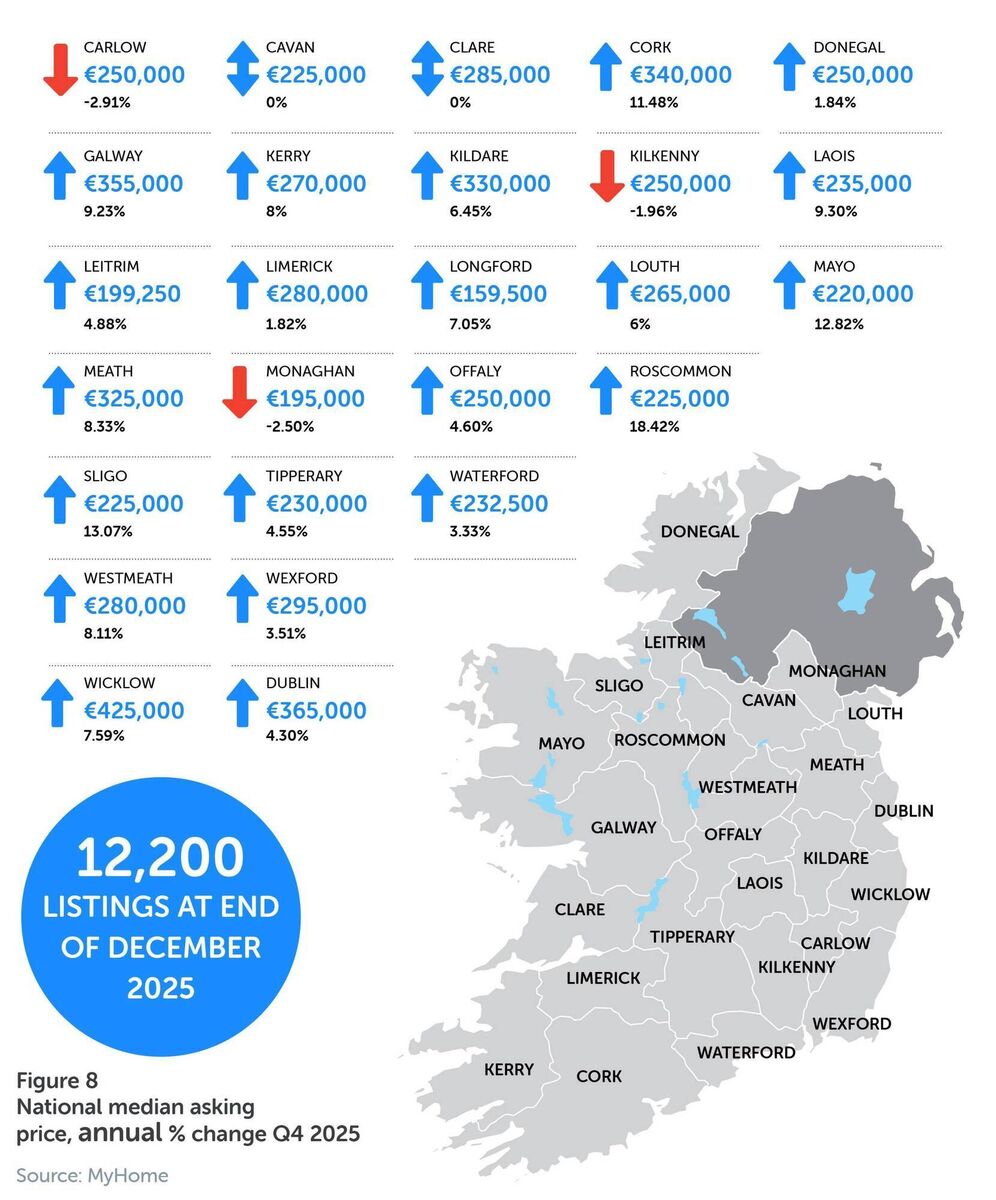
The MyHome report for the final quarter of 2025 shows national asking price inflation at 5.4% in the last three months of the year, with prices largely unchanged compared to the late summer and early autumn.
However, a typical property is still being sold for 7.4% above asking price, which is “high by historical standards” but down from the 8.6% peak in mid-2025.
“This quarter’s MyHome report adds to the evidence that the pace of Irish house price inflation is starting to soften,” report author and Bank of Ireland chief economist Conall Mac Coille said.
“The mortgage data also pointed to more sedate mid-single-digit gains heading into 2026. The overall impression from this quarter’s MyHome data is of the market pausing for breath after substantial price gains in 2024 and 2025.”
MyHome said the median asking price of a home was €380,000 nationally and €475,000 in Dublin.
The median is the middle figure in a row of numbers sorted from top to bottom, as opposed to the average.
The average mortgage approval in October was €336,800, up almost 5% on the previous year, while just 12,200 properties were listed for sale in December, reflecting the housing scarcity.

Mr Mac Coille said the 1.2% rise in the number of homes sold last year reflected the sale of newly built homes, with completions set to be in the region of 34,000 — far short of the Government’s original 41,000 target.
“In contrast, existing home sales in the first eight months of 2025 were down a further 2.7% on the same period of 2024,” he said.
“This illustrates the lack of ‘chains’ in the housing market — where it is necessary for movers to sell their own home before buying another — remains an impediment to housing market liquidity. There are no signs as yet this situation will improve in 2026.”

CONNECT WITH US TODAY



Be the first to know the latest news and updates