Richard Collins: Welcome hungry leatherbacks to chomp on lion's mane jellyfish
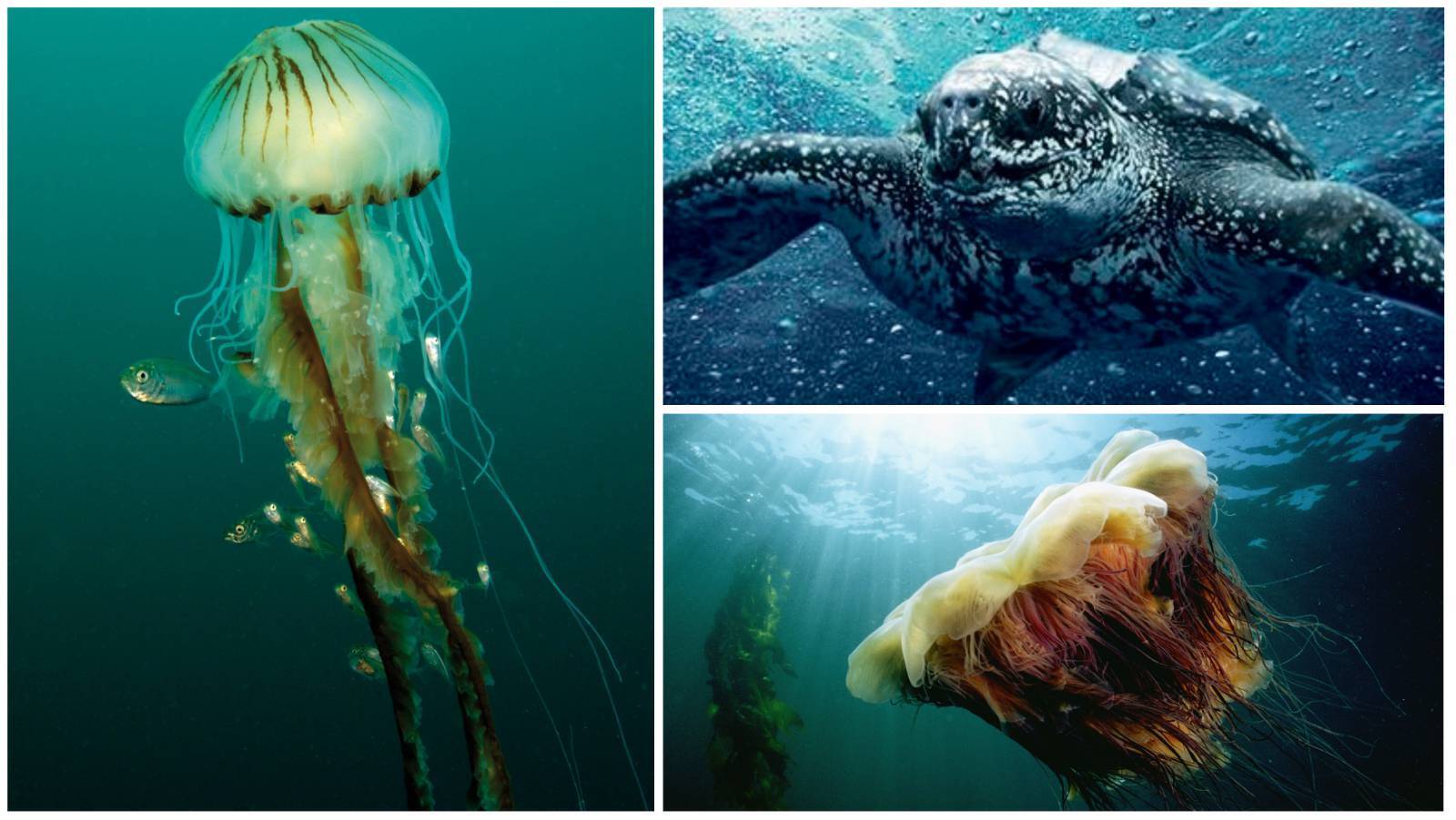
Compass jellyfish and Lion's mane jellyfish are part of the Leatherback turtle diet
Swimming in the sea is all the rage around the country. Bathers braved the waters even on the coldest days last winter.
However, now a problem has arisen: there has been an alien invasion. Compass and lion’s mane jellyfish have arrived in strength, ready to sting anyone who blunders into their dangling tentacles.

The compass species is unmistakable: Dark brown lines radiate from the centre of a whitish ‘bell’, up to 30cm in diameter. The sting is about as severe as a nettle’s.
The lion’s mane, however, is in another league militarily. Sometimes called the ‘hairy’ jellyfish, it is the second largest of the five species common in Irish waters.
Not the prettiest of creatures, it has an angry-looking dark red bell 30 to 40cm wide. Specimens exceeding a diameter of 2m have been recorded occasionally.
A dense mass of up to 1,200 shaggy tentacles trails beneath the bell, giving the species its name.
These can extend 30m or more, exceeding in length the world’s biggest creature, the blue whale. The lion’s mane jellyfish, therefore, can claim to be the world’s longest animal.

You don’t want to tangle with this monster. Its tentacles have tiny lethal darts, triggered by contact with a fish, a crustacean, or human skin.
Paralysed victims, which include smaller jellyfish, are drawn up to the predator’s mouth.
Tentacles severed by power-boat propellers may drift invisibly, delivering painful stings to a swimmer becoming entangled in them.
Even dead jellyfish, washed up on the shore, must be handled carefully.
Despite the species’ fearsome reputation, the lion’s mane sting is not actually life-threatening, unless you happen to be prone to anaphylactic shock.
Although the numbers this year are particularly impressive, the lion’s mane invasion is an annual event.
We notice only the final ‘medusa’ stage of the creature’s one-year lifecycle.
The eggs, fertilised by the male in March or April, are deposited on a hard surface, where they grow into polyps.
The adult form develops from these about 30 days later. Jellyfish swim by pulsing their bells but lion’s manes rely mostly on ocean currents for transport.

Few creatures will take on such a well-armed opponent. The lion’s mane has little to fear from predators — but there’s an exception: the leatherback turtle.
This would-be laureate is the world’s second-largest marine reptile. The top title goes to the saltwater crocodile.
We used to regard this ocean giant with the tractor-tyre rubbery carapace, as an accidental vagrant, a lost soul blundering into our waters.
There are more sightings here than elsewhere in Europe apart from France. Not a fan of fishermen though — this turtle becomes entangled in nets.
Leatherbacks breed on both sides of the South Atlantic. The origin of our Irish visitors is uncertain.
Unusually for a reptile, leatherbacks can generate their own body heat, allowing them to visit cooler waters where jellyfish are abundant. Some even venture beyond the Arctic Circle.
The swimmers here being put off by all the jellyfish visitors would welcome a visit by this critically endangered jellyfish-devouring giant.