Anja Murray: Whales are on the move and Cork and Kerry are great places for whale-watching
In Iceland, ironically, income from whale watching tourism far outweighs the income from commercial whale hunting
Anja Murray: Whales are on the move and Cork and Kerry are great places for whale-watching

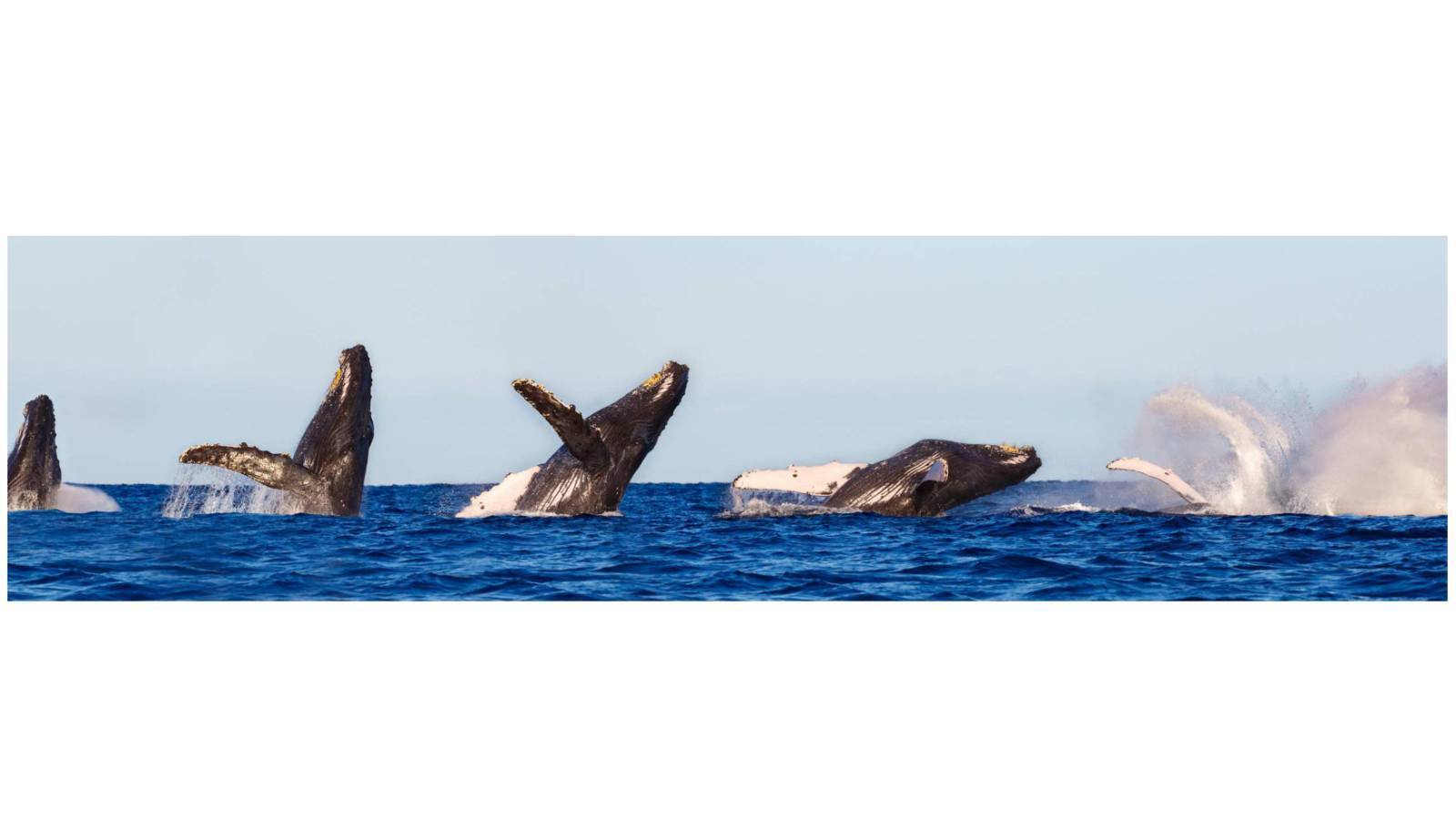
A series of photos of a humpback whale breaching: during August and September, humpback whales can sometimes be seen off the coasts of Cork and Kerry as they make their epic migration from summer feeding grounds in the Polar regions to warmer waters near the equator for breeding and birthing

Seeing a whale out at sea is a thrilling experience. 

The anticipation; watching the water intently, hoping for a glimpse of a whale — all part of the excitement of whale watching.

When someone spots a fin, everyone on board is keen to get a view. Whales are the biggest creatures on Earth, and knowing that one is in such close proximity, just beneath the surface, is an indescribable experience. 

Actually seeing a whale breach the water must be a whole other level of awe-inspiring. I’ve been moved near to tears by the sight of just a small part of a pilot whale’s back.

Luckily for us, Irish waters are well populated by whales of many species, making Ireland one of the best places in Europe to go whale watching. As well as the occasional glimpse of the dorsal fin of a whale, it’s not uncommon for pods of dolphins to whirl about near the boat, circling and pursuing one another at impressive speed. Whether they are playing, fishing or pursuing a female, we can only speculate.

We did not always value and respect whales in this way. In times past, whales provided the basis for a profitable industry here. Between 1908 and 1922, several Irish whaling companies caught blue whales, fin whales, humpback whales, sei whales, right whales and sperm whales off Ireland’s Atlantic coasts. 

Whale watching off the West Coast of Cork.

A single large whale could yield as much as 20 tonnes of oil. Much of this was used as lamp oil, before the days of petroleum or electricity. Across the Atlantic, so many whales were taken that most populations completely collapsed. 

Blue whales and right whales are two species that were hunted to the brink of extinction. As a result, the whaling industry became no longer viable, and some stocks have, over the hundred years since, begun to recover somewhat. Others have not recovered, such as the northern right whale which, 90 years after whaling ceased here, is still extinct in Irish waters.

Internationally, it took until 1986 for commercial whaling to be banned, with scientists, campaigners and the International Whaling Commission negotiating this historic conservation win. Today, Japan, Iceland and Norway carry on commercial whaling for profit nonetheless. 

In Iceland, ironically, income from whale watching tourism far outweighs the income from commercial whale hunting there. This contradiction has been causing great tension in Iceland this summer, as many within the Icelandic tourism industry believe that commercial whaling hurts Iceland's image as a tourism destination.

In Ireland, whales and their close cousins, dolphins and porpoises (all marine mammals) are protected under both national and international laws. The EU Habitats Directive lays out strict protection of whales’ feeding and breeding sites. 

Whale watching is among the great selection of activities listed on Kinsale.ie, a site hosted by Kinsale Chamber of Business and Tourism.

Whales are highly valued here, no longer for their meat or oil, but because they are the most majestic creatures in the sea. Several academic teams as well as The Irish Whale and Dolphin Group do a great deal for the conservation of whales and dolphins in Irish waters, improving our understanding of the movements of whales in Irish waters so that we can better protect these animals.

One of the most interesting things about whales and other marine mammals is that they communicate through sound. In addition to being the largest animals on earth, whales are also the loudest. Having to communicate with each other over large distances, whales emit deep, loud low-frequency calls. 

The calls are often elaborate and distinctive depending on the species, as is birdsong, only on a very different frequency. For humpback whales, all the males in a given area sing the same song: an elaborate set pattern of calls that lasts between 10 and 20 minutes, sometimes repeatedly for as long as 24 hours.

As well as using sounds to communicate and to find a mate, whales also use sound to hunt for food and to navigate. Because seawater is so much denser than air, sound carries further and faster underwater. 

Visibility is often poor underwater, especially at depth, so sound is also how these animals visualise their surroundings. The deeper the frequency, the further the sound will travel. Some whale ‘song’ can travel hundreds, or even thousands of kilometres through the ocean.

Because whales live in such a sonic world, they are also susceptible to noise pollution in the sea. When we drill for oil and gas in the ocean, the sounds can be so loud that whales flee in fear, which in turn affects their feeding and other behaviour. 

Many scientists are saying that the seismic drilling for fossil fuels at sea is pushing whales to their limit, as the whales dive deeper, are more stressed, and can suffer from oxygen depletion in their blood as a result. Evidence is mounting that whale strandings are a direct result of noise pollution in the sea. 

Military sonars make enormous noises too, which both stress the animals greatly and can prevent whales from finding a mate. When populations are still in recovery from near extinction through hunting, successful reproduction is especially imperative if populations are ever to fully recover. 

Even the everyday noise of shipping traffic can be deafening to marine mammals and hinder them from essential daily activities. International freight shipping has greatly increased in recent decades, and is having an enormous impact on ocean life.

More than 25 different species of whale and dolphin are present in Irish waters. During August and September, humpback whales can sometimes be seen off the coasts of Cork and Kerry, passing surprisingly near the shore as they make their epic migration from summer feeding grounds in the Polar regions to warmer waters near the equator for breeding and birthing. 

Enormous fin whales arrive in Irish waters in late summer. Orca whales (also known as killer whales) are sometimes seen too, including one memorable trip when three of them came from Cork Harbour up the River Lee in 2001.

Whales in cork june 2001 caroline delaney

Whales are truly wondrous animals and Irish waters are one of the most important places in Europe for them. There is much we have yet to discover about them too, including their role in cycling carbon from the atmosphere into the deep ocean. 

Having almost lost whales to extinction once already, hopefully the impacts of noise pollution in the ocean will be addressed before it's too late.

x

More in this section

Revoiced

Newsletter

Sign up to the best reads of the week from irishexaminer.com selected just for you.

Cookie Policy Privacy Policy Brand Safety FAQ Help Contact Us Terms and Conditions

© Examiner Echo Group Limited