Rare disease drugs: EU urged to tackle costs and improve access for patients
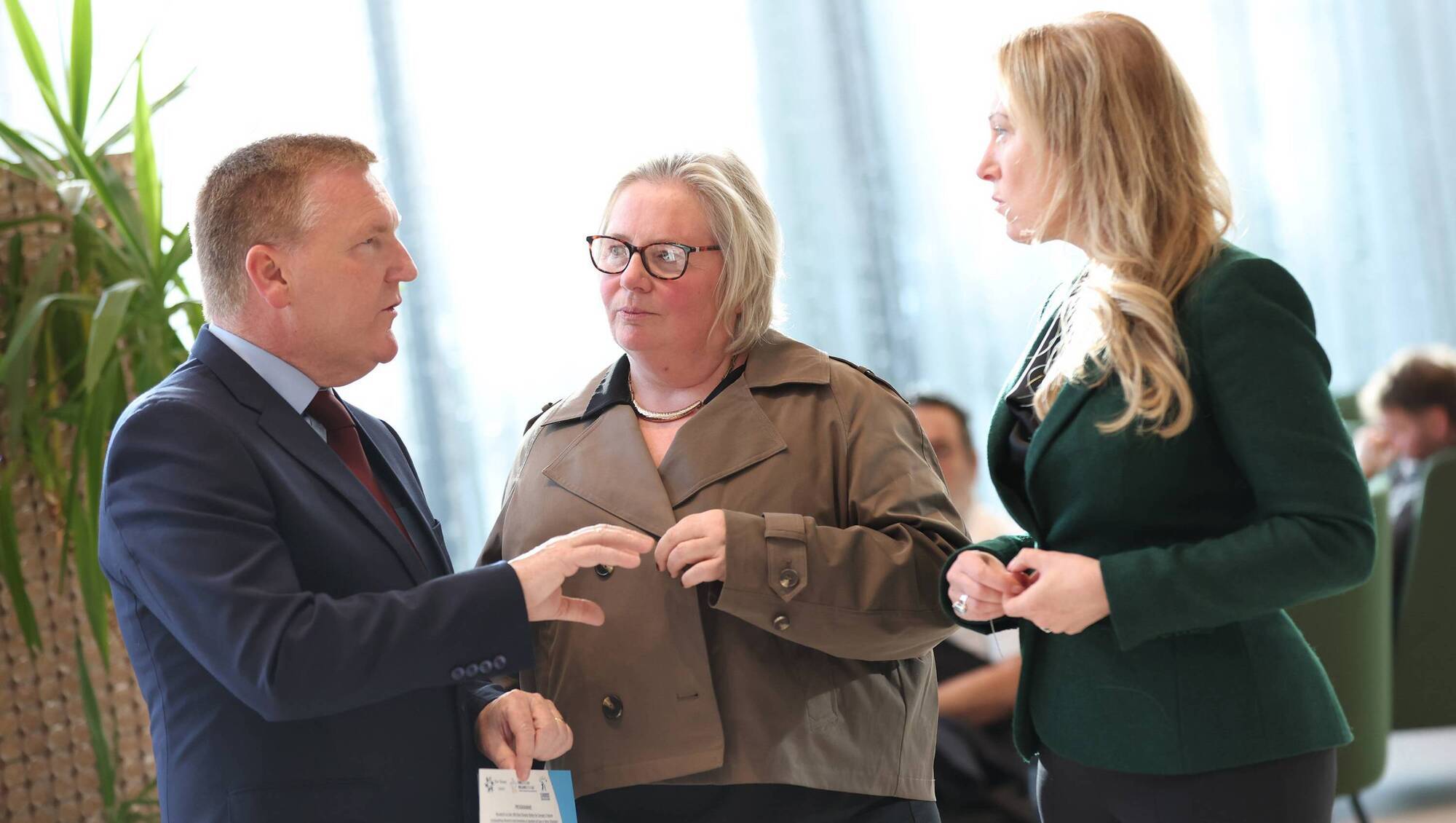
(Left to right) Michael McGrath, European Commissioner, Vicky McGrath CEO of Rare Diseases Ireland, and Avril Daly, president of EURORDIS at the EU Presidency Event 'Research as Care: Why Rare Diseases Matter for Europe's Future' in Dublin. Picture: Julien Behal
Treatments for rare diseases must be made more affordable and accessible to patients, Ireland’s EU Commissioner has said.
Michael McGrath has said scientific breakthroughs in new medicines are not always a breakthrough for patients, saying they must be in a position to "actually benefit from it".
“We must reward the innovators who develop new treatments, but we must also ensure that those treatments are affordable for health systems and accessible to the patients who need them,” Mr McGrath said.
Speaking at a Rare Diseases Ireland conference, Mr McGrath pointed out that rare disease medicines may not be available in all EU member states, given the small market.
He said the EU-proposed Critical Medicines Act is seeking to address this by improving the “security of supply of the medicines that people need”, including for orphan medicines, developed specifically to treat rare conditions.
This will also support co-operation between EU member states, including in areas such as procurement, Mr McGrath said. “Where you live should never decide whether you get the medicine that you need.
Read More
“If a country is trying to procure medicine for a rare disease in very, very small quantities, it is clearly not going to get the same value for money as if that was grouped with a much larger order,” Mr McGrath said.
“A lot of this is common sense. It’s about the EU working together, breaking down barriers.”
Mr McGrath said the fact that there are no approved therapies for nine in 10 rare diseases was “not good enough”. “Research and innovation should not be a privilege for the fortunate few,” he added.
Fianna Fáil TD for Cork North Central, Pádraig O’Sullivan, told the conference there is an obligation to improve the drugs reimbursement system in Ireland.
He pointed to legislation due to be debated at the Oireachtas health committee next month, which would provide separate reimbursement processes for rare disease drugs.
He pointed to the need to increase funding, particularly to European Reference Networks. These networks connect doctors, patient representatives, and researchers across borders, but Mr O’Sullivan said he did not believe they were being sufficiently funded.
Asked about the funding issue, Mr McGrath said negotiations on the next EU budget would be “absolutely pivotal”.
He said while the Irish presidency has tabled its latest draft, there is a need to maintain a “high level of ambition when it comes to support for the rare diseases community around the European Union”.
- Tadgh McNally, political reporter

CONNECT WITH US TODAY



Be the first to know the latest news and updates