Everything you need to know about periods — including what's not normal
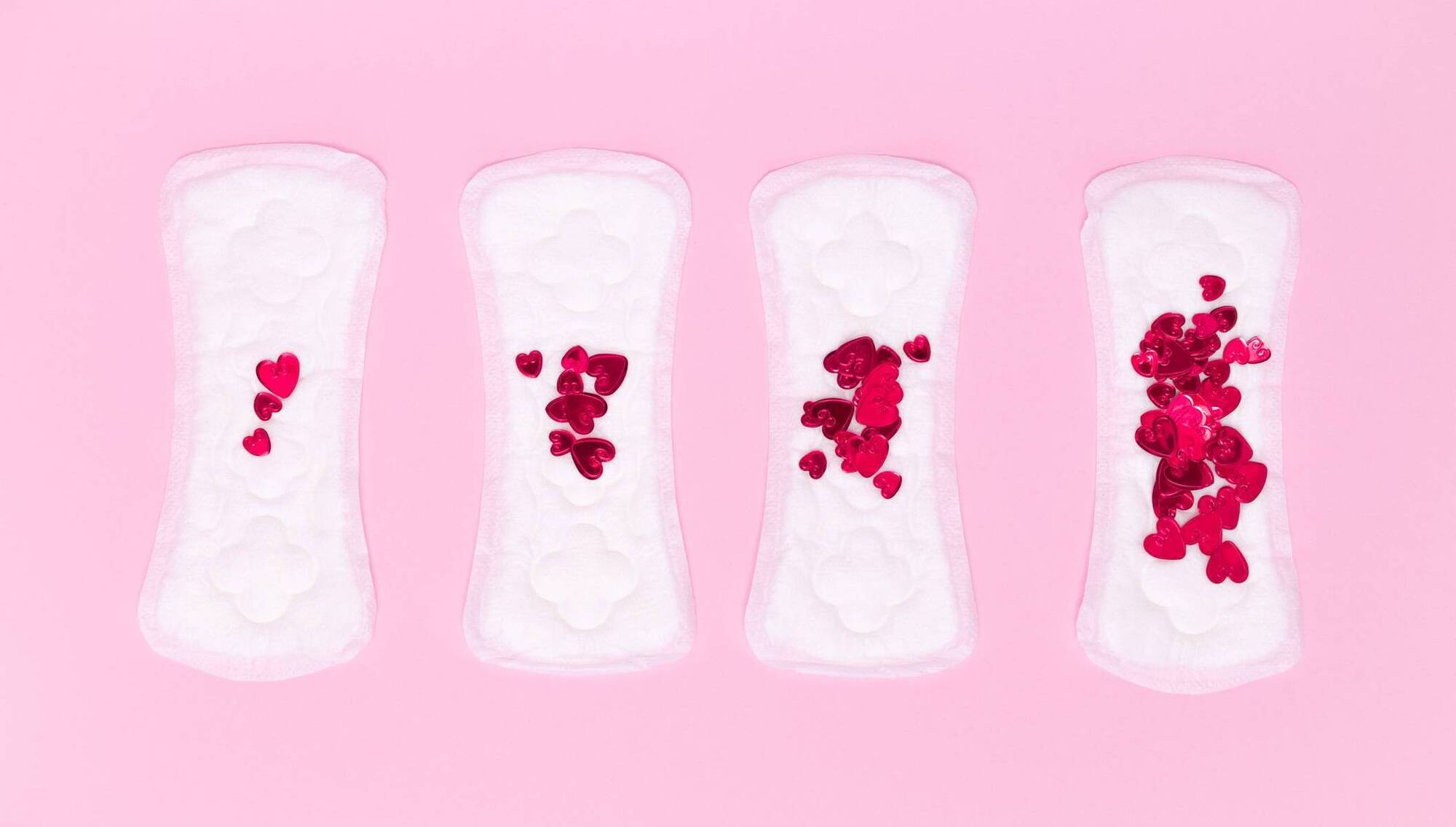
Menstruation deserves the same spotlight as the menopause, and putting the focus on periods will “direct research, the doctors, and the scientists to a very important area”. Picture: iStock
A lot of women don’t realise what a normal period is,” consultant endocrinologist Dr Mary Ryan says. She is on a mission to change that with , the follow-up book to her bestselling study of hormones.
Ryan gets granular on “where it all begins” — the period — for a simple reason: Most of us, doctors included, don’t know enough about menstrual health, and women and girls are suffering as a result.
“Where we really need to change with periods is to define what’s normal, define what’s abnormal, and get early intervention much, much quicker than we’re doing,” she says, adding that girls who get heavy periods are still being told to ‘go to bed with the hot water bottle and, hopefully, it’ll get better’, an approach she gives short shrift: “I think that’s a nonsense.”
Menstruation deserves the same spotlight as the menopause, and putting the focus on periods will “direct research, the doctors, and the scientists to a very important area”, while increasing awareness of what’s normal and what’s not. This, along with early intervention, would be game-changing for women and girls.
“I believe if we get in early enough, we can prevent endometriosis, we can prevent a lot of infertility, because you can prevent the adhesions; prevent painful periods, prevent the PMDD, and [deal with] polycystic ovaries.”
The dearth of research and lack of knowledge on menstrual-related issues have caused real suffering for women. Take pre-menstrual dysphoric disorder (PMDD), a severe form of pre-menstrual syndrome that has profoundly debilitating effects on mood, affecting around 5% of women. In her book, Ryan explains how, in her clinic, she has seen how “transformational the right dose and type of hormone can be for women [with PMDD], yet they aren’t routinely prescribed”.
It’s only when women are trying to get pregnant that menstruation issues are treated. At that point, they may be more complex than if addressed earlier. Ryan says: “Because of a lack of education and a lack of resources, we haven’t been going in early enough, and these women are only being treated when they want to get pregnant in their 30s. They’ve suffered for 20 years at that stage. That’s crazy.”
Normal period pain is mild and short-lived, she says, and while a period may be “painful” and “crampy” on the first day, it should settle down on the second and third.
Being “doubled up in pain” is “not normal”. When there’s no underlying medical condition, prolonged or severe period pain is, she says, usually due to an “excess release of prostaglandins, and that’s got to do with hormone imbalance”.
When too many prostaglandins are the cause of debilitating period cramps, there’s a straightforward fix. She says that “giving progesterone in the second phase of the cycle” will “reset” hormones, resolving the prostaglandin excess and, with it, the cramping.
With standard or mild period pain, “in the majority of cases” regular paracetamol should be sufficient for relief, but mefenamic acid, a prescription non-steroidal anti-inflammatory (NSAID) drug that significantly reduces the production of prostaglandins (these cause cramping), is another option and is, she says, “handy to have in the press”.
When the root cause of severe period pain is an underlying medical condition, such as endometriosis or uterine fibroids, early diagnosis and treatment are crucial, says Ryan in her book, because infertility and chronic pelvic pain can result when it is left untreated.
Past generations often accepted their daughter’s painful periods as an inevitability and something that just had to be endured, because it mirrored their own experience.
In short, period health reflects general health and vice versa.
Girls are now getting their periods earlier. Anything from age 11 to 16 is considered normal, but the first period usually occurs at 12. There is a link between early puberty and a diet high in ultra-processed foods, “and we know that from research”, Ryan says.
For good hormonal health and good period health, “we need to push healthy eating and less processed food and less junk food. We really need that, because the hormone-control centre thrives best on healthy eating and reduced sugar”. The odd treat is fine, but for good period health (and general health), her message is “go back to basics and eat healthily”.
Technology has made tracking our health markers easy, and latterly there has been a boom in devices and apps that allow women to monitor their menstrual cycles, hormonal patterns, and general wellness in real time. Ryan is all for it. “I love when [a patient] pulls out the app and shows me ‘this is where my cycle is’,” she says, noting that the data can provide valuable insights around periods and health.
Cycle tracking “puts them in control,” she says. “It means they’re proud of their cycle. They’re proud of having a period. There’s no shame about it. It’s absolutely wonderful.”
Of course, if you take the pill, you don’t actually have a true menstrual period. More research is needed into the long-term impact of taking hormonal contraception over many years, says Ryan, making the point that when the pill was introduced, it was seen as a short-term intervention. Modern usage is vastly different, and “girls are going on them at 15 and might be on them until they are 34, 35”.
While the pill is safe for most women, no long-term studies have been done on continuous use from teenage years to the mid-30s, and “we need to have those answers; the girls deserve those answers”, she says.
Ryan recommends taking a break (and using alternative precautions against pregnancy while doing so) “every 12 months, just for a month, and let the whole thing reset”.
Ultimately, Ryan has a simple wish: “What I want for every girl is that when she gets her period, she’s not going to suffer. And if she does get PMDD or PMS, that we know how to treat her and she knows she can be treated, and she can look forward to the next 30 or 35 years without any suffering. That’s the way it should be.”
- ‘’, by Dr Mary Ryan, is published by Gill and out now
Read More

CONNECT WITH US TODAY



Be the first to know the latest news and updates