Ultra-processed foods should be treated more like cigarettes than food, new study suggests

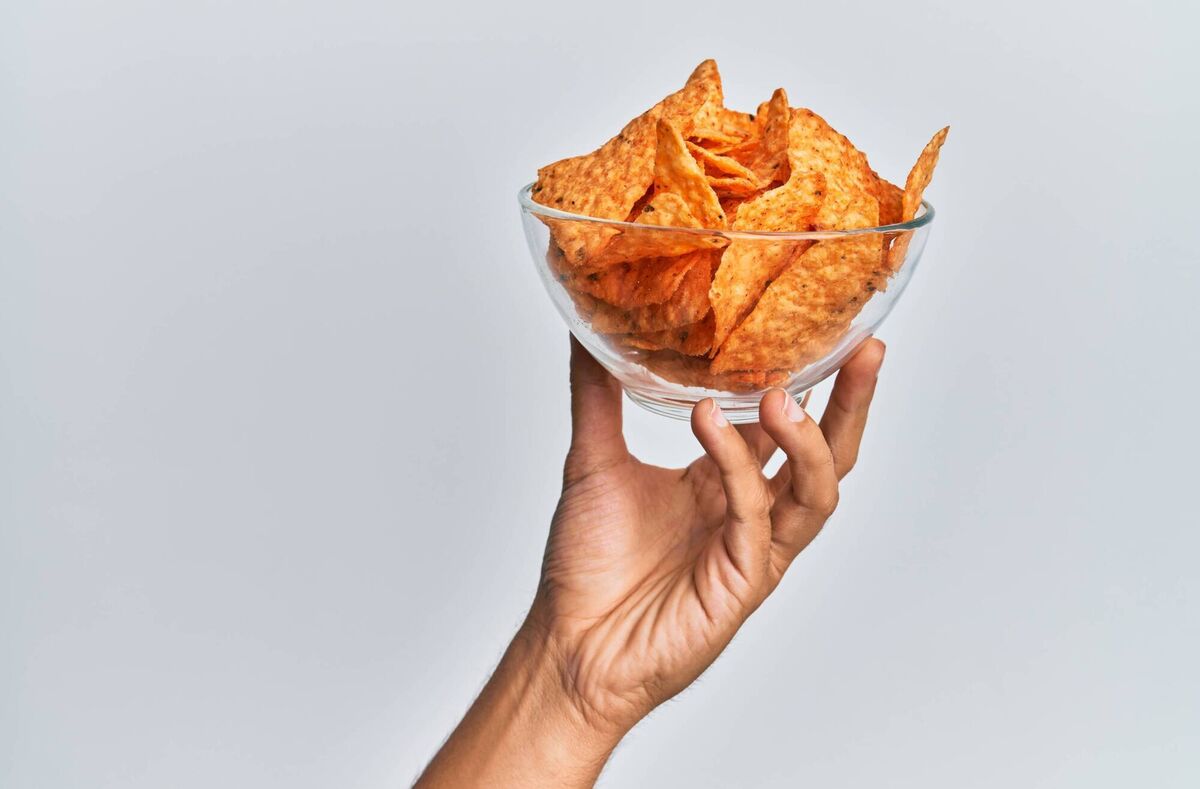
There are similarities in the production processes of UPFs and cigarettes, according to the paper from researchers. Picture: iStock
Ultra-processed foods (UPFs) have more in common with cigarettes than with fruit or vegetables, and require far tighter regulation, according to a new report.
UPFs and cigarettes are engineered to encourage addiction and consumption, researchers from three US universities said, pointing to the parallels in widespread health harms that link both.
UPFs, which are widely available worldwide, are food products that have been industrially manufactured, often using emulsifiers or artificial colouring and flavours. The category includes soft drinks and packaged snacks such as crisps and biscuits.
There are similarities in the production processes of UPFs and cigarettes, and in manufacturers’ efforts to optimise the “doses” of products and how quickly they act on reward pathways in the body, according to the paper from researchers at Harvard, the University of Michigan and Duke University.
They draw on data from the fields of addiction science, nutrition and public health history to make their comparisons, published on 3 February in the healthcare journal the Milbank Quarterly.
The authors suggest that marketing claims on the products, such as being “low fat” or “sugar free”, are “health washing” that can stall regulation, akin to the advertising of cigarette filters in the 1950s as protective innovations that “in practice offered little meaningful benefit”.
“Many UPFs share more characteristics with cigarettes than with minimally processed fruits or vegetables and therefore warrant regulation commensurate with the significant public health risks they pose,” they concluded.
One of the authors, Prof Ashley Gearhardt of the University of Michigan, a clinical psychologist specialising in addiction, said her patients made the same links: “They would say, ‘I feel addicted to this stuff, I crave it – I used to smoke cigarettes [and] now I have the same habit but it’s with soda and doughnuts. I know it’s killing me; I want to quit, but I can’t.’”
The debate around UPFs fits a well-worn pattern in the field of addiction, according to Gearhardt. She said: “We just blame it on the individual for a while and say ‘oh, you know, just smoke in moderation, drink in moderation’ – and eventually we get to a point where we understand the levers that the industry can pull to create products that can really hook people.”
While food, unlike tobacco, is essential for survival, the authors argue that the distinction makes action doubly necessary because it is difficult to opt out of the modern food environment.
Gearhardt said it should be possible to distinguish between harmful UPFs and other foodstuffs in the same way that alcoholic drinks are differentiated from other beverages.
UPFs meet “established benchmarks” as to whether a substance should be considered addictive, the paper argues, with design features that “can drive compulsive use” – although “the harms of UPFs are clear, irrespective of their addictive nature”.
The authors suggested that lessons from tobacco regulation, “including litigation, marketing restrictions and structural interventions”, could offer a guide to reducing harm related to UPFs, calling for public health efforts to “shift from individual responsibility to food industry accountability”.
Prof Martin Warren, chief scientific officer at the Quadram Institute, a specialist food research centre, said that while there were parallels between UPFs and tobacco, the authors risked “overreach” in their comparisons.
There were questions, he said, over whether UPFs were, like nicotine, “intrinsically addictive in a pharmacological sense, or whether they mainly exploit learned preferences, reward conditioning and convenience”.
He said it was also important to consider whether the adverse health effects attributed to UPFs came from their contents, or because they replaced “whole foods rich in fibre, micronutrients and protective phytochemicals”. He said:
Dr Githinji Gitahi, chief executive of Amref Health Africa, said: “This journal article reinforces a growing public health alarm sounding across Africa [where] corporates have found a comfortable, and profitable, nexus: weak government regulation on harmful products and a changing pattern of consumption.
“All this places new and preventable pressures on already stretched health systems,” he said. “Without publicly led interventions on the rising burden of non-communicable diseases, we risk health systems’ collapse.”
- The Guardian
CONNECT WITH US TODAY



Be the first to know the latest news and updates