Juggling breastfeeding and a full-time job

In spite of our low breastfeeding rate, Ireland is taking the right steps to support mothers returning to work
Juggling breastfeeding and a full-time job

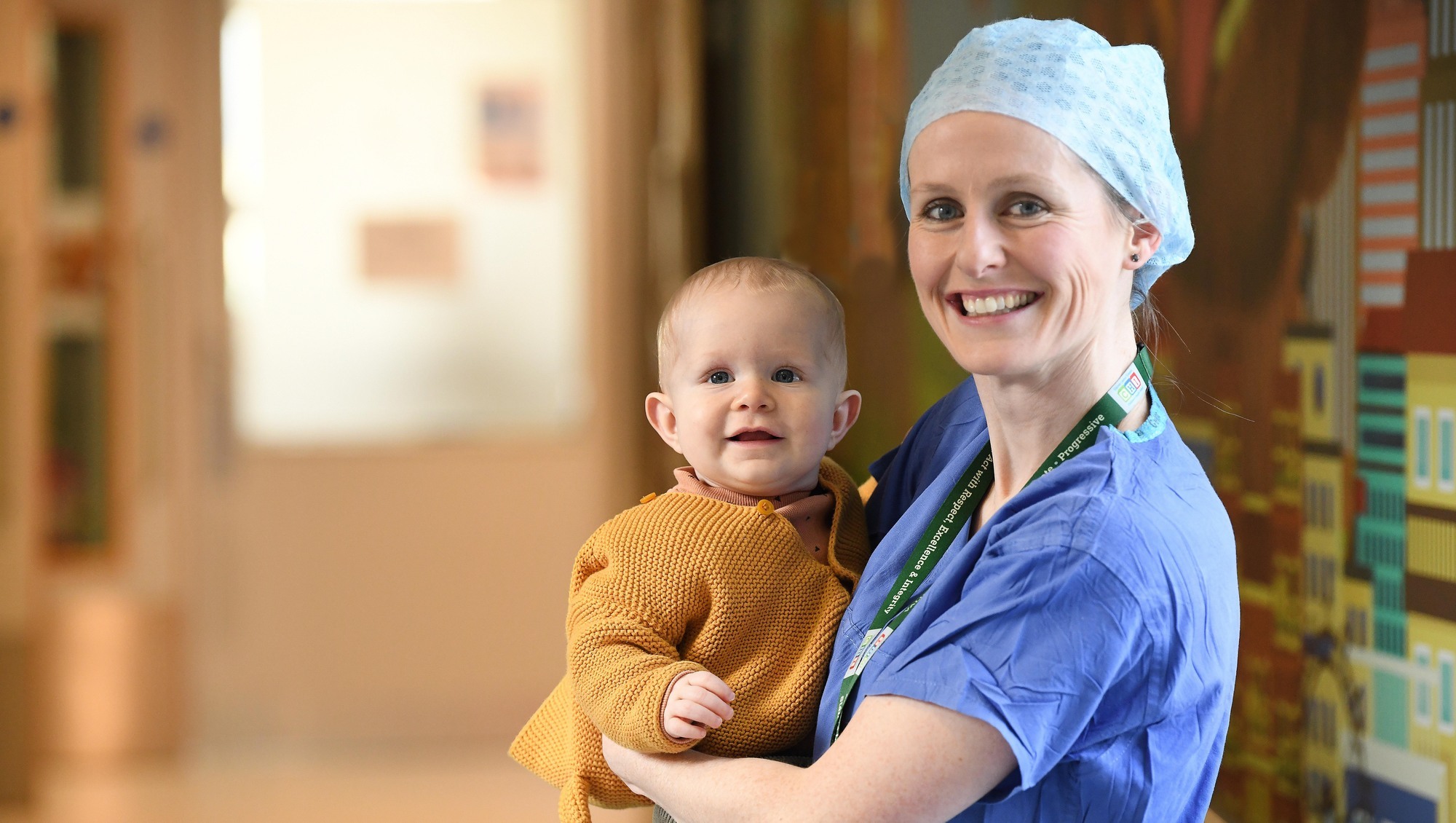
Eimear McGovern, a paediatric cardiologist at CHI Crumlin with her baby Senan. 

Eimear McGovern returned to work after maternity leave in December. Since then, the 38-year-old paediatric cardiologist at CHI Crumlin has juggled full-time work with breastfeeding her seven-month-old son.

“He’s my first baby, so I was worried about how I’d find time to pump during my working day,” she says.

She and her husband had taken steps to prepare for her return to work. They introduced solid food and McGovern says “that got off to a good start. My husband had been giving him bottles of expressed milk from four months and he had taken well to that too. I also got lots of advice from support groups like La Leche League and Cuidiú. They told me all about my legal entitlements and helped me believe we could make it work.”

Women are now entitled to take breastfeeding breaks at work until their child is two years old, thanks to the Maternity Protection Act 2024 and the Work Life Balance Act 2023.

Holly Fawcett-Keogh, secretary of the board of trustees of Friends of Breastfeeding, says these breaks can amount to one hour in an eight-hour day and can be taken as one 60-minute break, two 30-minute breaks, or three 20-minute breaks.

Holly Fawcett-Keogh is the secretary of the board of trustees of Friends of Breastfeeding. 

These breaks are in addition to normal rest breaks. Part-time workers can take them on a pro-rata basis. And, depending on whether there are appropriate facilities in the workplace, women can either use them to breastfeed or express milk at work or have their hours reduced to do so elsewhere.

As a consultant doctor, McGovern controls how she allocates her time. Before she went on maternity leave, she would aim to carry out four medical procedures every day but has reduced that to three to allow time for pumping.

 Eimear McGovern, a paediatric cardiologist at CHI Crumlin with her baby Senan. Photograph Moya Nolan
Eimear McGovern, a paediatric cardiologist at CHI Crumlin with her baby Senan. Photograph Moya Nolan

“That schedule means I can feed my son at 6am before I leave for work and then pump at 10am and 2pm,” she says. “I try to be home for 6am to feed him again.”

Crumlin hospital has a designated breastfeeding room for staff but it’s far from where McGovern does most of her work. So, she either pumps in her office or in the changing rooms near her lab. “Doing it there means I get it done quickly and can get back to work,” she says.

A varied experience

Fawcett-Keogh commends the Irish government for supporting breastfeeding mothers. “To be fair to our legislative and policy frameworks, Ireland has definitely done the right thing by extending breastfeeding breaks to two years. In most countries, these breaks are only for one year,” she says.

However, women supported by Friends of Breastfeeding have reported “hugely varied experiences” of how these breaks are implemented, ranging from “employers refusing them entirely to telling women to pump in the bathroom”.

She believes this lack of support contributes to Ireland’s low breastfeeding rates, which rank among the lowest in Europe. “There’s still a discriminatory attitude,” she says. “Mums have told us of managers and colleagues making comments like ‘Why are you still breastfeeding?’ and ‘Pumping isn’t appropriate in the workplace’. Attitudes like these are why some mums switch to formula when they return to work.”

She acknowledges there are also supportive employers, including some that “offer the option of working from home, a dedicated private space to pump at work, or allow employees to take an hour off so they can go off-site to nurse their babies”.

 Eimear McGovern, a paediatric cardiologist at CHI Crumlin with her seven-month-old baby Senan. Photograph Moya Nolan
Eimear McGovern, a paediatric cardiologist at CHI Crumlin with her seven-month-old baby Senan. Photograph Moya Nolan

AnnMarie Gallagher is a member of the Baby Feeding Law Group Ireland, a coalition of health professionals and organisations advocating for policies to protect maternal and infant health, combat the marketing of infant formula, and support breastfeeding.

The 38-year-old health and safety professional from Mayo is also a mother of three. She breastfed all her children and is still breastfeeding her 16-month-old daughter.

She finds it difficult to juggle with work, mainly because she cannot produce milk by pumping.

“With my first, I was able to make it work because it was the pandemic, I was working from home, and he was minded by a neighbour, so I would call over to feed him,” she says. “But I still got mastitis several times. The extension of breastfeeding breaks to two years meant I could continue feeding my younger two. That hour’s break has been a blessing for us because it means I can leave work early. I wouldn’t have been able to manage work and breastfeeding were it not for it.”

Gallagher also credits her line manager’s support. “She breastfed twins and knows how hard breastfeeding can be,” she says.

Her advice to mothers who want to continue breastfeeding post-maternity leave is to make sure they comply with legislation and let their employers know at least four weeks before they return. “Engaging with employers as early as possible will help you plan what your workday will look like to facilitate breastfeeding breaks,” she says. “Your employer will also have time to carry out any risk assessments, come up with any accommodations that may be needed or make provision to manage the workload from a resources point of view.”

She believes employers risk losing female employees if they aren’t supportive of breastfeeding mothers.

“Women who try to continue breastfeeding without taking breaks are likely to get sick with mastitis or to consider extending their maternity leave so they can feed their babies,” she says. “I would have extended my leave if there weren’t breaks available. Luckily, there are lots of resources to assist both employers and employees in managing breastfeeding breaks at work.”

Helpful toolkits

Companies can all help employers develop what Fawcett-Keogh describes as “toolkits that include a return-to-work planning conversation, a shared lactation plan and manager guidance on how to support a returning mother, such as planning for less travel and fewer back-to-back meetings. Giving women time and support to express milk and nurse their babies will help keep them and their valuable skills in the workplace.”

Vodafone Ireland prides itself on the supports it offers breastfeeding mothers. Its director of human resources Noelle Burke says that the organisation has built “a reputation for being people-centric in terms of policies and supports and for helping our 1,200-plus employees balance their work with family, health and caregiving responsibilities”.

Vodafone Director of Human Resources Noelle Burke

Since 2013, Vodafone’s headquarters in Sandyford, Dublin, has had a designated breastfeeding room, complete with rocking chair, blankets, a wash basin and a fridge for storing milk.

“The breastfeeding room in our new headquarters in Dublin city centre will be even better,” says Burke. “We’ve tried to create a relaxing space where women can be comfortable. They can close and lock the door, turn on music or the TV, adjust the temperature to suit themselves and pump.”

Other supports it offers to all women returning to work after maternity leave include a four-day week, while being paid for five, for up to six months, a buddy system to help them reintegrate into the workplace, and hybrid, flexible working hours.

“Employees only have to work a minimum of eight days a month in the office,” says Burke. “Core working hours are 10am to 4pm but people can choose their start and finish times outside of those hours. We also keep communication channels open so that our people can tell us what they need so that we can respond with the necessary supports.”

As for McGovern, she is grateful her job allows her to pump while at work, and she hopes to continue doing so until her son is at least one year old.

“I’d love to carry on for longer,” she says. “I’m exposed to so many different viruses at work, and it would be great if the antibodies in my breastmilk could protect him from them for as long as possible.”

I would have extended my leave if there weren’t breastfeeding breaks available

More in this section

Lifestyle

Newsletter

The best food, health, entertainment and lifestyle content from the Irish Examiner, direct to your inbox.

Cookie Policy Privacy Policy Brand Safety FAQ Help Contact Us Terms and Conditions

© Examiner Echo Group Limited