Snack tactics to improve your children's eating habits
By snacking on treats many children are missing out on essential micronutrients which will impact their growth, learning ability, and general health
Snack tactics to improve your children's eating habits

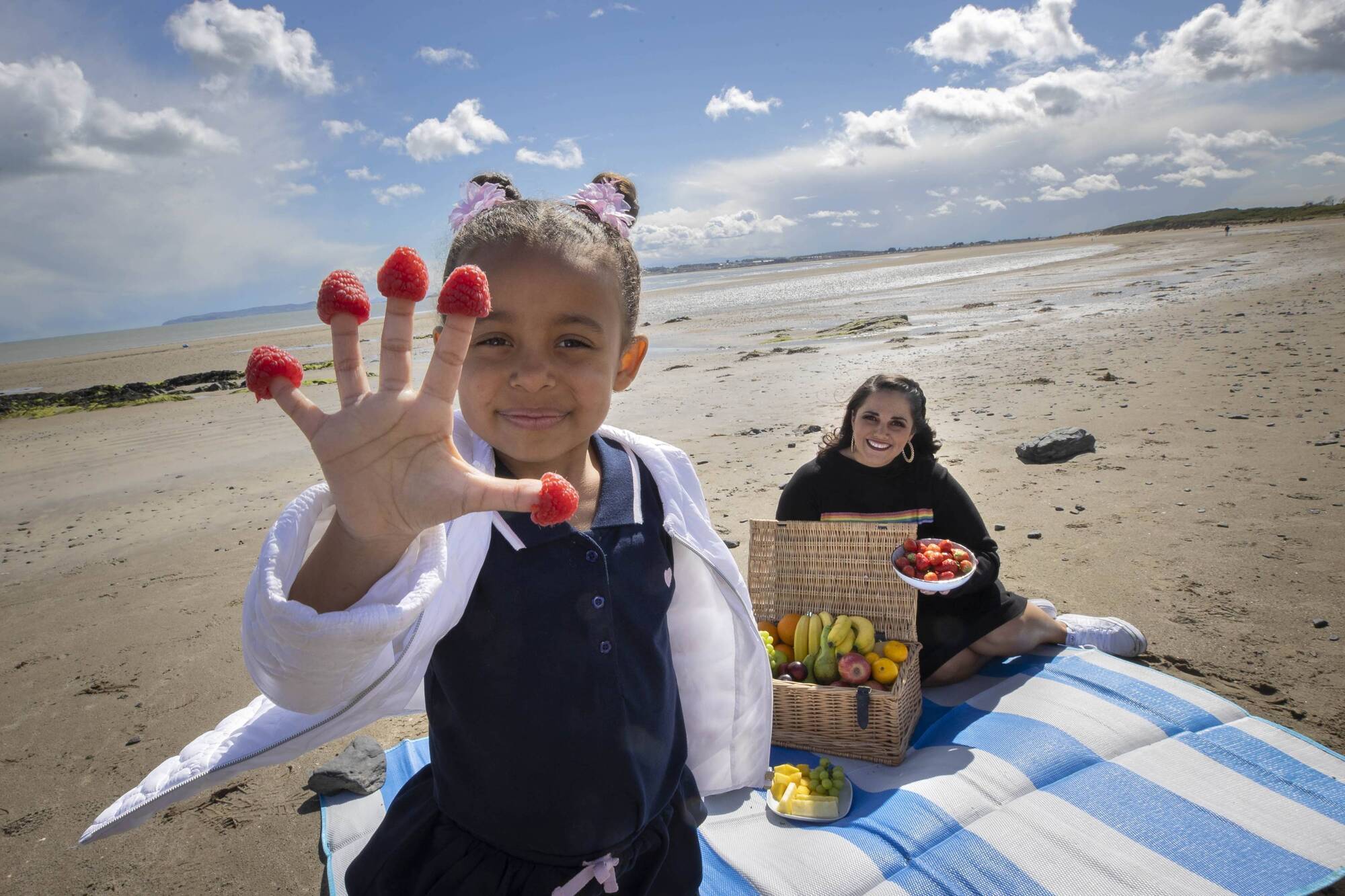
Today FM broadcaster, Paula MacSweeney alongside Mirah Mijumbi, from Dublin at the launch of the healthy eating START campaign. Picture: Andres Poveda

Have you and your family been eating more treat foods during the pandemic? You are not alone, according to Safefood Ireland.

In interviews with some 400 parents and guardians in March, 46% said their children were eating more treats since the start of the pandemic. Additionally, 49% said they found it difficult to keep the number of treats their children eat to a minimum.

These findings are why the latest message from the START public health awareness campaign is to take a break from treat foods. Run by Safefood in partnership with the HSE and Healthy Ireland, the campaign’s website, www.makeastart.ie, features practical tools and tips on how to do just this.

Joana Caldeira Fernandes da Silva, chief specialist in nutrition at Safefood, was not surprised by the latest research. “I’ve seen it happening in my own house,” she says. “We’ve all had to navigate a very stormy 12 to 14 months. Children had no schools to go to. They couldn’t go to playgrounds or meet friends or family. It’s no wonder we wanted to give them some treats.”

Today FM broadcaster Paula MacSweeney is an ambassador for the START campaign. The mother of two knows exactly what da Silva is talking about.

“My husband and I were working from home last year,” she says. “Our little boy – Roddy, now two and a half – was out of crèche, and I was pregnant. I’d have done anything for peace and quiet. It was a tough year, and we definitely treated our little boy and ourselves that little more often.” 

Missing essential micronutrients

Treat foods like biscuits, chocolate, crisps, and sweets should only be eaten once or twice a week as they are so high in fat, sugar, and salt. In 2019, research by Safefood revealed that these foods made up the second-most consumed food group by children, so we were already starting from a high baseline.

This worries dietitian Paula Mee. “Children need nutrient- and fibre-rich snacks, not ultra-processed, highly palatable snack foods,” she says. “Many Irish children are missing out on essential micronutrients which will impact their growth, learning, general health, and susceptibility to disease later on if these inadequacies are not corrected. A snack bar, biscuits, or crisps simply won’t make up for these nutrient deficiencies.” 

Now is the time to do something about this. “We’re not asking anyone to ban these foods as we know that’s unrealistic,” says da Silva. “The START campaign is here to support parents in making small changes to their daily routines to achieve a healthy diet and lifestyle for their entire family.” 

Mee thinks that the easing of lockdown and return to some semblance of normality may help. “Coming out of lockdown and going back to old routines is a great time to build new habits,” she says. “We can move on in a healthier way.” 

Da Silva hopes the new sense of positivity might encourage parents. “It feels like things are changing for the better,” she says. “The country is opening up for travel. Our elderly relatives are being vaccinated. Why not change one more thing and take a break from the treats?”

 She recommends starting this process with a family conversation. “Tell them why you are cutting back on treats and why.” Then take decisive action. “Leave the treat foods behind in the supermarket,” says da Silva. “If they are not in the press, it reduces temptation for everyone, children and adults.” 

Preparation is key

Mee questions whether children need snacks at all. “Children don’t necessarily need to snack,” she says. “Routine snacking is big business and serves the interests of commercial companies, many of which are in the business of making highly refined unhealthy snack foods.” 

If children snack when they are not hungry, this can impact their overall nutrition levels.

 “Snacking can mean small children fill up on less nutritious foods and fail to eat well at the next meal,” says Mee. “If your child has little or no appetite at mealtimes, take a look at their snacks. If they are drinking sugary drinks, replace those with water, and give them chopped whole fruits, nut butters on wholegrain crackers, and other nutrient-rich snacks if they do need something before dinner.” 

You may notice a difference in your child’s behaviour as a result. “These snacks will offer essential nutrients and fibre which feed the good microbes in their gut and positively affect their mood, ability to learn, and behaviour, as well as immunity, metabolism, and weight,” says Mee.

For MacSweeney, the secret to not resorting to unhealthy snacks is being prepared. “I try to have something to hand the minute my little boy asks for a treat,” she says.

“I know this myself as an adult. If there’s something quick and easy like a bag of crisps to hand, I’ll eat that rather than making something from scratch. So, I plan in advance.” 

This means her freezer is stocked with ice lollies made from chopped fruits and yogurt and there’s always a jug full of freshly-made fruit smoothie in the fridge.

“These are good fillers if he gets hungry between meals,” she says.

The START campaign also reminds parents that treats don’t have to mean food. “Plan a trip to the playground, the beach, or the park instead,” says da Silva. “Children have been so resilient this year. They definitely deserve some treats. Those treats just don’t have to be foods that are high in sugar, fat, and salt.”

Mee agrees. “It’s the experiences that children will remember and the memories they will cherish when they are older – not the biscuits,” she says.

It’s all about making small, gradual changes, according to da Silva. “Every family is different, and you will have to find what works for you,” she says. 

“Just remember even small changes can make a big difference over time.”

x

Celebrating 25 years of health and wellbeing

More in this section

Lifestyle

Newsletter

The best food, health, entertainment and lifestyle content from the Irish Examiner, direct to your inbox.

Cookie Policy Privacy Policy Brand Safety FAQ Help Contact Us Terms and Conditions

© Examiner Echo Group Limited