Losing your parents as an adult: Finding light while holding grief alone
Grief can be very difficult at Christmas.
So many of the stories we read and watch as a family at Christmas are about orphans — . Children’s authors will tell you they write about orphans because children can’t have adventures when their parents are there to save them.
The word orphan calls up tragic images — iron beds in Romanian children’s homes, huddled masses in residential institutions where knock-kneed Dickensian ruffians fought over porridge.
It does not conjure up a harassed looking woman in early middle age with three small children and a desk job. Nonetheless, here I find myself, ridiculously, an orphan.
The death of our parents is the natural order. There is a rhythm to life and death, in the normal run of things — I was pregnant for my mother’s first bout of cancer treatment — our 30s and 40s being the age where all of the joys and losses begin to coincide.
Because losing your parents as an adult is universal, it is rarely spoken about in any great depth. And losing your parents as an only child has another dimension that people really don’t know how to talk about.
Maybe it’s because Ireland is only now entering the era of small families. We are a generation behind the rest of the Western world — it’s unusual to meet an only child my age. I can’t count the number of people I’ve spoken to since my parents died who express their sympathies, and upon learning I have no siblings, redouble their efforts.
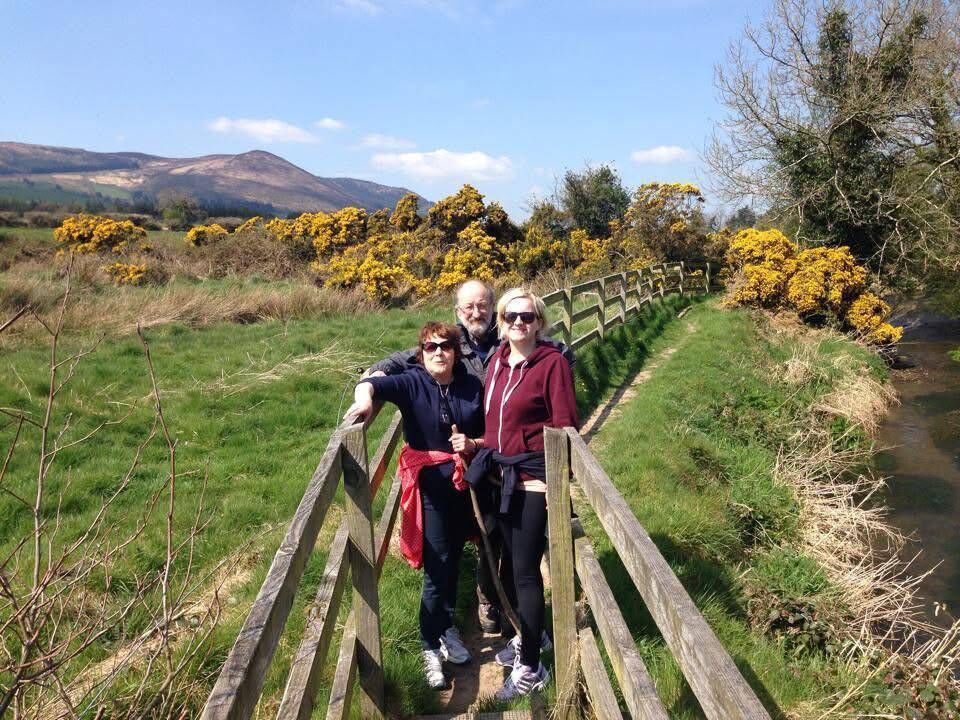
We handle death well in Ireland, but we don’t really handle grief. It’s one of those things you really can’t understand until you’re there.
Once the dried-up funeral sandwiches have been binned and the last well-intended apple tart given away, the empty house locked up to be tackled ‘when things settle down’ and the black dress washed and hung up for the next funeral … what happens then?
Your child’s teacher might send them home with a thoughtful book on the loss of a grandparent. Considerate friends — often those who have been there before you — will check in a bit more often.
More distant family members make a conscious effort to stay in touch. These gestures are all gifts, gratefully appreciated and handled with care.
But they cannot come close to sewing shut the enormous hole rent in the fabric of who you are.
How do you describe the feeling when you realise you are now the only person who could know the name of that cat your mam let you bring home during the 1994 World Cup (or speculate on what happened to it), or remember the colour of the inside of the hall door and the handmade letterbox your Dad painted red because he couldn’t quite bring himself to honour your request for a pink one.
How do you reminisce about the battle over wearing nail varnish (they thought I was too young, at 11) for the big trip to Croke Park the year Limerick were beaten at the last minute by Wexford, the tears of bitter disappointment you shed the whole way home? And how can you describe inhaling the smells of your childhood sitting room, the leather couch and wood fire and tobacco and Nescafé, and, layered intermittently on top, the faint beery tang of the slops trays and the waft of cigarette smoke as the door between bar and home opened and shut with your parents between customers.
But we all remember differently — every child’s memories are unique, even siblings who grow up together. A mother is a different person with each of her children, as I have learned with my three, just as the milk our bodies make for them adapts to their particular needs, so do our tones, our moods, our gestures, our ways of being.
My parents were uniquely my own, and that is a gift as well as a sorrow. I am lucky to have known them, and lucky that they poured themselves into me and my life so fully. That made their leaving harder, no doubt, but it made my life so much richer.
That is the part I try to remember when the grief threatens to overwhelm.
I spent a long time thinking of their deaths before they died. Anticipatory grief, my counsellor explained, is a thing, and the terrible diseases that laid waste to my parents for so many years meant I knew it well. It hangs in the air like a miasma.
So when the inevitable happened, and shockingly sudden despite the long expectation, I thought I knew where I stood. But nobody can describe to you how it feels to be untethered from your history, from the stories of what makes you ‘you’ and from your shared past.
A million little threads of memory attach you to the earth, and all of them fray with each loss, snapping in tandem when you lose both parents.
As Christmas approaches, those filaments of childhood memory glimmer once more, each decoration, tradition, special recipe, a thread of memory and meaning in the fabric of our being.
This magical time makes my parents feel simultaneously nearer and farther away than ever. But in the old traditions and the new rituals, I weave new threads for my children, and tether them with me to the earth once more.


CONNECT WITH US TODAY



Be the first to know the latest news and updates