Dutch offer a vision of the future for Irish farmers
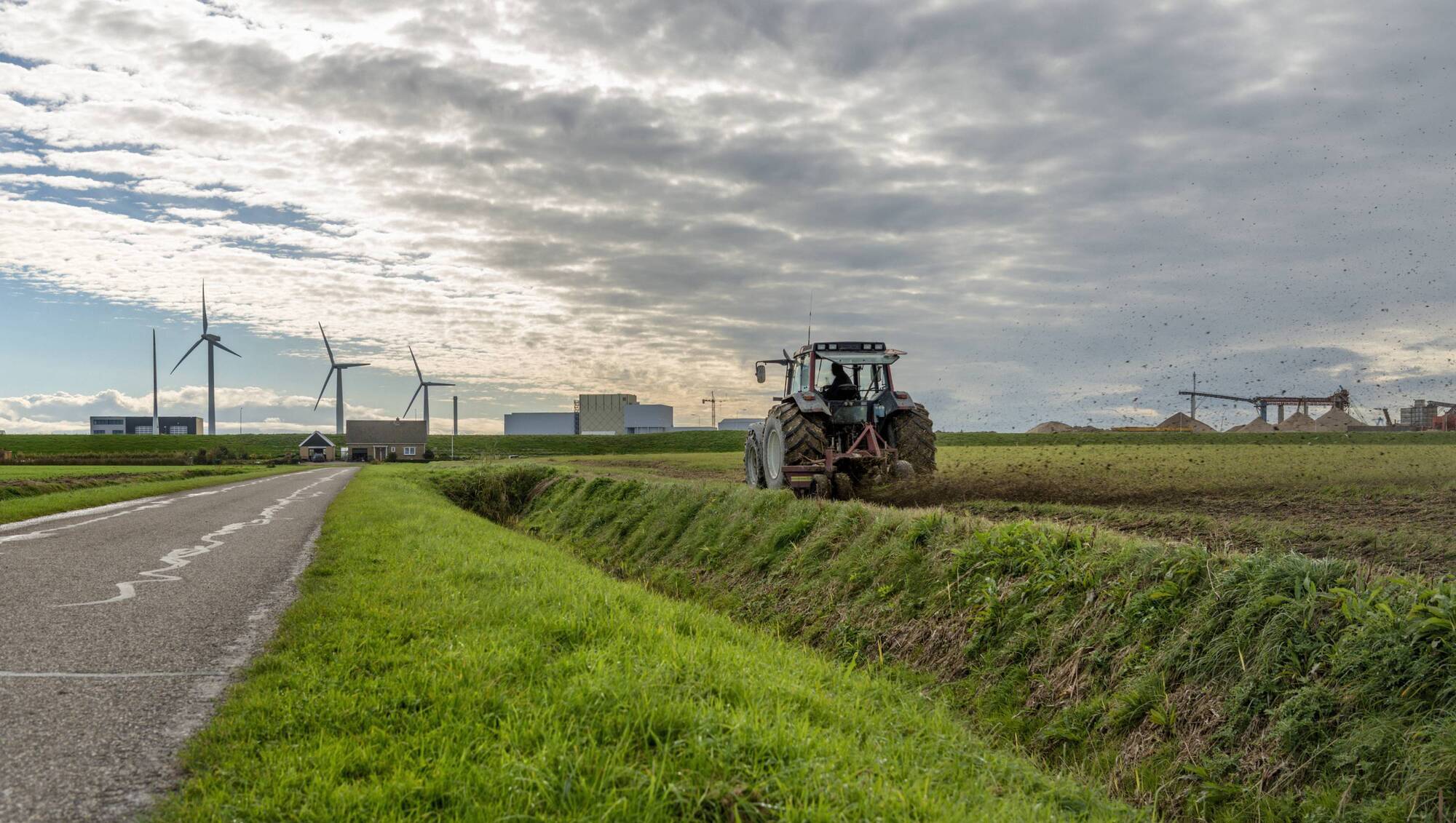
Last year, Dutch livestock farmers were paying €30 per cubic metre (220 gallons of slurry) to get their manure off the farm. File picture
As the EU changes its rules, nowhere are farmers under more pressure than in the Netherlands.
Being allowed to spread large amounts of manure from their livestock on their fields helped the relatively small country to become one of the world's largest food exporters. But the drive for sustainability brought huge changes in the rules, leaving 87% of Dutch dairy farms producing more manure than they could use, as did 94% of Dutch pig and poultry farms.
Farming there now offers a vision of the future that Irish farmers will want to avoid. Last year, Dutch livestock farmers were paying €30 per cubic metre (220 gallons of slurry) to get their manure off the farm, twice as much as in 2022.
Much of it is exported to neighbouring countries. Some manure is incinerated in a power plant. There's a government buyout scheme to close about 1,500 farms, and the pig population had fallen below 10 million for the first time in 45 years.
CLIMATE & SUSTAINABILITY HUB
Dutch livestock farmers pay large sums to offload manure, while still having to buy more artificial fertiliser to give their land the nutrients it needs.
Experts at Wageningen University & Research, one of the world's top life sciences universities, have chronicled how sustainability measures are hindering farms once thought to be the most productive in the world.
For decades, pig and chicken manure has been exported from the Netherlands, mainly to arable regions in Germany and France, where there is a demand for more manure.
Dairy farmers with plenty of land could still use most of their manure on their own or neighbouring fields, until last year’s sudden ‘manure crisis’, when the EU decided to phase out the derogation exemption that allowed Dutch dairy farmers to spread extra manure on their land.
The nitrogen applied per hectare would have to decrease in steps from a maximum of 250 kilos in 2022 to a maximum of 170 kilos by 2026. Dairy farmers have to spread 15% less on their land and trade the excess manure away from the farm.
The surplus means that livestock farmers have to pay the arable farmers to take the manure off them. Last year, that cost was €30 per cubic metre. Arable farmers in the Netherlands joke that manure is an extra crop, as they can earn good money by taking it in.
That went well this year, with suitable weather conditions for spreading manure. But a wet spring can be disastrous, leaving farmers unable to drive slurry machinery on the fields, when their spreading season starts on February 15.
Spreading is banned after September 1, and full slurry pits after the winter create pressure to spread.
Most poultry manure is processed. A proportion is dried and sold to garden centres, or exported. Some is incinerated in a power plant, poultry farmers pay for this. The ash, which contains phosphate and valuable minerals, is then exported.
In 2024, the markets had to deal with the additional surplus manure from dairy farmers, and data from the Netherlands Enterprise Agency indicates that Dutch manure exports increased 30%.
Pig and cattle manure is separated into solid and liquid fractions before export. With the liquid fraction, valuable as a nitrogen and potassium fertiliser, liquid is often evaporated or concentrated to avoid having tankers transporting mostly water.
The extra costs of offloading manure led to a big drop in income for many Dutch livestock farmers in 2024. That made up the minds of some to take part in a government buyout scheme aimed at about 1,500 farms in nature-sensitive areas.
The pig population falling below 10 million for the first time in 45 years, and a 3.3% cut last year in the number of cows have also helped to relieve sustainability pressures.
Harm Smit, the Emissions & Manure Valorisation project manager at Wageningen Livestock Research, said: “I expect the decline to continue in the next few years”. Wageningen environmental researcher Gerard Ros said: “We are still in a situation where farmers have to pay to offload their manure”.
In the Netherlands, grassland needs 350 kilos of nitrogen per hectare per year to grow well. Before the derogation phase-out started, farmers could apply 230-250 kilos of nitrogen in the form of manure, and then add 100-120 kilos of artificial fertiliser. Now, they must use extra artificial fertiliser, on top of only 170 kilos of manure.
Ros said: “We know that 70% of the nitrogen in animal manure becomes available to the plants, but the remaining 30% ends up in the soil and wider environment.” In contrast, most of the nutrients in artificial fertilisers can be absorbed directly by the plants.
Renure is a new option. It is nitrogen recovered from processed manure, which the EU’s Nitrates Committee has agreed can be used as a substitute for artificial fertiliser.
Farmers can process their manure on the farm, or send it to processing plants, possibly in combination with production of biogas.
But use of Renure is subject to conditions, such as an 80 kilos per hectare per year limit.
It also must contain more than 90% mineral nitrogen that is directly available to plants, and has to be applied using low-emission technology.
At Wageningen, Ros and Smit say Dutch livestock numbers must be reduced further, and processing and export of manure be improved.
Countries as far away as Poland and Romania are being targeted to take Dutch manure products.
Meanwhile, Dutch farmers must also reduce the protein content of animal feed, to cut the nation’s agricultural nitrogen production.
They must work on water quality to avoid the fate of counterparts in the Netherlands, where only about 1% of surface water has "good" status.
The importance of the dairy industry isn’t an excuse for neglecting water quality, the Netherlands is the third largest milk producing country in the EU, but must carry the cost for pollution.
If Irish dairy farmers can become more sustainable, they will be in a better position to replace the holes left in EU milk supply by Dutch farmers cut back or forced to close.