Meet the designers transforming Irish knitwear for a new generation
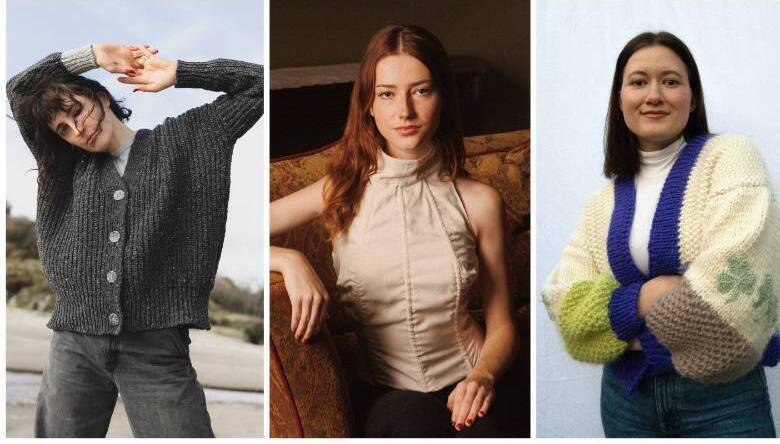
Designers Pearl Reddington, Sasha Donnellan and Gabrielle Malone
One of the most enduring images from Ireland’s inaugural Fashion Week last October came courtesy of designer Sasha Donnellan and her interpretation of the classic Aran knit: a traditional piece, reimagined for a modern audience.
Those lucky enough to be in the room watched as models sashayed down the runway, eyes lingering on the woollen jumper, bearing a Claddagh symbol embroidered on the front. Its impact was undeniable.
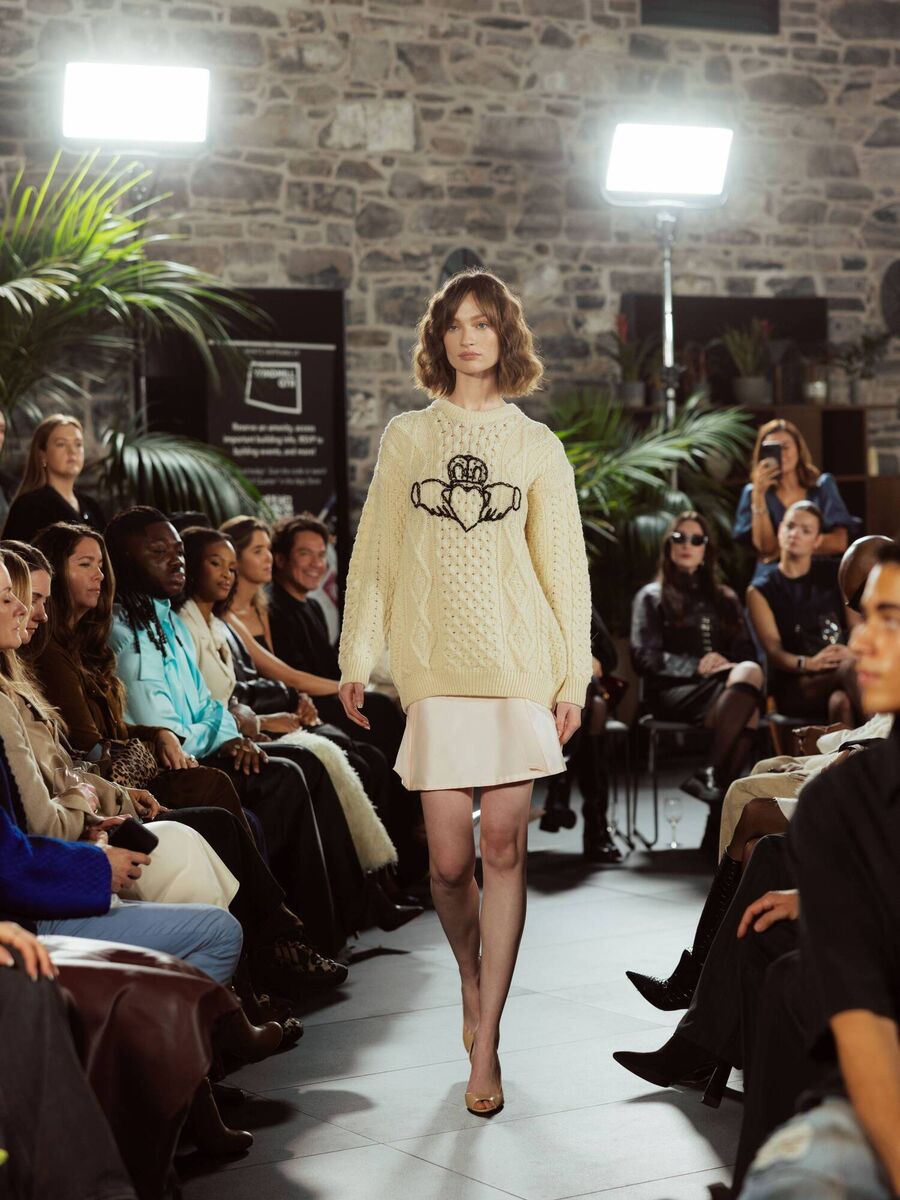
Donnellan’s debut collection was a wonderful fusion of old and new — and perhaps the clearest indication of how a new generation of women is preserving the time-honoured traditions of our ancestors. In her words, it resonated because “it was a contemporary take on heritage”, one that didn’t feel “performative but intentional”.
Historically, traditional Irish handcrafts were a form of women’s labour, providing women in rural communities with an income. As Leitrim-based knitwear designer Pearl Reddington points out, they were never just “quaint little hobbies, they were economic survival strategies.”
“Women built parallel economies inside their homes, long before they were recognised in formal employment structures,” she says.
“They were spinning, knitting, sewing, embroidering, doing lace work and getting paid per piece. In places like the Aran Islands and across Donegal, knitting became organised piecework, and women were producing garments for export while also raising children, running farms and holding households together.”
“I feel very strongly that craft should be recognised as art,” she continues. “It involves composition, colour, structure, discipline and technical mastery. The only reason it was separated from high art is because it happened in domestic spaces and it was primarily done by women.”
Mid-century Ireland offered women limited economic autonomy, and home-based textile work became one of the few ways to earn an income. While there isn’t strong evidence to suggest these crafts were acts of rebellion in themselves, they did provide women with a degree of economic agency within very restrictive social structures.
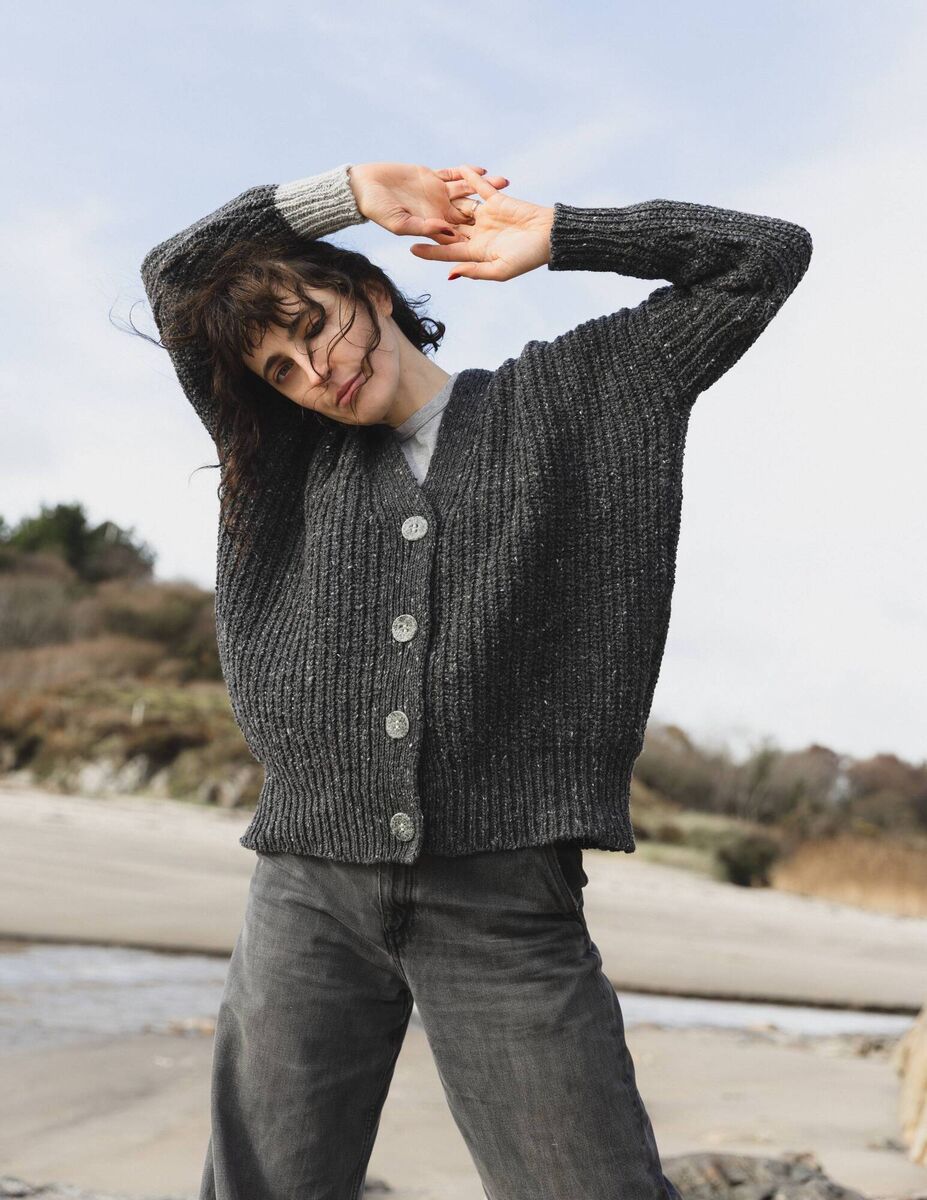
“It was quiet power,” agrees Reddington, whose work is shaped by the landscape of her home in Dromahair, Co. Leitrim. “When we talk about knitwear now, we are not just talking about craft,” she continues, “We are talking about a lineage of women who sustained families and communities with their hands, often without recognition.”
These handcrafts thrived mainly in rural areas with existing textile traditions. The Aran sweater was “the largest cottage industry that Ireland ever had”, says Vawn Corrigan, author of . “In rural areas, it was possible to assemble teams of over 200 women knitting to a professional standard,” she tells me.
“The money would never have been big, but it was theirs.”
Knitting was often taught in schools, and this combined with tariffs on imported goods, encouraged people to maintain the skill. “Clothes were expensive and people were cash poor, but they had time,” Corrigan notes. State-supported agencies distributed wool and patterns, collecting finished garments for export. Aran sweaters were shipped across the world.
“There was a huge market for it,” says Corrigan. “It became a symbol of home, connection and belonging.”
The form of the Aran jumper alone is not what made it an iconic, though; timing mattered too. The concept of Irishness in a visual sense was becoming more part of the global cultural consciousness. JFK was in the White House, emigrants were making their mark on the places in which these jumpers were being exported to, and as such, there was a growing appreciation for Irish music, culture and fashion.
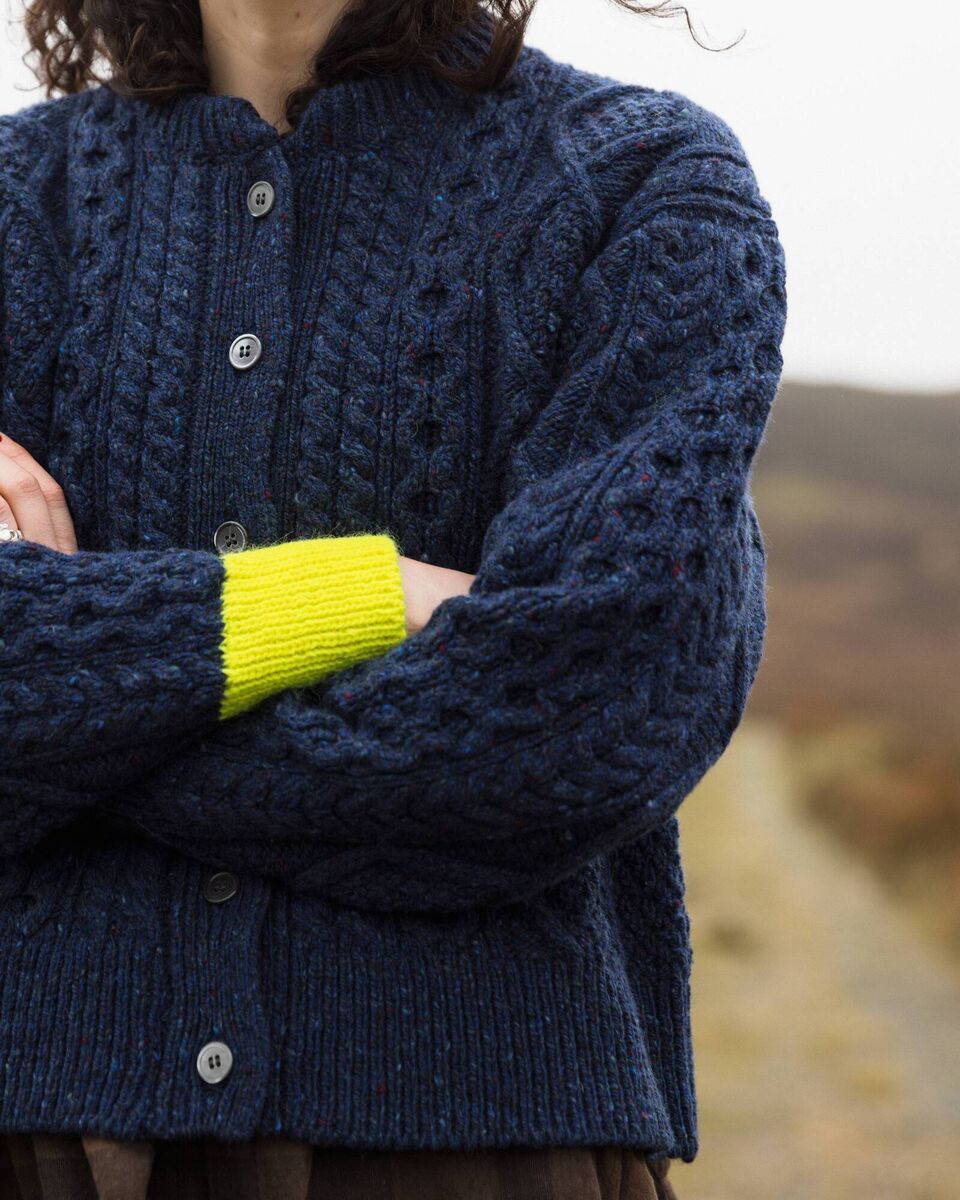
Of course, stereotypes persist. “There’s a funny thing in Ireland where knitwear can get trapped in its own postcard,” says Reddington. “There’s a misconception that it’s a bit naff, that it belongs to souvenir shops and stage-Irish nostalgia.” And yet, it has also been claimed by some of fashion’s most enduring style icons.
“Steve McQueen wore one in and suddenly, it became shorthand for quiet, masculine, cool. When Grace Kelly wore one, it read as elegant, refined, almost architectural,” she observes, adding “it can be nostalgic and high fashion simultaneously; it's that duality that makes it powerful.”
If Irish knitwear once existed primarily as necessity, today’s designers are approaching it in a different way — treating it as a living, breathing thing, that can adapt to the modern world rather relegating it to the attic as a relic of times gone by.
The challenge, as many admit, is in honouring tradition without slipping into costume. For Donnellan, modernity comes, not from abandoning heritage, but from adding something new. “It has to say something new through silhouette, context, or message, instead of simply repeating what already exists,” she clarifies.
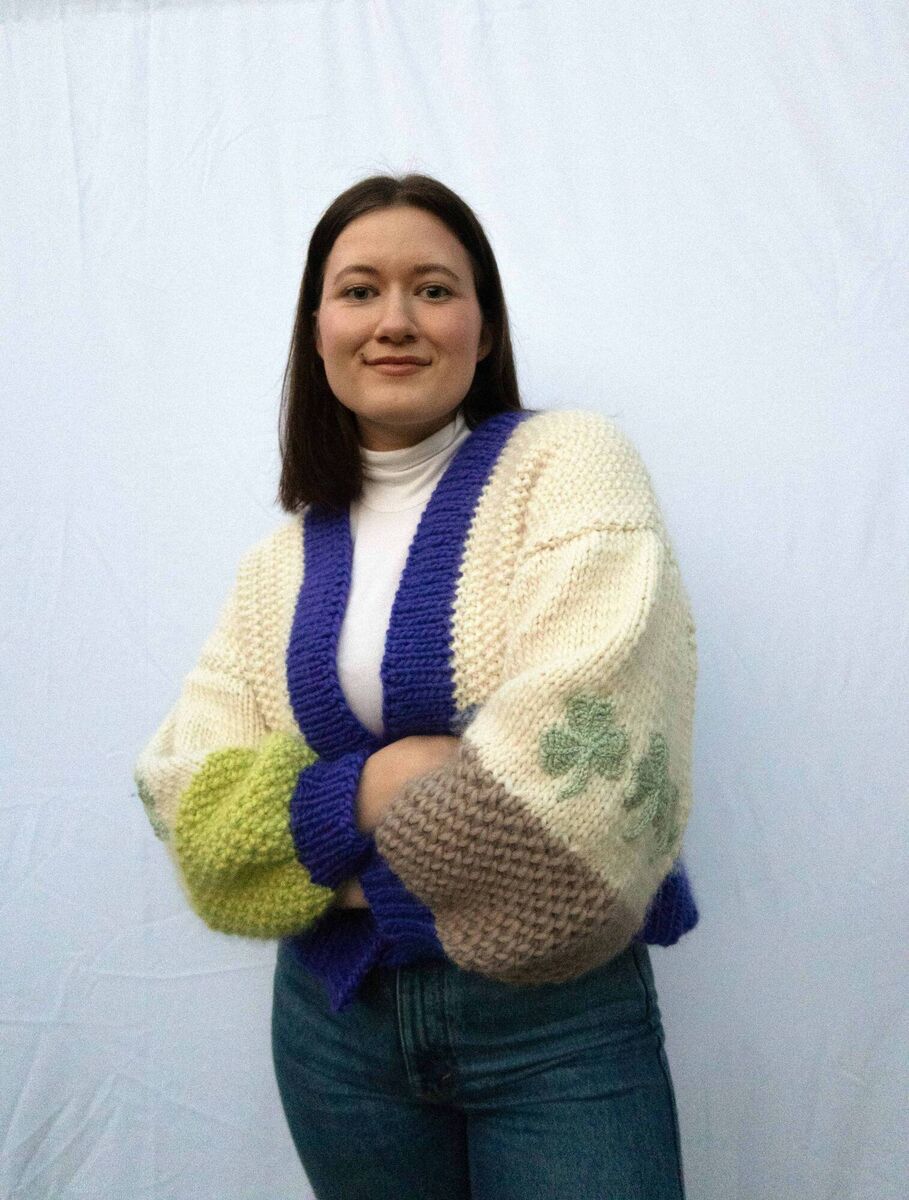
Kildare native Gabrielle Malone — whose work has been featured in Carrie Bradshaw’s wardrobe on — takes a similar approach. Rather than reproducing historical garments outright, she focuses on individual elements and reshapes them through scale and proportion.
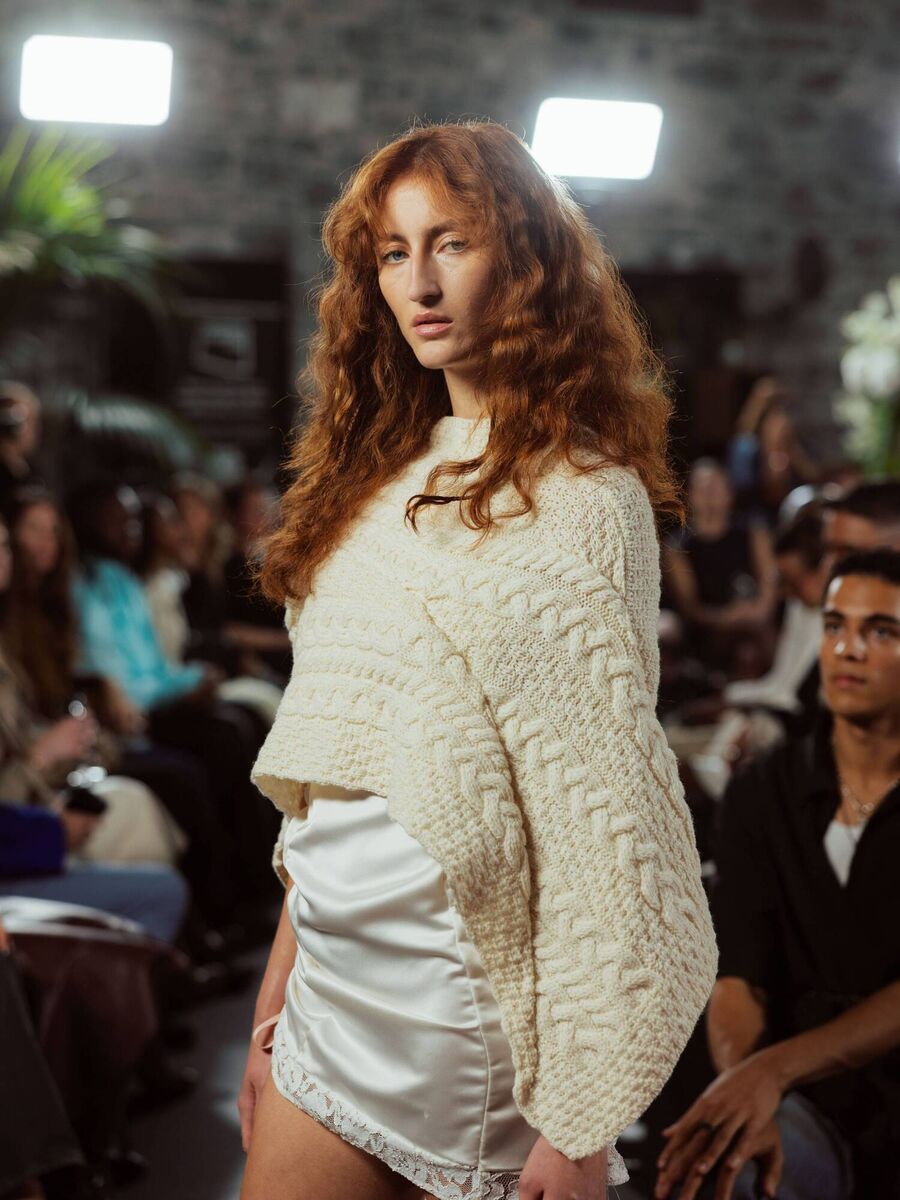
The result, she says, can feel like “a very distant granddaughter” of traditional knitwear: recognisably connected to the past, yet unmistakably modern. “I love a bishop sleeve, I love an oversized but slightly cropped silhouette…it’s about mixing things which it may not have been traditionally done before.”
Reddington describes this balance as an exercise in restraint, where sometimes, even one small intervention is enough. “I prefer a little glimmer, a detail that shifts the tone without erasing the foundation—the smallest modern gesture can do most of the work.
For all three designers, Irish knitwear is much more than just a design reference; it’s a creative outlet, a way of expressing identity. Donnellan describes working with Aran knit as a means of communicating connection to place without words.
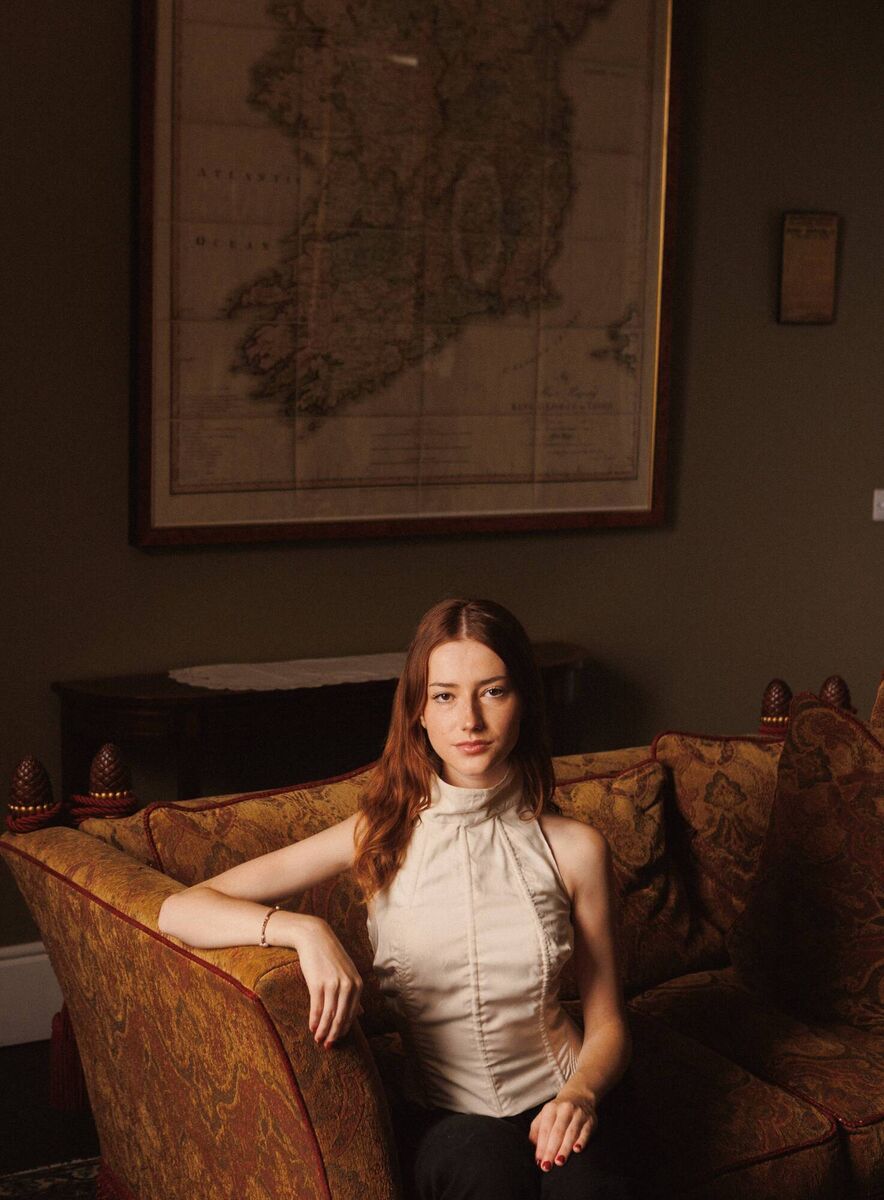
“Someone can buy a piece and be introduced to an entire region and its history through the garment alone,” she tells me. “That depth and authenticity is something mass produced synthetic fabrics simply cannot replicate. It's truly such a privilege to be able to work with these textiles, and get to tell their stories to people who may of never heard of them before.”
Malone remembers growing up surrounded by knitwear made by her grandmother—something she only truly appreciated once she began knitting herself and understood the labour involved. That labour sits in direct contrast to an industry that thrives on speed and immediacy. Knitting demands time, patience and repetition while fast fashion has taught consumers to value new, quick, and disposable.
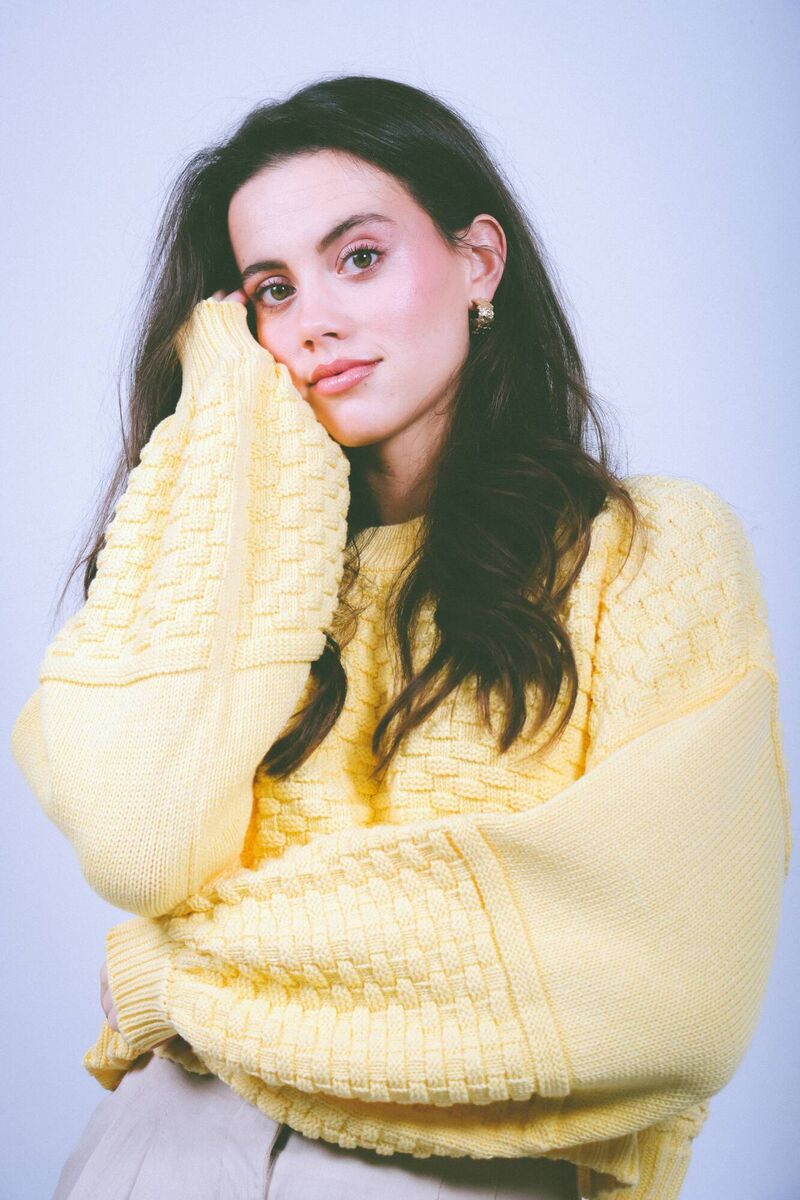
Shifting towards commission-based work has allowed Malone to work at a pace that suits her, but the tension between staying small and authentic and scaling within a modern system remains. Donnellan describes the process as both empowering and demanding. Handcraft, she says, adds layers of work, but it is also what anchors her brand’s identity.
With more and more people, particularly young women, embracing a more analogue life, it comes as no surprise that there has been a handcrafts revival amongst the general public too. Digital fatigue and AI slop have only fuelled our desire for community. Tired of doomscrolling, people are returning to more tactile, grounding activities such as knitting.
Many of us feel disconnected from the physical world, agrees Donnellan who says that “craft gatherings create real community and allow you to physically make something meaningful.”
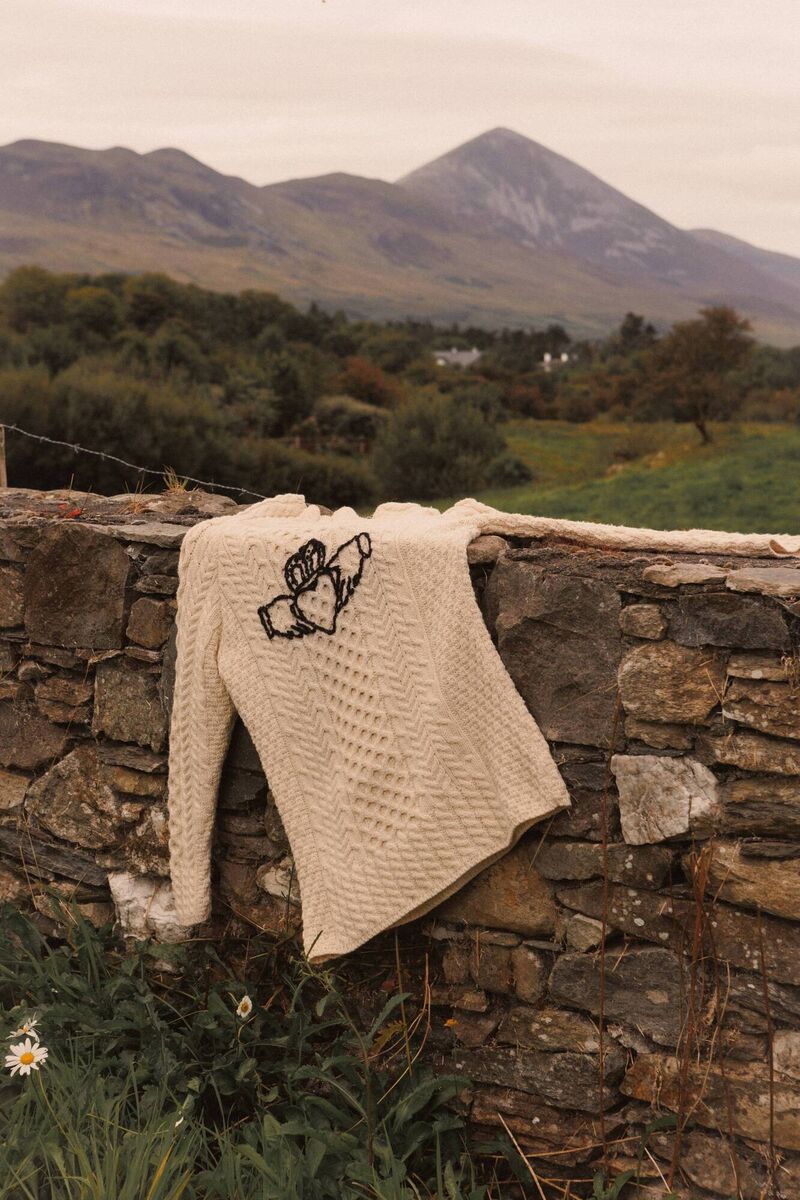
“That process can be grounding and therapeutic in a way that digital spaces are not.”
“With a digital footprint, we don't have any physical evidence of the lives we're living,” agrees Malone who says that knitting offers a real sense of achievement. For Reddington, its popularity harks back to that idea of quiet rebellion against an increasingly disposable culture.
Craft is often romanticised today, but at its core, it is still skilled, time-intensive labour. The processes involved are much more understood in today’s world, but there still exists a disconnect between pricing, effort, and aesthetic.
“People's Pinterest mood boards contain images of ateliers and needlework whilst they wear a Shein top made by an underage factory worker,” notes Donnellan who thinks that the world has chosen to glamorise only a “tiny section of the high fashion industry”, all the while contributing to the problem.
Malone believes fast fashion has, paradoxically, helped people appreciate quality. “The consumer might not realise how many hours goes into a garment but they’re seeing the differences,” she says, referencing Ryan Murphy’s latest series, Love Story, and conversations around fabric and construction.
“When test photos and paparazzi photos first came out, everyone was so upset with the wardrobe they put the actress in.
"Even though all the pieces were kind of similar, something was off…in the 90s, practically everything was organic material and now everything's polyester so even if you have two skirts that are almost the exact same style, but ones made from polyester and ones made from silk, there’s going to be a huge difference in the way they look on the body.”
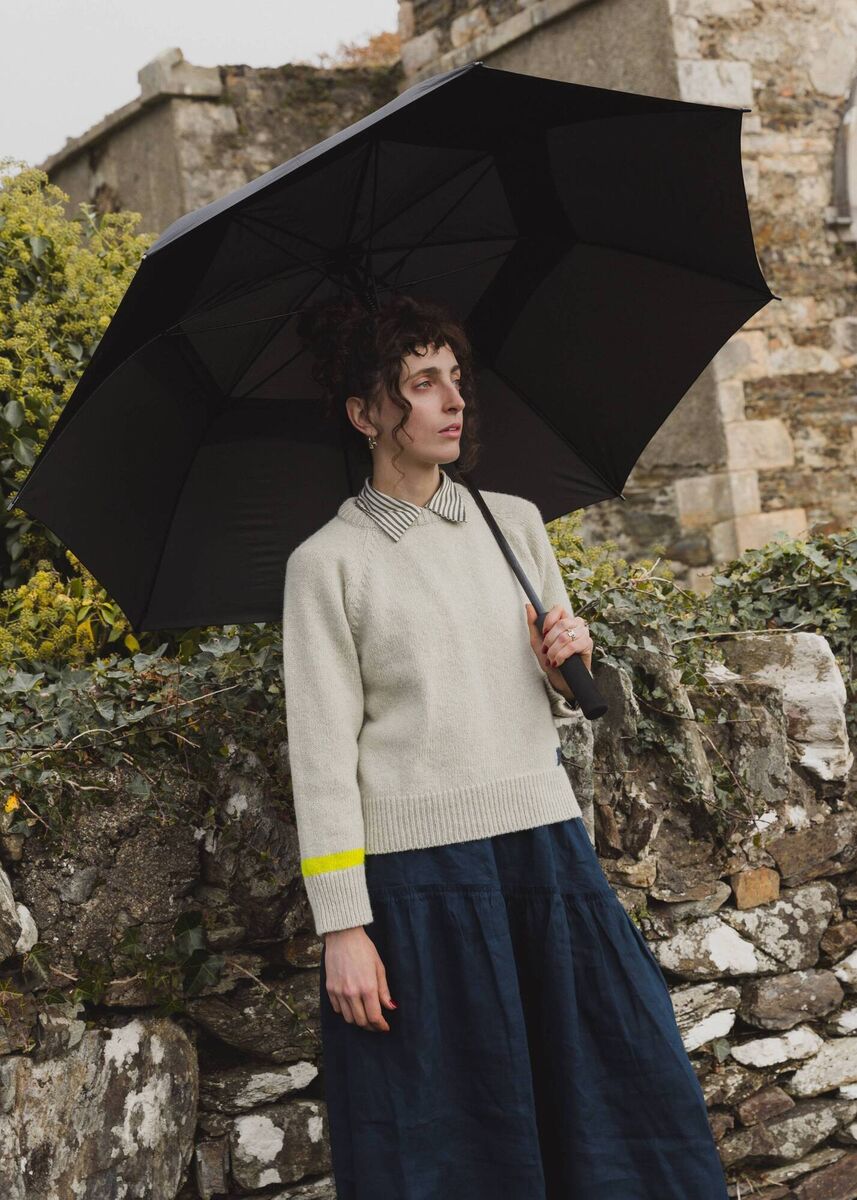
If prioritising quality is a motivating factor, then ensuring traditional craft skills continue being properly sustained is of the utmost importance—particularly here, now, when there is such appreciation for Irish talent. More needs to be done, agree all three designers.
“Textile artists and fashion designers weren’t included in government-approved funding for artists,” says Malone, noting that many creatives have had to emigrate to further their careers.
“Two of the largest designers in the world right now are Simone Rocha and J.W. Anderson…the fact that they had to leave Ireland to achieve that success is really sad. They both reference Ireland so much in their design language, [their collections are] such a love letter to Ireland but it doesn't feel like Ireland necessarily loves designers back.”
Reddington echoes the same concerns. “There are fewer mills than there used to be and skills are ageing,” she says. “We can produce responsibly and domestically, it just requires commitment, funding and consumer willingness to pay the full cost of true craft… It can't survive on romance alone, it has to be economically supported.”
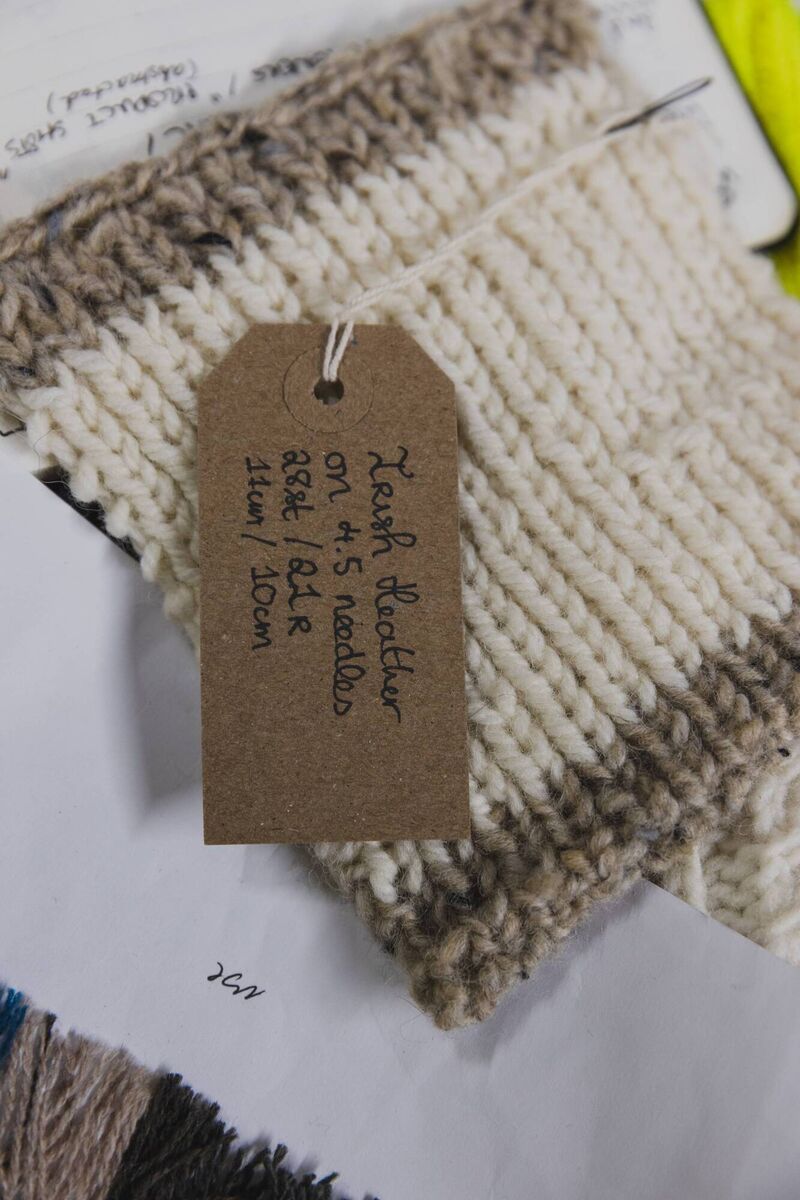
Her long-term dream is to create her own local production mill to support both herself and other designers. “I’m definitely drawn to the idea of a cooperative model. Historically, that's how women built power and craft—through shared structures,” she explains. “We're at the risk of losing that knowledge if it's not passed on.”
Donnellan also mentions education, suggesting Irish textile craft be added to the Leaving Certificate syllabus. “It’s just as important as the other art forms we studied,” she maintains. “Introducing students to Irish textile traditions could inspire the next generation to learn more about them, support them, or even take up the craft themselves and preserve it through time.”
Long before fashion week runways and international fashion houses, there were Irish women knitting quietly at kitchen tables for survival. Now reinterpreted by a new generation of designers, the impetus behind this desire to create remains the same: to make something lasting in a world that moves too quickly.
Whether through community knitting circles, made-to-order collections or renewed interest in Irish wool, the craft endures not because it is frozen in time, but because it continues adapting— buoyed by the hands of the thousands of women who came before.


CONNECT WITH US TODAY



Be the first to know the latest news and updates