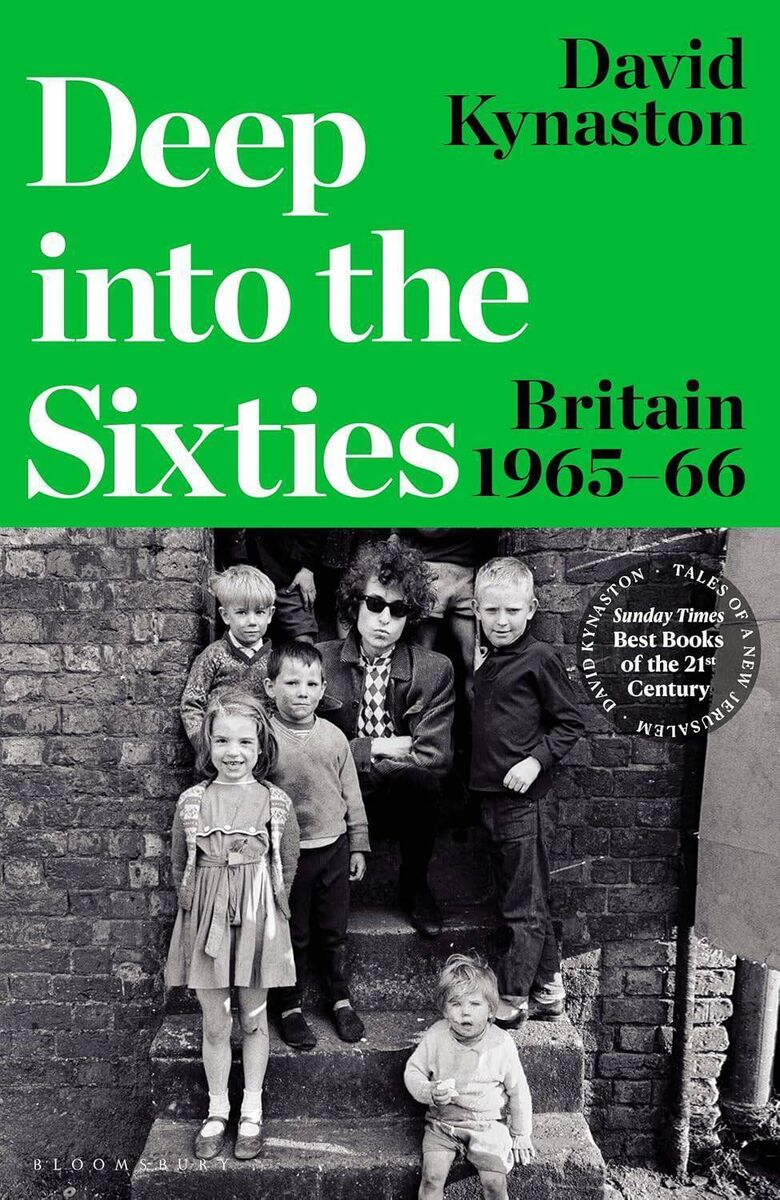
Book review: Dismantling an era of rosy retrospection in Britain

'Deep into the Sixties', David Kynaston’s take on the cultural revolution of mid-sixties Britain, is ultimately a work of demystification
David Kynaston takes the reader behind flashy headlines to the reality that conservatism and underdevelopment still gripped the British state in the mid-1960s. File picture: David Levenson/Getty

David Kynaston takes the reader behind flashy headlines to the reality that conservatism and underdevelopment still gripped the British state in the mid-1960s. File picture: David Levenson/Getty

  • Deep into the Sixties 
  • David Kynaston
  • Bloomsbury, £24.50

David Kynaston produces a definitive social history of the momentous 18 months from the death of Churchill in January 1965 to England’s World Cup victory at Wembley in July 1966.

So exhaustive is this, the sixth volume in Kynaston’s post-war series, that reading it induces a sensation of omniscience: like floating far above the country observing the whole teeming mass of British life unfolding below.

From sentence to sentence, Kynaston moves restlessly between myriad sources: newspapers, diaries, surveys, television shows, interviews, manifestos, concerts, and speeches. 

This dynamic style is potentially overwhelming at first, but once the reader becomes accustomed to it, the book delivers an incredibly immersive experience.

It’s as if you are listening to an entire generation talk at once, as though someone were turning the dials of an old radio, meticulously tuning in and out of a cacophony of overlapping frequencies.

Scenes of quiet, ordinary life create a false sense of calm, only to explode, without warning, into an epoch-defining flash, as though the reader is experiencing it in real time. 

Malcolm X calls the white residents of Smethwick fascists; Ronnie Kray shoots George Cornell dead in the Blind Beggar; Alfie (1966) convinces a generation of young men that caddishness is a virtue.

Albeit England-centric (Northern Ireland only gets a mention during the Queen’s visit to Belfast), Kynaston’s take on the cultural revolution of mid-sixties Britain is ultimately a work of demystification.

Of course, the sixties were transformative for many. A golden age of musical innovation had begun with The Beatles and The Rolling Stones digging deeper into experimental sounds, while Bob Dylan had just arrived on British soil for his first electric tour.

Liberalism was advancing as Boots began selling condoms, racial discrimination was outlawed, attitudes towards homosexuality were slowly shifting, and living standards were rising.

However, Kynaston takes the reader behind flashy headlines to the reality that conservatism and underdevelopment still gripped the British state. 

Wilson’s austerity policy was devastating; housing conditions were abhorrent for many; violent racism remained rampant; far-right movements were on the rise; women were still being systematically oppressed and sexual liberation, for most, was still years away.

Perhaps the sixties only truly swung in hindsight, its brilliance existing mostly through rosy retrospection.

BOOKS & MORE

Check out our Books Hub where you will find the latest news, reviews, features, opinions and analysis on all things books from the Irish Examiner's team of specialist writers, columnists and contributors.


More in this section

Scene & Heard

Newsletter

From music and film to books and visual art, explore the best of culture in Munster and beyond. Selected by our Arts Editor and delivered weekly.

Cookie Policy Privacy Policy Brand Safety FAQ Help Contact Us Terms and Conditions

© Examiner Echo Group Limited