Culture That Made Me: Cork musician Cormac McCarthy selects his touchstones
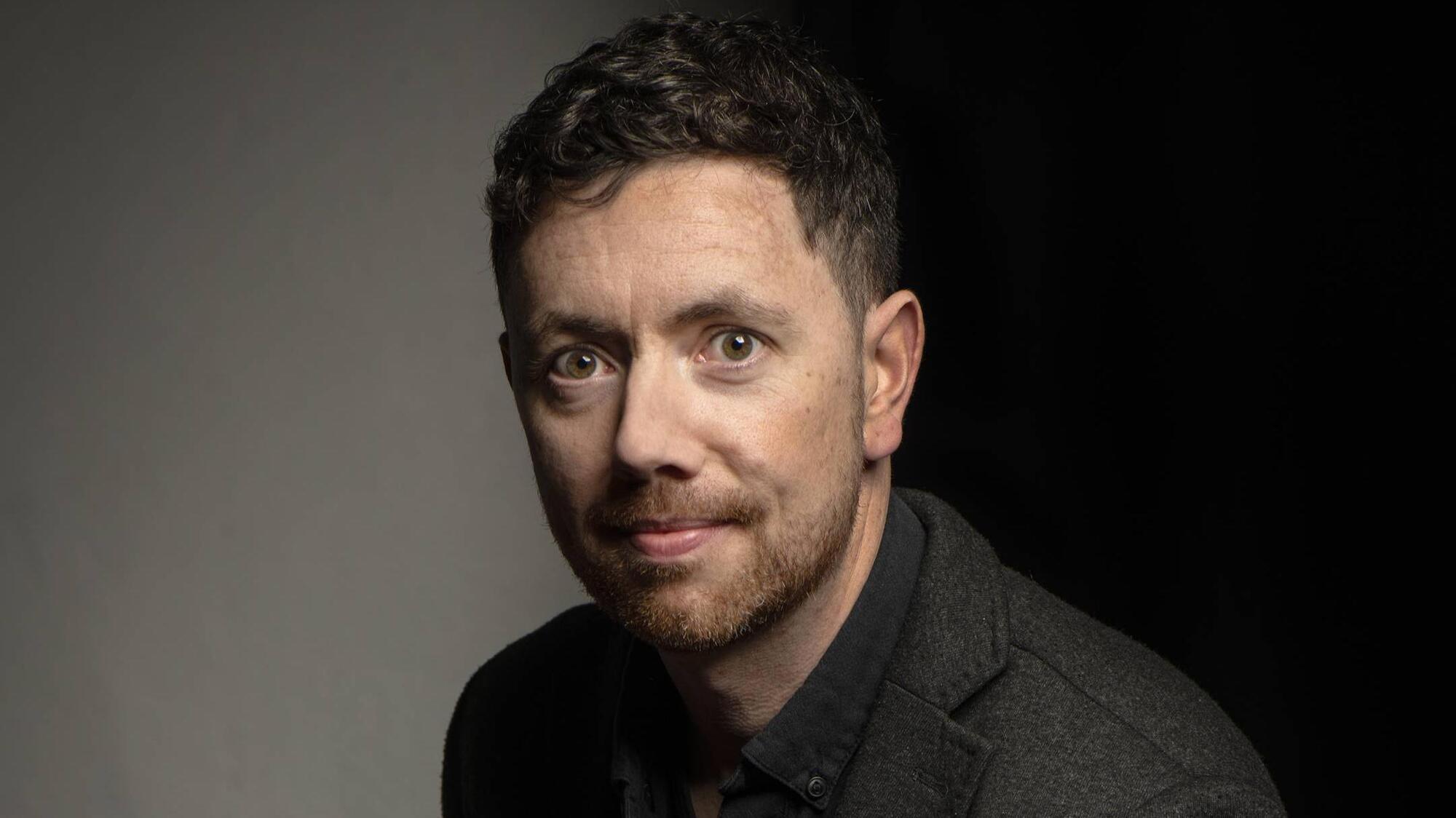
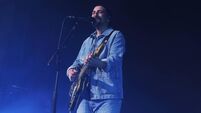
Cormac McCarthy plays a series of concerts across Co Cork with Aoife Ní Bhriain and Estonia’s Duo Ruut.
Cormac McCarthy, 42, grew up in Ovens, Co Cork. In 2015, he released his debut album, , to critical acclaim.
As a conductor, he has led the RTÉ Concert Orchestra, the Irish Chamber Orchestra and the Cork Opera House Concert Orchestra. His compositions have been performed and recorded by artists including Mick Flannery, Martin Hayes and Andrea Corr.
He will perform four concerts across Co Cork with Aoife Ní Bhriain and Estonia’s Duo Ruut, as part of Koos/Le Chéile, November 26-29.
The concerts take place at Mall Arts Centre, Youghal (Nov 26); Briery Gap, Macroom (Nov 27); Town Hall, Skibbereen (Nov 28); and Saint George’s, Mitchelstown (Nov 29).
See: fiddlefair.com
I remember being brought to the ballet at Cork Opera House around 1989. Prof. Aloys Fleischmann used to put on a ballet. My dad was playing in the orchestra. I was only about four or five. I was having to sit down and listen to a full orchestral concert for the first time, having gone to pantos, but this was different. I remember there was a bicycle prop in the ballet. It was a nugget dangled in front of me because I was a massive fan of Seán Kelly, the cyclist. It was like, oh, Seán Kelly is in the ballet. That was used to get me to embrace the whole thing. I do a lot of orchestral arranging, which is down to the fact I was exposed to it at an early age.
I remember my dad having Keith Jarrett records when I was a kid. I listened to them. When I turned about 15, I started getting into jazz and playing a bit. Keith Jarrett was a natural reference entry point for me into the jazz world. He has a particular lyrical style. His solo piano material is quite accessible. It has a lot of gospely, bluesy, funk grooves. It wasn't too challenging yet was complex — it had layers of depth — without being complicated.
There was an eclectic mix of music playing in the house from a young age. I remember a tape of Sting’s album, lying around. It was the first time I heard Sting. Something piqued my interest. I was only about seven. He had the best session musicians in the world on his records. has Kenny Kirkland on piano, Branford Marsalis on saxophone, Omar Hakim on drums.
I wouldn't have necessarily appreciated that level of detail regarding the musicianship, but maybe on a subconscious level, there was something going on that this is good stuff. The songs are great too.
I remember seeing Michael Brecker at the Everyman during the Guinness Cork Jazz Festival in 1999. Larry Goldings was on organ. It was an afternoon concert, a double bill with the Dave Holland Quintet. At the time, they had an up-and-coming jazz musician award at the festival. Chris Potter, who was in the Dave Holland Quintet, got that award. He’s gone on to become arguably the most influential tenor saxophonist of his generation. At that gig, he was just coming through. Interestingly, Brecker, who was probably the most influential tenor player for the 20 years before then, died seven or eight years later. In many ways, none of us knew it, but there was an element of a torch being passed on.
This is almost twee, but Cormac McCarthy, the author, is somebody I admire. Obviously having the same name is weird. My dad had his books at home; I remember picking them up. It's difficult literature to digest at first. It's like, “Whoa, what the hell’s going on here? This is different from all the other books I've been reading” — the sentence structure, the stream of consciousness element to it, the flow and the darkness. He's not trying to please anyone. He's not pandering. That's something that’s in my own music as well. Musically, you can push boundaries with structure, but also, you don't need to necessarily satisfy everybody.
I remember reading Hermann Hesse’s It was way above me. I was like 18. I didn't know half of what was going on. A neighbour of mine told me to check it out, an old guy in the pub — Tatler Jak's in Ovens — said to me: “You need to read this.” There were so many references to Bach in that book as well, about Bach being the master mathematician. It’s interesting.
I’ll never forget seeing the pianist Nicholas Payton in 2017 at the Everyman, again during the Cork Jazz Festival. I love his approach to music. He's an amazing trumpet player, but also an amazing piano player and singer. He's so rooted in the jazz tradition. Even the fact he'll only refer to it as “black American music”. He won't call it “jazz”. He has a contemporary take on the tradition that's well informed and inspiring.
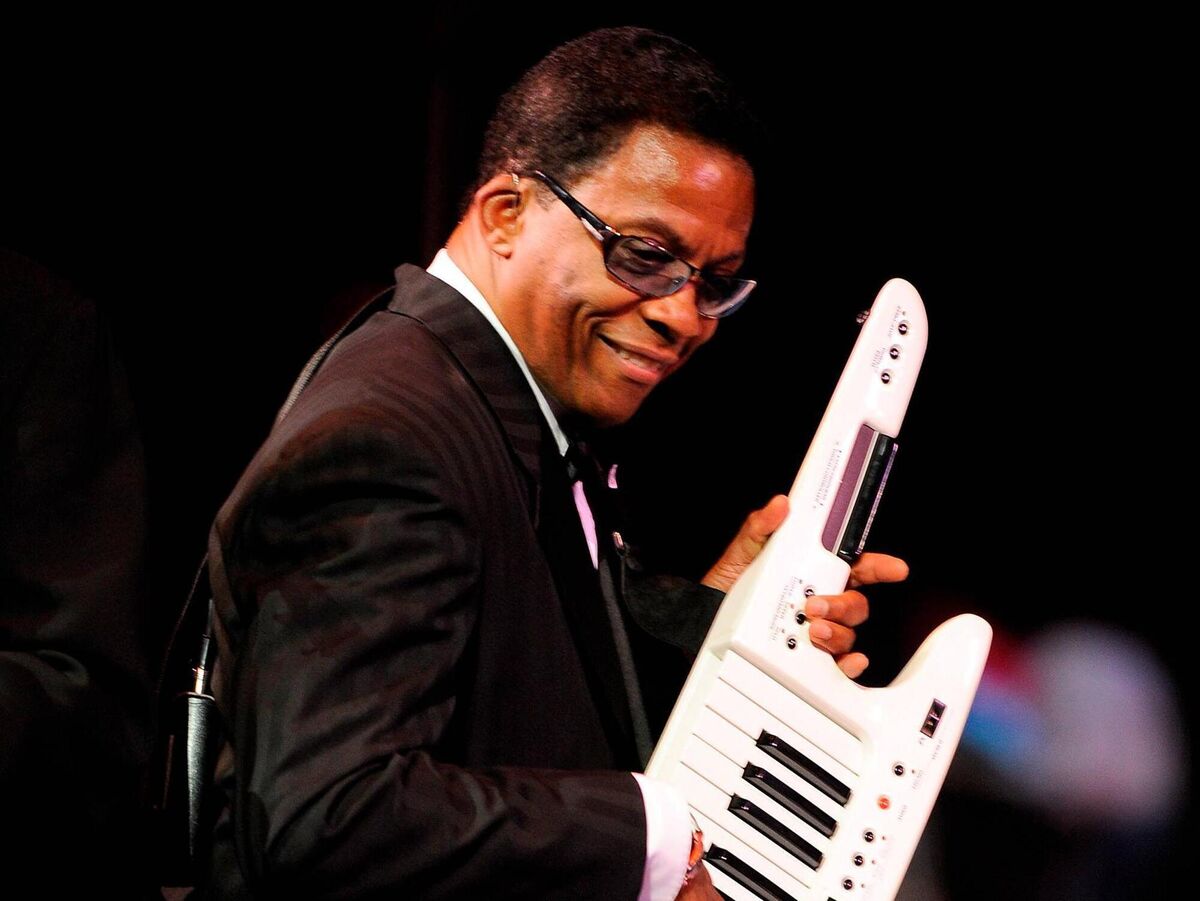
I saw Herbie Hancock playing the Savoy on Patrick Street in Cork in 2008. That was an incredible gig. I love his use of rhythm and groove. His harmonic palette is much derived from composers like Ravel and Stravinsky. That's music I love as well. In many ways, he's distilled a lot of that harmony into his own piano playing. That's something that interests me and the eclectic nature of his discography. He embraced every new style as it came through, and arguably continues to do so, even though he's 86. He takes the music seriously, but he also remains cool and detached on another level. He's an icon.
I'm a massive fan of John Williams, as an orchestrator, and his movie scores. A lot of people say he's just taken from Wagner, Strauss, Mahler. Late 19th century classical composers have obviously influenced his style of orchestration massively, but as Stravinsky said, “Good composers borrow, great composers steal.” He embraces that concept. If you're watching something like with Dustin Hoffman it's almost like an opera in some respects — the level of detail in the scoring, the orchestration through that movie.
As a composer, you must go to Bach first. Everything else comes from there. There's so much to be learned and experienced from him. A couple of weeks ago, I was doing this orchestra project in Munich. I spent the week traveling to and from the concert venue, listening to Víkingur Ólafsson’s recording of Bach’s Goldberg Variations on the train. It's perfection. Einstein reputedly said Bach was the greatest mathematician that ever lived.
I remember watching the Ken Burns documentary series on jazz as a teenager. It was very educational. It got the essence of the music across. It's also controversial in that it basically states that jazz ended in 1970, which is something I disagree with, but I understand where they were coming from. Wynton Marsalis has a massive input into it. I remember Marsalis talking about Thelonius Monk and the tune He played it on his trumpet. He explained what was brilliant about it. It made me realise, ok, this is approaching music from a different angle. To this day, I feel like I'm still trying to uncover Monk, to find where he was coming from. He was seeing the world from a different place. So as a result, the music was coming from a different place.