Book Review: A first-hand look at how Ireland has changed utterly in 60 turbulent years
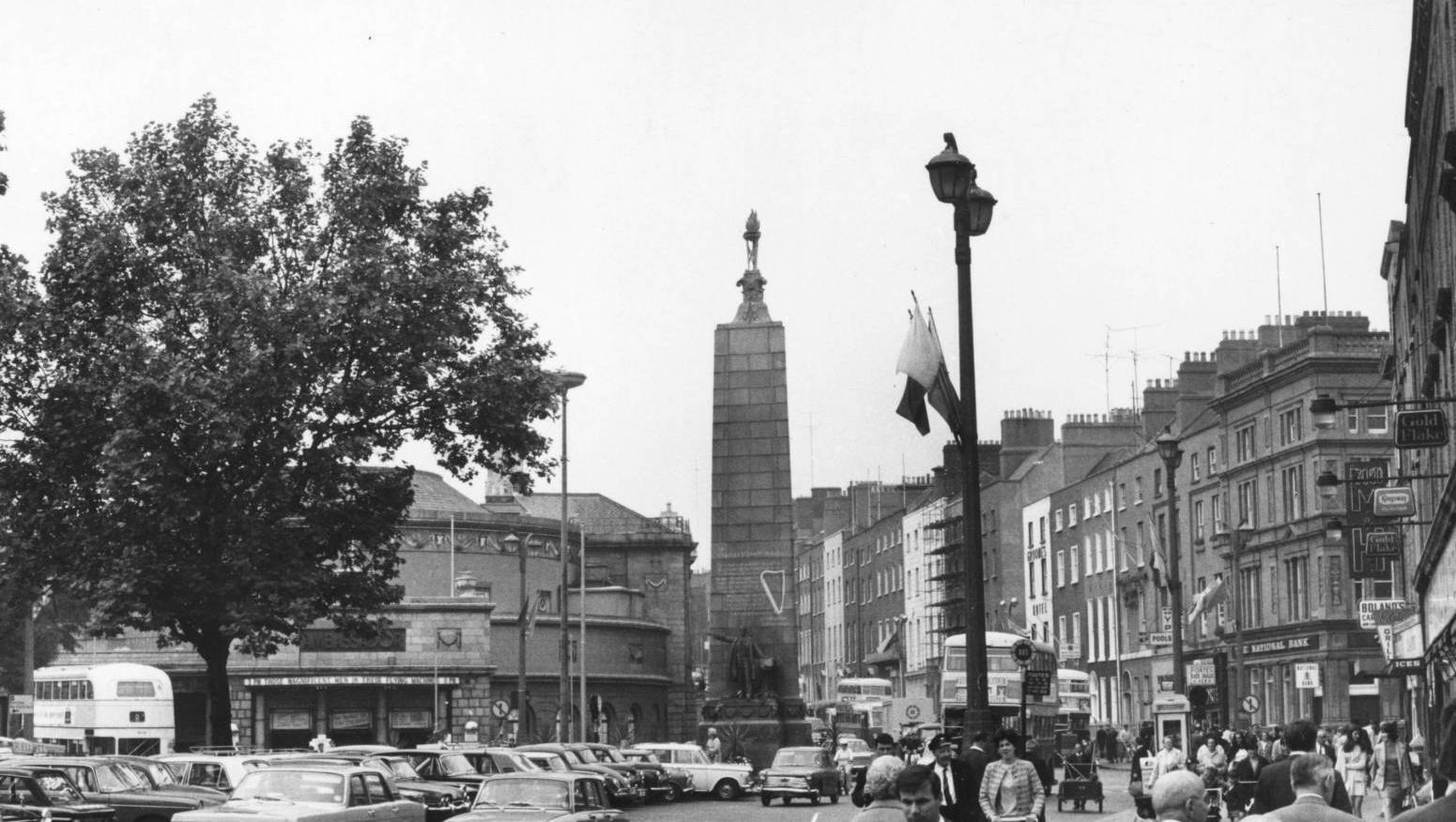
O’Connell Street in Dublin in the 1960s: The most shocking features of that period in Ireland were how total the power of the Church still was, and how absent women were from public life. Picture: H Allen/Evening Standard/Getty Images
- We Don’t Know Ourselves - A Personal History of Ireland Since 1958
- Fintan O’Toole
- Head of Zeus, €25
COLUMNIST, critic, author, and cultural commentator Fintan O’Toole takes his date of birth – 1958 – as the starting point for this lively and unflinching account of Irish life over the last sixty years. Reading it is like watching old newsreels with someone who knows the stories and the facts behind the pictures, and instead of laughing at their quaintness provides a commentary that all too often beggars belief, at other times makes your blood boil with rage.
Of course there is humour too, but it is informed by the facts. O’Toole’s years as a theatre critic – his academic expertise is in Irish drama – inform the best of his writing about Irish politics, giving him an awareness of the inherent drama of daily life, and a heightened sense of the absurd – increasingly useful as the century progressed and the excesses of the Haughey years were succeeded by banking scandals and the economic crash.
While it is not a memoir, the most highly-charged moments occur when the author draws on incidents from his own lived experience, whether as an altar boy kissing Archbishop McQuaid’s ring, a schoolboy in the Gaelteacht discovering the music of Ó Riada, or being mistaken for the murderer Malcolm Macarthur.
In 1958 Ireland was, as O’Toole writes, ‘a backwater and an irrelevance’. Economic stagnation had led 1.8% of the population to emigrate in 1957 – people and live animals on the same boat. Some 83% of farmers only had primary education. When he started school in 1962, O’Toole claims ‘…the church-dominated school system had left the Irish among the worst-educated people in the western world.’
While many people assume O’Toole had a privileged Dublin middle-class background – Foxrock, fee-paying school and Trinity perhaps – in fact, he is the son of a Dublin bus driver and grew up in Crumlin, a vast working-class housing estate built to relieve over-crowding in inner city Dublin. Fintan was a Christian Brothers boy, who went on to UCD. Though he is modest about his achievements, he was obviously a star pupil, and had a much-admired singing voice.
He captions a photograph of himself “A good boy: me aged 10, 1968”. He was an altar boy at a time when attendance at Sunday Mass was universal. Paedophilia was widespread among the priesthood, and regularly covered up. The Gardaí were never informed.
Young Fintan was also well aware of the fate of less angelic boys. The names of the industrial schools – Artane, Letterkenny and Daingean – struck terror into all boys. Boys were sent to these hell-holes, where beatings, hunger and cold were endemic, for bad behaviour, but also through no fault of their own, for reasons of family breakdown. They were the male equivalent of the Magdalene laundries and mother-and-baby homes so memorably documented in film by Fintan’s friend and contemporary, the late Mary Raftery, to whom he pays a touching homage.
There are very few women in the index of this book simply because women took very little part in public life up to the 1970s. The first woman to be singled-out is the poet Maire Mac an tSaoi (1922-2021), a barrister and a distinguished diplomat in 1961, who caused a scandal by living in sin in Katanga with the UN representative, a married man, Conor Cruise O’Brien, who later became her husband.
As it turned out, she was happy to leave her career on marriage, which is just as well because she had no other option. Another of the few women named in the 1960s was Edna O’Brien, whose novel The Country Girls was among 35 books banned by the Censorship of Publications Board. Biology was not taught in Irish schools at this time, and there was widespread ignorance about sex. O’Toole quotes the old joke that there was no sex in Ireland before the arrival of TV.
By 1966 most Irish homes, at least in the Dublin area, had television. Soon after, the census revealed that for the first time in Irish history a majority of the population was living in towns and cities, and that over half the population was under 25. This made the young city boy, who belonged in both categories, in his own opinion as authentically Irish as a ‘grandmother in a cottage up a mountain’.
It is well-known that women were forced to resign from teaching and the civil service when they married, but I had not realized that it was not until the preparation for Irish entry into the European Economic Union that the rights of Irish women were brought into line with women in the rest of Europe. The battle of the Irish Women’s Liberation Movement, featuring Irish-American journalist Mary Maher, Nuala Fennell, Mary Kenny, Nell McCafferty, Rosita Sweetman and many others, for legal access to contraception is well documented.
But there were other rights denied to Irish women in the 1970s, including the right to collect the family’s children’s allowance, or get a barring order against a violent husband. The husband could sell the marital home without his wife’s consent. She could not get the same pay for the job, nor, of course, could she get a divorce.
One of many highlights is Fintan’s encounter with the musician Seán Ó Riada in Cúil Aodha. The chapter opens with the most unlikely confession from the urbane journalist – ‘It was me that let the pigs out.’ They were saved by a man in a Jaguar wearing a tweed suit and plus fours, who got out of his car and waved the pigs back to the farmyard with an elegant stick.
Fintan was at the start of his month in the Gaelteacht, and looked down on these ‘backward’ country people. Then the children were ‘herded up to the little church for Mass’, and like many people before and since, Fintan was stunned and overawed by the beauty of the Irish-language sung mass, with its composer Ó Riada, the man with the stick, conducting the male choir from the organ.
The shorter, thematic chapters like the Ó Riada one, another on Bungalow Bliss, Not So Bad Myself (Annie Murphy and Gaybo) and the Riverdance era provide welcome relief from the extensive narratives of the Haughey years, summed up by Conor Cruise again as grotesque, unbelievable, bizarre and unprecedented – GUBU – followed by the boom years, the crash and the outrageous saga of the Anglo-Irish Bank among others. There are occasional longueurs, such is the author’s forensic accuracy as a reporter, but I soon learnt when to skip. It is a very long book at 616pp, but reading it is time well spent.
I was sickened by the atrocities of the “Troubles” and shared O’Toole’s abhorrence at the lack of “joined-up thinking” that led to so many civilian casualties. I was angry at what happened in the industrial schools and mother-and-baby homes, and at the clergy’s lack of accountability.
I was cheered by the older people whose votes helped to carry the same-sex marriage referendum, and glad that Ireland has become a kinder and more open society where people think for themselves.
It was a pleasure and an education to share Fintan O’Toole’s progress from obedient child to coolly analytical yet warmly engaged commentator. This is a wonderfully readable account of the Irish State’s turbulent coming of age, and to my mind, it is the nearest we will ever come to making sense of who we are and how we got here.